
The role of compliance in workplace drug screening
Workplace drug screening lawsuits represent a significant liability exposure for employers, with ADA-related disputes accounting for approximately 50% of drug-free workplace litigation. For HR professionals and compliance officers, understanding regulatory requirements isn’t optional. It’s essential protection against legal risks while maintaining workplace safety. This guide examines the critical role compliance plays in drug screening programs, from federal legal frameworks to practical implementation challenges. You’ll learn how to navigate evolving regulations, select appropriate testing methodologies, and avoid common pitfalls that expose organizations to liability.
Table of Contents
- Key takeaways
- Understanding the legal framework for drug screening compliance
- Drug testing methodologies and compliance requirements
- Navigating compliance challenges and evolving drug screening policies
- The impact of drug screening compliance on workplace safety and risk management
- Explore reliable drug screening solutions for compliance
- FAQ
Key Takeaways
| Point | Details |
|---|---|
| Federal compliance framework | Federal regulations from the Drug Free Workplace Act, the ADA, the NLRA, and DOT Part 40 create overlapping requirements that HR teams must coordinate to stay compliant. |
| ADA rights balance | The ADA protects individuals in recovery and those with past substance use disorders while employers can prohibit illegal use, requiring careful policy design to avoid discrimination claims. |
| Testing methods variety | Urine testing detects metabolites over days to weeks, oral fluid detects recent use within hours to days, and hair testing reveals longer term patterns for appropriate job related decisions. |
| DOT obligations | DOT rules require pre employment testing for safety sensitive roles, random testing, post incident testing within specific timeframes, reasonable suspicion testing, and return to duty follow ups with documented processes. |
| Policy and privacy controls | Organizations should maintain written policies, train supervisors, document chain of custody, and protect employee privacy to withstand legal scrutiny and reduce liability. |
Understanding the legal framework for drug screening compliance
Federal regulations establish the foundation for compliant workplace drug screening programs. The Drug-Free Workplace Act, ADA, NLRA, and DOT regulations under 49 CFR Part 40 create overlapping requirements that HR professionals must coordinate. These laws mandate consistent policies, certified laboratory partnerships, and meticulous documentation to withstand legal scrutiny.
The Americans with Disabilities Act presents particular challenges. While employers can prohibit illegal drug use, the ADA protects individuals in recovery programs and those with past substance use disorders. This creates a delicate balance between maintaining drug-free workplaces and avoiding discrimination claims. ADA-related disputes represent roughly 50% of drug-free workplace lawsuits, making proper compliance procedures essential for legal protection.
DOT regulations impose the most stringent requirements for transportation and safety-sensitive positions. These mandates specify:
- Pre-employment testing before first safety-sensitive duty
- Random testing at minimum annual rates (50% for controlled substances, 10% for alcohol)
- Post-accident testing within specified timeframes
- Reasonable suspicion testing based on documented observations
- Return-to-duty and follow-up testing after policy violations
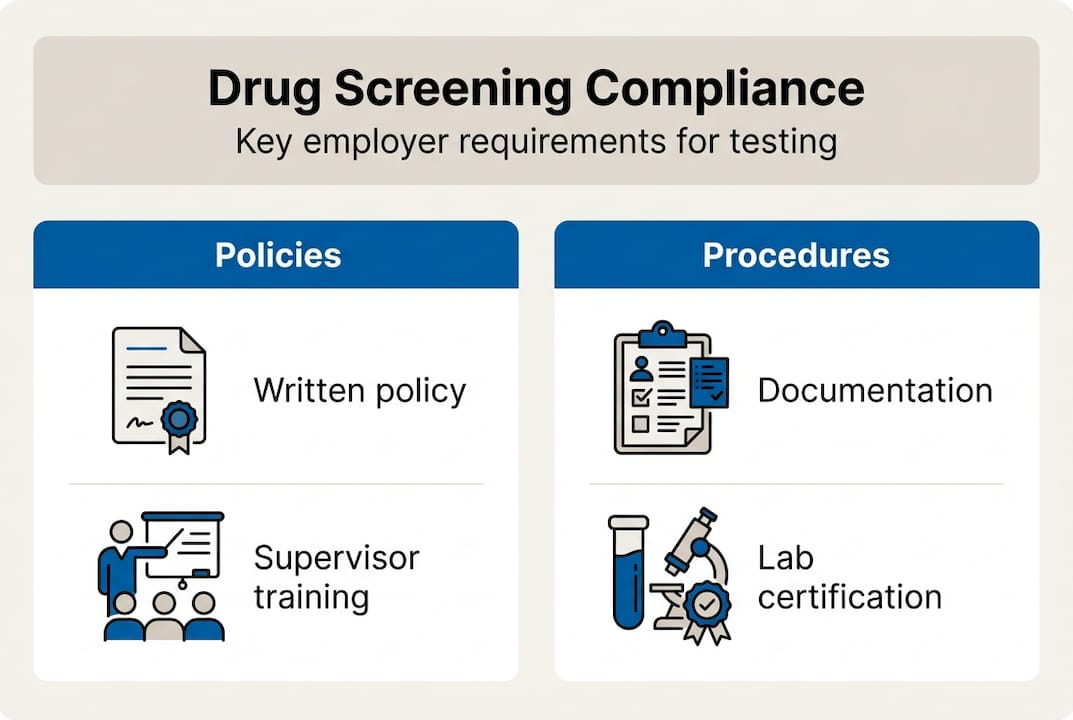
Employer obligations extend beyond simply conducting tests. Organizations must establish written policies, train supervisors to recognize impairment indicators, maintain chain of custody documentation, and protect employee privacy throughout the testing process. Failure to follow DOT employer guidelines can result in regulatory sanctions, while privacy violations expose companies to civil liability.
The National Labor Relations Act adds another compliance layer by protecting certain employee rights during drug testing implementation. Unionized workplaces must often negotiate testing policies through collective bargaining, and employers cannot unilaterally change established testing procedures without proper notice and consultation.
For comprehensive guidance on building compliant programs, review our drug testing compliance guide for employers in 2026. Understanding why compliance with federal drug testing matters helps organizations prioritize resources effectively and avoid costly missteps.
Drug testing methodologies and compliance requirements
Selecting appropriate testing methodologies directly impacts compliance outcomes and legal defensibility. Urine testing detects drug metabolites for days to weeks, oral fluid testing identifies recent use within hours to days, and hair testing reveals long-term patterns over months. Each methodology serves distinct compliance purposes based on detection windows and job role requirements.
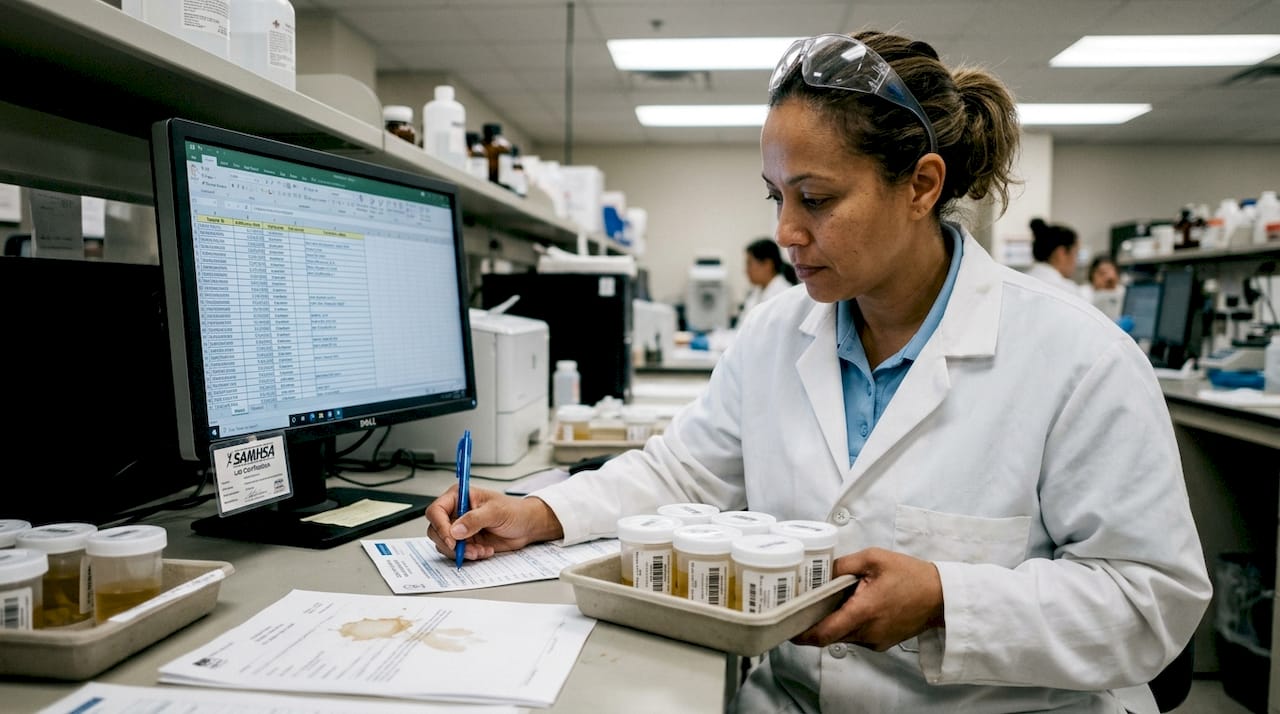
The Substance Abuse and Mental Health Services Administration establishes mandatory guidelines for federal workplace testing programs. These standards specify authorized testing panels, cutoff concentration levels, and procedural requirements. The standard 5-panel test screens for marijuana metabolites, cocaine, amphetamines, opiates, and phencyclidine. Expanded panels add substances like benzodiazepines, barbiturates, and synthetic opioids to address emerging drug trends.
| Testing Method | Detection Window | Best Use Case | Compliance Considerations |
|---|---|---|---|
| Urine | 1-30 days depending on substance | Standard workplace screening | SAMHSA-approved, most legally defensible |
| Oral Fluid | 5-48 hours | Recent use detection, observed collection | Less invasive, reduces privacy concerns |
| Hair | 90 days | Long-term pattern identification | Higher cost, delayed detection of recent use |
Testing procedures require initial immunoassay screening followed by confirmatory GC-MS analysis with specific cutoff levels for positive results. This two-step process minimizes false positives and ensures accuracy. Cutoff concentrations balance sensitivity with practical detection limits, preventing positive results from passive exposure or trace amounts.
Medical Review Officers play a critical gatekeeping role in the compliance process. When laboratories report positive results, MROs review medical explanations, verify prescription medications, and determine whether legitimate medical use explains the finding. This physician review protects employees from incorrect positive determinations while maintaining program integrity. Federal workplace drug testing guidelines require MRO involvement for all positive results in covered testing programs.
Common testing panels include:
- 5-panel: Marijuana, cocaine, amphetamines, opiates, PCP
- 10-panel: Adds benzodiazepines, barbiturates, methadone, propoxyphene, methaqualone
- DOT 5-panel: Marijuana, cocaine, amphetamines, opioids, PCP (specific DOT cutoffs)
- Expanded opioid panel: Includes synthetic opioids like fentanyl and tramadol
Pro Tip: Match your testing methodology to specific job role risks and regulatory requirements. Safety-sensitive positions warrant more comprehensive panels and shorter detection windows, while standard office roles may require only basic screening. Document the rationale for your methodology choices to demonstrate thoughtful compliance planning.
Certified laboratories meeting SAMHSA, ISO, CLIA, and CAP standards ensure reliable results that withstand legal challenges. Using non-certified facilities or improper collection procedures creates compliance gaps that undermine program defensibility. Our 2026 drug screening standards overview explains current certification requirements, while our rehab drug screening workflow for facilities demonstrates proper procedural implementation.
For technical details on testing methodologies and quality assurance, consult the workplace drug testing technical reference published by federal agencies.
Navigating compliance challenges and evolving drug screening policies
Even well-intentioned drug screening programs face implementation challenges that create compliance vulnerabilities. Common pitfalls include outdated policies, inconsistent enforcement, inadequate supervisor training, poor documentation practices, and mismatched testing methods for specific roles. Each gap represents potential legal exposure and undermines workplace safety objectives.
State marijuana legalization creates the most complex compliance challenge for multi-state employers. While numerous states have legalized recreational or medical marijuana, federal law still classifies it as a Schedule I controlled substance. This conflict directly impacts workplace testing policies. State marijuana legalization conflicts with federal testing requirements, with California banning metabolite-based testing except for federally mandated programs. DOT-regulated employers must continue testing for marijuana regardless of state law.
Organizations operating across multiple jurisdictions face particularly difficult decisions:
- Maintain uniform policies that may exceed requirements in some states
- Implement location-specific policies that increase administrative complexity
- Distinguish between federal contractor obligations and general employer flexibility
- Navigate varying state protections for off-duty marijuana use
- Balance safety-sensitive position requirements with broader workforce policies
Demographic factors and specimen validity testing add another compliance dimension. Certain substances show different detection patterns across populations, and sophisticated adulteration methods threaten result accuracy. Validity testing for pH, specific gravity, oxidants, and creatinine levels helps identify specimen tampering, but adds cost and complexity to testing programs.
Pro Tip: Establish a quarterly policy review process to identify compliance gaps before they create problems. Assign a cross-functional team including HR, legal, operations, and safety personnel to assess regulatory changes, update procedures, and deliver refresher training to supervisors. This proactive approach prevents the outdated policies that frequently trigger compliance failures.
“The intersection of state marijuana laws and federal testing mandates requires employers to carefully analyze their specific regulatory obligations. DOT-covered positions have no flexibility, while general industry employers must weigh state law protections against legitimate safety concerns and federal contractor requirements.”
Supervisor training represents a frequently overlooked compliance element. Managers must understand reasonable suspicion indicators, proper documentation requirements, employee privacy protections, and referral procedures. Inadequate training leads to inconsistent application, missed impairment indicators, and potential discrimination claims when testing decisions appear arbitrary.
Documentation failures create significant legal vulnerabilities. Every testing decision requires contemporaneous written justification, whether for reasonable suspicion, post-accident circumstances, or random selection methodology. Missing or incomplete documentation makes defending testing decisions nearly impossible during litigation or regulatory audits.
For practical implementation guidance, review our step-by-step drug screening workflow. Our analysis of drug testing and marijuana legalization explores industry-specific considerations.
Staying informed about drug testing compliance challenges and marijuana legalization conflicts helps organizations anticipate policy adjustments before compliance problems emerge.
The impact of drug screening compliance on workplace safety and risk management
Robust compliance programs deliver measurable safety improvements and risk reduction beyond mere legal protection. Overall US workforce urine positivity reached 4.4% in 2024, with fentanyl positivity 707% higher in random testing compared to pre-employment screening. These statistics demonstrate why ongoing testing programs outperform pre-employment screening alone for maintaining drug-free workplaces.
The dramatic difference between pre-employment and random testing positivity rates reveals important insights. Pre-employment screening primarily identifies current users who fail to abstain before testing. Random testing catches individuals who use substances after hire, including those with developing dependencies. This detection gap explains why comprehensive programs incorporating multiple testing types provide superior safety outcomes.
| Drug Category | Pre-Employment Positivity | Random Testing Positivity | Detection Advantage |
|---|---|---|---|
| Fentanyl | Baseline | 707% higher | Identifies post-hire use patterns |
| Marijuana | 3.5% | 4.8% | Detects ongoing use despite policies |
| Cocaine | 0.6% | 0.9% | Catches intermittent users |
| Amphetamines | 0.7% | 1.1% | Reveals prescription misuse |
Compliance-driven testing programs correlate with reduced workplace incidents across industries. Organizations with mature drug screening programs report fewer accidents, lower workers’ compensation claims, reduced absenteeism, and improved productivity metrics. While establishing direct causation proves difficult, the correlation between comprehensive testing and safety outcomes appears consistent across sectors.
Zero-tolerance policies versus impairment-based approaches represent an evolving compliance debate. Traditional zero-tolerance programs prohibit any positive test result regardless of timing or impairment level. Impairment-based approaches focus on actual workplace impairment rather than off-duty use, particularly for marijuana where metabolites persist long after effects dissipate. Each approach carries distinct compliance implications:
- Zero-tolerance provides clear, defensible standards but may conflict with state marijuana protections
- Impairment-based testing better aligns with actual safety risks but requires sophisticated detection methods
- Hybrid approaches distinguish safety-sensitive positions from general workforce
- Policy clarity matters more than specific approach for legal defensibility
Best practices for integrating compliance into comprehensive safety programs include:
- Establish clear written policies communicated to all employees
- Train supervisors on recognition, documentation, and referral procedures
- Use certified laboratories and follow proper chain of custody protocols
- Implement Medical Review Officer review for all positive results
- Maintain consistent enforcement across all employee levels
- Document every testing decision with contemporaneous written justification
- Conduct regular policy audits to identify and correct compliance gaps
- Track testing metrics to identify trends and assess program effectiveness
Pro Tip: Leverage compliance data analytics to identify risk trends before they escalate into incidents. Track positivity rates by department, job role, and substance category. Unusual patterns may indicate emerging drug trends, inadequate supervisor training, or policy enforcement inconsistencies. This proactive approach transforms compliance from a defensive legal exercise into a strategic safety tool.
Our resources on employer drug screening and workplace safety and government drug screening reducing workplace accidents provide additional evidence linking compliance with safety outcomes.
For current positivity data and emerging drug trends, review drug test positivity statistics from national laboratory providers.
Explore reliable drug screening solutions for compliance
Maintaining regulatory compliance requires partnerships with certified laboratories and access to appropriate testing methodologies. CountryWideTesting.com provides comprehensive drug screening solutions designed specifically for compliance-focused organizations.
Our lab testing services connect you with SAMHSA, ISO, CLIA, and CAP certified facilities nationwide, ensuring results meet federal standards for legal defensibility. Whether you need DOT-compliant testing programs, expanded panel options for emerging substances, or rapid turnaround for time-sensitive situations, our laboratory network delivers reliable results with proper chain of custody documentation.
We offer testing solutions matching every compliance requirement:
- Urine drug testing with standard and expanded panels
- Oral fluid testing for observed collection scenarios
- DOT-compliant testing programs with MRO review
- Validity testing to detect specimen adulteration
Explore our QuickScreen 10-panel saliva drug test for comprehensive screening with reduced privacy concerns. Visit CountryWideTesting.com to discover how our testing solutions support your compliance objectives while protecting workplace safety.
FAQ
What is the role of Medical Review Officers in drug screening compliance?
Medical Review Officers serve as licensed physicians who review positive drug test results to verify accuracy and assess legitimate medical explanations before final reporting. MRO review is required for positive results in federal workplace testing programs to ensure prescription medications or other valid reasons don’t result in incorrect positive determinations. This physician gatekeeping protects both employee rights and employer interests by preventing false positives that could trigger wrongful termination claims.
How do state marijuana legalization laws affect federal drug screening compliance?
Significant conflicts exist between state marijuana laws and federal testing requirements, creating complex compliance scenarios for employers. State legalization conflicts with federal DOT regulations, with some states banning metabolite testing while federal mandates still require marijuana screening for safety-sensitive positions. Federal regulations preempt state laws for DOT-covered employees and federal contractors, meaning these employers must continue testing regardless of state legalization status. General industry employers face more flexibility but must carefully analyze their specific jurisdiction’s protections for off-duty marijuana use.
What are common pitfalls HR should avoid in maintaining compliance?
Frequent compliance failures include inconsistent enforcement, outdated policies, inadequate supervisor training, and poor documentation practices across departments. Organizations often fail to update policies when regulations change, apply testing decisions inconsistently across employee levels, or neglect supervisor training on reasonable suspicion indicators and proper documentation requirements. Each gap creates legal vulnerabilities that undermine program defensibility during audits or litigation. Establishing quarterly policy reviews and comprehensive supervisor training prevents these common pitfalls.
Why is choosing the right drug testing methodology important?
Different testing methods have detection windows suitable for specific roles and compliance objectives, with wrong methodology choices risking inaccurate results or legal challenges. Urine testing detects use over days to weeks, oral fluid identifies recent consumption, and hair testing reveals long-term patterns. Safety-sensitive positions may require shorter detection windows to identify current impairment, while other roles benefit from longer detection periods. Matching methodology to job requirements and regulatory mandates ensures both accurate detection and defensible policy implementation.