
Drug testing compliance guide for employers in 2026
Federally mandated drug testing programs reduce workplace accidents by up to 25%, demonstrating the tangible value of compliance. Drug testing compliance refers to adhering to federal and state regulations governing workplace drug screening programs. This guide unpacks the regulatory complexity employers face, from laboratory standards to employee rights, providing a roadmap for building legally defensible programs that protect both workers and organizations.
Table of Contents
- Introduction To Drug Testing Compliance
- Federal And State Drug Testing Laws
- Laboratory And Testing Standards For Compliance
- Common Misconceptions About Drug Testing Compliance
- Implementing A Compliant Drug Testing Program
- Legal Consequences Of Non-Compliance And Benefits Of Adhering To Regulations
- How Countrywide Testing Supports Your Drug Testing Compliance
Key takeaways
| Point | Details |
|---|---|
| Legal framework | Drug testing compliance requires adherence to federal and state laws that vary by jurisdiction. |
| Laboratory standards | Certified labs and proper protocols are mandatory for defensible results. |
| Employee protections | Consent, privacy, and employee rights are central to compliance. |
| Risk mitigation | Non-compliance risks include legal penalties and workplace safety pitfalls. |
| Documentation | Clear policies and thorough documentation underpin successful programs. |
Introduction to drug testing compliance
Drug testing compliance operates at the intersection of workplace safety, legal obligation, and employee rights. For employers, it means designing screening programs that satisfy regulatory requirements while protecting workers and the organization from liability. The regulatory landscape involves multiple layers: federal mandates for specific industries, state laws that apply broadly, and procedural standards that ensure test accuracy.
Successful compliance operates across regulatory, procedural, and ethical layers. The regulatory layer encompasses laws like DOT mandates and state statutes. The procedural layer involves laboratory certification, chain of custody, and specimen collection protocols. The ethical layer addresses employee consent, privacy protections, and fairness in testing policies.
Understanding drug testing terminology compliance helps employers navigate this complex landscape. Three critical components define effective compliance:
- Legal authority to test under federal or state law
- Technically sound procedures through certified laboratories
- Transparent policies that respect employee rights
Employers benefit from compliance through reduced accident rates, lower insurance premiums, and protection from wrongful termination claims. Workers gain assurance that testing procedures are fair, accurate, and legally grounded. This mutual benefit creates the foundation for workplace safety programs that actually work.
Federal and state drug testing laws
Federal regulations govern specific industries and circumstances. The Department of Transportation mandates testing for safety-sensitive positions like truck drivers and pilots. OSHA requires accident investigation protocols that may include drug testing. The ADA restricts testing of applicants until after conditional job offers. HIPAA protects the privacy of medical information, including drug test results.
State laws create the primary framework for most private employers. Over 85% of private-sector drug testing is subject to state law variations rather than federal mandates. This jurisdictional complexity means employers must research requirements for each state where they operate.
Consider these examples of state law differences:
| State approach | Testing allowed | Key restrictions |
|---|---|---|
| Permissive states | Pre-employment, random, reasonable suspicion, post-accident | Minimal procedural requirements |
| Regulated states | Same categories with conditions | Must have written policy, use certified labs, provide notice |
| Restrictive states | Limited to safety-sensitive positions or reasonable suspicion | Strong employee protections, limited random testing |
Some states prohibit testing for marijuana use outside work hours, even for pre-employment screening. Others require employers to provide rehabilitation opportunities before termination. A few states mandate specific notice periods before implementing testing programs.
Understanding DOT drug test requirements helps employers in transportation industries comply with federal standards. For other sectors, reviewing drug testing laws by jurisdiction prevents costly policy mistakes.
Employers must reconcile multiple legal frameworks. When federal and state laws conflict, the more restrictive standard typically applies. Multi-state employers need policies flexible enough to accommodate different requirements while maintaining consistent safety standards. Key responsibilities include:
- Researching applicable federal regulations for your industry
- Reviewing state laws in every jurisdiction where you employ workers
- Updating policies when laws change
- Training HR staff on jurisdiction-specific requirements
Laboratory and testing standards for compliance
Laboratory certification provides the technical foundation for legally defensible drug tests. SAMHSA certification ensures the accuracy and reliability of testing laboratories through rigorous quality standards. SAMHSA-certified labs undergo regular inspections, maintain strict chain of custody protocols, and employ validated testing methods.
Chain of custody documentation creates an unbroken record from specimen collection through laboratory analysis. This paperwork proves sample integrity and prevents contamination or tampering challenges. Every person handling the specimen signs and dates the custody form, creating a legal trail that courts recognize.
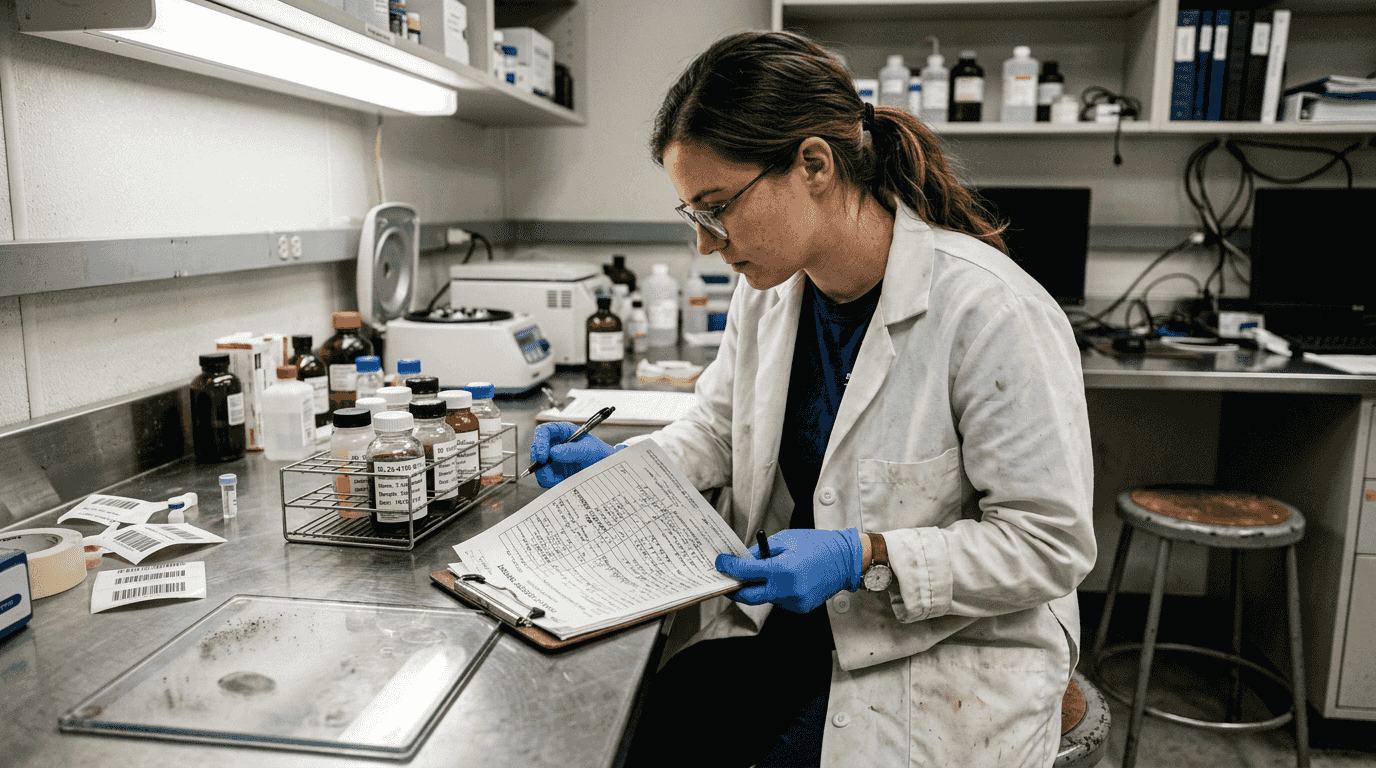
Approved testing methods vary by specimen type and detection window. Urine testing remains the most common approach due to cost-effectiveness and established legal precedent. Hair testing detects longer-term use patterns. Oral fluid testing offers observed collection with minimal privacy concerns. Each method requires specific collection procedures and laboratory protocols.
Understanding SAMHSA drug testing standards helps employers select appropriate testing approaches. Key procedural safeguards include:
- Using only SAMHSA-certified laboratories for employment testing
- Implementing split-specimen procedures for confirmation testing
- Maintaining temperature checks and validity testing for urine samples
- Training collectors on proper specimen handling procedures
- Storing samples securely with controlled access
Pro Tip: Always use certified labs for employment decisions, even if at-home tests seem cheaper. Courts give significant weight to SAMHSA certification when evaluating test accuracy in wrongful termination cases.
Medical review officers (MROs) provide another critical compliance layer. These licensed physicians review positive results, interview employees about legitimate medical explanations, and verify final results. Learning how to conduct drug testing workplace programs includes understanding MRO roles.
Technical compliance requirements extend beyond the laboratory. Collection site certification ensures proper specimen handling. Temperature strips verify sample authenticity. Validity testing detects dilution or adulteration attempts. These multiple safeguards create defensible results that withstand legal scrutiny.
Staying current with drug testing trends 2026 compliance guide developments helps employers adapt to evolving standards. Why comply with federal drug testing requirements becomes clear when considering the legal protection proper procedures provide.
Common misconceptions about drug testing compliance
Employers frequently misunderstand the legal landscape governing workplace drug testing. Many employers mistakenly believe federal law governs all workplace drug testing, overlooking state variations. This misconception leads to policies that may violate state employee protections while attempting federal compliance.
Another widespread myth suggests chain of custody protocols only apply to DOT-regulated testing. In reality, any employment decision based on drug test results benefits from documented chain of custody. Courts scrutinize testing procedures regardless of industry, making proper documentation essential for all employers.
Employee consent requirements create frequent confusion. Some employers believe at-will employment eliminates the need for explicit testing consent. Most states actually require written consent, advance policy notice, or both. Failing to obtain proper consent can invalidate test results and expose employers to privacy violation claims.
Privacy protections represent another misunderstood area. Employers sometimes assume they can observe all drug test collections or require observed collections without cause. State laws typically restrict direct observation to reasonable suspicion situations or after failed validity tests. Unnecessary observation can trigger privacy lawsuits.
Reviewing comprehensive drug testing laws resources helps employers avoid these pitfalls. Common compliance mistakes include:
- Assuming federal law preempts all state drug testing regulations
- Skipping chain of custody documentation for non-DOT tests
- Testing without written policies or employee acknowledgment
- Conducting observed collections without legal justification
- Terminating employees without MRO verification of positive results
- Ignoring state-specific restrictions on marijuana testing
The distinction between federal and state authority causes particular confusion. Federal law creates a floor of employee protections and specific industry mandates. State law builds additional requirements and protections on that foundation. Employers must comply with both frameworks, not choose between them.
Clarifying these misconceptions improves policy design and reduces legal exposure. Understanding true requirements versus assumed standards helps employers build programs that actually protect their organizations while respecting employee rights.
Implementing a compliant drug testing program
Effective drug testing programs require clear policies and trained staff for compliance and risk reduction. Building a legally defensible program involves systematic steps that address regulatory, procedural, and ethical requirements.
-
Develop comprehensive written policies that specify testing circumstances, substances tested, consequences for positive results, and employee rights. Policies should address pre-employment, random, reasonable suspicion, post-accident, and return-to-duty testing as appropriate for your industry.
-
Ensure lawful employee consent by providing advance notice of drug testing policies, obtaining written acknowledgment of policy receipt, and securing explicit consent before each test. Document all consent interactions.
-
Partner with SAMHSA-certified laboratories that meet federal quality standards. Verify laboratory certifications annually and establish clear service agreements covering turnaround times, reporting procedures, and MRO services.
-
Train specimen collectors on proper protocols, including identity verification, temperature checks, chain of custody documentation, and privacy protections. Use only trained collectors to prevent procedural errors that invalidate results.
-
Implement Medical Review Officer (MRO) verification for all positive results. MROs contact employees, review legitimate medical explanations, and verify final results before reporting to employers.
-
Maintain detailed documentation including policies, employee acknowledgments, consent forms, chain of custody records, laboratory reports, and MRO verifications. Store records securely with restricted access to protect employee privacy.
-
Conduct regular program audits reviewing procedures, documentation, and outcomes. Update policies when laws change and retrain staff on new requirements.
The step by step drug screening workflow guide provides detailed implementation protocols. For pre-employment testing specifically, pre employment drug testing policy guidance addresses candidate rights and timing requirements.
Pro Tip: Schedule annual policy reviews tied to your benefits enrollment period. This ensures drug testing policies stay current with legal changes and employees receive regular reminders about program requirements.
Staff training extends beyond collectors to managers and HR personnel. Supervisors need training on recognizing reasonable suspicion indicators and documenting observations. HR staff require education on privacy protections, accommodation requests, and termination procedures. Legal compliance depends on consistent application of policies by trained personnel.
Program effectiveness measurement helps demonstrate compliance value. Track metrics like accident rates, workers compensation claims, and policy violation rates. Compare pre- and post-implementation data to quantify safety improvements. This documentation supports continued program investment and demonstrates due diligence in litigation.
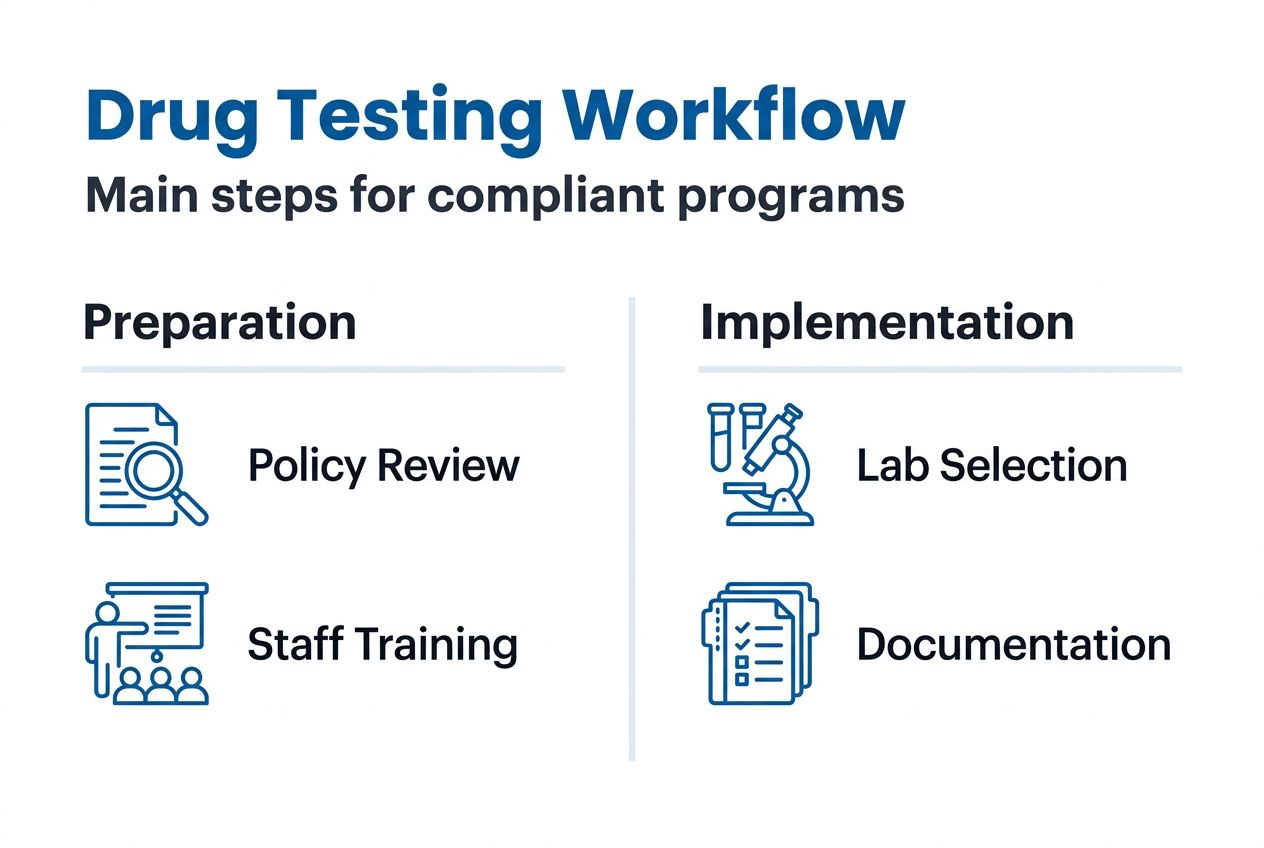
Adapting programs to specific contexts requires careful planning. How to implement drug testing in schools addresses unique considerations for educational settings, illustrating how compliance principles apply across different environments.
Legal consequences of non-compliance and benefits of adhering to regulations
Non-compliant employers risk fines, lawsuits, and increased workplace accidents. Regulatory penalties vary by violation severity and jurisdiction. DOT violations can result in fines exceeding $10,000 per occurrence. State violations typically involve smaller fines but cumulative exposure across multiple employees.
Wrongful termination litigation creates significant financial exposure. Employees successfully challenging test results or collection procedures win substantial damages for lost wages, emotional distress, and attorney fees. Punitive damages apply when employers knowingly violate employee rights or ignore procedural requirements.
Workplace accidents increase when drug testing programs lack compliance rigor. Invalid tests fail to identify impaired workers. Inconsistent application demoralizes employees and reduces program deterrent effects. The resulting accidents generate workers compensation claims, OSHA citations, and potential criminal liability for safety violations.
Reputational damage affects recruitment, customer relationships, and business development. News of compliance failures spreads quickly through industry networks and social media. Organizations known for violating employee rights struggle to attract quality talent. Government contractors may lose eligibility for projects requiring safety compliance.
Compliance investment pays dividends through reduced accidents, lower insurance premiums, and protection from litigation. The cost of proper procedures pales compared to potential liability exposure.
Adhering to drug testing regulations produces measurable benefits:
- Workplace safety improvements through accurate identification of substance abuse
- Legal defensibility when terminating employees or denying employment
- Insurance premium reductions for demonstrable safety programs
- Enhanced reputation as a responsible employer
- Eligibility for government contracts requiring drug-free workplace certification
- Reduced workers compensation claims and associated costs
Long-term cost analysis favors compliance. Initial investment in certified labs, trained collectors, and MRO services creates ongoing protection. Compare these costs against potential wrongful termination verdicts, accident liability, and regulatory penalties. The return on compliance investment becomes clear.
Understanding why comply with federal drug testing requirements helps employers appreciate both risk mitigation and operational benefits. Compliance protects workers, organizations, and the public through programs grounded in legal authority and technical rigor.
How Countrywide Testing supports your drug testing compliance
Navigating drug testing compliance requires reliable partners who understand regulatory requirements and provide certified services. Countrywide Testing offers comprehensive solutions for employers seeking to implement or improve workplace drug screening programs.
Our lab testing services meet SAMHSA certification standards, ensuring legally defensible results that withstand scrutiny. We partner with laboratories holding ISO, CLIA, and CAP accreditations, providing the quality assurance employers need for compliance confidence.
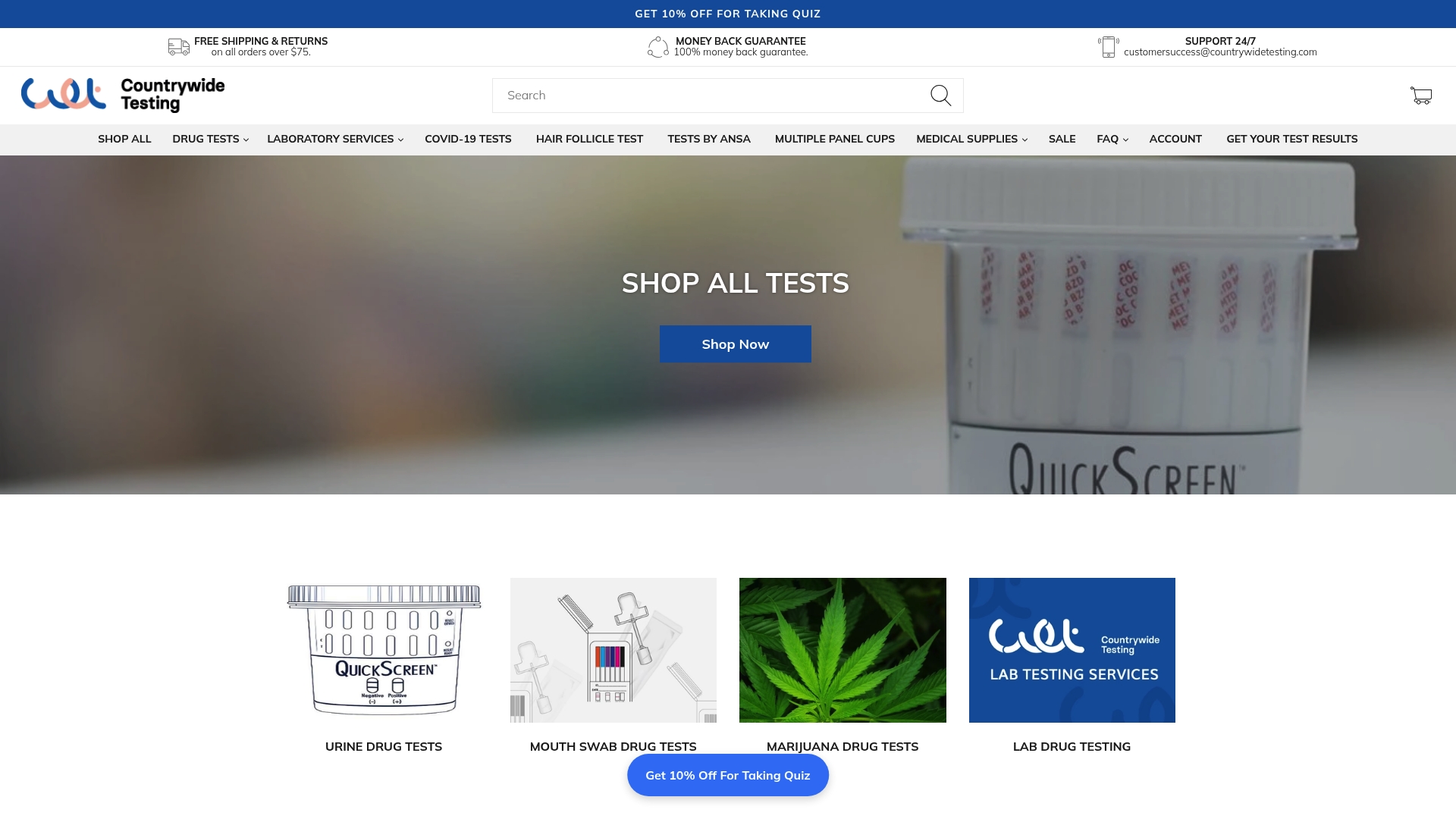
For organizations preferring point-of-collection testing, we offer certified drug test kits including the 12 panel multiple drug at home cup test and specialized options like the at-home steroid abuse urine test kit. These products provide initial screening capabilities while maintaining chain of custody options for confirmation testing.
Our support extends beyond products to implementation guidance. We help employers design policies, train staff, and establish procedures that satisfy federal and state requirements. Whether you need DOT-compliant programs or general workplace testing, Countrywide Testing provides the expertise and services to build defensible programs.
Frequently asked questions
What is drug testing compliance?
Drug testing compliance means following federal and state laws governing workplace drug screening programs. This includes using certified laboratories, obtaining proper employee consent, maintaining chain of custody documentation, and respecting privacy rights. Compliance ensures test results are legally defensible and protect both employers and employees.
Which federal regulations govern workplace drug testing?
DOT mandates testing for transportation industry safety-sensitive positions. OSHA requires drug testing policies as part of workplace safety programs. The ADA restricts pre-employment testing timing and prohibits disability discrimination. HIPAA protects the confidentiality of medical information including drug test results. Most private employers follow state law rather than federal mandates.
What drug testing methods are legally accepted?
Urine testing is the most common and legally established method. Hair testing detects longer use patterns and is accepted in most jurisdictions. Oral fluid testing offers less invasive collection with growing legal acceptance. Blood testing is rarely used due to cost and invasiveness. All methods require certified laboratory analysis and proper chain of custody for employment decisions.
What rights do employees have regarding drug testing?
Employees generally have rights to advance policy notice, written consent before testing, privacy during collection, and confidentiality of results. Many states require employers to provide rehabilitation opportunities before termination. Employees can request split-specimen testing to verify positive results. Some states protect off-duty marijuana use even for pre-employment screening.
How do I ensure my drug testing program is compliant?
Develop written policies addressing all testing circumstances and employee rights. Use only SAMHSA-certified laboratories for analysis. Train collectors on proper specimen handling and chain of custody. Implement MRO verification for all positive results. Maintain detailed documentation of procedures and results. Audit your program regularly and update policies when laws change. Consult legal counsel to address jurisdiction-specific requirements.