
How to Conduct Drug Testing for Workplace Compliance
Workplace safety can hinge on the precision and fairness of your drug testing strategies. For American HR managers, navigating compliance with local, state, and federal laws means making intentional choices that protect both employees and the organization. With options like urine, saliva, hair, and blood testing, developing a legally sound, confidential, and effective drug screening program is central to building a trustworthy workplace. This guide highlights compliant drug testing solutions and practical steps for ensuring transparency and safety every step of the way.
Table of Contents
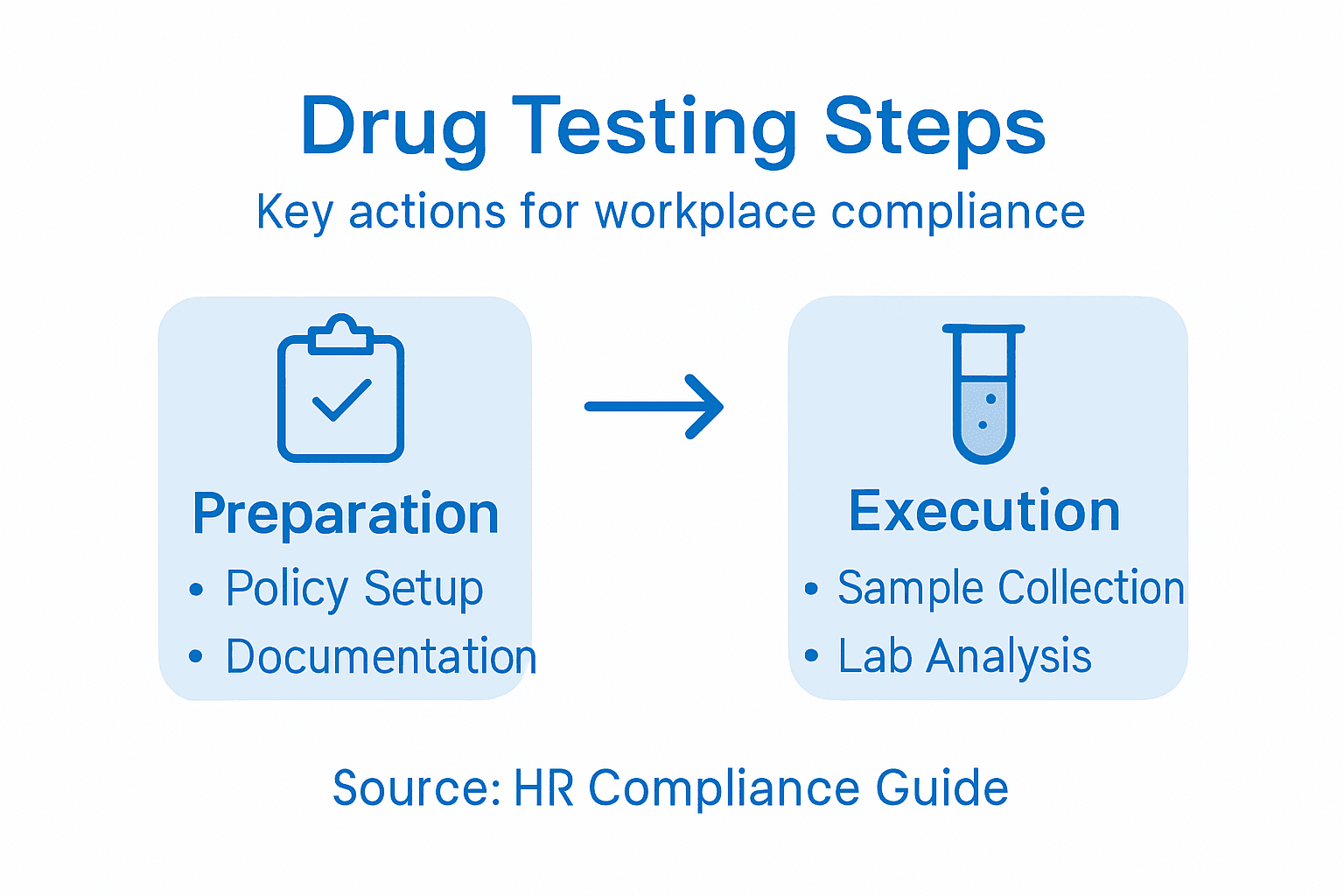
- Step 1: Assess Testing Needs And Select Compliant Methods
- Step 2: Prepare Proper Documentation And Notification Protocols
- Step 3: Set Up A Secure And Private Testing Environment
- Step 4: Collect And Handle Samples Following Best Practices
- Step 5: Verify Results With Certified Laboratory Analysis
- Step 6: Document Outcomes And Maintain Compliance Records
Quick Summary
| Key Takeaway | Explanation |
|---|---|
| 1. Assess workplace testing needs | Evaluate regulations and job roles to tailor drug screening strategies effectively. |
| 2. Establish thorough documentation | Create clear consent forms, policies, and record-keeping protocols to ensure legal compliance. |
| 3. Ensure secure testing environment | Design private and secure areas to protect employee dignity and testing integrity. |
| 4. Follow best sample handling practices | Use certified personnel and maintain privacy throughout the specimen collection process. |
| 5. Verify results with certified labs | Utilize advanced laboratory methods for accurate testing and maintain chain of custody. |
Step 1: Assess testing needs and select compliant methods
Assessing your workplace drug testing needs is about creating a targeted, legally sound screening strategy that protects both your organization and your employees. This step involves understanding your specific workplace requirements and selecting the most appropriate testing methods to ensure safety and compliance.
To effectively assess your testing needs, start by carefully evaluating your workplace environment and specific risk factors. Consider the following critical elements when developing your drug testing approach:
- Industry regulations that might mandate specific testing protocols
- Potential safety-sensitive job roles requiring more rigorous screening
- Workplace accident history and substance abuse patterns
- Legal requirements specific to your state and federal guidelines
When selecting testing methods, you have multiple options that offer different levels of detection and compliance. Drug testing methods vary significantly based on detection windows, accuracy, and logistical considerations. The most common workplace testing approaches include:
- Urine testing: Most prevalent method with broad substance detection
- Saliva testing: Quick and non-invasive screening for recent drug use
- Hair follicle testing: Provides longer historical substance use data
- Blood testing: Most precise but also most invasive method
Your selection should balance legal requirements, employee privacy concerns, and practical implementation challenges. Some industries like transportation, healthcare, and manufacturing often require more comprehensive testing due to safety-critical job responsibilities.
Here’s a comparison of common workplace drug testing methods and their key considerations:
| Method | Detection Window | Invasiveness | Typical Use Case |
|---|---|---|---|
| Urine Testing | 1-4 days | Moderate | General workforce screening |
| Saliva Testing | Up to 48 hours | Low | Post-accident or random checks |
| Hair Follicle Test | Up to 90 days | Moderate | Long-term use assessment |
| Blood Testing | Hours to 2 days | High | Confirmatory or legal disputes |
Choosing the right drug testing method is not just about compliance - it’s about creating a safe, respectful workplace environment.
Pro tip: Consult with a legal professional specializing in workplace drug testing to ensure your screening policies are fully compliant with current regulations and protect both employer and employee rights.
Step 2: Prepare proper documentation and notification protocols
Documentation and notification are critical components of a legally compliant workplace drug testing program. Your goal in this step is to create clear, comprehensive protocols that protect both your organization and your employees while maintaining transparency and legal standards.
When preparing documentation, you’ll need to develop a systematic approach that covers every aspect of your drug testing process. Drug testing documentation requirements involve multiple critical elements that ensure legal and procedural compliance:
- Consent forms with clear language explaining testing procedures
- Detailed policy statements outlining testing scope and consequences
- Standardized record-keeping templates
- Confidentiality agreements protecting employee information
Your notification protocols should include specific steps to communicate testing requirements effectively:
- Draft a comprehensive drug testing policy
- Provide written notification to all employees
- Ensure employees understand their rights and obligations
- Maintain clear communication channels for questions
Workplace testing documentation must address several key areas to ensure legal protection. This includes establishing precise procedures for:
- Collecting and handling test specimens
- Maintaining chain of custody documentation
- Protecting employee medical information
- Documenting testing results and potential actions
Effective documentation is not about creating bureaucratic barriers, but about establishing clear, fair processes that protect everyone involved.
Some industries with safety-critical roles like transportation, healthcare, and manufacturing will require even more rigorous documentation standards. Consulting with legal professionals can help you develop watertight protocols that meet all regulatory requirements.
Pro tip: Create a standardized documentation checklist that can be easily updated and consistently applied across your organization to streamline your drug testing notification process.
Step 3: Set up a secure and private testing environment
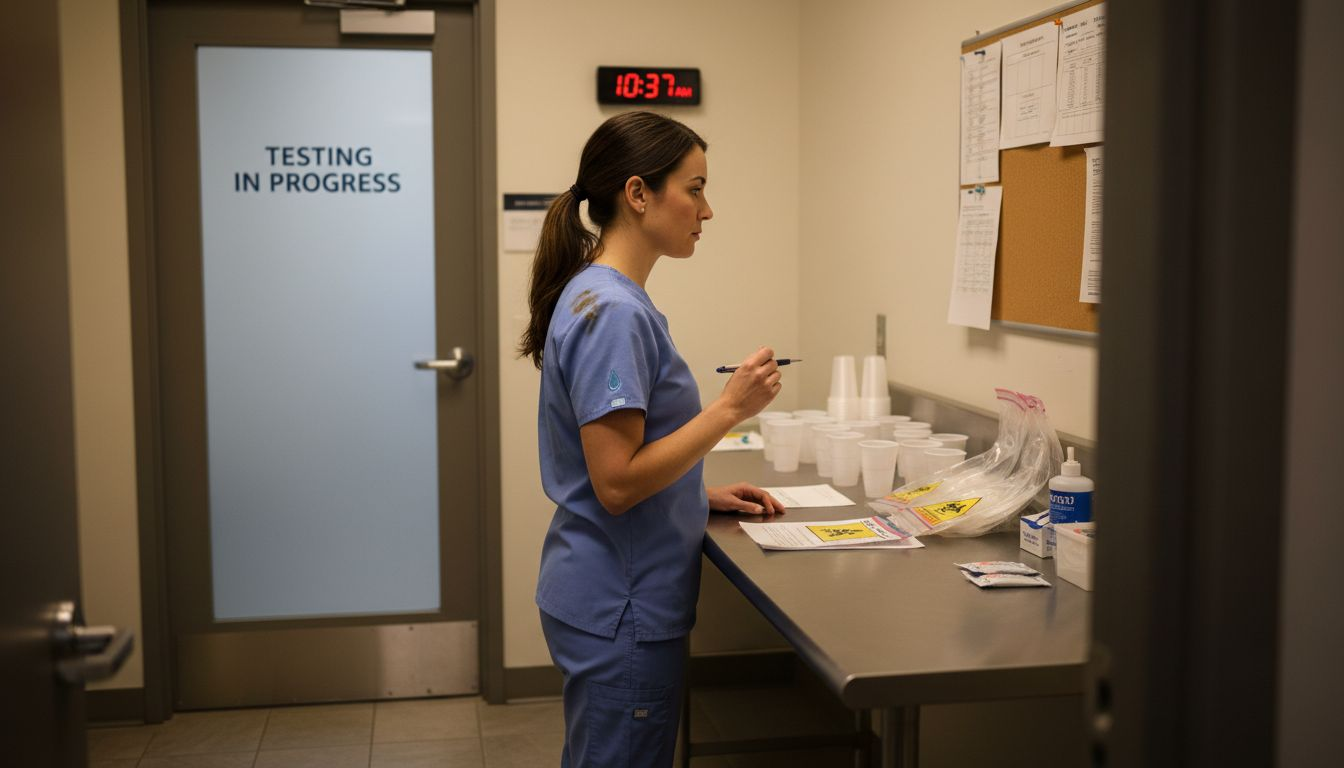
Creating a secure and private testing environment is crucial for maintaining the integrity of your workplace drug testing program and protecting employee dignity. This step involves establishing physical and procedural safeguards that ensure confidentiality, prevent tampering, and comply with federal regulations.
Workplace drug testing facilities must implement comprehensive security protocols that address multiple dimensions of privacy and specimen protection. Your testing environment should incorporate the following key elements:
- Private collection areas with restricted access
- Controlled entry and exit points
- Secure storage for testing materials and specimens
- Designated personnel with authorized access
When designing your testing space, consider these critical considerations:
- Select a location away from high-traffic workplace areas
- Ensure visual and auditory privacy during specimen collection
- Install secure locks and access control systems
- Create clear signage indicating authorized personnel only
Facility security measures should address multiple potential vulnerabilities:
- Installing surveillance systems in non-invasive collection areas
- Using tamper-evident collection containers
- Implementing chain of custody documentation
- Creating secure digital and physical record storage
Protecting employee privacy is not just a legal requirement - it’s a fundamental aspect of maintaining workplace trust and respect.
Different industries may have unique requirements. Safety-sensitive sectors like transportation and healthcare often demand more rigorous security protocols to maintain regulatory compliance.
Pro tip: Conduct periodic security audits of your testing environment to identify and address potential privacy and integrity vulnerabilities before they become problematic.
Step 4: Collect and handle samples following best practices
Collecting and handling drug testing samples requires precision, professionalism, and strict adherence to established protocols. Your goal is to ensure sample integrity, maintain chain of custody, and produce legally defensible testing results that protect both employee rights and workplace safety.
Workplace drug testing procedures demand meticulous attention to detail during specimen collection and management. Your comprehensive approach should address several critical aspects:
- Certified collection personnel with proper training
- Secure and private collection environments
- Detailed documentation and tracking protocols
- Proper specimen labeling and identification
When collecting and handling samples, follow these essential steps:
- Verify employee identification
- Prepare collection materials in advance
- Maintain strict privacy during collection
- Use tamper-evident collection containers
- Complete chain of custody documentation
Sample handling best practices include:
- Minimizing potential contamination risks
- Maintaining appropriate temperature control
- Securing specimens immediately after collection
- Preventing unauthorized access to samples
Maintaining sample integrity is not just a technical requirement - it’s about ensuring fair, accurate, and respectful workplace testing.
Different industries may have specific nuanced requirements. Safety-sensitive sectors like transportation and healthcare often require even more rigorous collection and handling protocols.
Pro tip: Develop a standardized training program for collection personnel that emphasizes precision, confidentiality, and legal compliance in every step of the sample collection process.
Step 5: Verify results with certified laboratory analysis
Verifying drug test results through certified laboratory analysis is the most critical step in ensuring accurate, legally defensible workplace testing. Your objective is to transform initial screening data into reliable, scientifically validated findings that meet rigorous professional standards.
Certified laboratory procedures involve multiple sophisticated verification stages designed to eliminate potential errors and ensure absolute result integrity. These comprehensive analysis protocols protect both employer interests and employee rights:
- Initial screening tests for rapid substance detection
- Confirmatory testing using advanced scientific methods
- Rigorous quality control procedures
- Multiple validation checkpoints
The laboratory verification process typically follows these critical steps:
- Review chain of custody documentation
- Conduct initial immunoassay screening
- Perform confirmatory gas chromatography/mass spectrometry (GC/MS) testing
- Validate results through multiple scientific techniques
- Generate detailed, legally compliant reporting
Laboratory result verification requires attention to several key factors:
- Ensuring HHS-certified laboratory credentials
- Checking technical precision of testing methods
- Reviewing comprehensive result documentation
- Validating scientific testing protocols
Laboratory verification is not merely a technical procedure - it’s the foundation of fair, accurate workplace drug testing.
Different industries may require varying levels of scientific scrutiny. High-risk sectors like transportation, healthcare, and manufacturing demand the most stringent verification protocols.
Pro tip: Request a complete chain of custody and detailed testing methodology report from your certified laboratory to ensure maximum transparency and legal defensibility of drug test results.
Step 6: Document outcomes and maintain compliance records
Documenting drug testing outcomes is critical for creating a legally defensible and transparent workplace compliance program. Your goal is to generate comprehensive records that protect both organizational interests and employee rights while meeting all regulatory requirements.
Federal workplace drug testing documentation requires meticulous record-keeping that captures every essential detail of the testing process. Your documentation strategy should encompass multiple critical components:
- Confidential test results with precise tracking
- Medical review officer evaluations
- Chain of custody documentation
- Retention and privacy protocols
Key elements of effective documentation include:
- Record initial screening results
- Document confirmatory test outcomes
- Capture medical review officer assessments
- Log any follow-up actions or recommendations
- Secure records in confidential storage
Compliance record management requires careful attention to several crucial factors:
Here is a summary of essential compliance records for workplace drug testing:
| Record Type | Purpose | Recommended Retention Period |
|---|---|---|
| Consent Forms | Document employee agreement to testing | 2-5 years |
| Chain of Custody | Track sample integrity and handling | As legally required |
| Test Results | Provide outcome documentation | 3-5 years |
| Medical Review Officer Notes | Verify medical analysis and opinions | 5 years or per regulations |
- Maintaining strict confidentiality standards
- Following industry-specific retention guidelines
- Implementing secure digital and physical storage
- Creating standardized documentation templates
Proper documentation is more than paperwork - it’s a critical shield protecting both employer and employee interests.
Different industries have varying record-keeping requirements. High-risk sectors like transportation, healthcare, and manufacturing demand even more rigorous documentation protocols.
Pro tip: Develop a digital record management system with encrypted storage and automatic compliance tracking to streamline your documentation process and reduce human error.
Ensure Workplace Drug Testing Compliance with Trusted Solutions
Navigating the complexities of workplace drug testing can feel overwhelming. From selecting the right testing methods and documenting every step to securing samples and verifying results with certified laboratories, there is little room for error when it comes to compliance and employee trust. This article highlighted key challenges such as maintaining legal documentation, protecting privacy, and ensuring scientifically validated testing. At CountryWideTesting.com, we understand these critical pain points and are dedicated to simplifying your drug and alcohol screening process while keeping it fully compliant with federal and industry regulations.
Ready to streamline your workplace drug testing program with confidence? Explore our comprehensive selection of urine and mouth swab drug tests and partner with licensed laboratories that uphold the highest standards like SAMHSA, ISO, CLIA, and CAP. Whether you need individual test kits or full-service lab testing for your organization, our platform offers reliable, legally defensible solutions that protect both employer and employee rights. Do not wait until compliance gaps put your workplace safety at risk. Visit CountryWideTesting.com today to take control of your drug testing strategy and protect your team with trusted expert support.
Frequently Asked Questions
What steps should I take to assess my workplace drug testing needs?
To assess your workplace drug testing needs, begin by evaluating your industry regulations, safety-sensitive job roles, and any workplace accident history. Identify specific testing protocols required to ensure safety and compliance, especially in high-risk environments.
How can I ensure proper documentation and notification protocols for drug testing?
To create proper documentation and notification protocols, develop clear consent forms and detailed policy statements. Communicate these requirements effectively to all employees, ensuring they understand their rights and obligations prior to testing.
What are the best practices for collecting and handling drug testing samples?
Best practices for collecting and handling samples include verifying employee identification, maintaining privacy during collection, and using tamper-evident containers. Establish a clear chain of custody to ensure sample integrity throughout the testing process.
How do I verify drug test results through certified laboratory analysis?
To verify drug test results, send samples to a certified laboratory that follows rigorous analysis protocols, including initial screenings and confirmatory testing using methods like gas chromatography/mass spectrometry. Document the entire process to ensure results are scientifically validated and legally defensible.
What types of records should I maintain for workplace drug testing compliance?
You should maintain records of consent forms, chain of custody documentation, test results, and medical review officer evaluations. Keep these records secure and ensure they are stored in compliance with regulatory retention periods, typically ranging from 2 to 5 years.