
Drug Testing Policies: Key Requirements for Employers
Developing an effective drug testing policy can quickly become overwhelming as regulations shift across states and new substances enter the workplace. For American HR managers, thorough drug testing policies are a vital tool for preventing accidents, protecting company reputation, and maintaining compliance with federal laws. This guide clarifies key concepts, exposes persistent myths, and highlights practical steps for creating policies that stand up to both legal scrutiny and everyday workplace challenges.
Table of Contents
- Drug Testing Policies Defined And Common Myths
- Types Of Drug Tests And Selection Criteria
- Key Legal Standards And 2026 Changes
- Implementing And Documenting Workplace Testing
- Employer Obligations And Compliance Risks
- Avoiding Common Mistakes And Misunderstandings
Key Takeaways
| Point | Details |
|---|---|
| Proactive Drug Testing | Drug testing is a strategic approach to maintain workplace safety and productivity, rather than a punitive measure. |
| Legal Compliance | Employers must stay informed about evolving federal and state drug testing laws to ensure their policies remain compliant. |
| Testing Method Selection | Choosing the appropriate drug testing method requires careful consideration of detection capabilities, privacy concerns, and industry requirements. |
| Ongoing Policy Review | Regular consultation with legal experts is essential for updating drug testing policies in light of changing regulations and potential legal risks. |
Drug Testing Policies Defined and Common Myths
Employers today face complex challenges in developing comprehensive drug testing policies that balance legal compliance, workplace safety, and employee privacy. Drug testing policies are strategic frameworks designed to identify potential substance abuse risks within professional environments, helping organizations maintain productivity, reduce workplace accidents, and ensure regulatory adherence.
Contrary to popular misconceptions, drug testing is not a punitive measure but a proactive approach to workplace management. Global drug use patterns demonstrate that substance abuse can significantly impact organizational performance, making these policies crucial for maintaining a safe and efficient work environment. Many employers mistakenly believe drug testing is straightforward, when in reality, it involves navigating intricate legal and ethical considerations.
Key elements of effective drug testing policies typically include clear guidelines on testing procedures, substances screened, consequences of positive results, and employee rights. These policies must account for variations in state laws, industry-specific regulations, and medical conditions that might influence test results. For instance, state-level physician requirements for drug testing in chronic pain management highlight the complexity of implementing uniform testing standards.
Pro tip: Consult with legal professionals specializing in employment law to develop a nuanced drug testing policy that protects both organizational interests and employee rights.
Types of Drug Tests and Selection Criteria
Employers must carefully navigate the complex landscape of drug testing methodologies, selecting appropriate screening techniques that balance accuracy, legal compliance, and workplace safety. Biological specimen analysis reveals multiple testing approaches, each with unique advantages and limitations for identifying potential substance use in professional environments.
Common drug testing methods include urine, blood, hair, saliva, and breath tests. Workplace drug testing techniques vary significantly in their detection windows, invasiveness, and ability to identify specific substances. Urine tests remain the most prevalent, offering a comprehensive screening option that can detect a wide range of drugs over a relatively extended period. Blood tests provide the most accurate real-time substance detection but are more invasive and expensive, making them less practical for routine workplace screening.
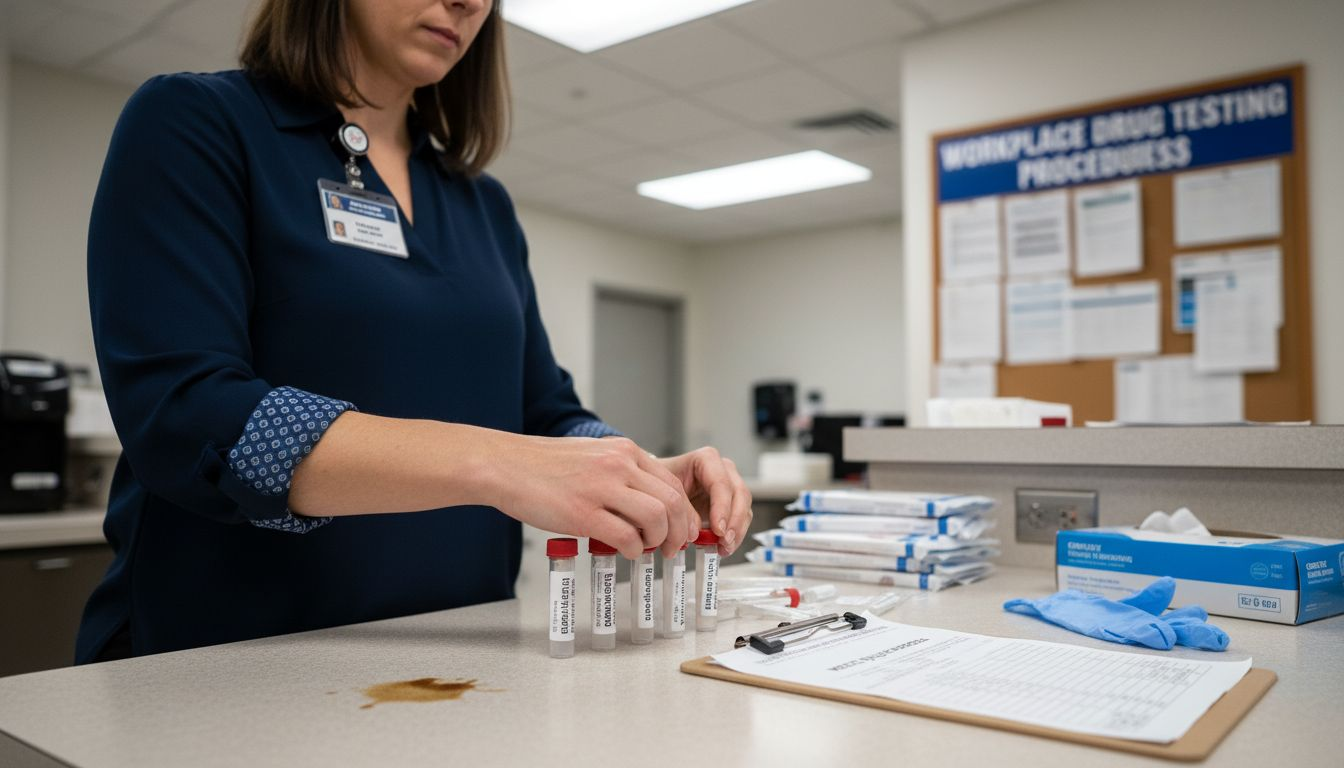
Selection criteria for drug tests extend beyond simple detection capabilities. Employers must consider factors such as the specific industry requirements, job safety considerations, legal restrictions, and the potential impact on employee privacy. Hair follicle tests offer the longest detection window, potentially identifying drug use up to 90 days prior, while saliva tests provide a shorter but more recent usage snapshot. Each testing method requires careful evaluation to ensure it meets both organizational needs and regulatory compliance standards.
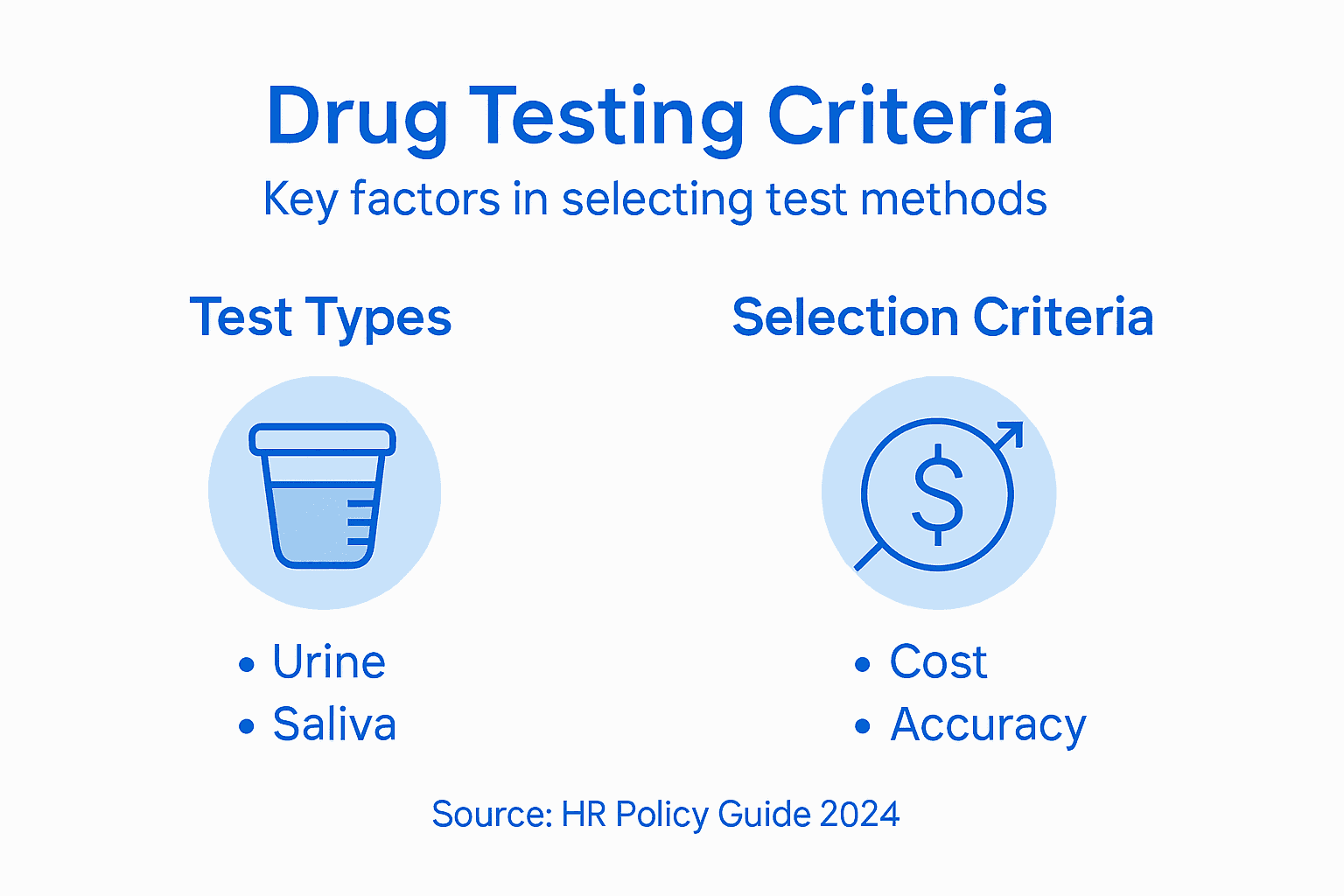
Here’s a comparison of common drug testing methods, highlighting their key characteristics:
| Test Method | Detection Window | Invasiveness | Typical Use Case |
|---|---|---|---|
| Urine | 2-5 days | Moderate | Pre-employment, random screening |
| Blood | Up to 24 hours | High | Post-accident, reasonable suspicion |
| Hair | Up to 90 days | Low | Long-term substance use history |
| Saliva | 24-48 hours | Low | Return-to-duty, recent use detection |
| Breath | Hours | Very Low | Alcohol testing, immediate results |
Pro tip: Develop a standardized drug testing protocol that clearly outlines the specific testing methods, substances screened, and potential consequences, ensuring transparency and fairness for all employees.
Key Legal Standards and 2026 Changes
Workplace drug testing is undergoing significant legal transformations, with federal laws reshaping employer approaches to substance screening and employee rights. The complex regulatory landscape continues to evolve, challenging organizations to maintain compliance while respecting individual privacy and accommodating changing societal norms around substance use.
The Drug-Free Workplace Act and Americans with Disabilities Act provide foundational guidelines, but emerging marijuana legalization and potential federal rescheduling create unprecedented complexity for employers. Marijuana drug testing regulations are particularly nuanced, with state laws increasingly limiting employer discretion in disciplinary actions related to cannabis use. Organizations must carefully navigate these shifting legal standards, recognizing that blanket prohibition policies may no longer be legally defensible.
Key legal considerations for 2026 include understanding state-specific marijuana laws, recognizing medical cannabis protections, and developing flexible policies that balance workplace safety with employee rights. Employers must remain vigilant about potential federal policy changes, particularly regarding cannabis classification and workplace testing standards. This requires ongoing legal consultation and proactive policy adaptation to ensure compliance and minimize potential litigation risks.
Pro tip: Consult with employment law specialists annually to review and update drug testing policies, ensuring alignment with the latest federal and state regulatory developments.
Implementing and Documenting Workplace Testing
Effective workplace drug testing requires a comprehensive and meticulously structured approach that goes far beyond simple screening procedures. Workplace drug testing programs demand careful planning, precise documentation, and consistent implementation to ensure legal compliance and organizational integrity.
Employers must develop robust protocols that address every aspect of the testing process, from initial policy communication to result management. Federal drug-free workplace laws mandate specific documentation requirements, including detailed records of testing procedures, consent forms, sample collection protocols, and laboratory analysis results. Critical elements include maintaining strict confidentiality, using certified testing laboratories, and ensuring transparent communication with employees about testing processes and potential consequences.
Successful implementation involves multiple strategic components: developing clear written policies, conducting employee training, selecting appropriate testing methods, and establishing consistent consequences for policy violations. Organizations must create comprehensive documentation that demonstrates a standardized approach, protecting both employer interests and employee rights. This includes maintaining detailed records of testing rationales, collection procedures, chain of custody for samples, and result interpretations, while simultaneously protecting individual privacy and adhering to legal standards.
Pro tip: Develop a comprehensive written drug testing policy manual that outlines every procedural detail, ensuring consistency and legal defensibility in your workplace testing approach.
Employer Obligations and Compliance Risks
Employers face increasingly complex legal landscapes when implementing drug testing policies, with workplace drug use implications extending far beyond simple screening procedures. Understanding the intricate balance between organizational safety and employee rights is critical for developing defensible and effective testing strategies.
Federal drug-free workplace regulations mandate specific compliance requirements that vary across industries and jurisdictions. Critical obligations include maintaining uniform policy application, respecting Americans with Disabilities Act protections, and implementing consistent testing protocols. Employers must navigate potential discrimination claims, privacy concerns, and wrongful termination risks while simultaneously protecting workplace safety and productivity.
Comprehensive risk management requires a multifaceted approach that goes beyond standard testing procedures. This includes developing clear written policies, conducting regular employee training, maintaining strict confidentiality protocols, and staying current with evolving legal standards. Organizations must carefully document testing rationales, ensure proper sample handling, and create transparent communication channels that protect both organizational interests and individual employee rights.
This summary outlines potential compliance risks and the recommended mitigation strategy:
| Compliance Risk | Description | Risk Reduction Strategy |
|---|---|---|
| Discrimination claims | Inconsistent policy enforcement may lead to lawsuits | Standardized procedures and documentation |
| Privacy violations | Unauthorized disclosure of results breaches confidentiality | Strong data protection protocols |
| Regulatory changes | Evolving laws could render policies outdated | Annual policy reviews with legal experts |
| Improper sample handling | Mishandling can invalidate test results | Chain-of-custody training for staff |
Pro tip: Conduct annual legal reviews of your drug testing policies with employment law specialists to ensure ongoing compliance and minimize potential litigation risks.
Avoiding Common Mistakes and Misunderstandings
Workplace drug testing requires nuanced understanding and strategic implementation to avoid critical errors that could expose organizations to significant legal risks. Drug testing workplace challenges demonstrate the complexity of creating comprehensive policies that protect both organizational interests and employee rights.
Federal workplace drug testing regulations highlight several common pitfalls employers must carefully navigate. These include inconsistent policy enforcement, inadequate employee communication, and failure to understand legal protections like the Americans with Disabilities Act. Organizations frequently misunderstand the scope of testing, leading to potential discrimination claims, privacy violations, and unnecessary legal disputes.
Effective drug testing strategies require a holistic approach that goes beyond simple screening procedures. Critical considerations include maintaining consistent testing protocols, respecting individual privacy, staying current with evolving state and federal regulations, and developing clear, transparent communication channels. Employers must carefully balance workplace safety concerns with employee rights, ensuring that testing policies are fair, scientifically sound, and legally defensible across different workplace contexts.
Pro tip: Develop a comprehensive drug testing policy review process that involves legal counsel, HR professionals, and periodic external audits to identify and mitigate potential compliance risks.
Ensure Your Drug Testing Policies Meet Every Legal and Safety Standard
Navigating the complexities of drug testing policies requires trusted, compliant solutions tailored to your workplace needs. Whether you face challenges with legal compliance, selecting the right testing methods, or ensuring thorough documentation, our platform provides you with reliable tools to meet these demands. CountryWideTesting.com partners with certified laboratories meeting SAMHSA, ISO, CLIA, and CAP standards so you can confidently implement policies that protect both your organization and your employees.
Take control now by choosing from our wide array of urine and mouth swab drug tests or exploring our specialized lab testing services designed to fit your compliance requirements. Visit our comprehensive drug and alcohol testing services to find the exact solutions that align with your workplace safety goals and evolving legal standards.
Don’t risk costly compliance errors or employee misunderstandings. Act today to build a trusted, transparent drug testing program with help from CountryWideTesting.com. Explore our full range of testing options and expert resources to safeguard your business and uphold workplace safety.
Frequently Asked Questions
What are the key elements of a drug testing policy for employers?
Effective drug testing policies should include clear guidelines on testing procedures, substances screened, consequences of positive results, and employee rights, taking into account state laws and industry-specific regulations.
What types of drug tests are commonly used in workplace regulations?
Common drug testing methods include urine, blood, hair, saliva, and breath tests, each with varying detection windows, invasiveness, and typical use cases depending on the context of testing.
How can employers ensure compliance with drug testing laws?
Employers can ensure compliance by understanding federal and state regulations, consulting legal professionals, developing standardized procedures, and regularly reviewing their drug testing policies to adapt to legal changes.
What are the potential risks associated with workplace drug testing?
Potential risks include discrimination claims, privacy violations, and regulatory changes. Employers must implement consistent testing protocols and maintain strict confidentiality to mitigate these risks.