
Employer Drug Screening: Impact on Workplace Safety
Nearly one in four American workers test positive for drugs in certain industries, underscoring why drug screening is critical for today’s Human Resources professionals. In environments where safety and liability matter, consistent screening policies safeguard employees and reduce organizational risk exposure. This guide clarifies the types, processes, and legal aspects of employer drug testing so you can confidently build compliance while protecting your workforce.
Table of Contents
- What Employer Drug Screening Involves
- Key Types Of Workplace Drug Tests
- How Employer Drug Screening Works
- Legal And Regulatory Requirements For Testing
- Risks, Compliance, And Employer Liabilities
Key Takeaways
| Point | Details |
|---|---|
| Comprehensive Drug Testing Policies | Employers should develop clear drug testing policies that outline procedures and employee rights while ensuring compliance with legal standards. |
| Variety of Testing Methods | Various testing methods exist, such as urine and hair tests, each with different detection windows and applications. |
| Legal and Regulatory Compliance | Employers must navigate complex federal and state regulations that protect employee privacy rights while maintaining workplace safety. |
| Mitigating Legal Risks | Consistent application of drug testing policies is crucial to minimize potential liabilities related to discrimination and privacy violations. |
What Employer Drug Screening Involves
Employer drug screening is a systematic process designed to identify potential substance use among workers that could compromise workplace safety and productivity. Typically, these screening protocols involve collecting biological samples like urine, hair, or saliva to test for the presence of illegal drugs, prescription medications, and alcohol. Workplace safety policies often require multiple types of testing throughout an employee’s tenure.
The drug screening process generally includes several key stages. Pre-employment screenings are standard, where job candidates must pass a drug test before receiving a job offer. Employers also conduct random testing, post-accident testing, reasonable suspicion testing, and periodic screenings for employees in safety-sensitive positions. Federal regulations mandate specific requirements for industries like transportation, aviation, and federal contracting.
Companies typically develop comprehensive drug testing policies that outline the procedures, consequences, and legal protections for employees. These policies must balance workplace safety concerns with employee privacy rights and comply with state and federal guidelines. Common substances tested include marijuana, cocaine, amphetamines, opioids, and phencyclidine (PCP). The screening methods can vary based on the industry, job role, and organizational risk tolerance.
Pro tip: Develop a clear, written drug screening policy that provides transparency and consistent application across all employee levels to minimize potential legal challenges and maintain workplace safety standards.
Key Types of Workplace Drug Tests
Employers utilize multiple types of drug testing methods to ensure workplace safety and monitor potential substance use among employees. Workplace drug testing techniques range from invasive blood tests to non-invasive oral fluid screenings, each offering unique advantages for detecting different substances and tracking usage patterns. The most common testing methods include urine, hair, blood, saliva, and breath alcohol tests, each with distinct detection windows and accuracy levels.
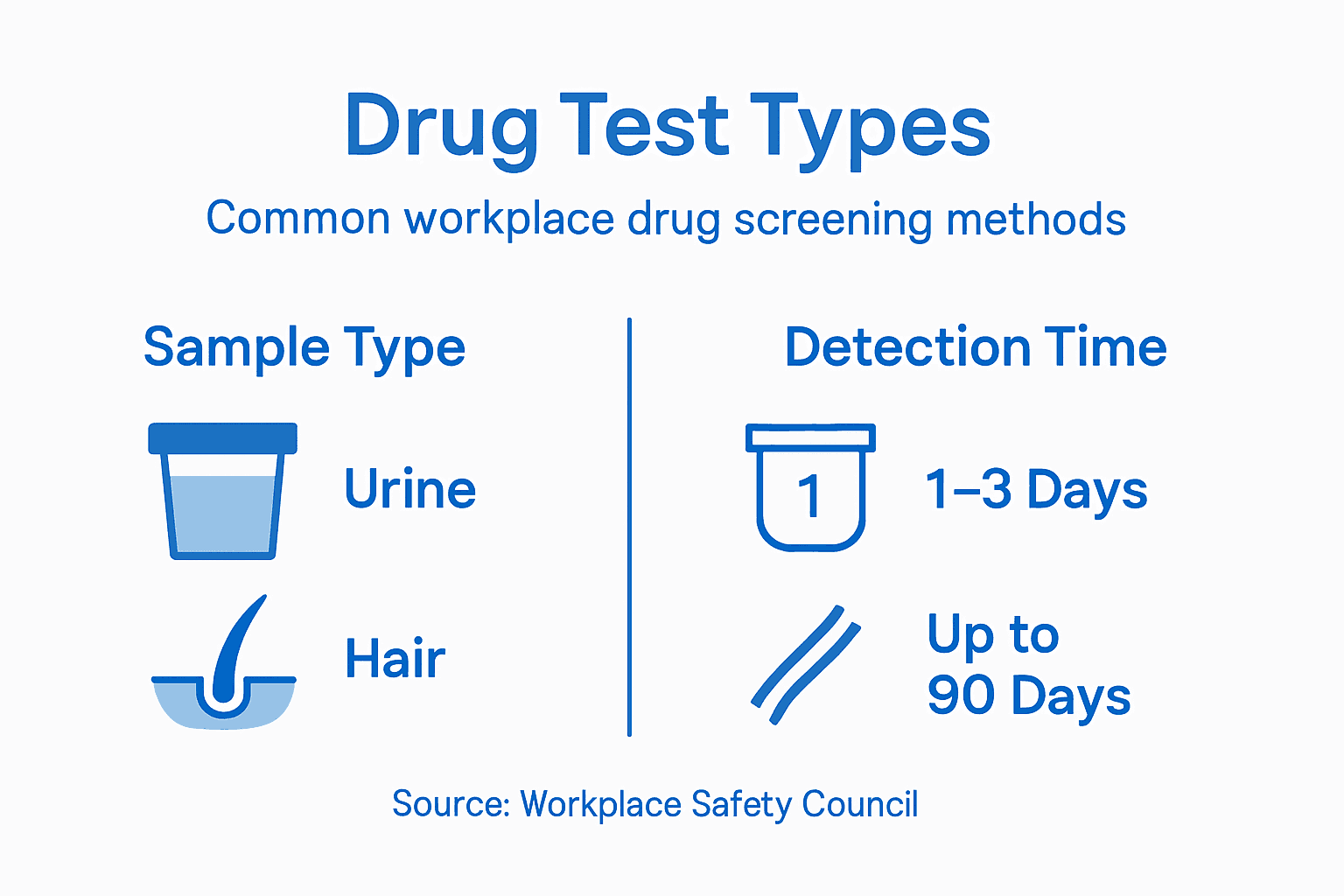
Urine drug tests remain the most prevalent screening method due to their cost-effectiveness and comprehensive detection capabilities. These tests can identify multiple substances including marijuana, cocaine, amphetamines, opioids, and phencyclidine (PCP). Clinical drug screening protocols typically examine urine samples for recent and historical drug use, providing employers with a reliable snapshot of an employee’s potential substance consumption.
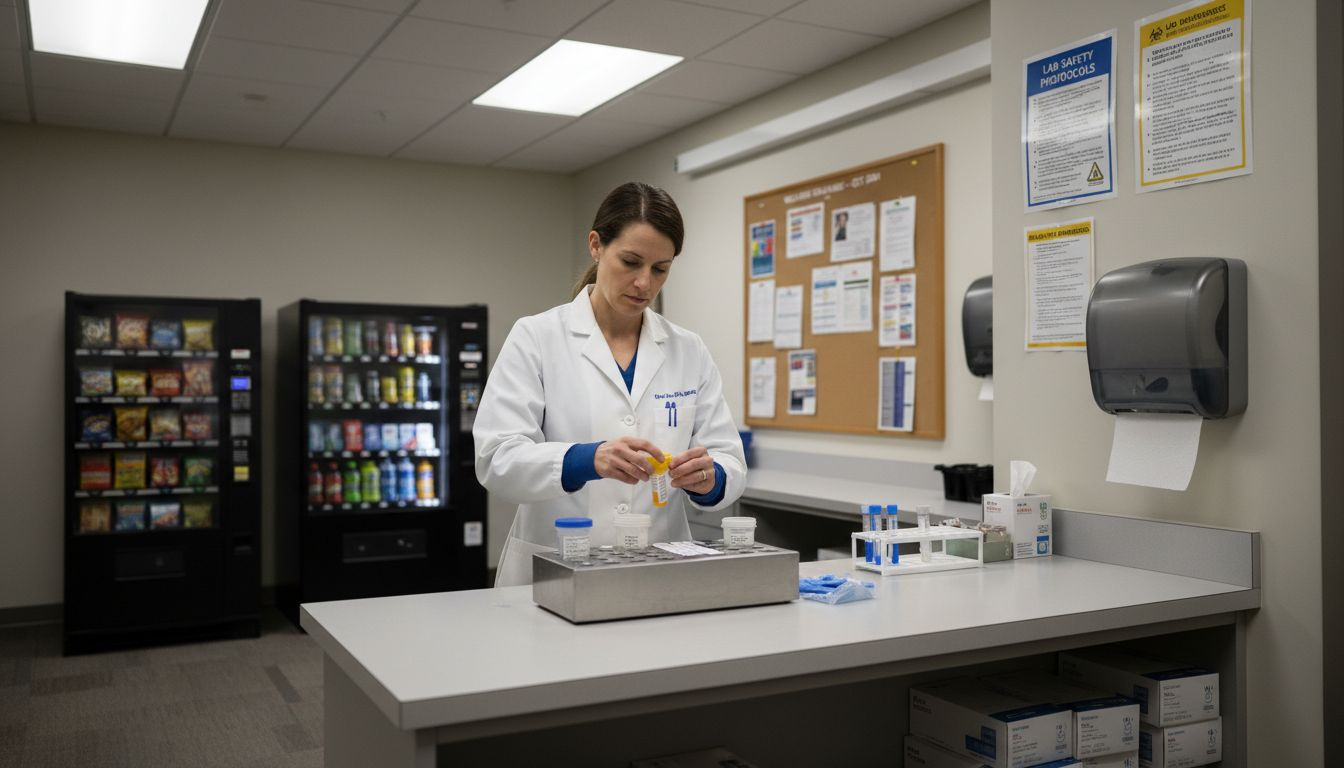
Other important drug testing methods include hair follicle tests, which can detect drug use up to 90 days prior, and oral fluid tests that provide a shorter but more recent detection window of approximately 24-48 hours. Blood tests offer the most precise measurement of current substance levels but are more invasive and expensive. Breath alcohol tests are specifically designed to measure current alcohol intoxication levels, making them crucial for safety-sensitive positions like transportation and heavy machinery operation.
Here’s a summary comparing the main workplace drug testing methods:
| Testing Method | Detection Window | Advantages | Typical Use Cases |
|---|---|---|---|
| Urine | Up to 7 days | Cost-effective, broad coverage | Pre-employment, random |
| Hair | Up to 90 days | Detects long-term use | Safety-sensitive jobs |
| Oral Fluid/Saliva | 24-48 hours | Non-invasive, recent use | Post-accident, routine |
| Blood | Hours to 1 day | High accuracy, current level | Reasonable suspicion |
| Breath Alcohol | Immediate result | Measures real-time intoxication | Transportation, machinery |
Pro tip: Develop a standardized drug testing policy that clearly outlines which testing methods will be used, under what circumstances, and communicates these expectations transparently to all employees to ensure fair and consistent implementation.
How Employer Drug Screening Works
Employer drug screening is a structured process designed to systematically detect potential substance use among employees. Workplace drug testing procedures typically involve several critical stages, beginning with sample collection by trained medical professionals in designated clinical or workplace settings. The collection process is carefully managed to ensure accuracy, privacy, and compliance with legal standards, with specimens carefully labeled and tracked to maintain chain of custody.
Once collected, samples are transported to certified laboratories for comprehensive analysis. Trained technicians examine the specimens for specific drug metabolites, looking for evidence of recent or historical substance use across multiple categories including marijuana, cocaine, amphetamines, opioids, and other controlled substances. Drug screening implementation guidelines require strict scientific protocols to ensure reliable and defensible results, with multiple verification steps to prevent false positives.
The final stage involves careful review of laboratory results by medical review officers who interpret the findings, considering potential legitimate medical explanations for detected substances. Employers receive confidential reports that outline whether an employee has passed or failed the screening, with detailed protocols for addressing positive results. These may include opportunities for explanation, potential rehabilitation referrals, or employment consequences depending on the organization’s specific drug-free workplace policies.
Pro tip: Develop a comprehensive written drug screening policy that clearly communicates testing procedures, consequences, and employee rights to ensure transparency and consistent application across your organization.
Legal and Regulatory Requirements for Testing
Employer drug testing is governed by a complex web of federal and state regulations that balance workplace safety with employee privacy rights. Federal workplace drug testing laws mandate specific requirements for certain industries, particularly those involving public safety, transportation, and government contracting. The Drug-Free Workplace Act of 1988 requires federal contractors and grantees to maintain drug-free workplace policies, establishing a framework for comprehensive substance screening programs.
The legal landscape for drug testing varies significantly across different states, with no comprehensive federal law regulating private sector testing uniformly. Employers must navigate a nuanced legal environment that includes considerations of privacy, discrimination protections, and procedural fairness. State-specific workplace testing regulations create additional complexity, with some states imposing strict limitations on testing methods, timing, and employee notification requirements.
Key legal considerations include compliance with the Americans with Disabilities Act (ADA), which provides protections for recovering addicts and employees with legitimate medical prescriptions. Employers must carefully balance their right to maintain a safe workplace with legal requirements to accommodate medical conditions and protect employee privacy. This includes maintaining strict confidentiality of test results, ensuring proper chain of custody for specimens, and providing clear, written policies that outline testing procedures, consequences, and employee rights.
Below is a quick reference to major legal considerations for employer drug testing:
| Regulatory Factor | Description | Business Impact |
|---|---|---|
| ADA Compliance | Protects medical conditions | Prevents discrimination |
| State Regulations | Vary by location, impact procedures | Policy customization |
| Confidentiality | Requires privacy for test results | Reduces legal exposure |
| Federal Laws | Mandates for certain industries | Obligatory for contracts |
Pro tip: Consult with a local employment law attorney to develop a legally compliant drug testing policy that meets both federal guidelines and specific state requirements for your workplace.
Risks, Compliance, and Employer Liabilities
Employer drug testing carries substantial legal and financial risks that require careful navigation of complex regulatory requirements. Federal workplace drug testing guidelines emphasize the critical importance of implementing consistent, fair, and legally defensible screening protocols. Companies face potential lawsuits for discrimination, invasion of privacy, or wrongful termination if their drug testing procedures are not meticulously designed and uniformly applied.
The primary legal risks stem from inconsistent policy enforcement and failure to protect employee rights. Employers must develop comprehensive drug testing strategies that balance workplace safety with individual privacy protections. This includes establishing clear written policies, maintaining strict confidentiality of test results, and ensuring testing procedures are applied equally across all employee levels. Potential liability areas include improper test administration, discriminatory implementation, and inappropriate handling of medical information related to substance use or rehabilitation.
Companies must also navigate the complex intersection of state and federal regulations, which can vary significantly across different jurisdictions. Workplace testing legal challenges require employers to stay informed about evolving legal standards, particularly regarding reasonable suspicion testing, medical accommodation requirements, and protections for employees with documented substance abuse disorders. Proactive legal compliance involves regular policy reviews, employee training, and consultation with employment law experts to minimize potential litigation risks.
Pro tip: Develop a comprehensive, written drug testing policy that is reviewed annually by legal counsel and consistently applied across your entire organization to reduce potential liability and ensure fair treatment of all employees.
Protect Your Workplace With Trusted Drug Screening Solutions
Maintaining workplace safety requires a reliable and compliant drug screening program that meets all federal and state regulations as discussed in the article. You need consistent, legally defensible testing methods like urine and oral fluid screens, along with transparent policies to minimize your risk of lawsuits and ensure employee privacy. CountryWideTesting.com understands these challenges and offers a full range of drug and alcohol testing services designed for employers who want to uphold safety standards without compromising compliance.
Explore our extensive selection of FDA-approved urine and mouth swab drug tests and partner with licensed laboratories certified to SAMHSA, ISO, CLIA, and CAP standards. Whether you require pre-employment, random, or post-accident testing, you can access convenient online ordering and dependable lab processing. Get started today to create a drug screening policy that protects your workforce and your business at CountryWideTesting.com. Learn more about how our drug testing services can help you build a safer workplace now.
Frequently Asked Questions
What are the main types of drug tests used by employers?
Employers commonly use urine, hair, blood, saliva, and breath alcohol tests. Each method has its own detection window and suitability for different testing scenarios.
How does the drug screening process work for employees?
The drug screening process typically involves sample collection by trained professionals, laboratory analysis, and a review of results by medical review officers to ensure accuracy and confidentiality.
What legal regulations should employers consider for drug testing?
Employers must navigate federal and state regulations, including the Americans with Disabilities Act (ADA) and specific state laws, to ensure compliance and protect employee rights.
What are the risks associated with employer drug testing?
Potential risks include legal liability from inconsistent policy enforcement, invasion of privacy claims, and wrongful termination lawsuits if testing procedures are not properly implemented.