
Why Choose Urine Testing: Ensuring Safe Workplaces
Managing employee safety can feel challenging when workplace risks include substance abuse concerns. For American companies, urine drug testing stands out as a reliable way to detect a range of controlled substances that could impact performance and workplace security. HR managers must balance effective screening protocols with compliance demands, and this guide offers practical insight on how urine drug testing supports safer work environments while minimizing common pitfalls and confusion.
Table of Contents
- Urine Drug Testing Explained For Employers
- Types Of Urine Drug Tests And Detection Windows
- How Urine Testing Ensures Compliance And Safety
- Cost, Speed, And Accuracy Versus Alternatives
- Legal Considerations And Regulatory Standards
Key Takeaways
| Point | Details |
|---|---|
| Urine Drug Testing Benefits | Employers utilize urine drug testing to enhance workplace safety, reduce liability, and ensure productivity. |
| Testing Protocols | Effective drug testing programs involve clear policies, rigorous sample collection, and certified laboratory analysis. |
| Compliance and Legal Requirements | Employers must adhere to federal regulations and maintain employee confidentiality while conducting drug tests. |
| Cost-Effectiveness | Urine testing is a cost-efficient method that balances speed and accuracy compared to other testing options. |
Urine Drug Testing Explained for Employers
Employers increasingly rely on urine drug testing as a critical strategy for maintaining workplace safety and productivity. This screening method allows organizations to detect potential substance abuse that could compromise employee performance, workplace security, and overall operational effectiveness.
Urine drug tests are the most comprehensive screening method, capable of identifying multiple substances including amphetamines, cocaine, marijuana, opioids, and PCP. The process involves collecting a biological sample that is then analyzed in a certified laboratory to detect drug metabolites. Unlike other testing methods, urine screening provides a balanced approach by offering a reasonable detection window while remaining cost-effective and minimally invasive.
The primary purposes of workplace urine drug testing extend beyond simple compliance. Employers implement these programs to:
- Reduce workplace accidents
- Minimize potential liability
- Ensure employee safety
- Maintain high productivity standards
- Create a drug-free work environment
Comprehensive Testing Protocols
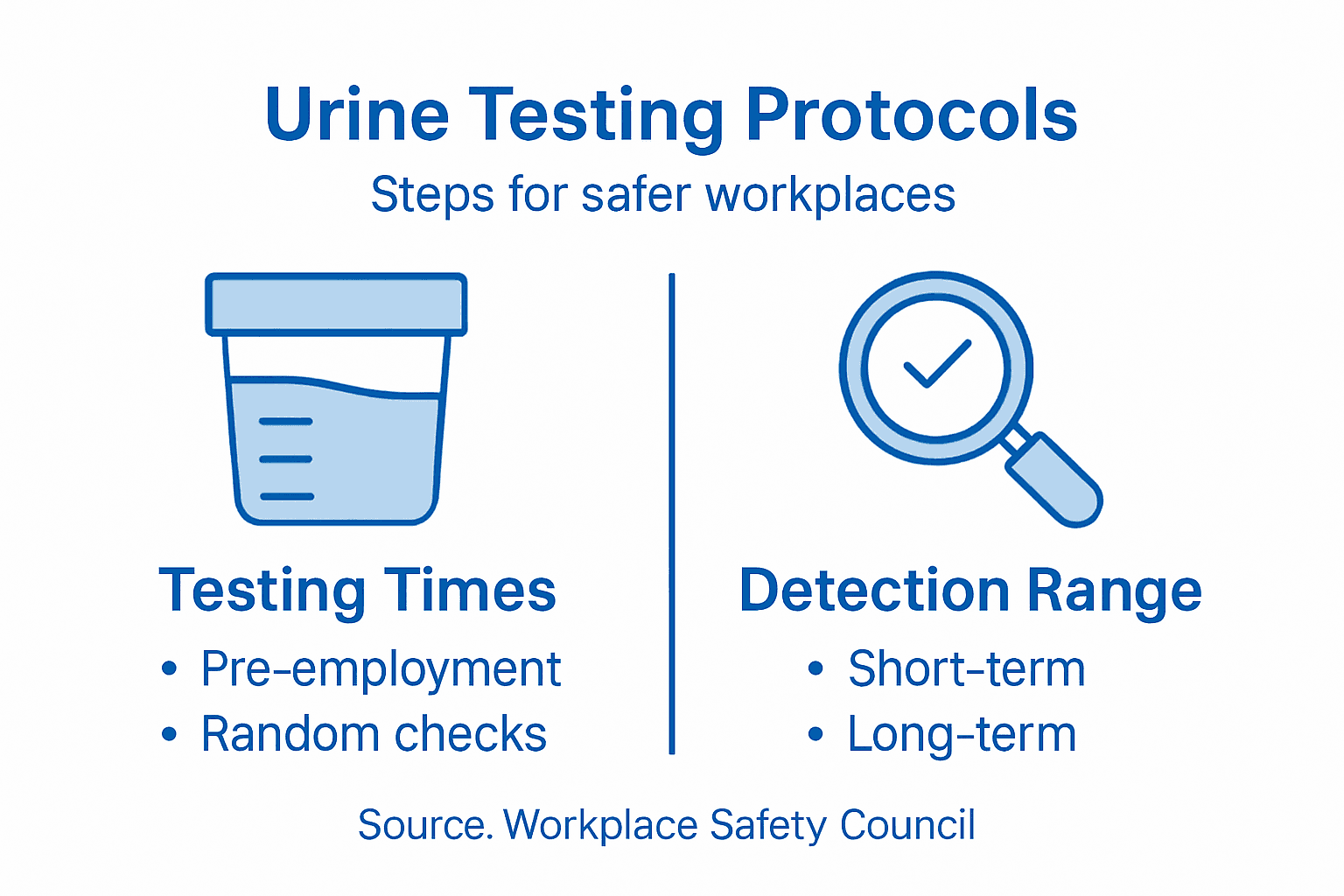
Most organizations conduct drug tests during specific scenarios: pre-employment screening, random checks, post-accident investigations, or when reasonable suspicion exists. The testing process typically involves a trained professional collecting the sample under controlled conditions to prevent tampering or misrepresentation.
Pro tip: Develop clear, consistent drug testing policies that are communicated transparently to all employees to ensure understanding and compliance.
Types of Urine Drug Tests and Detection Windows
Employers have multiple options when implementing urine drug testing protocols. The most common approach involves a two-step screening process that provides comprehensive and reliable results. Initially, an immunoassay screening identifies potential drug presence, followed by a confirmatory test to validate initial findings and eliminate false positives.
Types of Urine Drug Tests
The primary urine drug testing methods include:
- Immunoassay Screening: A quick, cost-effective initial test that uses antibodies to detect drug metabolites
- Gas Chromatography-Mass Spectrometry (GC-MS): A highly precise confirmatory test that offers definitive identification of specific substances
- Enzyme Multiplied Immunoassay Technique (EMIT): Another screening method that detects various drug classes
Detection Windows for Common Substances
Detection times vary significantly depending on the specific substance, individual metabolism, and frequency of use. Typical detection windows include:
- Marijuana: 3-30 days
- Cocaine: 2-10 days
- Amphetamines: 2-5 days
- Opioids: 2-4 days
- Alcohol: 12-48 hours
Modern urine drug testing continues to evolve, with advanced analytical approaches improving both sensitivity and specificity. Employers must understand that detection windows can fluctuate based on individual factors such as hydration, body mass, and frequency of substance use.
Pro tip: Work with certified laboratory partners who utilize multiple testing methods to ensure the most accurate and reliable drug screening results.
How Urine Testing Ensures Compliance and Safety
Workplace Safety Protocols demand robust mechanisms for identifying potential substance abuse risks. Standardized urine testing procedures provide employers with a critical tool for maintaining a safe, productive work environment by detecting recent drug use that could compromise employee performance and organizational safety.

Key Compliance Mechanisms
Effective urine drug testing ensures organizational safety through several essential components:
- Rigorous sample collection protocols
- Documented chain of custody
- Certified laboratory analysis
- Consistent testing procedures
- Comprehensive documentation
The testing process goes beyond simple screening. It involves multiple safeguards designed to protect both employee rights and organizational interests. Employers utilize these protocols to:
Here is a quick reference for the business impact of key urine drug testing features:
| Feature or Protocol | Business Impact | Reason |
|---|---|---|
| Certified Lab Analysis | Increases reliability of results | Reduces risk of false positives |
| Documented Chain of Custody | Supports litigation defense | Ensures evidence integrity |
| Clear Testing Policies | Improves employee trust | Minimizes misunderstanding and disputes |
| Random Testing Programs | Deters substance use at work | Unpredictability discourages drug abuse |
- Identify potential substance abuse risks
- Prevent workplace accidents
- Support employee rehabilitation
- Maintain regulatory compliance
- Protect overall workplace productivity
Modern workplace drug testing programs have evolved to balance comprehensive screening with respect for individual privacy. Validated analytical methods ensure data reliability while supporting critical decisions related to employment, safety, and potential intervention strategies.
Use this table to understand how employer goals align with drug testing protocols:
| Employer Goal | Supporting Testing Protocol | Value to Organization |
|---|---|---|
| Accident Prevention | Post-incident drug testing | Reduces recurrence and liability |
| Regulatory Compliance | Adherence to federal standards | Avoids legal penalties |
| Supporting Rehabilitation | Confirmatory testing and reporting | Guides employee assistance efforts |
| Privacy Protection | Confidential result management | Maintains workforce trust |
Pro tip: Develop a transparent drug testing policy that clearly communicates procedures, consequences, and support resources to maintain employee trust and organizational integrity.
Cost, Speed, and Accuracy Versus Alternatives
Employers seeking efficient drug screening methods find urine testing offers significant advantages over alternative testing approaches. Unlike more invasive methods, urine screening provides a balanced solution that maximizes cost-effectiveness, speed, and diagnostic reliability across multiple workplace contexts.
Comparative Testing Method Analysis
A comprehensive comparison of drug testing methodologies reveals critical distinctions:
| Testing Method | Cost | Speed | Invasiveness | Detection Window |
|---|---|---|---|---|
| Urine Testing | Low | Fast | Non-invasive | 2-7 days |
| Blood Testing | High | Slow | Invasive | 12-24 hours |
| Hair Follicle | Medium | Slow | Non-invasive | 90 days |
| Saliva Testing | Medium | Fast | Non-invasive | 24-48 hours |
Technology and Accuracy Improvements
Office-based urinalysis techniques continue advancing, addressing historical accuracy concerns. Modern approaches integrate sophisticated screening protocols that minimize false positives while maintaining rapid processing times. These technological refinements enable employers to conduct comprehensive drug screenings without sacrificing precision or incurring excessive costs.
The primary advantages of urine testing include:
- Lower per-test expenses
- Quick sample collection
- Minimal employee discomfort
- Extensive substance detection capabilities
- Established regulatory compliance standards
Pro tip: Invest in certified laboratory partnerships that utilize advanced screening technologies to maximize the accuracy and reliability of your drug testing program.
Legal Considerations and Regulatory Standards
Employers must navigate a complex landscape of federal drug testing regulations that govern workplace screening procedures. These legal frameworks establish critical guidelines designed to protect both organizational interests and employee rights, ensuring fair and standardized drug testing practices across different industries.
Key Legal Requirements
Workplace drug testing compliance involves multiple critical components:
- Obtaining employee consent
- Maintaining strict confidentiality
- Using certified laboratory testing facilities
- Following specific collection protocols
- Avoiding discriminatory testing practices
Specific industry sectors have additional regulatory requirements. For instance, transportation-related employers must adhere to stringent federal testing standards that dictate precise collection, documentation, and verification procedures. These regulations aim to create uniform standards that minimize potential legal challenges and ensure workplace safety.
Compliance Strategies
Successful legal compliance requires a comprehensive approach:
- Develop clear, written drug testing policies
- Train HR personnel on current regulations
- Establish consistent testing procedures
- Document all testing processes meticulously
- Stay updated on changing federal and state laws
The legal landscape surrounding drug testing continues to evolve, with increasing emphasis on balancing employer safety concerns with employee privacy rights. Organizations must remain proactive in understanding and implementing current regulatory standards.
Pro tip: Consult with legal professionals specializing in employment law to review and validate your drug testing policies annually to ensure ongoing compliance and minimize potential litigation risks.
Ensure Workplace Safety with Trusted Urine Drug Testing Solutions
Maintaining a drug-free workplace is essential to reducing accidents, ensuring compliance, and protecting your team’s well-being. This article highlights the challenges employers face with urine drug testing protocols, including detection accuracy, legal compliance, and cost effectiveness. At CountryWideTesting.com, we understand these critical pain points and provide reliable urine drug tests and lab testing services that meet SAMHSA, ISO, CLIA, and CAP standards.
Our comprehensive solutions support employers by offering easy access to certified laboratory partnerships and a diverse range of screening products designed to detect substances efficiently and fairly. Stay ahead in workplace safety and compliance with proven testing methods that prioritize both accuracy and employee trust.
Take the next step toward a safer workplace today. Explore the full range of urine drug testing options and ensure your drug testing program meets the highest standards. Visit CountryWideTesting.com now and secure the trusted support you need to protect your workforce and your business.
Frequently Asked Questions
What are the advantages of using urine drug testing in the workplace?
Urine drug testing offers a cost-effective, non-invasive screening method that can detect a wide range of substances. It helps maintain workplace safety by identifying potential substance abuse, which can prevent accidents and promote productivity.
How does the urine drug testing process work?
The process involves collecting a urine sample under controlled conditions and sending it to a certified laboratory for analysis. A two-step approach is typically used: an initial immunoassay screening followed by a confirmatory test to ensure accurate results.
What substances can urine drug tests detect?
Urine drug tests can identify multiple substances, including amphetamines, cocaine, marijuana, opioids, and PCP. The detection window varies depending on the substance and individual factors such as metabolism and usage frequency.
How can employers ensure compliance with urine drug testing regulations?
Employers can ensure compliance by developing clear drug testing policies, obtaining employee consent, using certified laboratories, and documenting all procedures thoroughly. Regular training for HR personnel on current regulations is also essential.