
What Is At-Home Drug Screening for HR Compliance
Maintaining a safe workplace can quickly become complicated when questions arise about employee substance use. For human resource managers across the United States and Canada, reliable at-home drug screening offers a practical first step toward protecting both organizational reputation and compliance with federal regulations. By understanding the strengths and limitations of these screening tools, you can confidently establish fair, effective policies while supporting your team and reducing risk.
Table of Contents
- At-Home Drug Screening Explained Clearly
- Types of At-Home Drug Tests Compared
- Step-By-Step Process for Accurate Screening
- Legal Compliance and Workplace Responsibilities
- Benefits and Limitations for Employers
Key Takeaways
| Point | Details |
|---|---|
| Initial Screening Tool | At-home drug tests provide quick preliminary results but require laboratory confirmation for accuracy. |
| Testing Methodologies | Urine-based tests offer longer detection windows, while saliva tests are easier to administer and detect recent use. |
| Legal Compliance | Employers must obtain consent and maintain confidentiality, ensuring fair application of drug screening policies. |
| Risk vs. Benefit | While drug screening enhances workplace safety, it poses legal complexities and potential privacy concerns for employees. |
At-Home Drug Screening Explained Clearly
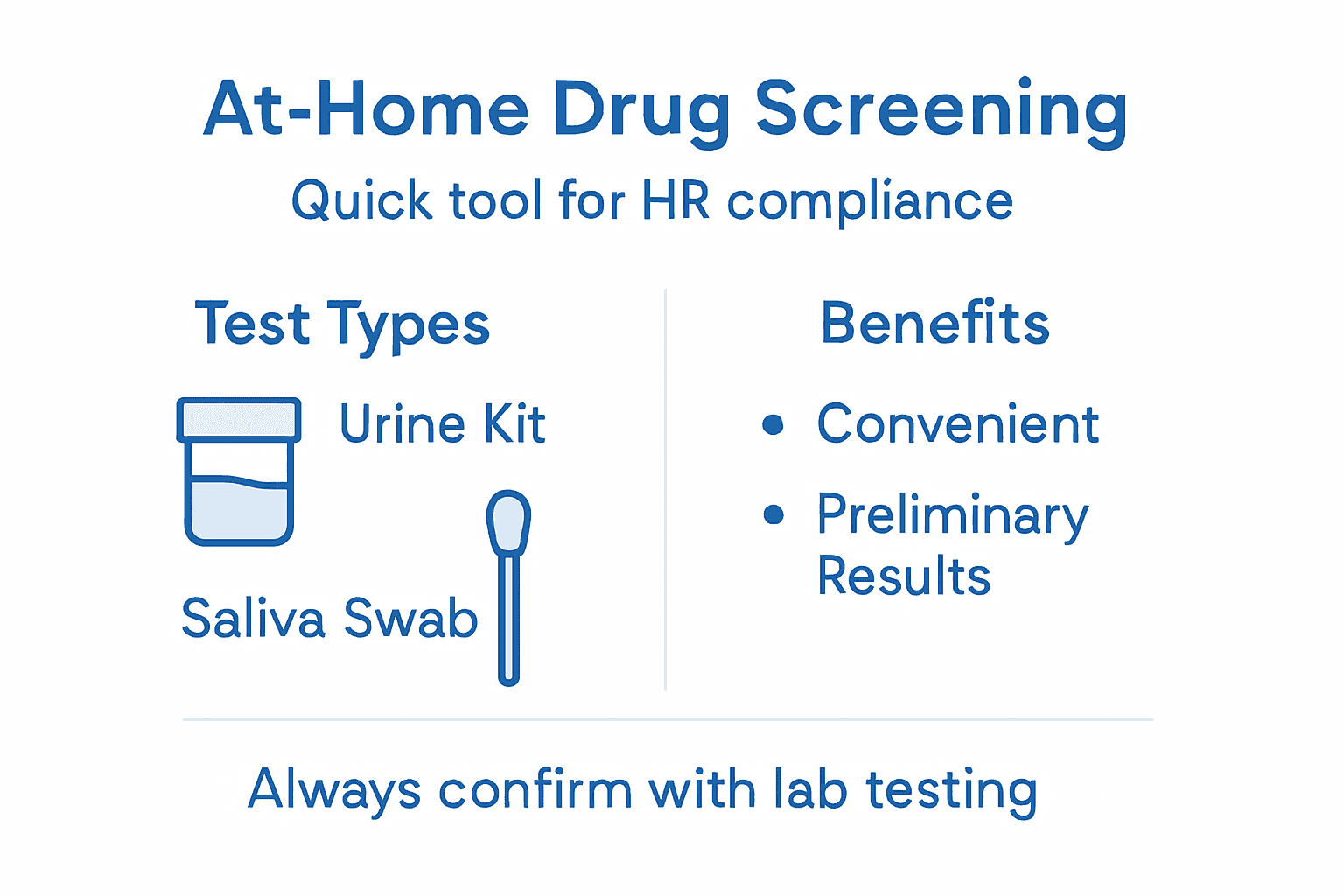
At-home drug screening is a crucial tool for employers seeking to maintain workplace safety and regulatory compliance. These screening methods involve using validated testing kits that detect the presence of various substances in biological samples like urine or saliva. Unlike traditional laboratory testing, at-home screenings provide quick, preliminary results that help organizations make informed decisions about employee substance use.
The core mechanism of at-home drug tests involves qualitative immunoassay screening which rapidly identifies potential drug metabolites. These tests typically screen for multiple substances simultaneously, including:
- Marijuana (THC)
- Cocaine
- Amphetamines
- Opioids
- Benzodiazepines
- Methamphetamines
While these tests offer convenience, they are not definitive proof of drug use. Preliminary screenings require subsequent laboratory confirmation to validate initial results. The FDA guidelines recommend two-phase testing to ensure accuracy and mitigate potential false positives.
Employers must understand that at-home drug tests serve as initial screening tools, not as conclusive evidence. These tests provide a quick snapshot of potential substance presence, helping organizations make preliminary risk assessments. Professional HR managers should always pair at-home screening results with professional laboratory confirmation to maintain legal and ethical standards.
Pro tip: Always establish clear written policies about drug testing procedures and potential consequences before implementing any screening program.
Types of At-Home Drug Tests Compared
At-home drug testing offers multiple approaches for employers to screen potential substance use, with different testing methodologies available designed to meet various organizational needs. The two primary categories of at-home drug tests are urine-based and saliva-based screenings, each with distinct characteristics and detection capabilities.
Urine-Based Drug Tests represent the most common at-home screening method, offering comprehensive substance detection:
- Wide range of drug metabolite detection
- Longer detection window (3-30 days)
- Ability to screen multiple substances simultaneously
- Generally more affordable option
- Recommended for comprehensive workplace screening
Saliva-Based Drug Tests provide an alternative screening approach with unique advantages:
- Minimally invasive collection process
- Shorter detection window (24-72 hours)
- Easier to administer on-site
- More difficult to manipulate
- Effective for detecting recent substance use
The FDA guidelines emphasize that these tests are preliminary screening tools requiring subsequent professional confirmation. Employers should understand that at-home tests provide initial insights, not definitive legal evidence of drug use.
Comparative Detection Windows:
- Marijuana: Urine (3-30 days), Saliva (24-72 hours)
- Cocaine: Urine (2-10 days), Saliva (1-2 days)
- Amphetamines: Urine (3-7 days), Saliva (24-48 hours)
Pro tip: Always cross-reference at-home test results with professional laboratory testing to ensure accuracy and maintain legal compliance.
Here is a side-by-side overview of the main differences between urine and saliva-based at-home drug tests:
| Criterion | Urine-Based Test | Saliva-Based Test |
|---|---|---|
| Sample Collection | Requires private restroom area | Can be done in open setting |
| Detection Window | Long (up to 30 days) | Short (up to 72 hours) |
| Administration Effort | More steps, may need supervision | Simple and quick process |
| Primary Use Case | Detects past substance use | Best for recent drug exposure |

Step-by-Step Process for Accurate Screening
Effective at-home drug screening requires a meticulous approach to ensure reliable results and maintain workplace safety standards. Accurate drug testing depends on precise sample collection and following standardized procedures that minimize potential errors and false positives.
Screening Process Steps:
- Prepare Testing Environment
- Select a clean, private area
- Gather all testing materials
- Review test instructions thoroughly
- Ensure proper lighting and workspace
- Sample Collection
- Follow manufacturer’s specific collection guidelines
- Use clean, uncontaminated collection containers
- Maintain proper temperature and handling protocols
- Minimize potential sample tampering
- Test Administration
- Carefully apply sample to testing device
- Wait specified development time
- Read results within recommended timeframe
- Document results immediately
Critical Considerations for Accurate Results:
- Verify test kit expiration date
- Maintain consistent room temperature
- Use chain of custody documentation
- Avoid interfering substances
- Confirm results with professional laboratory testing
Professional drug screening requires precision, documentation, and objective evaluation of results.
Pro tip: Train designated personnel in proper testing protocols to ensure consistent and legally defensible screening procedures.
Legal Compliance and Workplace Responsibilities
Workplace drug screening requires a delicate balance between ensuring organizational safety and protecting employee rights. Drug testing policies must navigate complex legal considerations that safeguard both employer interests and individual privacy protections.
Key Legal Requirements:
- Obtain explicit employee consent before testing
- Develop clear, written drug testing policies
- Apply testing procedures consistently and uniformly
- Maintain strict confidentiality of test results
- Provide opportunities for employee explanation or challenge
Employer Responsibilities in Drug Screening:
- Establish Transparent Policies
- Define exact testing circumstances
- Outline potential consequences of positive results
- Communicate policy to all employees
- Update policies periodically
- Ensure Fair Implementation
- Avoid discriminatory testing practices
- Apply screening equally across organizational levels
- Provide reasonable accommodations
- Respect employee medical privacy
Critical Compliance Considerations:
- Document every stage of testing process
- Train HR personnel in legal requirements
- Understand state and federal regulations
- Implement consistent disciplinary standards
- Offer employee assistance programs
Legal drug testing balances organizational safety with individual employee rights and requires meticulous procedural adherence.
Pro tip: Consult legal counsel to review drug testing policies annually and ensure ongoing compliance with evolving workplace regulations.
The table below summarizes key legal and HR considerations for workplace drug testing:
| Area | Best Practice Example | Risk if Overlooked |
|---|---|---|
| Consent | Obtain written employee consent | Potential legal action |
| Privacy | Store results securely, restrict access | Employee trust erosion |
| Policy Clarity | Provide clear consequences in writing | Policy disputes or misunderstandings |
| Staff Training | Regularly update HR and managers | Testing errors or bias |
Benefits and Limitations for Employers
Employers must carefully evaluate drug screening strategies, understanding both the significant advantages and potential drawbacks. Workplace drug screening programs offer complex organizational implications that require nuanced strategic planning and implementation.
Primary Benefits of Drug Screening:
- Enhance workplace safety
- Reduce potential workplace accidents
- Decrease employee absenteeism
- Improve overall productivity
- Demonstrate organizational commitment to health
Potential Limitations:
- Potential for false positive results
- Privacy concerns for employees
- Significant administrative overhead
- Complex legal compliance requirements
- Potential employee morale challenges
Comprehensive Screening Considerations:
- Safety Impact
- Identifies potential substance abuse risks
- Prevents accidents before they occur
- Protects organizational and employee well-being
- Legal Complexities
- Requires precise policy documentation
- Must follow state and federal regulations
- Demands consistent implementation
Effective drug screening balances organizational risk management with respect for individual employee rights.
Pro tip: Develop a holistic drug screening approach that combines testing with employee support programs and clear communication.
Simplify Your At-Home Drug Screening for HR Compliance Today
Managing workplace safety while respecting employee rights is a delicate challenge for HR professionals. This article highlights the need for reliable at-home drug screening methods that provide quick, preliminary results without sacrificing accuracy or legal compliance. If you are seeking trusted, easy-to-use testing solutions that align with FDA guidelines and protect your organization, CountryWideTesting.com offers the perfect starting point.
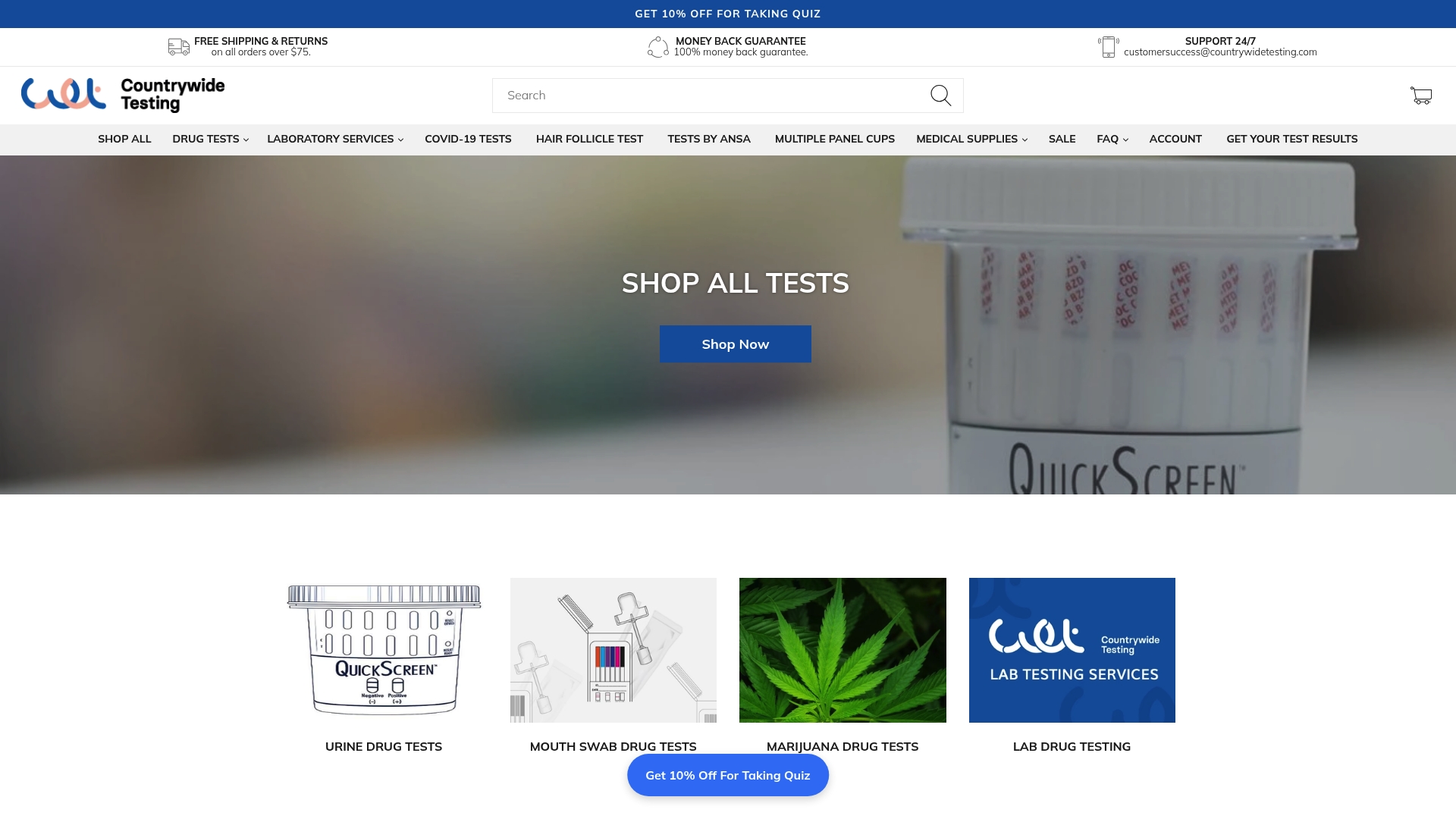
Discover a comprehensive selection of urine and saliva-based drug tests along with certified laboratory services that meet rigorous standards like SAMHSA and CLIA. With clear instructions and professional support, you can confidently implement screening programs that help you detect substances early, maintain legal integrity, and foster a safer workplace culture. Don’t wait to act on those important drug testing policies. Visit CountryWideTesting.com now to explore affordable test kits and lab options tailored to your needs.
Take the next step in protecting your business by choosing reliable at-home drug screening designed for HR compliance and peace of mind.
Frequently Asked Questions
What is at-home drug screening?
At-home drug screening involves using validated testing kits to detect the presence of various substances in biological samples like urine or saliva, providing quick preliminary results for employers.
How accurate are at-home drug tests?
At-home drug tests are initial screening tools that provide quick results but are not definitive proof of drug use. They require laboratory confirmation to ensure accuracy and mitigate false positives.
What types of substances can at-home drug tests detect?
At-home drug tests can typically screen for multiple substances simultaneously, including marijuana (THC), cocaine, amphetamines, opioids, benzodiazepines, and methamphetamines.
How should employers implement drug screening policies?
Employers should establish clear written policies regarding drug testing procedures, obtain employee consent, and ensure policies are communicated consistently across the organization.