
Government Drug Screening Cuts Workplace Accidents 50%
Employers across America struggle to implement legally compliant drug screening programs that protect their workforce and meet federal mandates. Noncompliance exposes organizations to workplace accidents, legal liability, and regulatory penalties. This comprehensive guide walks you through every step of the government drug screening process, ensuring you meet all requirements while building a safer, more productive workplace. You’ll learn prerequisites, execution protocols, lab selection, common pitfalls, and measurable outcomes that demonstrate real safety improvements.
Table of Contents
- Prerequisites: Preparing For Government Drug Screening
- Step-By-Step Government Drug Screening Process
- Choosing Certified Laboratories And Testing Methods
- Common Pitfalls And Troubleshooting
- Expected Results And Measurable Outcomes
- Streamline Your Drug Screening Compliance With Countrywide Testing
- Frequently Asked Questions
Key Takeaways
| Point | Details |
|---|---|
| Federal compliance is non-negotiable | All government drug screening must follow DOT and SAMHSA regulations to avoid legal penalties. |
| Certified labs ensure validity | Only SAMHSA-certified and ISO 17025-accredited laboratories produce legally defensible results. |
| Documentation protects your organization | Proper chain of custody and employee notification prevent legal challenges and audit failures. |
| Testing methods vary by need | Urine, oral fluid, and hair testing each offer distinct advantages in accuracy, cost, and detection windows. |
| Safety improvements are measurable | Compliant screening programs reduce workplace accidents by 30 to 50 percent. |
Prerequisites: Preparing for Government Drug Screening
Before launching your drug screening program, you must complete several mandatory preparations that form the foundation of legal compliance. Skipping these steps creates vulnerabilities that can invalidate your entire program and expose your organization to litigation.
Start by notifying employees in writing about your drug testing policies. This written communication must explain what substances you test for, when testing occurs, and how results affect employment decisions. Informed consent protects both you and your employees from future disputes.
Next, understand the federal drug testing requirements that govern your specific industry. Understanding applicable federal regulations (DOT, SAMHSA) is essential before starting drug screening, as different sectors face different mandates. Transportation companies follow DOT rules, while other federal contractors must comply with Drug-Free Workplace Act provisions.
Select testing laboratories carefully. Your lab must hold SAMHSA certification and ISO 17025 accreditation. These credentials guarantee that your results will withstand legal scrutiny and regulatory audits. Non-certified labs void your compliance efforts entirely.
Prepare your documentation systems before the first test. You need chain of custody forms, consent documents, result storage protocols, and retention schedules. These systems must be ready to activate immediately when testing begins.
Train your collection personnel on proper specimen handling. Even minor procedural errors can contaminate samples and invalidate results. Your staff must understand:
- Proper specimen collection techniques for each testing method
- Chain of custody protocols and documentation requirements
- Specimen storage and transportation procedures
- Employee privacy protections during collection
- Procedures for handling refusals or irregular samples
Invest time in this preparation phase. The DOT drug testing regulations specify exact procedures that leave no room for improvisation. Organizations that rush implementation create compliance gaps that become expensive to fix later.
Step-by-Step Government Drug Screening Process
Executing a compliant drug screening program requires following a precise sequence. Each step builds on the previous one, creating an unbroken chain of documented procedures that satisfy regulatory requirements.
Step 1: Provide written notification to the employee being tested. This document must state the reason for testing (pre-employment, random, post-accident, reasonable suspicion), the substances being screened, and the consequences of a positive result. Obtain the employee’s signature acknowledging receipt and understanding.
Step 2: Collect the specimen under strict chain of custody forms guide protocols. The collector must verify the employee’s identity using photo identification, complete the custody form with all required information, seal the specimen in the employee’s presence, and have both parties sign the form. Any break in this chain invalidates the sample.
Step 3: Transport the specimen to a SAMHSA-certified laboratory within the required timeframe. The federal drug testing process mandated by DOT includes pre-test notification, specimen collection under chain of custody, SAMHSA-certified lab analysis, and confidential result reporting. The lab conducts initial screening followed by confirmatory testing for any presumptive positives.
Step 4: Receive and review results through secure, confidential channels. A Medical Review Officer (MRO) must evaluate positive results, contact the employee to identify legitimate medical explanations, and issue a final determination. Never share results with anyone beyond those with a legitimate need to know.
Step 5: Store all documentation securely for the minimum retention period of two years. This includes consent forms, chain of custody documents, lab reports, MRO determinations, and any follow-up correspondence. Audit-proof your files by organizing them chronologically with clear indexing.
Pro Tip: Create a digital backup system for all drug testing records. Federal auditors increasingly request electronic access, and paper files deteriorate or get misplaced. Encrypted cloud storage with access controls protects confidentiality while ensuring long-term availability.
For post-accident drug testing steps, act immediately. DOT regulations require testing within specific timeframes after qualifying incidents. Delays can disqualify results from use in employment decisions or accident investigations. Review DOT Part 40 drug testing procedures annually to stay current with any regulatory updates.
Choosing Certified Laboratories and Testing Methods
Your laboratory selection directly impacts result validity, legal defensibility, and program credibility. Not all labs meet government standards, and choosing incorrectly wastes money while exposing you to compliance failures.
Verify SAMHSA certification and ISO 17025 accreditation before signing any contract. Request copies of current certificates and confirm them through SAMHSA’s published list of certified labs. Employers must select SAMHSA-certified labs and weigh tradeoffs of urine, oral fluid, and hair testing methods for accuracy and turnaround time.
Evaluate three primary testing methods based on your operational needs:
Urine Testing remains the gold standard for government programs. It offers the longest regulatory track record, highest accuracy rates, and widest acceptance in legal proceedings. Most SAMHSA lab certification procedures focus on urine analysis. Detection windows span 1 to 3 days for most substances, extending to 30 days for chronic marijuana use.
Oral Fluid Testing provides easier, less invasive collection that reduces privacy concerns and opportunities for sample adulteration. Collection occurs under direct observation without the discomfort of monitored urination. However, detection windows are shorter (24 to 48 hours for most drugs), potentially missing use that occurred days before testing.
Hair Follicle Testing detects substance use over 90 days, making it ideal for pre-employment screening when you need a broader history. Costs run significantly higher, collection requires cutting visible hair, and some substances (particularly marijuana) show race-based detection bias that creates legal exposure.
| Testing Method | Detection Window | Collection Ease | Cost | Best Use Case |
|---|---|---|---|---|
| Urine | 1-30 days | Moderate | Low | Standard compliance testing |
| Oral Fluid | 24-48 hours | High | Moderate | Post-accident, reasonable suspicion |
| Hair Follicle | 90 days | Low | High | Pre-employment screening |
Consider turnaround time when selecting testing methods and labs. Standard urine tests return results within 24 to 72 hours. Hair tests take 5 to 7 days due to complex processing. Your operational tempo determines which timeline works best.
Pro Tip: Negotiate service level agreements that specify maximum turnaround times with financial penalties for delays. Time-sensitive decisions (post-accident determinations, new hire start dates) cannot wait indefinitely for lab results. The common drug testing methods comparison helps match your needs to method capabilities.
Balance cost against risk carefully. The cheapest option often lacks proper certification or cuts corners on confirmation testing. Your screening program represents insurance against workplace accidents and liability claims. Underfunding it creates false economy.
Common Pitfalls and Troubleshooting
Even experienced employers make mistakes that compromise their drug screening programs. Recognizing these errors before they occur saves money, prevents legal challenges, and maintains program integrity.
Failing to provide adequate written notification tops the list of compliance failures. Verbal warnings or vague policy statements do not satisfy federal requirements. Every employee must receive specific written notice before each test explaining the reason, substances tested, and potential consequences. Document this notification with signed receipts.
Improper chain of custody documentation invalidates otherwise valid tests. Common errors include:
- Missing signatures at transfer points
- Incorrect or illegible specimen identification numbers
- Unsealed specimens or broken seals without documentation
- Temperature readings outside acceptable ranges without notation
- Time gaps between collection and lab receipt exceeding limits
Each mistake requires expensive retesting and creates doubt about result reliability. Train collectors thoroughly and audit custody forms regularly to catch problems early. Review the chain of custody forms guide with your team quarterly.
Relying solely on rapid screening tests without certified lab confirmation creates legal vulnerability. Point-of-care devices produce presumptive results that require confirmation through laboratory methods. Taking adverse employment action based only on rapid tests invites wrongful termination lawsuits. Always confirm positives through your certified lab.
Using uncertified laboratories represents a critical failure that voids your entire compliance effort. Some employers choose cheaper, faster local labs without verifying credentials. These results cannot be used for regulatory compliance, safety-sensitive positions, or federal contractor requirements. The importance of federal drug testing compliance extends beyond individual tests to systemic program validity.
Inadequate recordkeeping and documentation retention expose organizations to audit failures. Federal regulations mandate minimum two-year retention for all testing records. Many employers discard records prematurely or store them insecurely. Implement document management systems with automated retention schedules and secure access controls.
Employee privacy violations during testing create additional legal exposure. Collectors must balance observation requirements against dignity preservation. Never allow multiple collections simultaneously in shared spaces, post results publicly, or discuss outcomes with unauthorized personnel.
Expected Results and Measurable Outcomes
Understanding realistic timelines and success metrics helps you evaluate program effectiveness and justify ongoing investment in workplace safety initiatives.
Typical laboratory turnaround times average 24 to 72 hours for standard urine testing panels. Initial screening occurs within hours of receipt, but confirmation testing for presumptive positives adds 24 to 48 hours. Oral fluid tests return similarly quick results, while hair analysis requires 5 to 7 business days due to complex washing and extraction procedures.
Employers who comply with government drug screening experience 30-50% reduction in workplace accidents. This dramatic safety improvement translates directly to lower workers’ compensation premiums, reduced liability claims, and improved employee morale. Organizations that track incident rates before and after program implementation document substantial returns on investment.
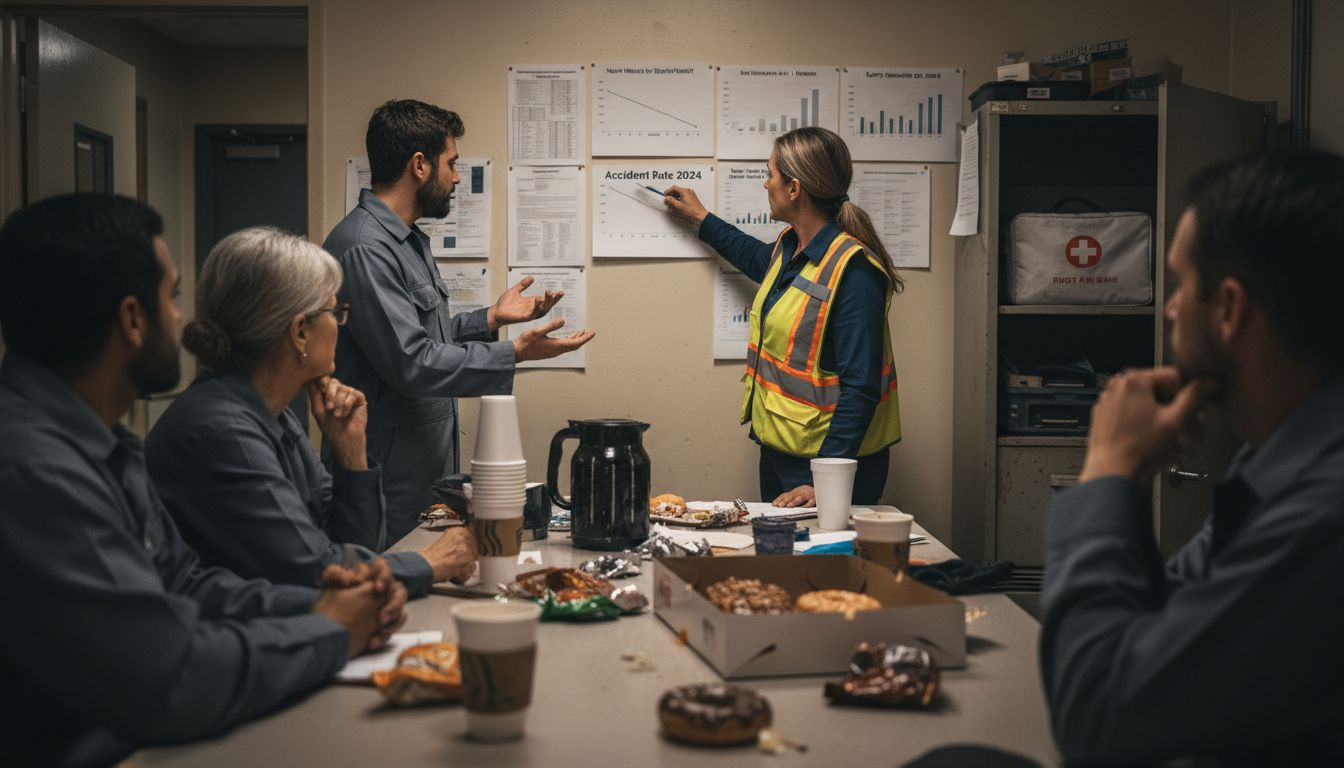
Legal compliance audit pass rates exceed 95 percent when employers follow proper procedures systematically. Regulatory audits focus on documentation completeness, lab certification verification, chain of custody integrity, and employee notification adequacy. Programs built on the foundations outlined in this guide consistently pass scrutiny.
Documentation retention for two years ensures audit readiness while supporting any legal challenges to employment decisions. This timeline allows you to defend terminations, respond to unemployment claims, and demonstrate consistent policy application across your workforce.
| Outcome Metric | Typical Result | Measurement Period |
|---|---|---|
| Workplace accident reduction | 30-50% decrease | 12 months post-implementation |
| Audit compliance rate | 95%+ pass rate | Ongoing |
| Result turnaround time | 24-72 hours | Per test |
| Documentation retention | 100% available | 2+ years |
| Workers’ comp premium reduction | 10-20% decrease | Annual policy renewal |
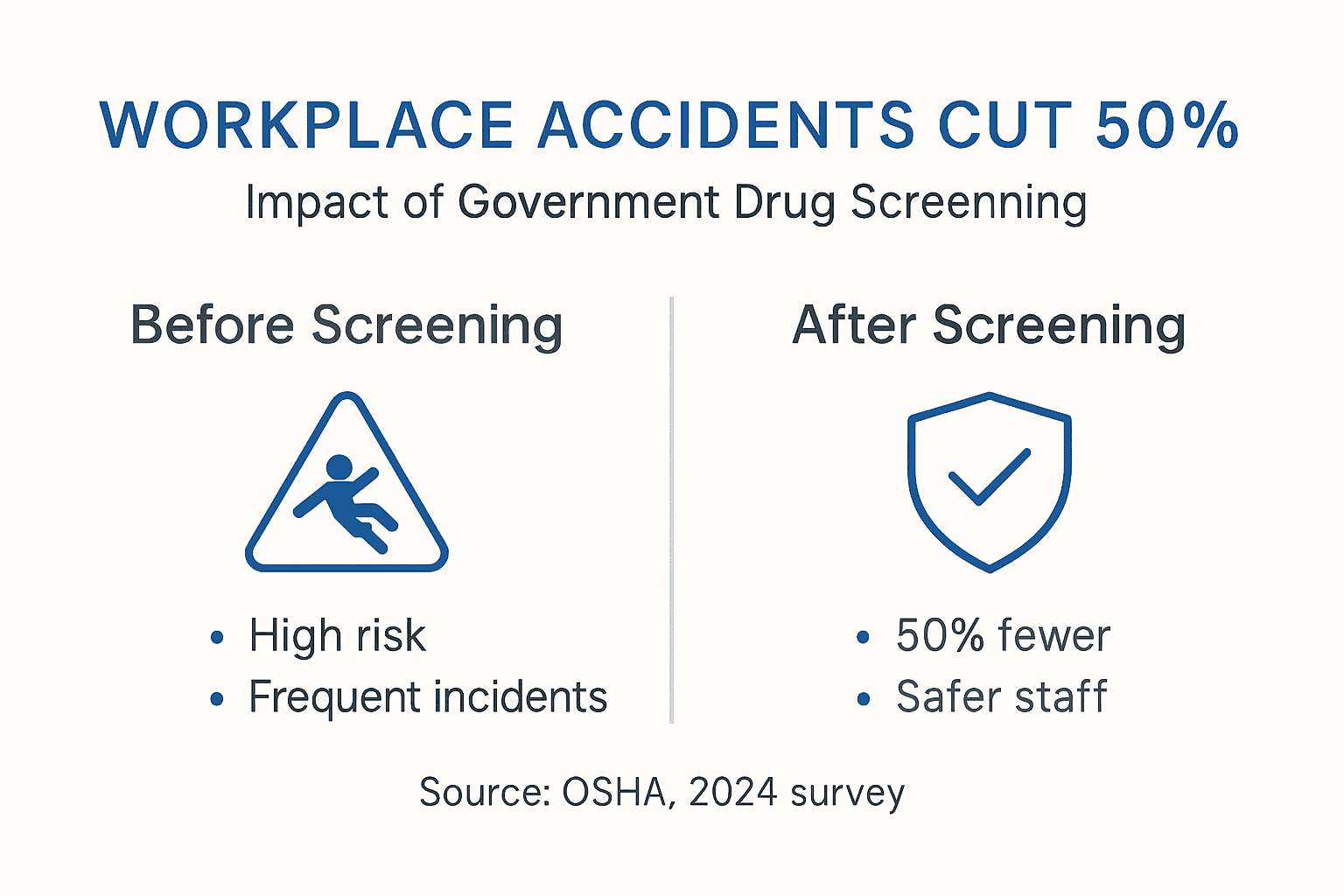
Measurable improvements in safety culture often accompany formal screening programs. Employees appreciate management’s commitment to maintaining drug-free workplaces. Applicant quality improves as substance users self-select out of your hiring pool. Productivity increases when impaired workers exit or seek treatment.
Track your program metrics monthly. Monitor positive test rates, turnaround times, audit findings, accident rates, and cost per test. Trending this data reveals whether your program delivers expected value and where adjustments might improve outcomes. The drug screening workflow and results dashboard helps visualize performance.
Calculate return on investment by comparing program costs against avoided accident expenses, reduced insurance premiums, and improved productivity. Most organizations find that comprehensive screening programs pay for themselves within the first year through these combined savings. The benefits of federal drug testing compliance extend beyond regulatory checkbox satisfaction to tangible financial and safety improvements. Additional data from the National Safety Council drug testing statistics reinforces these outcomes across industries.
Streamline Your Drug Screening Compliance with Countrywide Testing
Implementing everything covered in this guide requires expertise, certified partnerships, and ongoing support. Countrywide Testing delivers comprehensive solutions that simplify compliance while improving your workplace safety outcomes.
Our SAMHSA-certified laboratory services and nationwide collection network ensure your program meets every federal requirement from day one. We handle chain of custody documentation, secure result reporting, and MRO services so you can focus on running your business instead of managing testing logistics.
Explore our educational resources to deepen your understanding of how drug tests work at the molecular level. Stay current with evolving testing technologies and regulatory changes through our regularly updated content library.
Partner with experienced professionals who understand the unique challenges facing employers in 2026. Our lab drug testing services support organizations of every size, from small businesses conducting occasional pre-employment screening to large corporations managing thousands of random tests annually. Visit Countrywide Testing to discover how we streamline your drug screening program while ensuring complete regulatory compliance and measurable safety improvements.
Frequently Asked Questions
Is written employee notification always required for government drug screening?
Yes, federal regulations mandate written notification for all regulated drug testing. Employees must receive clear documentation explaining the test reason, substances screened, and potential consequences before providing specimens. Verbal communication alone does not satisfy compliance requirements.
What happens if chain of custody procedures are not properly followed?
Improper chain of custody invalidates test results and makes them legally indefensible. Courts and regulatory agencies reject specimens with broken custody chains, missing signatures, or documentation gaps. You must retest the employee at additional expense, and any employment action taken on invalid results creates wrongful termination exposure.
How long must drug testing records be retained?
Federal law requires keeping all drug testing documentation for a minimum of two years after the test date. This includes consent forms, chain of custody documents, laboratory reports, and MRO determinations. Many attorneys recommend five-year retention to cover statute of limitations periods for employment claims.
Are rapid screening tests alone acceptable for government compliance?
No, rapid point-of-care tests produce only presumptive results that require laboratory confirmation. Federal regulations mandate that all positive screening results undergo confirmatory testing by a SAMHSA-certified lab using different methodology. Taking adverse employment action based solely on rapid test results violates compliance standards and invites litigation.
Can oral fluid or hair testing replace urine testing in government programs?
Urine testing remains the standard method for most federal drug testing programs due to its established regulatory framework and extensive validation research. Oral fluid testing is permitted in some DOT modes and other contexts when properly implemented with certified labs. Hair testing is not currently approved for DOT compliance but may be used in non-regulated private sector programs. Always verify that your chosen method meets your specific regulatory requirements.