
Drug Testing Cuts Workplace Accidents by 45% in 2026
Drug impairment contributes to approximately 15% of workplace accidents annually, creating significant safety hazards for employees and the public alike. Implementing workplace drug testing has emerged as a powerful strategy for employers to reduce these incidents by nearly half while ensuring regulatory compliance. This comprehensive guide walks you through how drug testing enhances public safety, navigates legal requirements, and supports a healthier workplace culture.
Table of Contents
- Introduction: Understanding The Role Of Drug Testing In Public Safety
- How Drug Testing Enhances Workplace Safety
- Legal And Regulatory Compliance For Employers
- Common Misconceptions About Drug Testing
- Comparison Of Different Drug Testing Methods
- Practical Steps For Employers To Implement Effective Drug Testing Programs
- Bridging Drug Testing To Support And Rehabilitation
- Explore Comprehensive Drug Testing Solutions
- Frequently Asked Questions
Key Takeaways
| Point | Details |
|---|---|
| Safety Impact | Drug testing programs can reduce illicit drug use by up to 45% among employees, directly lowering accident rates. |
| Legal Compliance | Federal DOT mandates and varying state laws require employers to follow strict testing protocols to avoid penalties. |
| Method Comparison | Urine, saliva, hair, and at-home tests offer different detection windows and accuracy levels suited to various workplace needs. |
| Common Myths | Drug testing does not violate privacy when conducted with proper consent and confidentiality safeguards. |
| Support Integration | Pairing testing with employee assistance programs reduces repeat offenses by 20-30% and improves retention. |
Introduction: Understanding the Role of Drug Testing in Public Safety
Workplace drug testing is a systematic process employers use to detect drug use among employees through biological samples like urine, saliva, or hair. The primary goals include enhancing workplace safety, ensuring regulatory compliance, and maintaining productivity levels. When employees work under the influence, reaction times slow, judgment becomes impaired, and the risk of accidents skyrockets.
Drug impairment contributes to a significant share of workplace accidents impacting public safety beyond individual companies. Industries like transportation, construction, and healthcare face heightened risks because errors can harm customers, patients, and bystanders. Drug testing serves as both a deterrent and detection mechanism, identifying at-risk individuals before incidents occur.
Several workplace categories benefit from robust drug testing:
- Safety-sensitive positions in transportation, manufacturing, and energy sectors
- Healthcare facilities where patient care depends on staff alertness
- Construction sites with heavy machinery and hazardous conditions
- Federal contractors required to maintain drug-free workplace policies
- Companies seeking to reduce insurance premiums and liability exposure
Understanding random drug testing impact helps employers design programs that balance employee rights with safety imperatives. The foundation rests on clear policies, consistent enforcement, and transparent communication with your workforce.
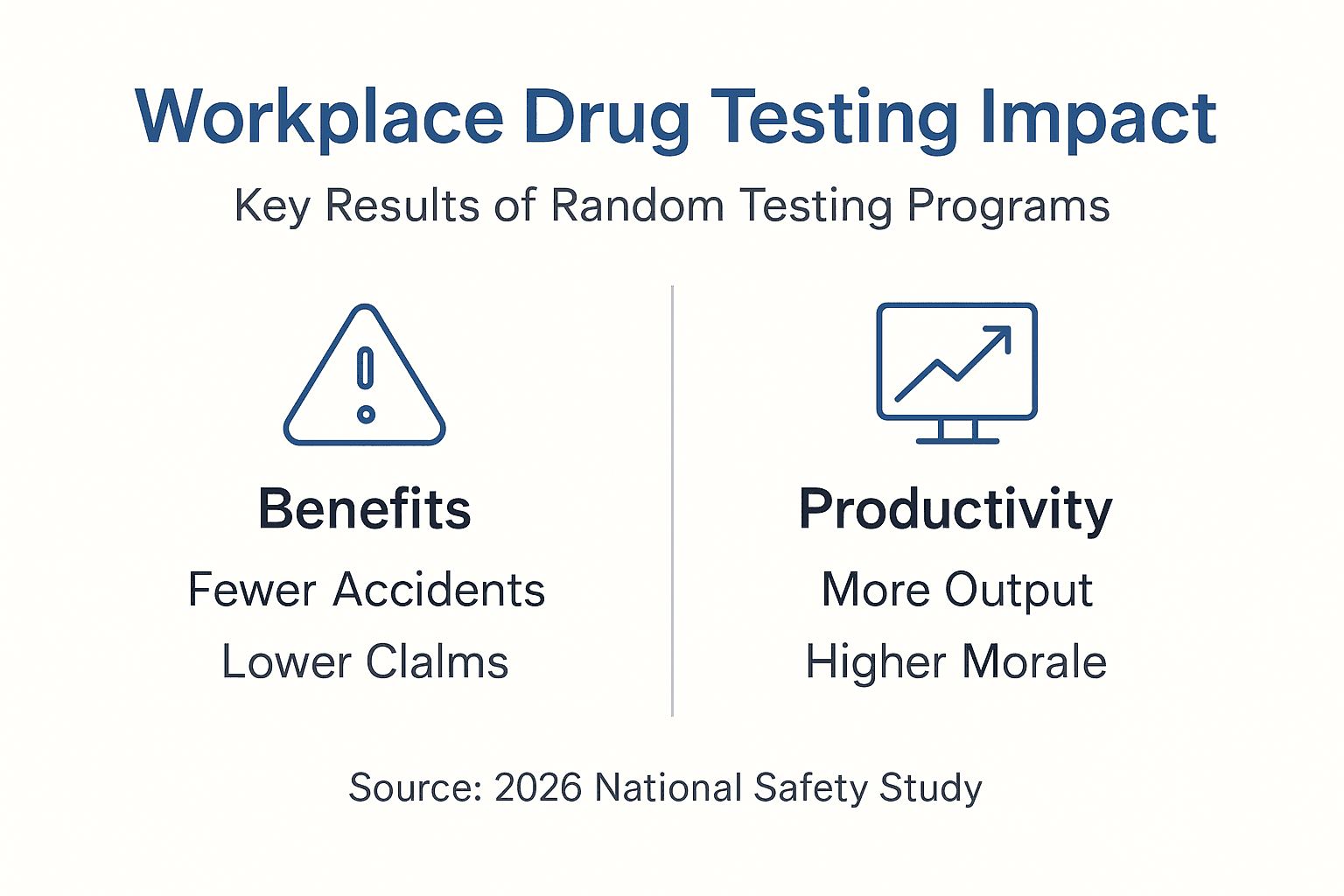
How Drug Testing Enhances Workplace Safety
Impaired employees exhibit slower reflexes, poor decision-making, and reduced situational awareness. These effects amplify accident risks in environments requiring precision and focus. Drug testing creates a deterrent effect by establishing consequences for substance use, prompting employees to avoid drugs knowing detection is likely.
Research demonstrates measurable safety improvements when employers implement testing programs:
- Random drug testing programs decrease illicit drug use among employees by up to 45%, directly reducing workplace incidents
- Pre-employment screening filters out high-risk candidates before they join your team
- Post-accident testing identifies whether substance use contributed to incidents
- Reasonable suspicion testing addresses observable impairment before accidents occur
Up to 45% reduction in illicit drug use when employers adopt random testing protocols
These statistics translate to fewer workers’ compensation claims, lower insurance costs, and improved employee morale. When coworkers know their colleagues are sober, trust and teamwork strengthen. Public safety benefits extend beyond your facility walls as impaired workers in transportation, delivery, and service roles pose risks to customers and communities.
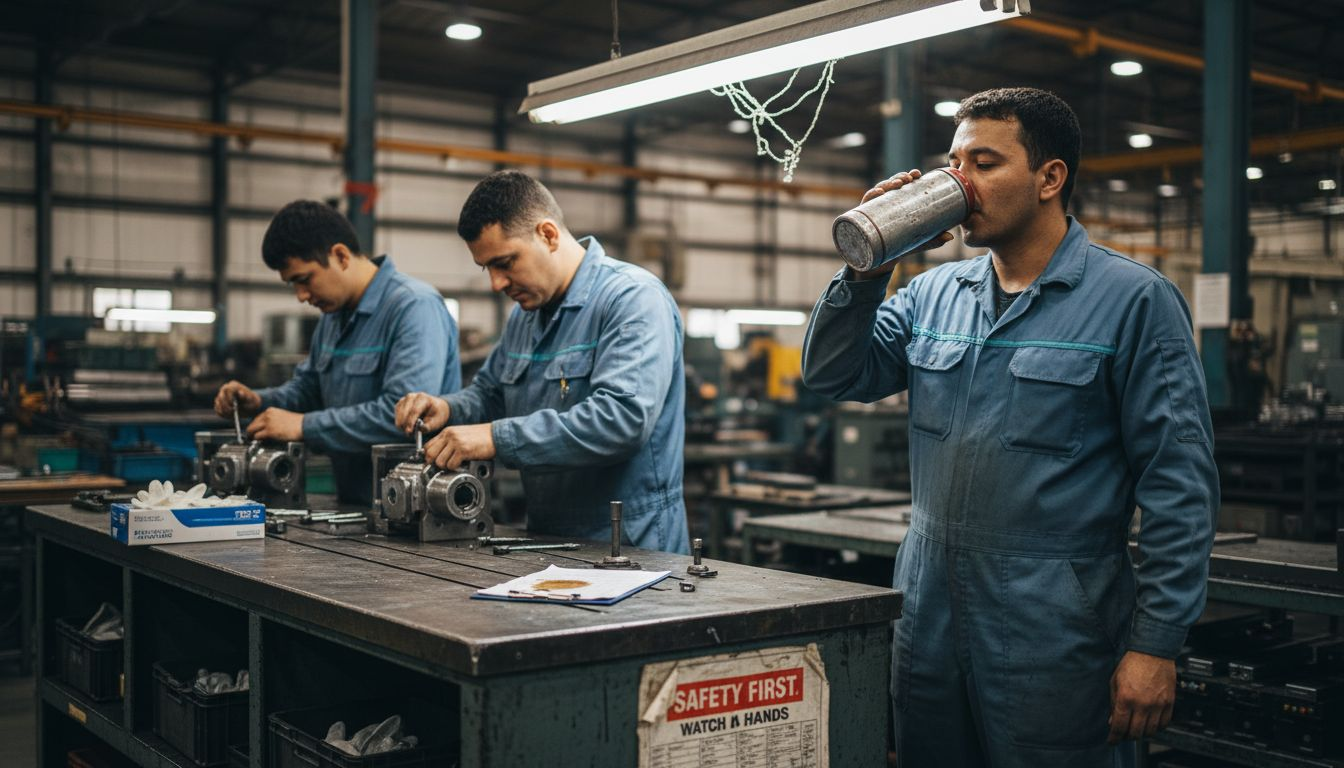
The employer drug screening impact reaches beyond accident prevention. Productivity increases because sober employees maintain focus and complete tasks efficiently. Absenteeism drops as substance abuse issues receive attention through early detection and intervention.
Legal and Regulatory Compliance for Employers
Federal and state laws create a complex framework governing workplace drug testing. Understanding these regulations protects your organization from legal challenges while ensuring program effectiveness. DOT mandates drug and alcohol testing for safety-sensitive transportation jobs with certified labs processing samples according to strict protocols.
Key federal requirements include:
- Department of Transportation rules for commercial drivers, pilots, and railroad workers
- Drug-Free Workplace Act obligations for federal contractors and grant recipients
- Americans with Disabilities Act protections limiting testing circumstances
- Occupational Safety and Health Administration guidelines for post-accident procedures
State laws vary significantly regarding permissible testing scenarios, notice requirements, and consequences for positive results. Some states mandate written policies distributed before testing begins. Others restrict random testing or require reasonable suspicion standards. Penalties for non-compliance range from fines exceeding $10,000 to wrongful termination lawsuits.
Employers should review drug testing laws overview regularly as regulations evolve, particularly with changing marijuana legalization status. Government drug testing requirements provide additional context for public sector employers.
Staying current requires monitoring federal agency updates, state legislative changes, and court rulings affecting testing practices. The importance of federal compliance cannot be overstated, especially for organizations operating across multiple jurisdictions. Consulting legal counsel and partnering with certified testing providers minimizes risk while maintaining program integrity.
Common Misconceptions About Drug Testing
Many employers hesitate to implement drug testing due to widespread myths that create unnecessary concerns. Addressing these misconceptions head-on builds confidence in program design and employee acceptance.
Privacy Invasion Claims: Drug testing does not violate privacy when conducted with informed consent and proper confidentiality measures. Employees sign authorization forms acknowledging testing conditions. Results remain confidential between designated personnel, the testing facility, and medical review officers. Legal frameworks protect employee information from unauthorized disclosure.
Effectiveness Doubts: Some question whether testing actually deters drug use or simply catches users after the fact. Evidence shows random drug testing programs decrease illicit drug use by up to 45%, proving deterrent value. The possibility of detection prompts behavior change before impairment causes harm.
Ethical Concerns: Critics argue testing treats employees as suspects rather than trusted team members. However, drug testing protects all workers from the dangers impaired colleagues create. Framing programs as safety initiatives rather than punitive measures helps employees understand the mutual benefit.
At-Home Test Reliability: Some employers worry that at-home kits lack accuracy compared to lab testing. FDA-approved at-home tests provide reliable initial screening when confirmed by certified laboratories. This two-step approach balances convenience with accuracy.
Pro Tip: Communicate testing policies transparently during onboarding and provide educational resources explaining how drug testing protects everyone’s safety. When employees understand the rationale, resistance decreases significantly.
Comparison of Different Drug Testing Methods
Employers choose from several testing methods based on accuracy needs, detection windows, costs, and workplace requirements. Understanding the strengths and limitations of each approach helps you select appropriate options for your organization.
| Method | Detection Window | Accuracy | Cost | Pros | Cons |
|---|---|---|---|---|---|
| Urine | 1-30 days | High (98%+) | Low | Industry standard, detects recent use | Requires privacy facilities |
| Saliva | 1-3 days | Moderate-High (95%) | Moderate | Non-invasive, detects very recent use | Shorter detection window |
| Hair | Up to 90 days | High (99%) | High | Long detection period, hard to adulterate | Cannot detect very recent use |
| At-Home Kits | Varies by type | Moderate (90-95%) | Very Low | Convenient initial screening | Requires lab confirmation |
Key considerations when selecting testing methods:
- Match detection windows to your monitoring goals (recent use vs. long-term patterns)
- Balance accuracy requirements with budget constraints
- Consider employee acceptance and ease of collection
- Ensure chosen methods meet regulatory requirements for your industry
- Verify laboratory certifications (SAMHSA, CAP, CLIA) for confirmation testing
Exploring different types of drug tests provides detailed comparisons to inform your decision. Many employers combine methods, using quick saliva tests for reasonable suspicion situations and urine tests for pre-employment and random screening.
Pro Tip: Align your testing method with workforce characteristics. Construction and manufacturing roles benefit from longer detection windows, while transportation jobs require tests detecting impairment within hours of duty.
Practical Steps for Employers to Implement Effective Drug Testing Programs
Building a compliant and effective drug testing program requires systematic planning and execution. Follow these steps to create a program that enhances safety while respecting employee rights.
-
Assess Workplace Risks and Legal Obligations: Identify safety-sensitive positions, review industry-specific regulations, and determine state law requirements. Document the business necessity for testing to establish legal defensibility.
-
Choose Compliant Testing Methods and Certified Labs: Select testing approaches matching your detection needs and budget. Partner with SAMHSA-certified laboratories ensuring accurate results and regulatory compliance. Verify labs maintain ISO, CLIA, and CAP accreditations.
-
Develop Written Policies with Clear Communication: Create comprehensive policies specifying who gets tested, when, under what circumstances, and what happens after positive results. Distribute policies to all employees and obtain written acknowledgment. Include details about specimen collection procedures, confidentiality protections, and appeal processes.
-
Execute Testing Consistent with Federal and State Laws: Follow established procedures uniformly across all employees in tested categories. Train supervisors on recognizing reasonable suspicion indicators and documenting observations. Maintain meticulous records demonstrating program consistency and compliance.
-
Integrate Employee Assistance Programs for Support: Offer counseling, treatment referrals, and return-to-work protocols for employees testing positive. This approach balances accountability with compassion, improving outcomes while reducing turnover.
Resources like how to conduct drug testing for compliance and drafting pre-employment drug testing policies provide templates and detailed guidance for each implementation phase.
Pro Tip: Review and update your drug testing policy annually to reflect regulatory changes, emerging drug trends, and program effectiveness data. Regular audits ensure ongoing compliance and identify improvement opportunities.
Bridging Drug Testing to Support and Rehabilitation
Drug testing achieves optimal results when paired with employee support rather than purely punitive consequences. Employee Assistance Programs (EAPs) provide confidential counseling, substance abuse treatment referrals, and mental health services helping employees address underlying issues.
Integrating drug testing with employee assistance programs reduces repeat offenses by 20-30% and lowers turnover compared to termination-only approaches. Employees who receive support are more likely to successfully overcome substance abuse, return to productive work, and become advocates for workplace safety.
Best practices for integrating support programs include:
- Offering EAP access as part of your response to positive test results
- Providing paid leave for employees entering treatment programs
- Creating return-to-work agreements with continued testing and performance monitoring
- Training managers to recognize signs of substance abuse and make appropriate referrals
- Communicating that seeking help proactively will be viewed more favorably than waiting for test detection
This balanced approach improves workplace morale by demonstrating that management values employee wellbeing. Coworkers feel safer knowing issues are addressed while also seeing that the company supports recovery efforts. The dual impact on safety culture and employee retention delivers measurable business benefits beyond accident reduction.
Employers implementing comprehensive programs report stronger recruitment outcomes as job seekers appreciate workplaces prioritizing both safety and employee support. The investment in EAPs pays dividends through reduced workers’ compensation costs, lower absenteeism, and improved productivity.
Explore Comprehensive Drug Testing Solutions
Ready to implement or enhance your workplace drug testing program? Countrywide Testing offers tailored solutions helping employers navigate compliance requirements while improving safety outcomes. Our platform provides access to multiple testing methods, from convenient at-home screening kits to comprehensive laboratory services.
Our certified laboratory network meets all SAMHSA, ISO, CLIA, and CAP standards, ensuring accurate results you can trust for employment decisions. Whether you need to understand different drug test options, learn how to conduct compliant drug testing, or access certified laboratory drug testing services, we provide the expertise and resources to build effective programs. Contact our team to design a custom drug testing program meeting your organization’s unique safety and compliance needs.
Frequently Asked Questions
What types of drug tests are most accurate for workplace safety?
Urine and hair tests offer the highest accuracy rates (98-99%) with laboratory confirmation. Urine testing remains the industry standard for most workplace programs due to its balance of accuracy, cost-effectiveness, and reasonable detection windows. Hair testing provides the longest detection period but costs more and cannot identify very recent use.
How often should employers conduct drug testing to remain compliant?
Testing frequency depends on your industry and applicable regulations. DOT-regulated employers must follow specific random testing rates (typically 50% annually for drugs, 10% for alcohol). Non-regulated employers often conduct pre-employment testing plus random testing at rates between 25-50% annually. Post-accident and reasonable suspicion testing should occur whenever circumstances warrant.
Can drug testing programs violate employee privacy?
Properly implemented programs do not violate privacy rights. Employees provide informed consent, collections follow standardized procedures ensuring dignity, and results remain confidential among authorized personnel only. Courts consistently uphold workplace drug testing when employers have legitimate safety concerns and follow established protocols.
What should an employer do if an employee tests positive?
Follow your written policy consistently. Most employers use medical review officers to verify positive results and rule out legitimate prescription use. Options include offering EAP referrals with return-to-work agreements, suspension pending treatment completion, or termination for policy violations. Document all steps thoroughly and apply consequences uniformly across similar situations.
Are at-home drug testing kits reliable for initial screening?
FDA-approved at-home kits provide reliable preliminary screening when used correctly and confirmed by certified laboratory testing. They work well for initial assessments before sending samples for definitive laboratory analysis. Never make employment decisions based solely on at-home test results without laboratory confirmation meeting SAMHSA standards.