
Why Federal Drug Testing Matters for Employers
Keeping employees safe and maintaining productivity are everyday priorities for American HR managers. Federal drug testing regulations are designed to support these goals by establishing strict guidelines that help detect and deter substance use, especially in safety-sensitive roles. Understanding the scope of these guidelines ensures your company stays compliant and avoids costly mistakes. Discover how a well-structured drug testing program supports both workplace safety and organizational integrity, while meeting evolving legal standards.
Table of Contents
- Federal Drug Testing: Core Purpose and Scope
- Types of Federal Drug Testing Programs
- How the Federal Testing Process Works
- Key Compliance and Regulatory Requirements
- Employer Responsibilities and Common Pitfalls
Key Takeaways
| Point | Details |
|---|---|
| Core Purpose of Federal Drug Testing | The primary objective is to maintain workplace safety and integrity while ensuring compliance with regulations. |
| Types of Testing Programs | Employers utilize various testing methods including pre-employment, random, and post-accident testing to deter substance use. |
| Critical Compliance Requirements | Adherence to authorized panels, privacy guidelines, and laboratory certification is essential for a valid testing program. |
| Employer Responsibilities | Employers must develop clear policies, provide staff training, and ensure consistent testing implementation to avoid legal pitfalls. |
Federal Drug Testing: Core Purpose and Scope
Federal drug testing programs represent a critical mechanism for maintaining workplace safety and professional integrity across various industries. These systematic screening initiatives are designed to detect and deter drug use among employees, particularly in safety-sensitive positions where impairment could pose significant risks to individual and public welfare.
The core purpose of federal drug testing extends beyond simple compliance, focusing on several fundamental objectives:
- Protecting workplace safety and reducing accident risks
- Maintaining productivity and operational efficiency
- Ensuring compliance with federal regulations
- Protecting organizational reputation and liability
- Supporting employee health and wellness
The federal workplace drug testing guidelines mandate specific protocols for identifying substance use, particularly targeting Schedule I and II controlled substances. These comprehensive guidelines apply to various sectors, with particular emphasis on industries where safety is paramount.
Specifically, regulatory frameworks like the Federal Motor Carrier Safety Administration’s program demonstrate the targeted nature of these initiatives. The drug and alcohol testing regulations for commercial driver license (CDL) holders exemplify how federal guidelines prioritize public safety by establishing rigorous screening standards.
Employers must understand that federal drug testing is not merely a punitive measure but a proactive strategy for creating safer, more productive work environments. The testing protocols involve sophisticated processes including initial screening, confirmation testing, and medical review to ensure accuracy and fairness.
Pro tip: Develop a comprehensive drug testing policy that balances legal compliance, employee privacy, and organizational safety objectives.
Types of Federal Drug Testing Programs
Federal drug testing encompasses a comprehensive array of screening methodologies designed to ensure workplace safety and regulatory compliance across various sectors. These programs are strategically developed to detect substance use and maintain professional standards in safety-sensitive environments.
The primary types of federal drug testing programs include:
- Pre-employment testing: Screening candidates before initial employment
- Random testing: Unannounced screenings to deter ongoing substance use
- Post-accident testing: Investigating potential substance involvement after workplace incidents
- Reasonable suspicion testing: Screening based on observable behavioral indicators
- Return-to-duty testing: Verifying an employee’s fitness after substance-related incidents
- Follow-up testing: Periodic monitoring for employees who have undergone rehabilitation
The federal drug testing guidelines outline specific protocols for detecting various substances. These guidelines typically cover a standard panel of controlled substances, including alcohol, marijuana, cocaine, amphetamines, opioids, and PCP.
Particular industries have unique testing requirements. For instance, the commercial driver license (CDL) testing program represents a critical safety mechanism for transportation sectors. These rigorous standards aim to prevent impaired driving and reduce potential accidents by implementing systematic screening processes.
Each testing program follows a structured approach involving initial screening, confirmation testing, and medical review to ensure accuracy, fairness, and compliance with federal regulations. Employers must carefully design their testing strategies to balance legal requirements, workplace safety, and employee privacy.
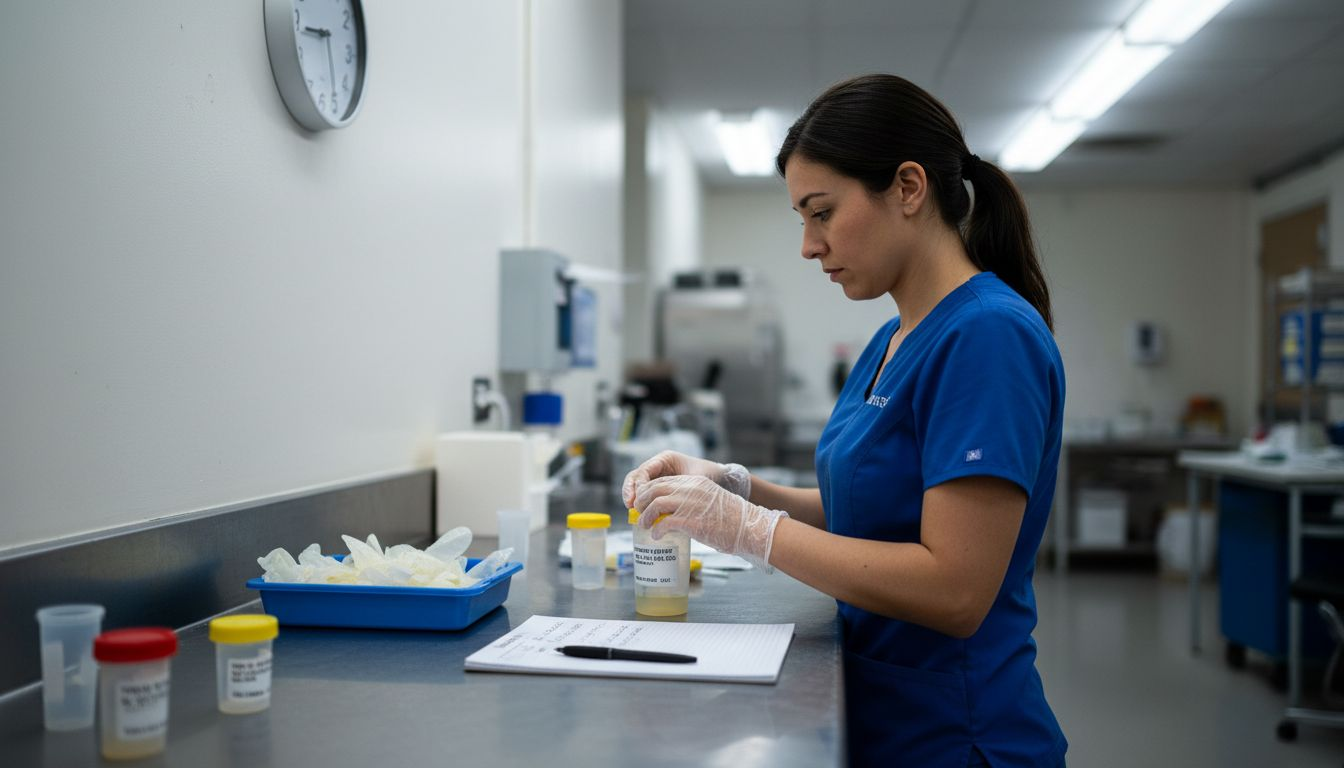
Here’s a quick comparison of the main federal drug testing types and their primary objectives:
| Testing Type | Main Objective | Example Scenario |
|---|---|---|
| Pre-employment | Screen before hiring | Applicant job offer |
| Random | Deter ongoing substance use | Unannounced during year |
| Post-accident | Investigate incidents | After workplace injury |
| Reasonable suspicion | Address observed behaviors | Notable impairment |
| Return-to-duty | Ensure readiness post-violation | After rehab program |
| Follow-up | Monitor compliance after return | Scheduled re-testing |
Federal drug testing is not about punishment, but about creating a safe, productive work environment for all employees.
Pro tip: Develop a transparent drug testing policy that clearly communicates procedures, consequences, and support resources for employees.
How the Federal Testing Process Works
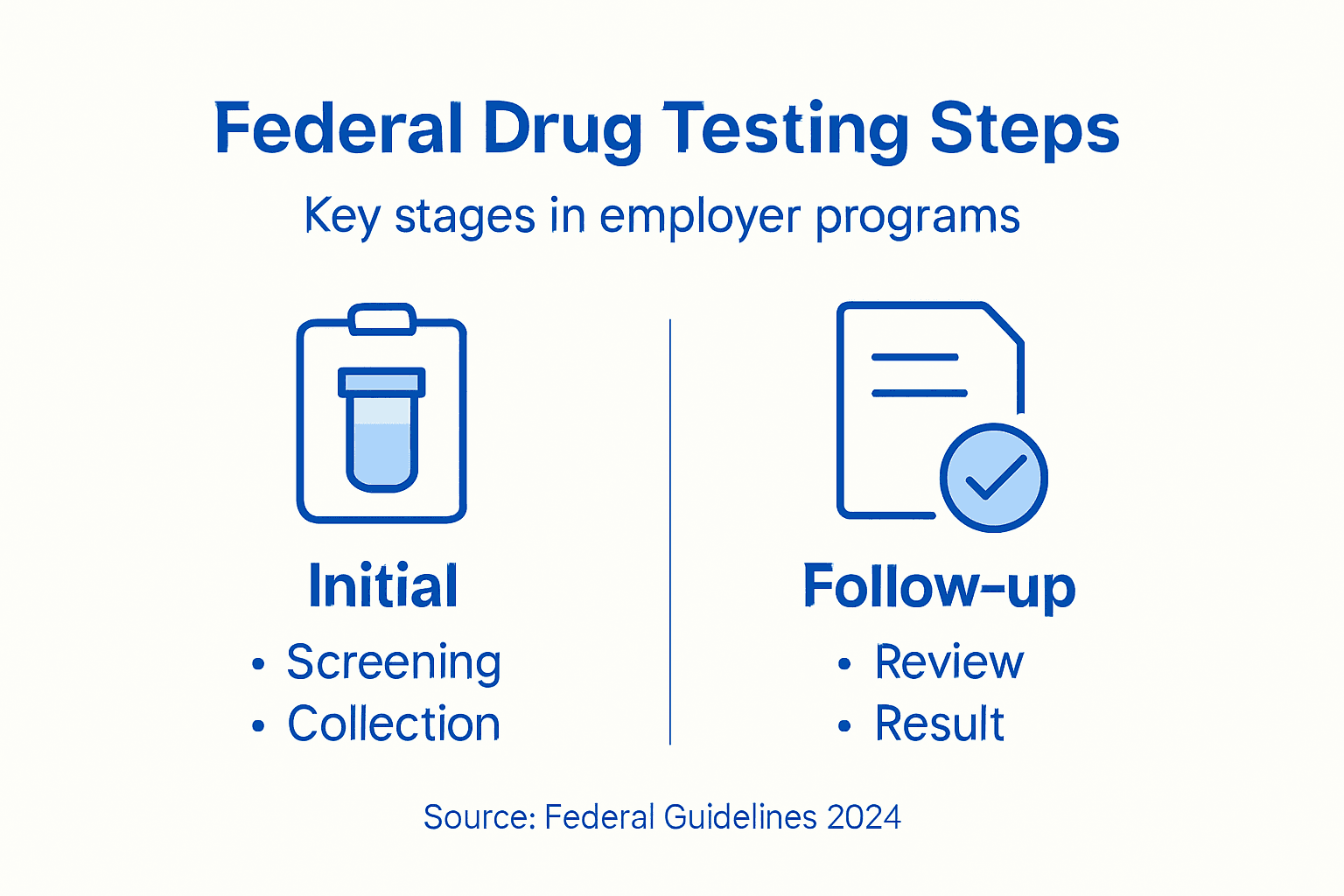
The federal drug testing process is a meticulously structured procedure designed to ensure accuracy, fairness, and comprehensive substance screening across workplace environments. Federal testing protocols follow a rigorous, multi-step approach that protects both employer interests and employee rights.
The comprehensive testing process involves several critical stages:
- Specimen Collection: Conducted by trained, certified collectors
- Initial Screening: Preliminary substance detection using immunoassay techniques
- Confirmation Testing: Detailed analysis using gas chromatography-mass spectrometry
- Medical Review: Professional evaluation of test results by certified Medical Review Officers
- Documentation: Strict chain-of-custody tracking to maintain sample integrity
- Confidential Reporting: Secure communication of test outcomes
The drug testing standards mandate specific procedures for different specimen types, including urine and oral fluid samples. Each step is carefully designed to minimize errors and ensure reliable results.
Particularly noteworthy is the role of Medical Review Officers (MROs), who serve as critical gatekeepers in the testing process. These licensed physicians evaluate potential medical explanations for positive results, providing an additional layer of fairness and professional interpretation.
Accuracy and confidentiality are the cornerstones of a legitimate federal drug testing program.
Employers must understand that the testing process is not about catching employees, but about maintaining a safe, productive workplace. The multi-stage approach allows for thorough investigation while protecting individual privacy and ensuring scientific reliability.
Pro tip: Develop a comprehensive understanding of federal testing protocols to implement a fair and legally compliant drug screening program.
Key Compliance and Regulatory Requirements
Federal drug testing compliance represents a complex landscape of legal and regulatory obligations that employers must carefully navigate. Mandatory workplace drug testing guidelines establish comprehensive standards that organizations must follow to ensure legal and ethical screening practices.
Key compliance requirements encompass several critical areas:
- Authorized Testing Panels: Specific substances approved for detection
- Specimen Collection Protocols: Standardized methods ensuring sample integrity
- Laboratory Certification: Requirements for testing facility accreditation
- Medical Review Officer (MRO) Verification: Professional evaluation of results
- Privacy Protection: Strict confidentiality guidelines
- Reporting Standards: Formal documentation and communication procedures
The transportation industry regulations provide a prime example of sector-specific compliance requirements. These rules mandate comprehensive testing for safety-sensitive positions, highlighting the nuanced approach different industries must take.
Employers must remain vigilant about evolving regulatory landscapes. The 2025 updates to federal guidelines demonstrate the dynamic nature of drug testing standards, requiring ongoing education and adaptive compliance strategies.
Compliance is not a one-time achievement, but a continuous commitment to workplace safety and legal standards.
Navigating these requirements demands a proactive approach, with careful attention to detail and a comprehensive understanding of both federal and industry-specific regulations.
The table below highlights critical compliance elements for employers and their importance:
| Requirement | Why It Matters | Example Consequence |
|---|---|---|
| Lab accreditation | Ensures test accuracy | Invalidated results |
| Confidential reporting | Protects employee privacy | Legal liability risk |
| Policy documentation | Demonstrates compliance | Fines for missing records |
| MRO verification | Provides fair result review | Disputed test findings |
Pro tip: Conduct regular compliance audits and maintain updated documentation to ensure your drug testing program meets current federal standards.
Employer Responsibilities and Common Pitfalls
Employers face a complex landscape of legal and operational challenges when implementing drug testing programs. Comprehensive drug testing responsibilities extend far beyond simple screening, requiring strategic planning and meticulous implementation.
Critical employer responsibilities include:
- Policy Development: Creating clear, legally compliant drug testing guidelines
- Employee Training: Educating staff about testing procedures and expectations
- Supervisor Preparation: Training managers to recognize potential substance impairment
- Confidentiality Management: Protecting employee test result privacy
- Consistent Implementation: Applying testing protocols uniformly across the organization
- Ongoing Compliance: Regularly updating policies with changing legal landscapes
Common pitfalls that employers must carefully navigate include:
- Inconsistent policy enforcement
- Inadequate documentation of testing procedures
- Failure to stay current with changing state and federal regulations
- Insufficient training for supervisors and managers
- Lack of clear communication about testing expectations
Navigating the complex terrain of drug testing requires employers to remain adaptable. Drug testing policy challenges become increasingly complex with evolving state laws, particularly surrounding cannabis legalization and medical marijuana usage.
Effective drug testing programs balance legal compliance, workplace safety, and employee rights.
Successful implementation demands a proactive approach that prioritizes clear communication, consistent application, and ongoing education.
Pro tip: Develop a flexible drug testing policy that can quickly adapt to changing legal and regulatory environments.
Ensure Compliance and Safety with Expert Federal Drug Testing Solutions
Federal drug testing plays a crucial role for employers striving to uphold workplace safety, maintain legal compliance, and protect their organizational reputation. If you are facing challenges such as creating clear drug testing policies, managing confidential results, or simply implementing a reliable and regulated testing process, you are not alone. Accurate specimen collection, Medical Review Officer involvement, and adherence to federal protocols are essential to avoid costly pitfalls and foster a safe work environment.
Take control of your drug testing program today by partnering with CountryWideTesting.com, where you gain access to trusted urine and mouth swab drug test kits plus comprehensive laboratory testing services fully compliant with federal standards like SAMHSA and CLIA. Explore how our services can help you meet all compliance and regulatory requirements by checking out our full range of drug and alcohol testing products and lab support. Make your next step toward a safer workplace simple, reliable, and convenient by visiting CountryWideTesting.com now.
Frequently Asked Questions
What is the purpose of federal drug testing for employers?
Federal drug testing aims to maintain workplace safety, reduce accident risks, support employee health, and ensure compliance with federal regulations.
What types of drug testing are mandated under federal regulations?
Federal regulations typically mandate pre-employment testing, random testing, post-accident testing, reasonable suspicion testing, return-to-duty testing, and follow-up testing.
How does the federal drug testing process work?
The federal drug testing process involves specimen collection, initial screening, confirmation testing, medical review, documentation, and confidential reporting to ensure accuracy and fairness.
What are common pitfalls employers face with drug testing programs?
Common pitfalls include inconsistent policy enforcement, inadequate documentation of procedures, failure to stay updated with regulations, and insufficient training for supervisors.