
Federal Drug Testing: What HR Leaders Must Know
Sorting through federal drug testing rules can feel like navigating a maze for any HR leader in an American transportation company. With requirements set by the Department of Transportation and guidelines enforced by agencies like the Federal Motor Carrier Safety Administration, the risks of missing the mark are high. Understanding which regulations apply and implementing a federally compliant drug testing program is key to protecting both employees and your business from serious safety and legal consequences.
Table of Contents
- Federal Drug Testing Defined And Demystified
- Types Of Federal Drug Testing Programs
- Testing Methods And Detection Windows
- Legal Standards And Compliance Duties
- Employer Obligations And Risks Of Noncompliance
Key Takeaways
| Point | Details |
|---|---|
| Federal Drug Testing Framework | It is governed by multiple regulations impacting various industries, primarily overseen by the Department of Transportation for safety-sensitive roles. |
| Types of Testing | Different programs like pre-employment, random, and reasonable suspicion testing are crucial for compliance and workplace safety. |
| Testing Methods | Urine testing is the federal standard, while oral fluid testing helps detect current impairment more effectively. |
| Employer Obligations | A written drug-free workplace policy is mandatory, and training for personnel involved in testing is essential to maintain compliance and safety. |
Federal Drug Testing Defined and Demystified
Federal drug testing isn’t a single regulation handed down from one agency. Instead, it’s a system of rules created by different government departments that apply to specific types of employers and industries. For transportation companies, this means understanding which regulations actually govern your operations and what “federal drug testing” means for your workforce.
At its core, federal drug testing refers to workplace drug screening programs mandated by federal law for safety-sensitive positions. The Department of Transportation (DOT) oversees the most common framework affecting transportation employers. Under 49 CFR Part 40, the DOT establishes detailed procedures for who must be tested, when testing occurs, and how results are handled. This regulation covers drivers, mechanics, dispatchers, and other transportation employees in safety-sensitive roles across trucking companies, transit agencies, and related operations.
Beyond DOT requirements, civilian federal employees fall under different standards. SAMHSA’s Mandatory Guidelines provide the framework for federal agencies and their contractors. These guidelines outline how federal workplaces conduct drug tests, who must conduct them, and how to interpret results with medical review officers. The key distinction here is that federal civilian employees operate under slightly different rules than transportation workers regulated by DOT.
What often confuses HR leaders is the difference between federal requirements and company policies. Federal drug testing sets the floor, not the ceiling. You can implement stricter testing than federal law requires, but you cannot be more lenient if your company operates under federal jurisdiction. Understanding which specific regulations apply to your company depends entirely on your industry classification and the nature of your employees’ roles.
The testing itself involves standardized procedures. Drug tests detect substances like marijuana, cocaine, amphetamines, opioids, and phencyclidine (PCP). Alcohol testing for DOT-regulated employees uses breath and urine analysis. Results go through a medical review officer process where a physician can determine if there’s a legitimate medical reason for a positive result before it’s reported to the employer.
Here’s the reality: federal drug testing exists for safety reasons. Transportation accidents involving impaired operators create massive liability and human costs. That’s why DOT maintains such detailed regulations. Your role as an HR leader is to ensure your company follows these specific requirements without cutting corners or making assumptions.
Pro tip: Review your company’s exact classification under DOT regulations before implementing any testing program. Different transportation sectors have different testing frequencies and requirements, so confirm whether your drivers are safety-sensitive employees under federal definition.
Types of Federal Drug Testing Programs
Federal drug testing isn’t one-size-fits-all. Different regulations require different testing approaches depending on when you test, why you test, and who you’re testing. For transportation HR leaders, understanding these distinctions is critical because using the wrong testing type at the wrong time creates compliance violations and potential liability.
The most common federal testing types fall into six categories. Pre-employment testing happens before an employee starts work. This screens out candidates with active drug use before they ever sit in a driver’s seat or operate equipment. Random testing occurs throughout employment without warning, on a rotating schedule. The Federal Motor Carrier Safety Administration (FMCSA) requires random drug testing for CDL drivers as a core deterrent. You can’t announce these tests in advance, which is exactly why they’re effective at catching actual drug use rather than temporary abstinence.
Reasonable suspicion testing occurs when a supervisor observes specific behaviors suggesting impairment. This might include erratic driving patterns, slurred speech, or signs of intoxication during duty hours. Post-accident testing follows incidents where someone was involved in a reportable accident, regardless of whether they caused it. These tests help establish whether substances contributed to the accident and protect your company from liability claims.
Return-to-duty testing applies after an employee tests positive or violates drug-free workplace policies. Before they resume work, they must test negative and often complete substance abuse treatment. Follow-up testing continues periodically after return-to-duty testing, typically for 12 months, to monitor sustained compliance.
The specimen types vary by program. Most federal testing uses urine samples, which detect drug metabolites from recent use. Different testing procedures and collection methods each serve specific purposes based on detection windows and accuracy. Oral fluid testing has grown more common because it’s less invasive and harder to adulterate, though urine remains the federal standard for most DOT testing.
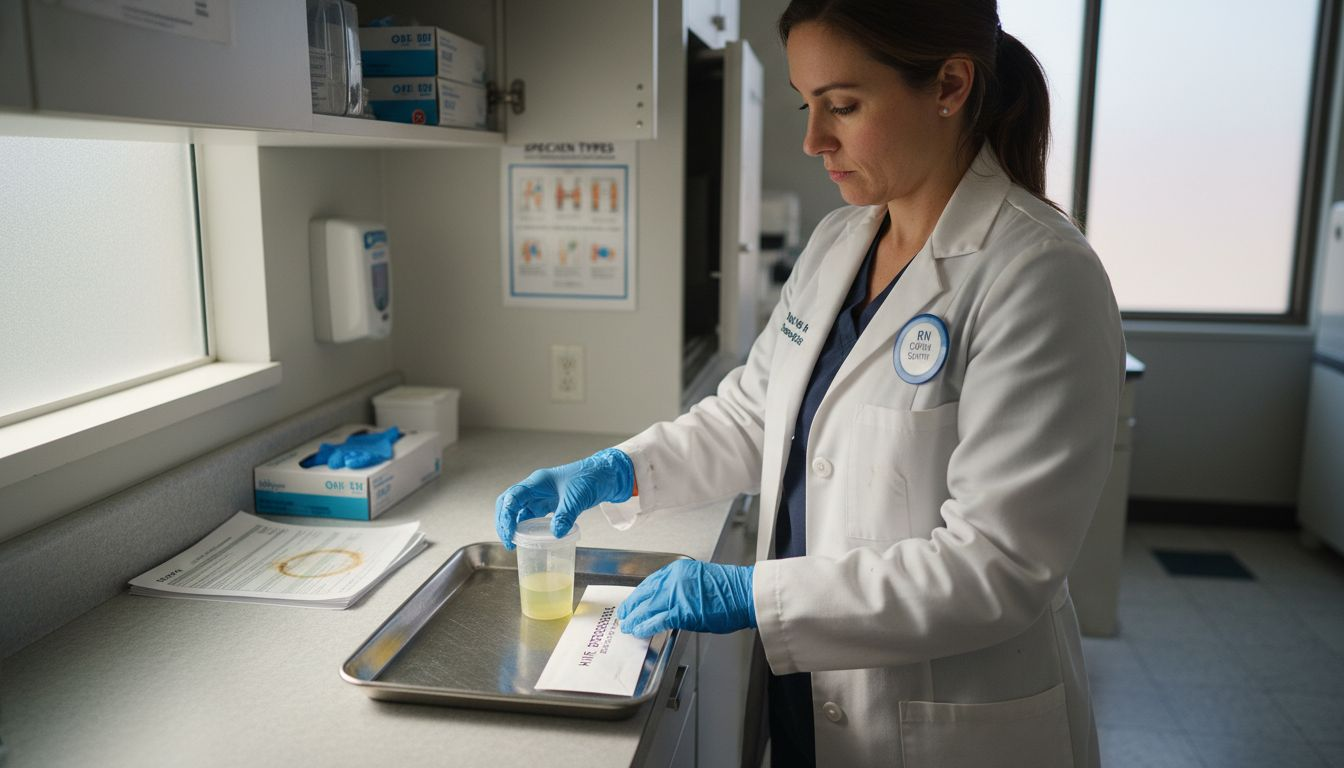
Your transportation company likely needs multiple testing types running simultaneously. Pre-employment filters out unsuitable candidates. Random testing provides ongoing deterrence. Reasonable suspicion and post-accident testing address specific incidents. This layered approach creates accountability and supports safety.
Pro tip: Establish a written testing policy that specifies which testing type applies to which situation, then train all supervisors on recognizing reasonable suspicion indicators so they can request testing appropriately when safety concerns arise.
Here’s a quick reference comparing federal drug testing programs and when they are typically applied:
| Program Type | When Used | Main Purpose |
|---|---|---|
| Pre-employment | Before hire | Screen out drug users |
| Random | Unscheduled, ongoing | Deter workplace drug use |
| Reasonable suspicion | On observed behaviors | Identify active impairment |
| Post-accident | After reportable accidents | Assess substance involvement |
| Return-to-duty | After violation/treatment | Confirm fitness to return |
| Follow-up | After return-to-duty | Monitor sustained sobriety |
Testing Methods and Detection Windows
Not all drug tests are created equal. The method you choose determines what substances you’ll detect, how far back in time you can identify use, and how quickly you get results. For transportation HR leaders, selecting the right testing method directly impacts your ability to maintain a safe workforce and stay compliant with federal regulations.
Urine testing remains the federal standard for DOT-regulated transportation employees. It detects drug metabolites that remain in the body for 2 to 4 days after use, depending on the substance and individual metabolism. Urine tests are cost-effective, non-invasive, and have established chain-of-custody procedures that courts recognize. The downside is that they detect past use rather than current impairment, so someone could test positive days after using drugs off-duty.
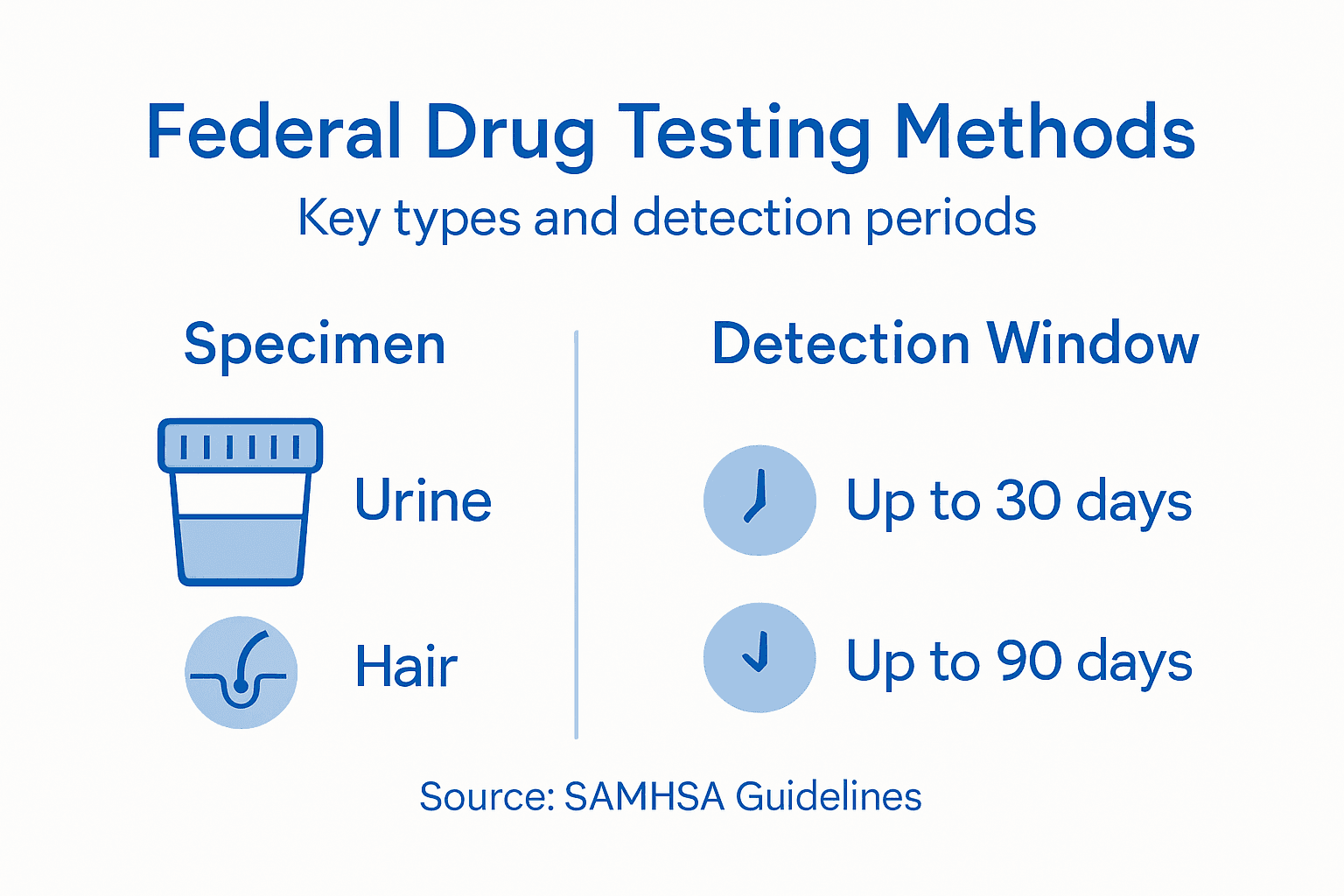
Oral fluid testing (saliva) detects more recent drug use, typically within the last 24 hours. This method identifies current impairment better than urine and is harder to adulterate. It’s less invasive than blood draws and provides faster results. However, oral fluid has a shorter detection window, so it works better for reasonable suspicion testing when you suspect active impairment rather than historical use.
Hair testing offers the longest detection window, up to 90 days. This method captures chronic or repeated use patterns rather than isolated incidents. Varied detection windows across different testing methods means you should pair hair testing with other methods to build comprehensive screening. Hair testing is less common in transportation because of cost and the longer timeline it represents.
Blood testing shows drug presence at the exact moment of testing and correlates most directly with impairment. It’s invasive, requires medical personnel, and is expensive. You’ll use blood testing primarily after accidents or when you need to establish immediate impairment for legal purposes.
Breath alcohol testing is the standard for measuring alcohol levels in transportation employees. It’s quick, objective, and directly measures breath alcohol content. Federal regulations specify exact breath testing devices and calibration requirements.
Detection windows matter enormously. A urine test before your driver shift starts catches weekend drug use. An oral fluid test at roadside checks catches someone impaired right now. Understanding which substance stays in the system longest helps you choose the right testing timeline.
Pro tip: Use urine testing as your primary screening method for pre-employment and random testing since it’s federally mandated and cost-effective, then add oral fluid testing for reasonable suspicion situations where you need to identify current impairment.
This table summarizes how different drug testing methods compare on key factors:
| Method | Typical Detection Window | Main Use Case | Invasiveness |
|---|---|---|---|
| Urine | 2-4 days | Pre-employment, random | Low |
| Oral fluid | Up to 24 hours | Reasonable suspicion | Very low |
| Hair | Up to 90 days | Chronic use detection | Moderate |
| Blood | Immediate use | Post-accident | High |
| Breath (alcohol) | Few hours | Alcohol checks | Very low |
Legal Standards and Compliance Duties
Federal drug testing doesn’t exist in a legal vacuum. Multiple federal laws intersect to create your compliance obligations as an HR leader. Understanding which laws apply to your transportation company prevents costly violations and protects both your employees and your organization from legal exposure.
The Controlled Substances Act (CSA) establishes the federal framework for which substances are illegal and how they’re classified. The Drug Enforcement Administration enforces these rules and determines which substances employers must test for. This matters because federal testing panels include specific drugs based on CSA classifications. You can’t just test for whatever you want. Your testing must align with federally approved substance lists, which currently include marijuana, cocaine, amphetamines, opioids, and phencyclidine (PCP).
The Americans with Disabilities Act (ADA) creates another layer of compliance. Drug testing for illegal drug use is permissible under the ADA and isn’t considered a medical examination. This means you can test and make employment decisions based on results. However, any medical information revealed during testing must remain confidential and separate from general employment records.
Your transportation company also faces liability under state and local laws that may be stricter than federal requirements. Some states require additional testing, more frequent random testing, or specific reporting procedures. You cannot implement a testing program that meets only federal standards if your state requires more. That’s the minimum compliance trap many HR leaders fall into.
Chain of custody requirements exist at both federal and state levels. Every sample must be documented from collection through testing and storage. Breaking this chain invalidates test results and creates legal liability. This is why using certified laboratories matters enormously. They maintain the documentation that holds up in court if results are challenged.
Your written testing policy must reference these legal standards explicitly. Employees need to understand that testing isn’t arbitrary. It’s mandated by federal law and conducted according to established legal procedures. This transparency actually reduces litigation because employees see fairness in the process.
Pro tip: Consult with an employment attorney in your state to create a written testing policy that meets federal DOT requirements plus any additional state or local regulations that apply, then review it annually since laws change and new guidance gets issued.
Employer Obligations and Risks of Noncompliance
As an HR leader at a transportation company, you’re not just managing a testing program. You’re assuming legal obligations that carry real consequences if violated. Understanding what you must do and what happens when you don’t is essential for protecting your organization.
Your primary obligation is establishing a written drug-free workplace policy that clearly outlines your testing procedures, consequences for positive results, and employee rights. This isn’t optional bureaucracy. Federal contractors and grantees must establish and maintain documented policies under federal mandates. If you receive any federal contracts or grants, this becomes mandatory. Without a written policy, you can’t prove you’re following federal guidelines if audited or sued.
You must also train all personnel involved in testing. Supervisors need to understand reasonable suspicion indicators. Lab personnel must follow chain-of-custody procedures precisely. Medical review officers must interpret results correctly. Proper drug testing staff training prevents errors that invalidate tests and create liability.
Reporting obligations are strict and time-sensitive. Any confirmed positive test must be reported to the Federal Clearinghouse if you operate under DOT regulations. Missing this deadline creates penalties and potentially disqualifies your drivers from operating. You must also notify affected employees within required timeframes and provide them opportunities to explain or challenge results through a medical review officer process.
Noncompliance carries severe consequences. Loss of federal contracts tops the list. If you’re a federal contractor, noncompliance can disqualify you from future bidding, essentially ending that revenue stream. Regulatory penalties and fines apply when you fail to report, use improper testing procedures, or violate employee privacy protections. You also face personal liability exposure if an impaired employee causes an accident and it’s discovered you failed to test properly.
Beyond legal consequences, noncompliance damages workplace safety. An undetected substance-abusing employee operating a commercial vehicle creates catastrophic accident risk. You’re liable for injuries they cause if it’s proven you negligently failed to implement required testing.
Pro tip: Conduct a compliance audit annually where you review testing records, verify proper documentation, confirm staff certifications are current, and ensure your written policy reflects any regulatory changes from the prior year.
Simplify Federal Drug Testing Compliance With Trusted Solutions
Navigating the complexities of federal drug testing regulations can feel overwhelming, especially when you must ensure safety-sensitive employees comply with DOT and SAMHSA standards. The key challenges include managing multiple testing types, maintaining strict chain-of-custody, and meeting all legal reporting obligations while protecting your workforce and organization from costly liabilities. With pressures to establish written policies and train supervisors on reasonable suspicion indicators, HR leaders need reliable support to stay compliant and confident.
CountryWideTesting.com offers a comprehensive range of urine and mouth swab drug tests along with certified laboratory services that meet federal standards like SAMHSA, ISO, CLIA, and CAP. Our platform connects you directly to trusted testing solutions designed for pre-employment, random, post-accident, and return-to-duty screening. We understand the urgency and high stakes involved, so we provide convenient online access to federally approved testing products and expert guidance that empowers your safety program.
Discover how you can meet your compliance duties effortlessly and protect your transportation company today.
Ready to take control of your federal drug testing requirements? Explore our full selection of testing products and laboratory services at CountryWideTesting.com.
Start building your compliant testing program now by visiting CountryWideTesting.com and accessing solutions tailored for federal workforce safety. Don’t risk costly violations or workplace hazards when expert support is just a click away.
Frequently Asked Questions
What is federal drug testing?
Federal drug testing refers to workplace drug screening programs mandated by federal law, particularly for safety-sensitive positions. These regulations are primarily overseen by the Department of Transportation (DOT) and involve specific procedures for testing and handling results.
Who is subject to federal drug testing regulations?
Employees in safety-sensitive positions within the transportation industry, such as drivers, mechanics, and dispatchers regulated under DOT guidelines, are subject to federal drug testing regulations. Additionally, federal civilian employees must comply with different standards set by the Substance Abuse and Mental Health Services Administration (SAMHSA).
What are the different types of federal drug testing?
Federal drug testing includes six common types: pre-employment testing, random testing, reasonable suspicion testing, post-accident testing, return-to-duty testing, and follow-up testing. Each type serves a specific purpose and applies to different situations within employment.
What are the main testing methods used in federal drug testing?
The primary testing methods for federal drug testing include urine testing (the federal standard), oral fluid testing, hair testing, blood testing, and breath alcohol testing. Each method has distinct detection windows, uses, and levels of invasiveness, impacting the types of drug use they can effectively identify.