
Stay Compliant: 2026 Laboratory Testing Standards for Employers
TL;DR:
- In 2026, federal drug testing regulations remain unchanged, but updates in lab certification, analyte panels, and international standards require continuous compliance monitoring. Employers must verify lab certification status monthly, track state law changes, and update documentation practices to avoid regulatory gaps. Using HHS-certified labs and adhering to ISO 15189:2022 standards enhances testing reliability, risk management, and overall program integrity.
Federal drug testing rules rarely feel urgent until an audit or a failed compliance review puts your program under scrutiny. Many employers assume laboratory testing standards stay frozen from year to year, but 2026 brings important nuances around lab certification, analyte panels, and emerging international standards that directly affect how you document and manage your testing program. The HHS/SAMHSA Mandatory Guidelines remain in effect with no changes to urine or oral fluid panels as of March 2026, yet enforcement, certification monitoring, and documentation requirements deserve your full attention right now.
Table of Contents
- Understanding 2026 laboratory drug testing standards
- Key substances, cutoffs, and testing panels for 2026
- Lab certification, compliance checks, and new technology
- Emerging standards: Risk management, ISO updates, and best practices
- Editorial perspective: What most compliance guides miss about lab testing in 2026
- Next steps: Secure your compliance with trusted laboratory solutions
- Frequently asked questions
Key Takeaways
| Point | Details |
|---|---|
| 2026 panels unchanged | Federal drug testing panels remain unchanged in 2026, but employers must stay alert for enforcement updates. |
| Certification required | Only HHS-certified labs can conduct regulatory workplace testing, with ongoing performance checks. |
| Urine tests standard | Urine testing is the only HHS-certified method for 2026; no labs authorized for oral fluid testing yet. |
| ISO and risk management | New ISO 15189:2022 standards push risk management and best practices for all medical labs in 2026. |
| Ongoing monitoring | Employers must review lab certifications regularly and document compliance for every testing cycle. |
Understanding 2026 laboratory drug testing standards
Most employers running federally mandated drug testing programs operate under a two-layer system: federal guidelines set the floor, and state laws sometimes raise it. Understanding both layers is the starting point for a compliant 2026 program.
At the federal level, the HHS/SAMHSA framework governs which labs you can use, which substances must be tested, and how results are reviewed. The 2026 drug screening updates reinforce that the current panels for urine and oral fluid remain unchanged as of March 2026. That sounds straightforward, but “no changes to the panel” does not mean “no changes to how you operate.” Lab certification suspensions, new enforcement guidance, and shifting state laws can all create compliance gaps even when the federal panel itself stays the same.
Key fact: Compliance is not a one-time setup. Regulatory bodies publish updates, suspensions, and clarifications in the Federal Register throughout the year. If you are not monitoring those publications, you may miss enforcement changes that affect your program mid-year.
Here is what you need to track continuously in 2026:
- Lab certification status: Certified labs can be suspended or removed from the approved list at any time. Verify your lab’s status monthly, not annually.
- State law changes: Several states have updated cannabis-related testing rules in recent years. State employment law can limit when and how you test, even under a federally mandated program.
- Documentation requirements: Chain-of-custody forms, Medical Review Officer (MRO) records, and collector training logs all need to meet current standards.
- Federal Register monitoring: Any interim rules, suspensions, or guidance affecting your testing program will appear there first.
Supporting testing for workplace safety starts with knowing exactly which rules apply to your industry and your workforce. Transportation, defense contractors, and nuclear energy employers face stricter oversight than many other sectors, and even a minor documentation error can trigger a regulatory finding. Use a lab quality checklist for compliance to audit your current setup against the 2026 requirements before an inspector does it for you.
Key substances, cutoffs, and testing panels for 2026
Building on your awareness of overarching standards, let’s examine which substances and thresholds actually matter most in 2026.
The authorized federal panel covers a broader range of substances than many employers realize. Under the current guidelines, authorized analytes include marijuana (Δ9-THC and Δ9-THCC), cocaine (benzoylecgonine), a full opioid group, phencyclidine (PCP), fentanyl and norfentanyl, amphetamines, and MDMA/MDA, each with specific initial test cutoffs and confirmatory cutoffs. The fentanyl addition is a notable element that some employers are still working into their policies and collector training materials.
Here is a summary of the key analytes and their standard initial cutoff levels for urine testing:
| Drug class | Primary analyte | Initial test cutoff |
|---|---|---|
| Marijuana | Δ9-THC / Δ9-THCC | 50 ng/mL |
| Cocaine | Benzoylecgonine | 150 ng/mL |
| Opioids (morphine/codeine) | Morphine / Codeine | 2,000 ng/mL |
| Opioids (semi-synthetic) | Oxycodone / Hydrocodone | 300 ng/mL |
| Heroin marker | 6-Acetylmorphine | 10 ng/mL |
| Phencyclidine | PCP | 25 ng/mL |
| Amphetamines | Amphetamine / Methamphetamine | 500 ng/mL |
| MDMA/MDA | MDMA / MDA | 500 ng/mL |
| Fentanyl | Fentanyl / Norfentanyl | 1 ng/mL (initial screen) |
These cutoffs are the federal floor. Your lab must use SAMHSA-approved confirmation testing (typically GC/MS or LC-MS/MS) to validate any positive initial result. The MRO then interprets the result in the context of any legitimate prescription the donor may hold.
One critical point that many compliance programs get wrong: there is still no approved standard for impairment-based biomarker testing under the federal guidelines. If a vendor is pitching you an “impairment detection” tool as a replacement for laboratory drug testing, it does not satisfy your federal obligation in 2026. Stick to the employment drug test panels that meet current SAMHSA requirements.
Pro Tip: Review your internal drug testing policy document to confirm it references fentanyl and norfentanyl as a tested analyte pair. Many older policy templates predate the fentanyl addition and will fail an internal audit.
Lab certification, compliance checks, and new technology
To ensure you choose the right partner, next we’ll dive into which labs qualify in 2026 and how to navigate shifting certification requirements.
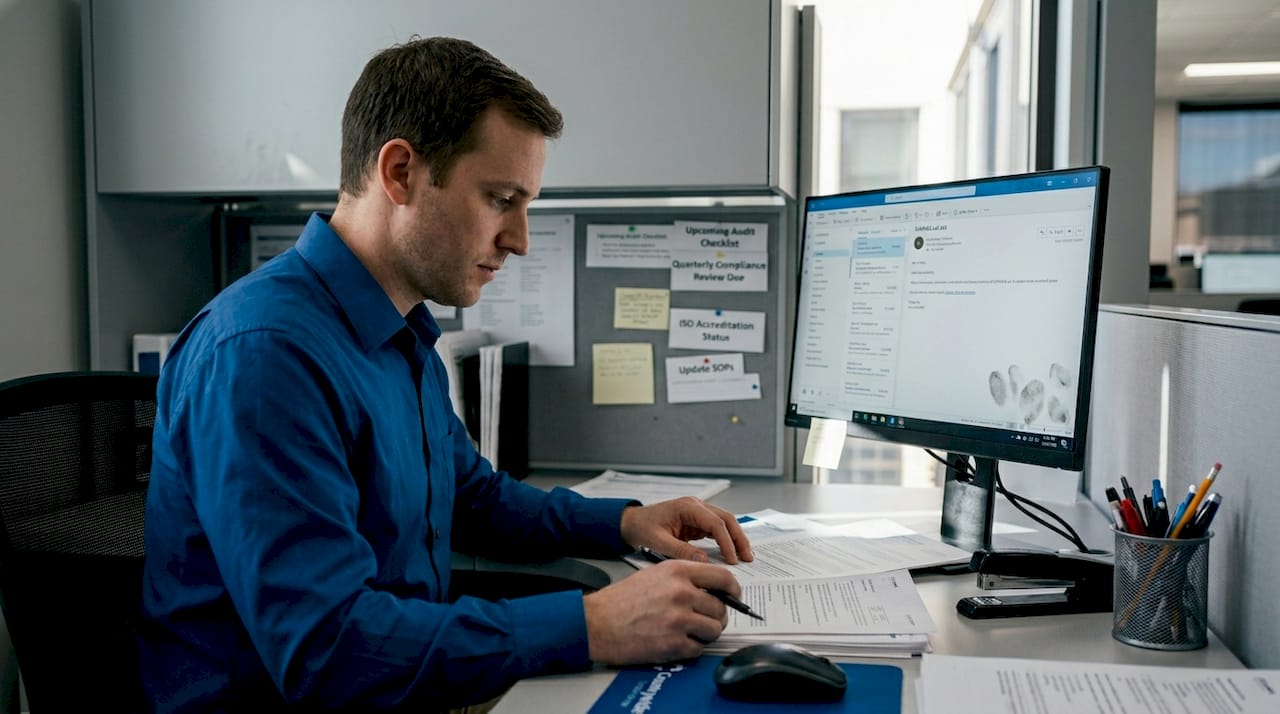
Not every laboratory that offers drug testing qualifies for federally mandated workplace programs. To test federal employees or workers in DOT-regulated industries, your lab must hold HHS certification through the National Laboratory Certification Program (NLCP). That certification is not a one-time achievement. HHS-certified lab requirements include completing three rounds of performance testing, passing an on-site inspection, and maintaining quarterly performance testing once certified. Labs that slip on any of those requirements can be suspended or removed from the approved list entirely.
Here is a comparison of the two primary lab types used in federal workplace drug testing:
| Lab type | Regulatory oversight | Suitable for federal testing? | Test method |
|---|---|---|---|
| HHS/NLCP-certified laboratory | SAMHSA/HHS inspected and approved | Yes | Urine (primary) |
| IITF (Instrumented Initial Test Facility) | HHS-certified for initial tests only | Partial (confirmation sent to full lab) | Urine |
| Non-certified commercial lab | No federal approval | No | Varies |
| Oral fluid lab (as of April 2026) | No HHS-certified labs approved yet | No | Oral fluid |
That last row is critical. As of April 2026, no HHS-certified labs are approved for oral fluid drug testing. The regulatory framework for oral fluid testing in federal programs exists on paper, but the certified laboratory infrastructure is not yet available. If your program is federally mandated, oral fluid is not an option right now, regardless of how convenient it sounds.
For employers who want to understand lab certification explained in plain terms, the process works like this:
- Initial performance testing: The candidate lab receives blind performance test samples from an HHS-approved PT provider and must achieve passing scores across three rounds.
- On-site inspection: An HHS inspector reviews the lab’s facilities, equipment, procedures, chain-of-custody handling, and personnel qualifications.
- Certification issuance: Once the lab passes all initial requirements, it is added to the HHS-approved laboratory list, which is published and updated regularly.
- Quarterly maintenance testing: Certified labs must continue receiving and passing quarterly performance test samples to maintain certification.
- Annual inspections: Regular follow-up inspections ensure ongoing compliance with all NLCP standards.
When managing your drug screening workflow, build a monthly verification step into your compliance calendar to confirm your testing lab remains on the active HHS-certified list. You can also use external guides on regulatory compliance for lab products to benchmark your internal documentation process.
Pro Tip: Download the current HHS-certified laboratory list directly from the SAMHSA website at least once per month. Set a recurring calendar reminder for the first business day of each month. If your lab’s name disappears or shows a suspended status, you need to act immediately before your next collection event.
Emerging standards: Risk management, ISO updates, and best practices
Now that you’re equipped with regulatory and certification knowledge, here’s how to stay ahead with risk management and forward-looking strategies.
While SAMHSA governs federal workplace drug testing directly, the laboratory industry is also evolving under international quality standards that affect how certified labs operate. ISO 15189:2022 is the primary international standard for medical laboratory quality. Its 2026 effective updates place increased emphasis on risk management, patient and donor safety, point-of-care testing (POCT) inclusion, and alignment with ISO/IEC 17025:2017 for testing and calibration. For some accredited laboratories, the transition to the 2022 version became mandatory as early as February 2026.
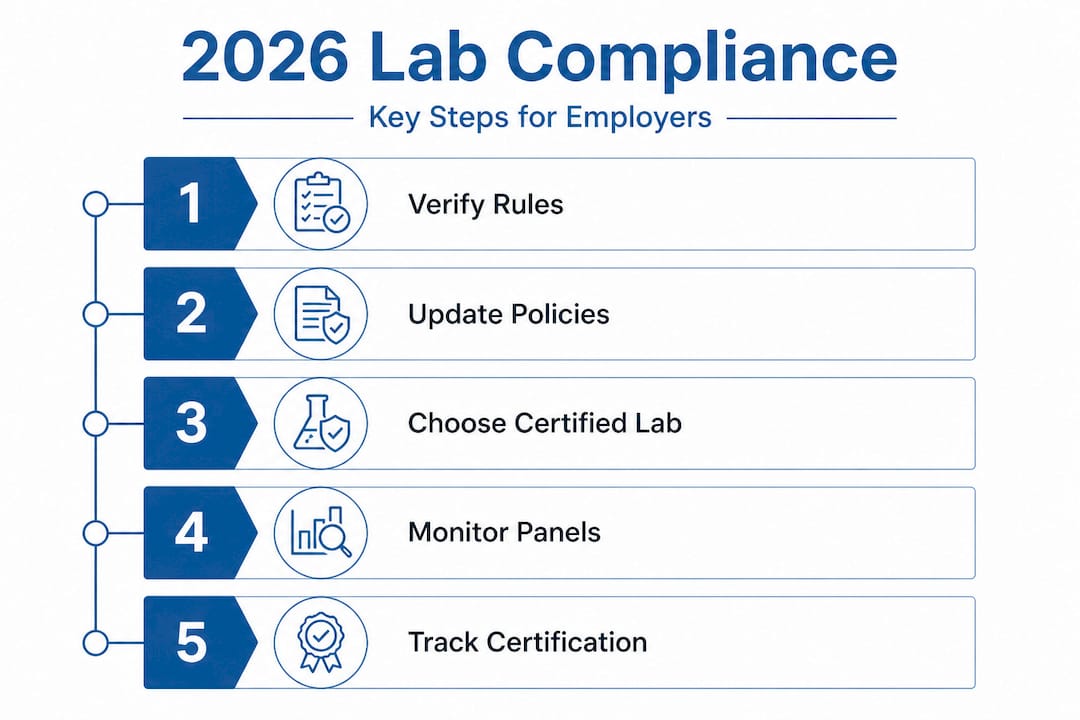
Why does this matter to you as an employer? Because labs operating under ISO 15189:2022 are implementing more rigorous risk management processes, which translates directly into better chain-of-custody handling, more reliable result reporting, and stronger documentation practices. When you choose a lab that is both HHS-certified and ISO-accredited, you are getting a provider that meets both federal regulatory requirements and internationally recognized quality benchmarks.
Here is what this means for your compliance program in practical terms:
- Risk-based thinking is now baked into lab operations. ISO 15189:2022 requires labs to identify risks in every process, from sample receipt through result reporting. This reduces the chance of errors that could invalidate your test results.
- POCT alignment matters for pre-employment screening. While point-of-care tests (rapid urine cups, oral fluid devices) cannot serve as the final result in federally mandated programs, they are commonly used in non-DOT settings. ISO alignment means the rapid testing products you use should come from suppliers operating under comparable quality frameworks.
- Documentation and audit trails are non-negotiable. Under ISO 15189:2022, labs must maintain thorough records of every quality event, equipment calibration, and corrective action. Your own internal records need to match that standard to survive an audit.
- Continuous improvement is a formal requirement. Labs cannot just meet the standard once. They must demonstrate ongoing improvement, which pushes the best labs to consistently raise the bar.
The drug testing trends shaping 2026 reflect this same emphasis. Employers who build internal audit calendars, maintain living policy documents, and stay current with their compliance guide are the ones who avoid costly findings. Treat your compliance program the same way the best labs treat their quality management systems: as something that is always being improved, not just maintained.
Stat to know: Labs transitioning to ISO 15189:2022 must demonstrate risk management integration across all pre-analytical, analytical, and post-analytical phases. That is a more demanding standard than the 2012 version and affects how quickly labs can turn around compliant results under stress conditions.
Editorial perspective: What most compliance guides miss about lab testing in 2026
Most compliance guides focus on what changed. The more useful question is what employers consistently fail to do, even when nothing changes.
The biggest gap we see is not a knowledge gap, it is a process gap. Employers research the rules, update their policies, and choose a certified lab. Then they stop. They treat compliance as a completed project rather than an ongoing operation. Lab certifications expire or get suspended. State laws shift. The Federal Register publishes mid-year clarifications. By the time the next annual review rolls around, the gap between policy and current reality can be significant.
The second gap involves grouped analytes. Fentanyl and norfentanyl are now standard in federal panels, but many employer policies still list only the legacy “opioids” category without specifying the full analyte list. That matters when an MRO questions a result or when an employee challenges a positive. Vague language in your policy is a liability.
The third gap is documentation culture. Too many HR teams treat chain-of-custody paperwork as a checkbox. In reality, your chain-of-custody records are your primary defense in any legal challenge to a positive result. Every break in that chain is an attack surface. The complete drug screening workflow should be written down, trained to every collector and HR staffer, and reviewed against current standards at least twice per year.
Our honest take: the employers who avoid compliance failures in 2026 are not the ones with the most sophisticated testing programs. They are the ones who built simple, repeatable processes and actually follow them. Monthly lab status checks, quarterly policy reviews, and annual collector retraining are unglamorous. They are also the activities that keep your program bulletproof.
Next steps: Secure your compliance with trusted laboratory solutions
Ready to turn best practices into action? Here’s how to ensure your program is ready for 2026 and beyond.
Staying compliant in 2026 means more than knowing the rules. It means having a certified lab partner, the right testing products, and a reliable process behind every collection event. CountryWideTesting.com connects employers directly with lab testing services backed by HHS-certified, SAMHSA, CAP, CLIA, and ISO-accredited laboratories, giving you the documentation trail and certified results your compliance program demands.
For pre-employment screening and non-DOT workplace programs, the 12-panel at-home drug test covers the full range of federally relevant substances in a convenient, cost-effective format. Whether you need individual test kits, bulk employer orders, or fully managed lab confirmation services, CountryWideTesting.com offers nationwide drug testing solutions scaled to your program size. Do not leave your 2026 compliance to a lab you have not verified this month.
Frequently asked questions
Are there any changes to the federal drug testing panels in 2026?
No, the SAMHSA panels remain unchanged for both urine and oral fluid as of March 2026, though enforcement and lab certification requirements continue to apply in full.
Which drugs must labs test for under federal guidelines in 2026?
Labs must test for marijuana, cocaine, opioids, phencyclidine, amphetamines, and MDMA/MDA, with the full authorized analyte list including fentanyl/norfentanyl and specific confirmatory cutoffs for each substance.
Can I use oral fluid drug testing for mandated workplace programs in 2026?
No. As of April 2026, no HHS-certified labs are approved for oral fluid drug testing, so urine testing through certified laboratories remains the required method for federally mandated programs.
Do labs need special certification to perform regulatory workplace testing?
Yes, labs must hold HHS certification via NLCP, which includes performance testing rounds, on-site inspections, and ongoing quarterly testing to maintain their approved status.
What international lab standards take effect in 2026?
ISO 15189:2022 places new emphasis on risk management and patient safety, with transitions effective for some labs in February 2026, raising the quality bar for how certified laboratories document and manage their testing processes.