
Drug Testing Compliance Checklist: Ensure Workplace Adherence
TL;DR:
- Compliance requires understanding layered federal, state, and industry-specific drug testing laws.
- Proper procedures include certified labs, chain-of-custody, MRO review, and confidentiality measures.
- Regular audits, training, and policy updates are essential to adapt to evolving legal standards.
Failing a drug testing audit is not just an embarrassment. It can expose your organization to federal penalties, costly litigation, and serious safety incidents that damage your reputation for years. With evolving drug testing laws reshaping what employers are required to do, a patchwork policy is no longer enough. This checklist walks HR professionals and employers through every critical compliance step, from understanding your regulatory obligations to selecting the right drug panels, documenting results, and training your team to handle every scenario correctly.
Table of Contents
- Understand your regulatory requirements
- Establish proper drug testing procedures
- Select appropriate drug panels and testing occasions
- Document, train, and review for ongoing compliance
- A compliance checklist is just the start: What most guides miss
- Take the next step with professional drug testing solutions
- Frequently asked questions
Key Takeaways
| Point | Details |
|---|---|
| Check regulations first | Begin every compliance program by confirming your federal, state, and industry-specific drug testing obligations. |
| Use certified labs | Always conduct employee drug tests in HHS-certified labs with proper chain-of-custody to ensure accurate results. |
| Choose the right panels | Select drug panels based on substance trends in your industry and adjust for changing legal requirements. |
| Document and train | Keep thorough documentation and train staff regularly to pass audits and maintain compliance. |
| Review and update | Regularly revisit your checklist and policies as laws and organizational needs evolve. |
Understand your regulatory requirements
Before you write a single policy line, you need to know exactly which regulations govern your organization. This is where many employers stumble. They assume one federal standard applies to everyone, but the reality is layered. Federal rules, state statutes, and industry-specific mandates can all apply simultaneously, and they do not always agree.
At the federal level, the Department of Transportation sets the most detailed requirements for safety-sensitive industries. DOT-regulated employers must use HHS-certified labs and follow 49 CFR Part 40, which covers everything from specimen collection to chain-of-custody documentation and the use of a Medical Review Officer. If your workforce includes commercial drivers, pilots, or pipeline workers, these rules are non-negotiable.
Beyond DOT, the Drug-Free Workplace Act applies to federal contractors and grant recipients. State laws add another layer entirely. Some states restrict when you can test, what substances you can screen for, and how you must handle a positive result. Others give employees protections around off-duty marijuana use that directly conflict with older federal policies.
Here is a quick breakdown of the key regulatory areas to verify before finalizing your policy:
- Federal DOT rules (49 CFR Part 40): Mandatory for transportation and safety-sensitive roles; requires HHS-certified labs, chain-of-custody, and MRO review
- Drug-Free Workplace Act: Applies to federal contractors receiving $100,000 or more in contracts
- State-specific statutes: Vary widely; some states mandate employee notification, others restrict random testing
- Industry-specific standards: Healthcare, aviation, and nuclear energy each carry unique requirements
- Marijuana legalization nuances: Even where recreational use is legal, employers in safety-sensitive roles may still test for impairment
The marijuana question deserves special attention. As more states legalize recreational and medical use, the standard of testing for past use is shifting toward testing for current impairment. Your compliance guide for employers should address this distinction explicitly.
Pro Tip: Set a calendar reminder to check your state labor department website every quarter. Drug testing laws changed in multiple states in 2025 alone, and an outdated policy is just as risky as having no policy.
Establish proper drug testing procedures
With legal frameworks in mind, next you need bulletproof procedures that stand up to any scrutiny. A well-written policy means nothing if the collection and testing process is flawed. Courts and regulators look at the entire chain of events, not just the final result.
Here is a numbered checklist for building legally defensible testing procedures:
- Select an HHS-certified laboratory. Only labs certified by the Department of Health and Human Services meet federal standards. Using an uncertified lab can invalidate results entirely. Review HHS lab certification requirements before signing any lab contract.
- Implement strict chain-of-custody documentation. Every specimen must be tracked from collection to final result. A break in chain-of-custody procedures is one of the most common reasons test results get challenged.
- Use a Medical Review Officer for all non-negative results. An MRO is a licensed physician trained to interpret drug test results. They verify whether a positive result has a legitimate medical explanation before it is reported to the employer. Understanding MRO responsibilities is essential for any HR team.
- Train your collection site staff. Collectors must follow standardized procedures for specimen handling, temperature checks, and documentation. Untrained collectors create liability.
- Protect result confidentiality. Drug test results are sensitive medical information. Store them separately from general personnel files and limit access to those with a direct need to know.
“Use certified labs (HHS for federal), maintain chain-of-custody, MRO verification for positives, ensure confidentiality of results.”
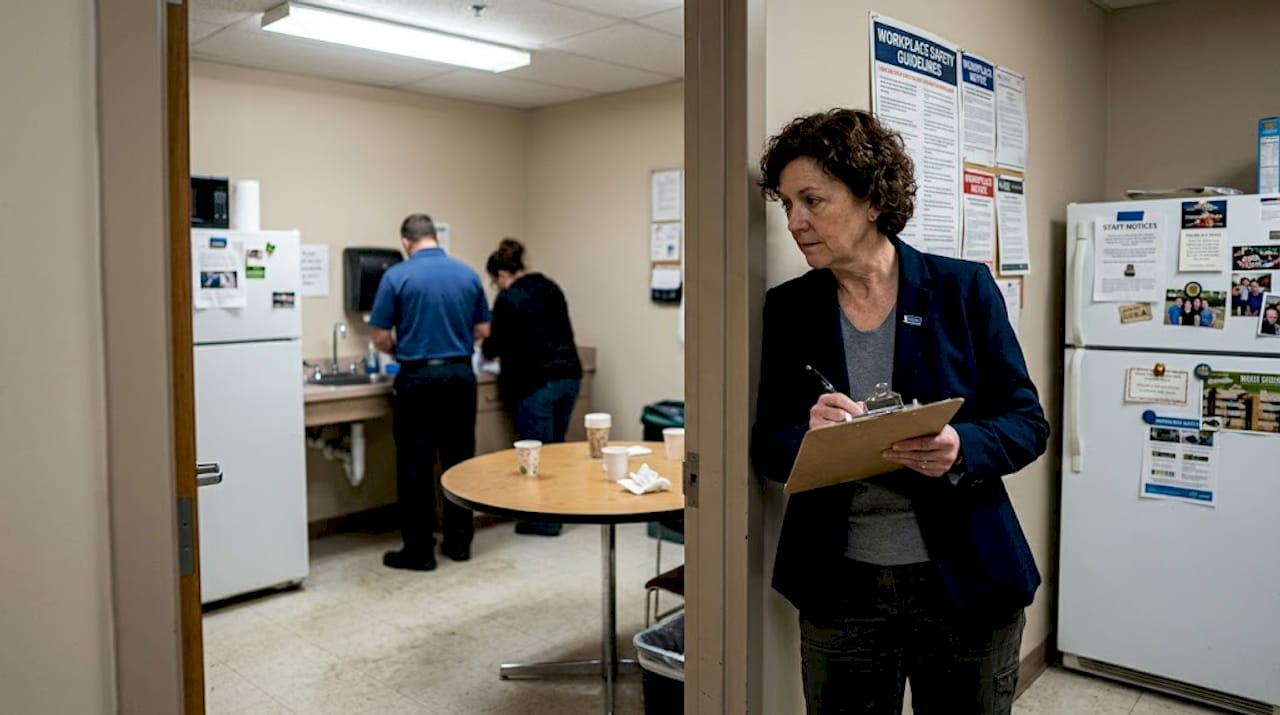
Pro Tip: Auditing your process annually, not just your written policy, catches real-world gaps. Observe a mock collection, review three recent chain-of-custody forms, and confirm your lab’s certification is current. This takes two hours and can prevent a lawsuit.
Select appropriate drug panels and testing occasions
After systematizing your procedures, the next priority is ensuring you test for the right drugs at the right times. Choosing the wrong panel wastes money and creates gaps in your safety program.
The standard 5-panel test screens for THC, cocaine, opioids, amphetamines, and PCP. For many industries, this is a reasonable baseline. However, standard panels may need expansion to include fentanyl, benzodiazepines, or synthetic opioids depending on your workforce risk profile. Fentanyl in particular has become a critical addition for employers in logistics, construction, and healthcare.
Review examples of common drug panels to match your industry risk to the right screening level.
Panel comparison table
| Panel type | Substances detected | Best use case |
|---|---|---|
| 5-panel | THC, cocaine, opioids, amphetamines, PCP | General workforce, DOT baseline |
| 10-panel | Above plus benzodiazepines, barbiturates, methadone, propoxyphene, methaqualone | Healthcare, safety-sensitive roles |
| 12-panel | Above plus fentanyl, synthetic opioids | High-risk industries, logistics |
| Expanded custom | Any combination based on employer need | Specialized programs |
Beyond panel selection, you also need to define your testing occasions clearly:
- Pre-employment: Test all final candidates before their start date
- Random: Use a scientifically random selection process; document the selection method
- Post-incident: Test after any workplace accident or near-miss that meets your threshold criteria
- Reasonable suspicion: Require two trained supervisors to document observable signs before ordering a test
- Return-to-duty: Mandatory for employees returning after a positive result or policy violation
Pro Tip: Review your panel selection every 18 months. Substance trends shift by region and industry. What was rare in your sector three years ago may now be a documented risk.
Document, train, and review for ongoing compliance
With clear choices on what and when to test, your compliance hinges on robust documentation and regular process improvement. The best testing program in the world fails if the paperwork is missing or the supervisors do not know how to act on a reasonable suspicion observation.
Document retention table
| Document type | Recommended retention period |
|---|---|
| Written drug testing policy | Indefinitely (update with each revision) |
| Employee signed consent forms | Duration of employment plus 3 years |
| Chain-of-custody forms | Minimum 2 years (5 years for DOT) |
| Drug test results (negative) | 1 year |
| Drug test results (positive/MRO verified) | 5 years |
| Training records | Duration of employment plus 2 years |
Proper documentation and confidentiality are required for regulatory compliance, and auditors will ask for these records by name. Build a filing system now, not after your first inspection.
Here is a five-step self-audit checklist your HR team can run every year:
- Pull three random chain-of-custody forms and verify they are complete and signed at every stage
- Confirm your lab’s HHS certification is active and on file
- Review your written policy against any state law changes from the past 12 months
- Check that all supervisors responsible for reasonable suspicion determinations completed training within the last two years
- Verify that positive result files are stored separately and access is logged
For training, your managers need to recognize behavioral and physical signs of impairment, understand what they can and cannot say to an employee before a test, and know the documentation steps. Resources on conducting compliant drug testing can support your internal training program. Also consider reviewing best drug testing kits if you manage on-site preliminary screening.
A compliance checklist is just the start: What most guides miss
Most compliance guides hand you a checklist and call it done. The uncomfortable truth is that a static checklist becomes a liability the moment the law changes and nobody updates it.
Marijuana is the clearest example. In the last three years, multiple states rewrote their employment drug testing statutes. Employers who relied on templates built before those changes found themselves enforcing policies that were no longer legal in their state. Leadership buy-in is what prevents this. When executives treat compliance as a living program rather than a one-time setup, policies actually get updated.
Employee education matters just as much. Workers who understand why testing exists and what the process looks like are far less likely to challenge results or file grievances. Sporadic training creates confusion. A consistent annual touchpoint keeps everyone aligned.
The evolution of drug testing policy is accelerating, not slowing. If you operate across multiple states, a single-state focus is a trap. Build your program to be adaptable. A rehab drug testing checklist can also offer perspective on how specialized programs handle ongoing compliance in high-scrutiny environments. Be proactive, not reactive.
Take the next step with professional drug testing solutions
Building a compliant drug testing program is detailed work, and the right lab partner makes every step more manageable. CountryWideTesting.com works with employers to simplify the process from panel selection to certified lab processing.
Our lab testing services connect you with SAMHSA, CLIA, and CAP-certified laboratories that meet federal and state standards. Whether you need pre-employment screening, random testing programs, or post-incident testing support, we provide the infrastructure to keep your program running smoothly. Explore nationwide drug testing options built for employers who need reliable, defensible results without the administrative burden.
Frequently asked questions
What labs are required for DOT drug testing compliance?
DOT regulations require the use of HHS-certified laboratories that follow 49 CFR Part 40 procedures for all drug tests.
How often should employers update their drug testing policies?
Policies should be reviewed at least annually and updated whenever state or federal laws change, particularly given marijuana legalization impacts on workplace testing rules.
What should a drug testing compliance checklist include?
It should cover regulatory review, procedure setup, panel selection, supervisor training, documentation protocols, and periodic audits, as outlined in the drug testing compliance guide.
Is marijuana testing still required where it is legal?
Policies may shift to test for impairment rather than off-duty use; always check your state laws and update company policies to reflect current workplace drug testing standards.
Who can verify and review positive drug test results?
A Medical Review Officer must verify all non-negative results before any employer action is taken, as required by federal drug testing standards.