
Rehab drug testing checklist: criteria and practices 2026
Rehabilitation centers face mounting pressure to implement drug testing protocols that balance accuracy, compliance, and patient dignity. With inconsistent cutoff levels across laboratories and evolving regulatory standards, administrators must navigate a complex landscape of testing methods and policies. This article provides a structured checklist approach to help you select reliable drug testing protocols, standardize procedures, and support patient recovery while meeting federal and state requirements.
Table of Contents
- Establishing Criteria For An Effective Rehab Drug Testing Checklist
- Review Of Drug Testing Methods And Their Role In Rehab Screening
- Understanding Variability In Cutoff Levels And Interpreting Test Results
- Comparing Drug Testing Options: Checklist Features And Best Practices
- Enhance Your Rehab Drug Testing Program With Countrywide Testing
Key takeaways
| Point | Details |
|---|---|
| Regulatory compliance | Drug testing protocols must align with federal and state regulations to ensure legal defensibility and program integrity. |
| Urine testing dominance | Urine testing remains the most reliable and widely adopted method for monitoring substance use in rehabilitation settings. |
| Cutoff standardization | Laboratory cutoff levels vary significantly, requiring facilities to establish consistent internal standards for result interpretation. |
| Comprehensive checklists | Structured testing checklists improve accuracy, reduce errors, and enhance patient outcomes through systematic implementation. |
| Multi-method monitoring | Combining urine tests with oral fluid or breath testing provides comprehensive coverage for different detection windows and use cases. |
Establishing criteria for an effective rehab drug testing checklist
Creating a robust drug testing checklist begins with defining clear policy goals that serve multiple stakeholders. Your checklist must address compliance requirements, support patient recovery objectives, and establish defensible legal standards. The Substance Abuse and Mental Health Services Administration (SAMHSA) emphasizes the importance of comprehensive policies that outline prohibited behaviors, testing procedures, and consequences for violations.
Start by identifying which substances your facility will monitor based on patient populations and treatment focus. Common panels include opioids, amphetamines, cocaine, marijuana, and benzodiazepines, but your specific context may require expanded or specialized testing. Document these substances explicitly in your policy to eliminate ambiguity during implementation.
Your checklist must specify every procedural step from sample collection through result reporting. Detail how staff will collect specimens, maintain chain of custody, protect patient confidentiality, and handle positive results. These procedures protect both patients and your facility from legal challenges while ensuring test integrity. Consider integrating a rehab drug screening workflow that maps each touchpoint in your testing process.
Establish consequences for positive tests that balance accountability with therapeutic goals. Your policy should distinguish between initial positive results, confirmed positives after retesting, and repeated violations. Align these consequences with ethical treatment principles rather than purely punitive measures. Pro Tip: Schedule quarterly policy reviews to incorporate new regulatory guidance, emerging substances of abuse, and lessons learned from your own program data.
Key checklist elements include:
- Clear definitions of prohibited substances and behaviors
- Step-by-step sample collection and handling protocols
- Chain of custody documentation requirements
- Confidentiality safeguards and data protection measures
- Escalating consequences framework for violations
- Regular policy review and update schedule
Review of drug testing methods and their role in rehab screening
Selecting appropriate testing methods requires understanding each option’s strengths, limitations, and fit with your program goals. Urine testing is the best developed and most commonly used monitoring technique in substance abuse treatment programs, offering reliable detection of most abused substances through a non-invasive collection process.
Urine tests provide detection windows ranging from one to four days for most drugs, though some substances like marijuana can be detected for weeks in chronic users. This window aligns well with typical rehab monitoring schedules and provides sufficient time to identify recent use. The method’s maturity means extensive validation data supports its accuracy and legal defensibility.
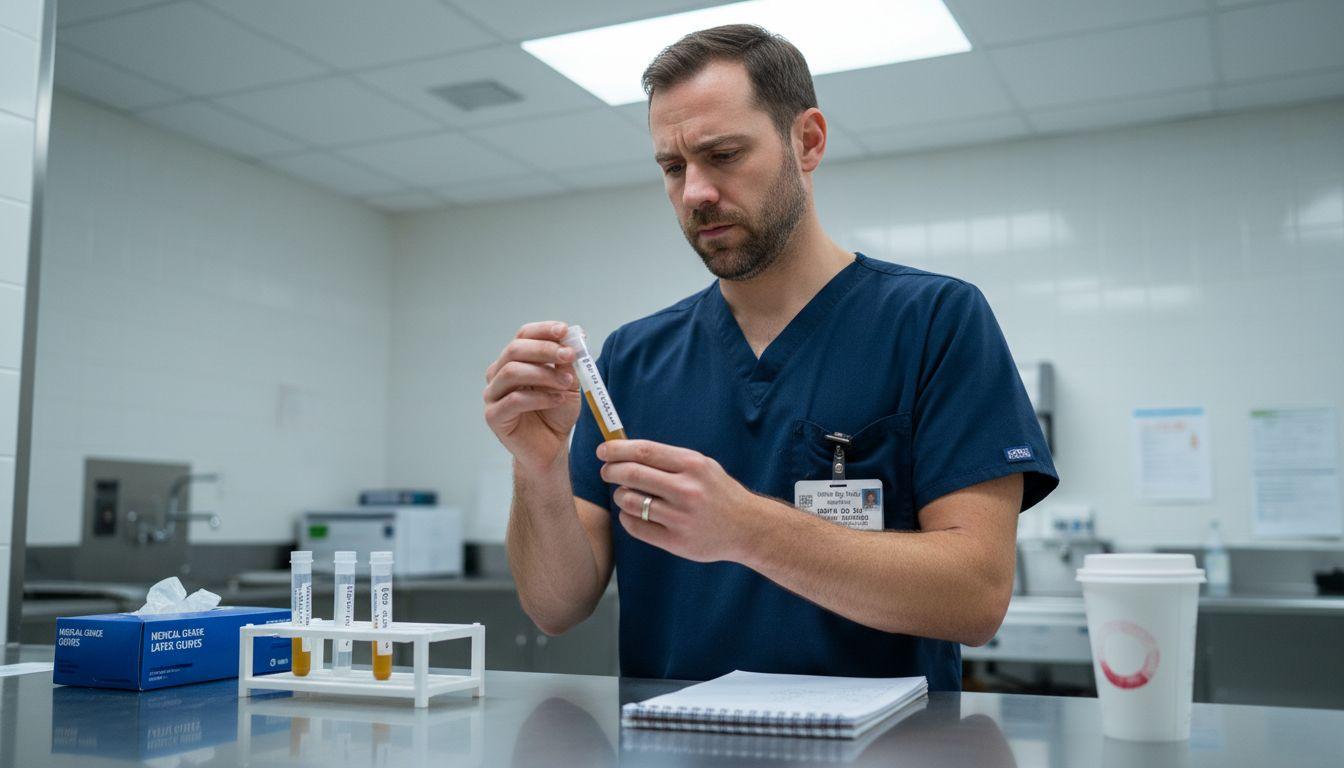
Oral fluid testing offers advantages for specific scenarios where recent use detection matters most. Saliva tests typically detect substances used within the past 24 to 48 hours, making them ideal for identifying very recent consumption or verifying abstinence immediately before privileges or outings. The observed collection process also reduces tampering opportunities compared to urine samples.
Breath testing serves a specialized role for alcohol monitoring, particularly in programs focused on alcohol use disorder. Modern breathalyzers provide immediate results and can be administered frequently without the privacy concerns of biological sample collection. Some facilities use breath testing as a daily check-in requirement to reinforce accountability.
Your testing strategy should integrate multiple methods based on patient needs and program phases. Early treatment might emphasize frequent urine testing to establish baseline compliance, while later stages could incorporate oral fluid tests for specific situations. This layered approach enhances monitoring without creating excessive burden. Implementing these methods supports drug testing relapse reduction by providing comprehensive coverage across different use patterns.
Pro Tip: Document your rationale for selecting specific testing methods in your policy manual to demonstrate thoughtful program design during audits or accreditation reviews.
“The choice of testing method should reflect your facility’s specific patient population, treatment philosophy, and operational capabilities rather than simply following industry defaults.”
Consider these method selection factors:
- Detection window alignment with monitoring goals
- Collection procedure privacy and dignity considerations
- Tampering resistance and result reliability
- Cost per test and budget sustainability
- Laboratory turnaround time for confirmatory testing
- Staff training requirements and competency maintenance
Understanding variability in cutoff levels and interpreting test results
Laboratory cutoff levels create significant interpretation challenges that administrators must address through standardized policies. There is no consensus among labs on what level should confirm the presence of codeine in urine, leading to situations where identical samples might yield different results depending on which laboratory processes them.
Cutoff levels represent the concentration threshold above which a test registers as positive. These thresholds vary for each substance and differ between screening tests and confirmatory analyses. For example, one laboratory might use a 300 ng/mL cutoff for marijuana metabolites while another uses 50 ng/mL, dramatically affecting positive test rates for the same patient population.
This variability stems from multiple factors including analytical capabilities, regulatory interpretations, and laboratory business decisions. Federal workplace testing follows SAMHSA guidelines with specific cutoffs, but clinical rehabilitation testing operates under less standardized requirements. You must establish which cutoff levels your facility will recognize regardless of laboratory variations.
Develop standard operating procedures that specify accepted cutoff ranges for each substance class your program monitors. When contracting with laboratories, require them to disclose their cutoff levels and ensure alignment with your policy. If you use multiple labs, document any cutoff differences and train staff on how these variations affect result interpretation.
Create comparison tables that track cutoff standards across your laboratory vendors. This documentation proves invaluable when explaining results to patients, defending decisions to stakeholders, or identifying testing inconsistencies. Regular audits of laboratory performance should include cutoff level verification. Understanding cutoff levels for drug tests helps you maintain consistent standards across your program.
Pro Tip: Negotiate contracts with laboratories that allow you to specify custom cutoff levels aligned with your clinical judgment rather than accepting default thresholds.
| Substance | Common Screening Cutoff | Common Confirmation Cutoff | Clinical Consideration | | — | — | — | | Marijuana (THC) | 50 ng/mL | 15 ng/mL | Lower cutoffs detect passive exposure | | Cocaine | 300 ng/mL | 150 ng/mL | Metabolite persistence varies widely | | Opiates | 2000 ng/mL | 2000 ng/mL | Codeine levels lack standardization | | Amphetamines | 1000 ng/mL | 500 ng/mL | Prescription medications cause positives | | Benzodiazepines | 200 ng/mL | 200 ng/mL | Therapeutic use complicates interpretation |
Comparing drug testing options: checklist features and best practices
Implementing an effective testing program requires comparing checklist components to identify the optimal configuration for your facility’s needs. Different approaches to sample collection, notification policies, and retesting procedures each carry distinct advantages and limitations that impact program success.
Strict testing schedules with random selection provide maximum deterrence but require significant administrative resources to coordinate. Flexible schedules based on clinical judgment reduce burden but may create perceptions of unfairness if patients believe selection is arbitrary. Your checklist should specify which approach you’ll use and document the rationale.
Notification policies range from advance warning to completely unannounced testing. Advance notice allows patients to prepare and reduces anxiety but also enables potential tampering or temporary abstinence. Unannounced testing better reflects actual use patterns but may feel punitive. Many programs use a hybrid approach with scheduled baseline tests and random spot checks.
Retesting protocols determine how you handle initial positive results. Immediate confirmatory testing using gas chromatography-mass spectrometry (GC-MS) provides definitive answers but increases costs. Some facilities use a two-step approach with screening tests followed by confirmation only for positives. Your checklist must specify which substances warrant automatic confirmation versus clinical review.
Best practices balance patient dignity with program integrity through transparent policies applied consistently. Observed collection prevents tampering but requires same-gender staff and private facilities. Temperature strips and adulterant checks offer less invasive verification. Document your chosen safeguards in the checklist with clear implementation instructions. Reviewing rehab drug screening workflow facilities and drug screening workflow clinics reveals diverse implementation strategies.
| Checklist Component | Strict Approach | Flexible Approach | Recommended Practice | | — | — | — | | Testing frequency | Fixed schedule, all patients | Clinical judgment based | Hybrid with minimum baseline | | Sample collection | Always observed | Privacy with verification | Risk-stratified observation | | Notification | Completely unannounced | Scheduled appointments | Random within known windows | | Confirmation testing | Automatic for all positives | Selective based on substance | Confirm opioids, stimulants always | | Result turnaround | Immediate point-of-care | Laboratory processing | POC screening, lab confirmation |
Implement your chosen checklist through these numbered steps:
- Train all staff on collection procedures, chain of custody, and result interpretation before launching the program.
- Conduct pilot testing with a small patient group to identify procedural gaps and refine workflows.
- Roll out facility-wide with clear patient education on expectations, procedures, and consequences.
- Establish weekly case review meetings to discuss ambiguous results and ensure consistent policy application.
- Perform monthly audits of documentation completeness, chain of custody compliance, and turnaround times.
- Schedule quarterly stakeholder reviews to assess program effectiveness and identify improvement opportunities.
Enhance your rehab drug testing program with Countrywide Testing
Implementing the comprehensive checklist framework outlined above requires reliable laboratory partners and quality testing supplies. Countrywide Testing provides the infrastructure rehabilitation centers need to execute consistent, compliant drug monitoring programs.
Our lab testing services support facilities nationwide with fast turnaround times and SAMHSA-compliant processing. Whether you need basic screening panels or comprehensive analysis, our licensed laboratories deliver accurate results you can trust. The 12 panel multiple drug test offers convenient point-of-care screening for the most commonly abused substances in rehabilitation settings. By partnering with Countrywide Testing, you simplify compliance management while improving patient monitoring outcomes through professional-grade testing solutions designed specifically for healthcare applications.
FAQ
What is the most reliable drug testing method used in rehab?
Urine testing is the best developed and most commonly used monitoring technique in substance abuse treatment programs. It balances accuracy, non-invasiveness, and cost-effectiveness while providing detection windows that align with typical rehab monitoring schedules. The method’s extensive validation data and legal precedent make it the gold standard for rehabilitation settings.
How can rehab centers handle variability in drug test cutoff levels?
Implement facility-wide standard cutoff policies that specify acceptable thresholds regardless of which laboratory processes samples. Train staff thoroughly on interpreting results within these established standards to prevent inconsistent decision-making. There is no consensus among labs on what level should confirm the presence of codeine in urine, making internal standardization essential. Document your chosen cutoffs and require laboratory vendors to align with your specifications through contract terms. Regular audits should verify that actual testing matches your policy requirements. Understanding cutoff levels for drug tests helps maintain consistency across your program.
What key elements should be included in a rehab drug testing checklist?
Your checklist must include a clear prohibited substances list, defined testing procedures, confidentiality measures, and consequences for violations. The Substance Abuse and Mental Health Services Administration (SAMHSA) emphasizes the importance of comprehensive policies covering these elements. Specify sample collection protocols, chain of custody requirements, result interpretation standards, and retesting procedures. Include regular policy update schedules to align with evolving regulations and scientific standards. A well-structured rehab drug screening workflow maps each procedural touchpoint to ensure nothing falls through the cracks.
How often should rehab facilities update their drug testing policies?
Quarterly reviews allow you to incorporate new regulatory guidance, emerging substances of abuse, and lessons from your program data. Major policy revisions typically occur annually unless significant regulatory changes or program incidents require immediate updates. Document all changes with effective dates and ensure staff receive training before implementation. Maintain version control to track policy evolution and demonstrate continuous improvement during accreditation reviews.
Can rehab centers use multiple drug testing methods simultaneously?
Combining testing methods provides comprehensive monitoring across different detection windows and use cases. Urine testing serves as your primary monitoring tool while oral fluid tests verify recent abstinence before privileges or outings. Breath testing offers immediate alcohol screening for daily check-ins. This layered approach enhances detection without creating excessive burden when implemented strategically based on treatment phase and individual patient risk factors.