
Drug testing in rehabs: 30% relapse reduction in 2026
Many assume drug testing automatically prevents relapse in rehab programs. However, testing without therapeutic integration does not significantly reduce relapse rates. Studies show rehabs combining regular testing with counseling achieve up to 30% relapse reduction. This guide covers testing methods, regulatory standards, timing strategies, and ethical implementation to help your facility improve client outcomes. For common questions about testing protocols, explore our drug rehab FAQs.
Table of Contents
- Types Of Drug Testing Methods Used In Rehabs
- Regulatory Standards And Accreditation For Drug Testing Labs
- Common Misconceptions And Ethical Considerations
- Optimizing Drug Testing: Frequency And Integration With Treatment
- Implementing A Drug Testing Protocol In Rehab Centers
- Conclusion: The Future Role Of Drug Testing In Effective Rehab Programs
- Explore Reliable Drug Testing Solutions For Rehab Centers
- Frequently Asked Questions About Drug Testing In Rehabs
Key takeaways
| Point | Details |
|---|---|
| Regular testing reduces relapse | Rehabs using mandatory drug testing report relapse reductions of up to 30% within the first year. |
| Different tests serve different needs | Urine tests detect longer windows (1-7 days) while saliva tests provide rapid results for recent use (24-48 hours). |
| Accreditation ensures validity | Compliance with SAMHSA, CLIA, and CAP standards guarantees legally defensible results. |
| Ethics maintain trust | Punitive testing damages therapeutic relationships; transparent communication builds client cooperation. |
| Weekly testing optimizes outcomes | Combined testing and counseling yields 25% increased abstinence at 12 months post treatment. |
Introduction to drug testing in rehab programs
Drug testing provides objective monitoring of client adherence and safety throughout treatment. It serves as an accountability tool that identifies early warning signs of relapse, allowing counselors to intervene before full-blown substance use resumes. The historical evolution of testing has shifted from punitive screening tools to integrated therapeutic components that inform personalized care plans.
Rehabs using mandatory drug testing report relapse reductions of up to 30% within the first year compared to facilities without structured testing protocols. This significant improvement comes when testing results feed directly into treatment adjustments rather than serving as standalone enforcement mechanisms. Understanding proper implementation separates effective monitoring from security theater.
Modern rehab drug testing serves four primary functions:
- Monitoring client compliance with abstinence commitments during and after treatment
- Ensuring facility safety by detecting substance use that might endanger other clients
- Providing objective data for insurance and legal compliance requirements
- Tailoring individualized care based on specific substance use patterns revealed through testing
For facilities developing comprehensive protocols, our rehab drug testing FAQs address common implementation questions. Testing effectiveness multiplies when paired with evidence-based interventions outlined in drug relapse prevention tips. Research continues validating testing as a cornerstone of comprehensive drug testing effectiveness review across diverse rehab settings.
Types of drug testing methods used in rehabs
Rehab centers typically employ four main testing approaches, each with distinct advantages for monitoring client progress. Urine tests remain the gold standard for comprehensive screening due to their extended detection windows of 1-7 days for most substances. Labs can detect multiple drug classes simultaneously while maintaining high accuracy rates when processed through certified facilities.
Saliva tests offer rapid results within minutes, making them ideal for frequent monitoring scenarios. Point-of-care saliva drug tests provide rapid results with 90%+ accuracy but detect only recent use within 24-48 hours. This shorter window makes saliva testing particularly valuable for outpatient programs requiring immediate feedback during counseling sessions.
Rapid tests deliver convenient on-site results but come with important limitations. Rapid drug tests have a 10-15% false result rate, requiring confirmatory lab testing for any positive results before taking clinical action. The speed advantage must be weighed against accuracy concerns and the need for follow-up verification.
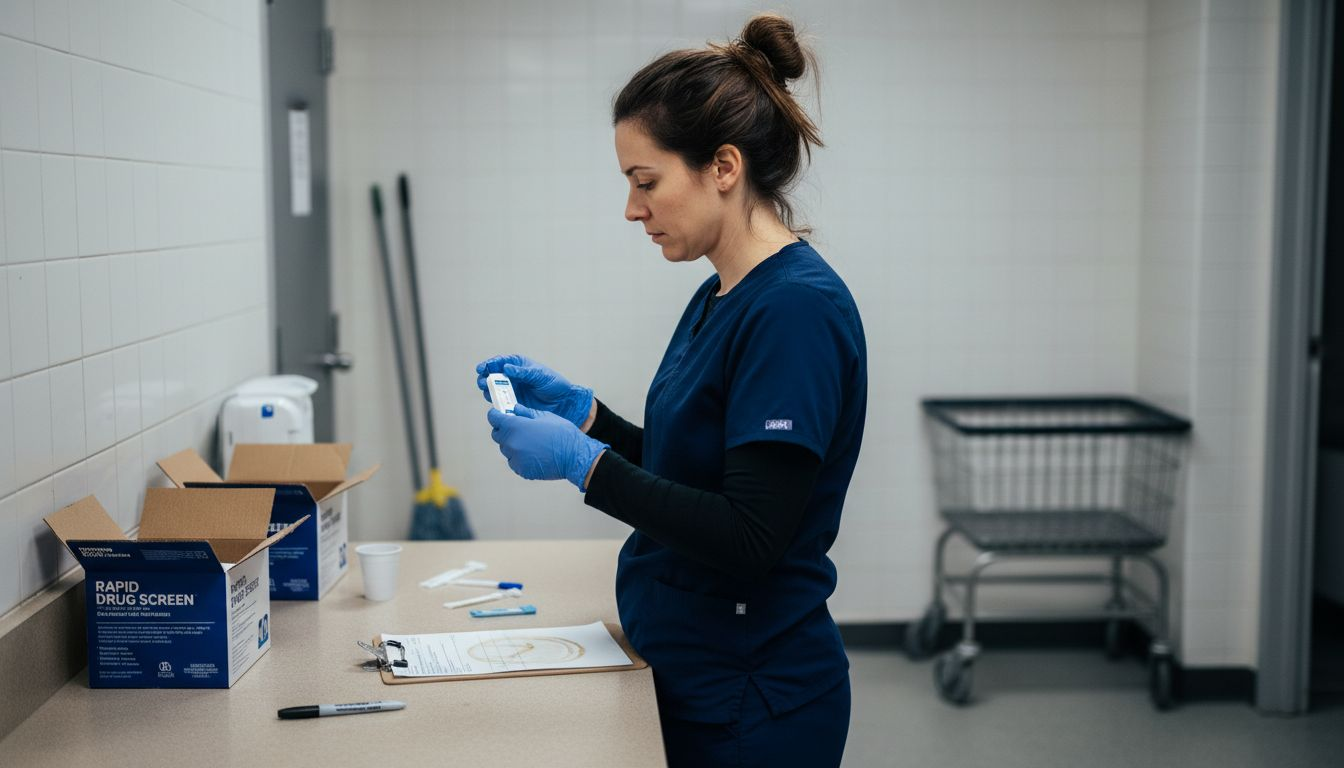
| Test Type | Detection Window | Accuracy | Turnaround Time | Best Use Case |
|---|---|---|---|---|
| Urine lab test | 1-7 days | 95-99% | 1-3 days | Comprehensive baseline and periodic screening |
| Saliva rapid test | 24-48 hours | 90-94% | 5-10 minutes | Frequent outpatient monitoring |
| Urine rapid test | 1-7 days | 85-90% | 5-10 minutes | Initial screening requiring confirmation |
| Hair follicle test | 90 days | 90-95% | 3-5 days | Long-term use history assessment |
Pro Tip: Use saliva tests for outpatient programs needing immediate feedback during counseling sessions, but always confirm any positive results with laboratory testing to avoid treatment decisions based on false positives.
Understanding which method fits your program requirements requires considering factors beyond detection windows. Our types of drug tests guide explores selection criteria in depth. Facilities must also recognize drug test accuracy challenges that affect reliability. Additional details on saliva drug testing overview and rapid test accuracy limitations help inform evidence-based testing protocols.
Regulatory standards and accreditation for drug testing labs
Federal guidelines and laboratory certifications ensure drug test results hold up to legal scrutiny while protecting client rights. SAMHSA guidelines establish mandatory procedures for federal workplace drug testing that heavily influence rehab facility protocols. These standards cover everything from chain of custody documentation to laboratory analysis procedures and staff qualifications.
CLIA and CAP accreditations verify that laboratories meet rigorous quality control standards. CLIA certification from the Centers for Medicare and Medicaid Services ensures labs maintain proper equipment calibration, staff training, and quality assurance programs. CAP accreditation from the College of American Pathologists adds an additional layer of peer review and proficiency testing requirements.
Compliance with these standards protects rehab facilities from legal challenges to test results. Courts routinely dismiss evidence from non-accredited labs or improperly documented chain of custody. Insurance providers also require certified lab results for coverage decisions related to treatment progress and continued stay authorizations.
Key regulatory certifications for rehab drug testing include:
- SAMHSA certification for labs conducting federally regulated testing
- CLIA accreditation ensuring laboratory quality and competence
- CAP certification demonstrating peer-reviewed laboratory excellence
- ISO 17025 accreditation for testing and calibration laboratory competence
- State-specific licensure requirements varying by jurisdiction
Staff training on regulatory requirements remains critical for internal protocol adherence. Medical review officers must understand how to interpret results within the regulatory framework while maintaining client confidentiality. Facilities should verify laboratory credentials before establishing testing partnerships. Our drug screening workflow for rehabs outlines compliant procedures from sample collection through result reporting.
Common misconceptions and ethical considerations
Several persistent myths about drug testing undermine effective implementation in rehab settings. The most damaging misconception holds that testing alone prevents relapse. Testing without therapeutic integration does not significantly reduce relapse rates because accountability measures must connect with counseling interventions that address underlying addiction drivers.
Another widespread belief assumes rapid tests provide fully accurate results suitable for immediate clinical decisions. The reality reveals that rapid drug tests have a 10-15% false result rate, making confirmatory lab testing essential before taking actions like discharge or privilege restrictions. False positives can severely damage therapeutic relationships when facilities act on unconfirmed results.
Ethical testing practices build the trust necessary for effective treatment relationships. Clients who perceive testing as punishment rather than support become less engaged in recovery work. Transparent communication about testing purposes, frequencies, and consequences creates cooperation rather than resentment.
Common myths versus facts about drug testing effectiveness:
- Myth: Testing alone prevents relapse / Fact: Testing must pair with counseling for significant relapse reduction
- Myth: Rapid tests are fully accurate / Fact: 10-15% false result rates require lab confirmation
- Myth: Random testing is always more effective / Fact: Predictable weekly testing often yields better compliance
- Myth: Positive results warrant immediate consequences / Fact: Results should trigger therapeutic intervention discussions
- Myth: Clients always try to cheat tests / Fact: Most clients cooperate when testing serves therapeutic rather than punitive goals
Pro Tip: Communicate openly with clients about how testing results inform their personalized treatment rather than serving as gotcha moments. This transparency prevents mistrust and increases voluntary compliance.
Patient surveys show 40% report reduced trust when testing is perceived as punitive rather than supportive.
Balancing accountability with compassion requires intentional protocol design. Facilities should frame testing as a tool for celebrating progress rather than catching failures. For comprehensive therapeutic approaches, explore effective addiction treatment approaches. Additional research on drug testing myths and realities and patient trust and drug testing supports ethical implementation strategies.
Optimizing drug testing: frequency and integration with treatment
Testing frequency dramatically impacts both detection effectiveness and client acceptance. Weekly drug testing yields up to 20% higher treatment compliance over monthly schedules by creating consistent accountability touchpoints. More frequent testing catches relapse earlier while demonstrating facility commitment to client success rather than simply monitoring for program violations.
Integrating test results with counseling sessions enables personalized treatment adjustments that address specific challenges. When counselors review results collaboratively with clients, testing becomes a conversation starter about triggers, cravings, and coping strategies rather than an enforcement tool. This integration transforms data points into therapeutic insights.
Implementing integrated testing and therapy feedback loops:
- Schedule testing immediately before individual counseling sessions when possible
- Train counselors to review results collaboratively rather than confrontationally with clients
- Use negative results to celebrate progress and reinforce effective coping strategies
- Frame positive results as opportunities to identify triggers and strengthen relapse prevention plans
- Adjust testing frequency based on individual risk factors and progress indicators
- Document how test results inform treatment plan modifications for continuity of care
- Share anonymized outcome data with staff to continuously improve testing protocols
Rehabs using combined testing and therapy feedback loops report a 25% increase in abstinence at 12 months post treatment compared to facilities using testing only for compliance monitoring. This improvement stems from treating testing as clinical data rather than security surveillance. Counselors gain objective information about what interventions work for each client.
Weekly testing integrated with counseling feedback achieves the highest combination of treatment compliance and sustained abstinence rates among evidence-based monitoring protocols.
Timing considerations extend beyond frequency to include test scheduling predictability. While random testing has theoretical advantages, predictable weekly testing often produces better therapeutic outcomes by reducing client anxiety and resentment. Clients appreciate knowing when testing occurs and can prepare for conversations about challenges they are facing.
For facilities developing comprehensive support systems, our addiction intervention guide complements testing protocols. Research on drug testing frequency optimization and testing and therapy integration provides additional evidence for best practices.
Implementing a drug testing protocol in rehab centers
Successful protocol implementation requires systematic planning across testing method selection, laboratory partnerships, staff training, and client communication. Facilities that rush implementation without addressing these components often see poor compliance and limited therapeutic benefit from their testing investments.
Sequential protocol implementation steps:
- Assess your program needs based on client population, treatment setting (inpatient vs outpatient), and regulatory requirements
- Select testing methods matching those needs, typically combining urine tests for comprehensive screening with saliva tests for frequent monitoring
- Establish partnerships with SAMHSA, CLIA, and CAP certified laboratories ensuring result validity and proper chain of custody
- Develop written policies covering testing frequency, substances screened, confirmation procedures for positive results, and consequence frameworks
- Train all staff on ethical test administration, result interpretation, and integrating findings into treatment planning
- Create client education materials explaining testing purposes, procedures, and how results inform individualized care
- Implement quality assurance reviews tracking false positive/negative rates, turnaround times, and therapeutic outcome correlations
Staff training deserves particular attention as the bridge between protocol and practice. Collection technicians need training on proper sample handling and chain of custody documentation. Counselors require skills in discussing results therapeutically rather than punitively. Medical staff must understand when confirmatory testing is necessary and how to interpret complex results.
Common protocol best practices include:
- Always confirm rapid test positives with laboratory analysis before clinical consequences
- Schedule testing consistently (same days/times weekly) to reduce client anxiety
- Review policies annually based on outcome data and emerging evidence
- Maintain strict confidentiality protections for all testing results
- Provide clients written copies of testing schedules and procedures during admission
Pro Tip: Always confirm rapid test positives with lab testing to avoid false results that damage therapeutic relationships and waste resources on unwarranted interventions.
Documentation systems must track not just results but how findings inform treatment modifications. This creates accountability for using testing therapeutically rather than simply collecting data. For detailed workflow guidance, review our rehab drug screening workflow covering every step from admission screening through discharge planning.
Conclusion: the future role of drug testing in effective rehab programs
Drug testing remains a cornerstone for improving abstinence through objective monitoring when implemented ethically and integrated with therapeutic interventions. Facilities that balance testing with client trust and evidence-based counseling see dramatically better outcomes than those using testing punitively or in isolation. The 30% relapse reduction achievable through properly integrated protocols represents significant progress in addiction treatment effectiveness.
Balancing testing with therapeutic relationships requires ongoing attention to client perceptions and staff training. As regulatory standards evolve and new testing technologies emerge, rehab centers must adapt protocols while maintaining the core principle that testing serves treatment rather than simply monitoring compliance. Future technologies promise faster results, broader substance detection, and lower costs that will expand testing accessibility.
Emerging technologies will enhance accuracy and enable more sophisticated integration with electronic health records and treatment planning systems. Point-of-care tests with laboratory-grade accuracy may soon eliminate confirmation delays while maintaining result validity. Biomarker research could enable testing that distinguishes recent use from longer-term consumption patterns, providing richer data for counselors.
Future rehab models will personalize testing frequency and methods based on individual client risk factors, substance use history, and treatment progress. Machine learning algorithms may eventually predict optimal testing schedules that maximize detection while minimizing client burden. However, the human element of therapeutic integration will remain essential regardless of technological advances.
Explore reliable drug testing solutions for rehab centers
Countrywide Testing offers comprehensive drug testing products and services designed specifically for rehab facility needs. Whether your program requires rapid on-site screening or certified laboratory analysis, we provide solutions that balance accuracy with practical implementation requirements.
Our product catalog includes urine and saliva test kits suitable for various monitoring frequencies and client populations. Each product connects with our network of SAMHSA, CLIA, and CAP certified laboratory drug testing services ensuring result validity and legal defensibility. For facilities developing or refining testing protocols, explore our educational content on types of drug tests and implementation best practices. Visit Countrywide Testing to discover how our testing solutions support your commitment to evidence-based addiction treatment.
Frequently asked questions about drug testing in rehabs
What is the most accurate drug test for rehab programs?
Laboratory-analyzed urine tests provide 95-99% accuracy with detection windows of 1-7 days for most substances, making them the gold standard for comprehensive screening. Hair follicle tests detect use up to 90 days but cost significantly more and have longer turnaround times.
How often should clients be tested during rehab?
Weekly testing achieves optimal balance between detection effectiveness and client acceptance, yielding up to 20% higher compliance than monthly schedules. Outpatient programs may benefit from twice-weekly saliva testing during early recovery phases when relapse risk peaks.
Can drug testing alone prevent relapse?
No, testing without therapeutic integration does not significantly reduce relapse rates. Effective programs combine regular testing with counseling that addresses results collaboratively, using data to strengthen coping strategies and modify treatment plans based on individual challenges.
What should rehabs do if a rapid test is positive?
Always confirm rapid test positives with laboratory analysis before imposing consequences or modifying treatment. Use the preliminary positive as an opportunity for therapeutic conversation while awaiting confirmation, avoiding punitive responses that damage trust based on potentially false results.
How can facilities maintain client trust during drug testing?
Communicate transparently about testing purposes, procedures, and how results inform personalized care rather than serving as gotcha moments. Frame testing as a collaborative tool for celebrating progress and identifying support needs, with predictable schedules that reduce anxiety and demonstrate respect for client dignity.