
Chain of custody in drug testing for employer compliance
Many employers assume drug testing reliability depends only on laboratory accuracy. The truth is that meticulous chain of custody documentation throughout sample handling ensures test integrity and legal defensibility. Without proper chain of custody procedures, even the most accurate lab results can be challenged, creating liability risks and compromising workplace safety programs.
Table of Contents
- Understanding The Chain Of Custody In Drug Testing
- Federal Regulations And Compliance Requirements
- Common Pitfalls And Risks In Maintaining Chain Of Custody
- Navigating Ada Considerations In Drug Testing And Chain Of Custody
- Enhancing Chain Of Custody With Electronic Systems And Best Practices
- Enhance Your Drug Testing Compliance With Countrywide Testing
- Frequently Asked Questions
Key takeaways
| Point | Details |
|---|---|
| Chain of custody tracks samples | A documented process following samples from collection through analysis to final reporting prevents tampering and ensures integrity. |
| Federal regulations mandate strict protocols | DOT and SAMHSA require specific chain of custody procedures to maintain compliance and test validity. |
| Human error threatens sample integrity | Documentation mistakes, improper sealing, and labeling failures are common risks requiring vigilant prevention. |
| ADA compliance intersects with testing | Employers must accommodate disabilities related to drug testing while maintaining chain of custody standards. |
| Electronic systems reduce errors | ECCF technology automates tracking, improves security, and streamlines compliance management. |
Understanding the chain of custody in drug testing
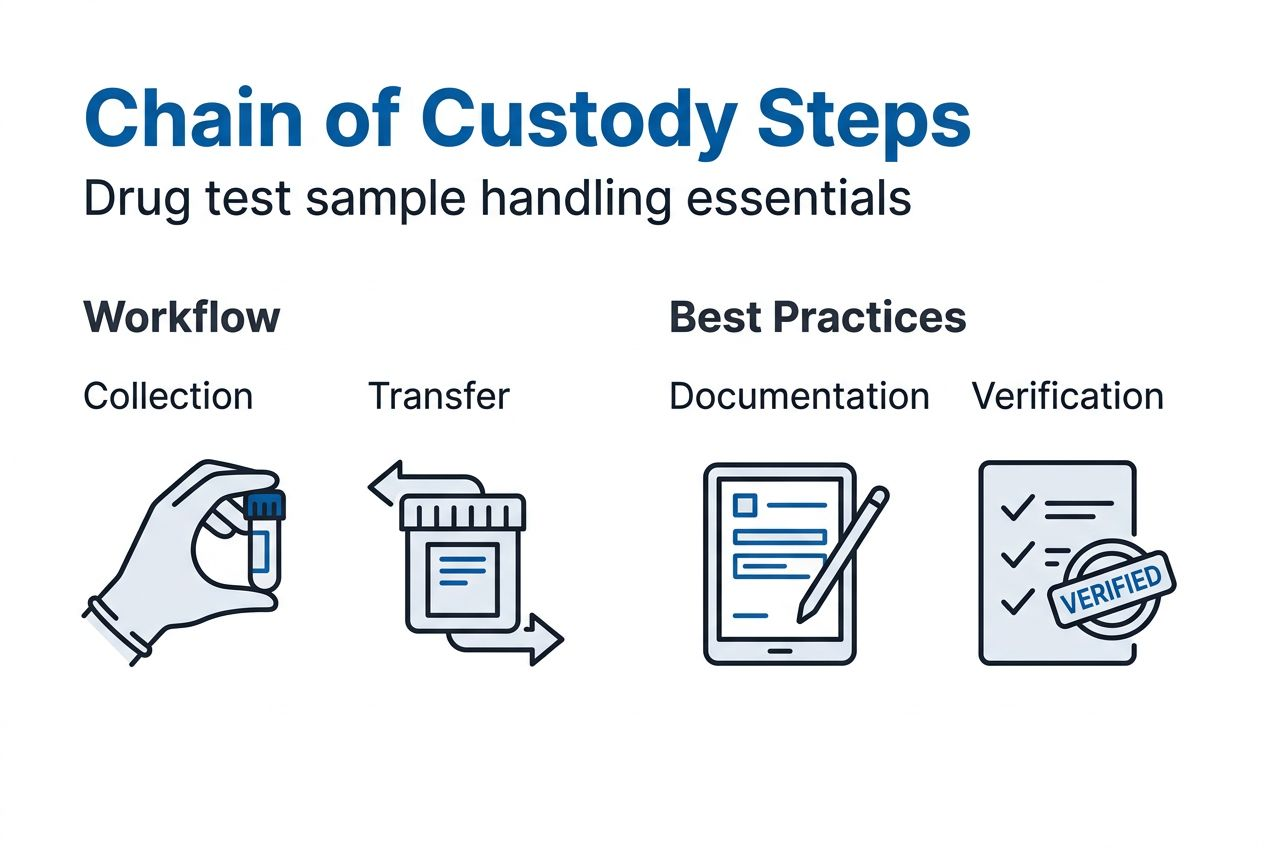
The chain of custody is a documented process that tracks a sample from collection to reporting, ensuring integrity and preventing tampering. This systematic approach creates an unbroken trail of accountability at every stage.
The process involves several critical steps:
- Sample collection by a trained collector who verifies donor identity
- Immediate sealing and labeling with unique identifiers and tamper-evident seals
- Secure transportation following temperature and security protocols
- Laboratory receipt, analysis, and results documentation
- Final reporting with complete custody records
Each step preserves sample integrity and prevents unauthorized access or mix-ups. A compromised chain can invalidate results, expose employers to wrongful termination lawsuits, and undermine safety programs. Consider a scenario where improper sealing allows contamination: the entire test becomes legally indefensible, regardless of laboratory precision.
Following the step by step drug screening workflow ensures every custody transfer is documented with signatures, dates, and times. This creates an audit trail that withstands legal scrutiny.
Pro Tip: Meticulous documentation at every custody transfer is your strongest defense against challenges to test validity in legal proceedings or grievance hearings.
Federal regulations and compliance requirements
Federal regulations from DOT and SAMHSA govern chain of custody processes in the USA. These frameworks establish mandatory procedures for collection, handling, transport, and reporting that employers must follow to maintain legal compliance.
Employers bear responsibility for:
- Using only certified collectors trained in proper specimen handling
- Ensuring all samples reach HHS-certified laboratories
- Implementing approved custody documentation systems
- Maintaining secure storage and transport conditions
- Preserving records for required retention periods
The use of HHS-certified laboratories and ECCF systems is crucial for maintaining federal compliance. These certified entities follow standardized protocols that protect sample integrity and ensure defensible results.
| Requirement | DOT Programs | SAMHSA Guidelines |
|---|---|---|
| Collector certification | Mandatory specific DOT training | General proficiency standards |
| Custody form type | Federal CCF or approved ECCF | Federal CCF or approved ECCF |
| Laboratory certification | HHS-certified mandatory | HHS-certified recommended |
| Split sample option | Required for all tests | Optional based on program |
| MRO review | Mandatory for all results | Recommended for workplace programs |
Understanding SAMHSA drug testing certification requirements helps employers select qualified laboratories and avoid compliance gaps. The drug testing compliance guide for employers provides detailed implementation strategies.
Pro Tip: Regular training sessions and compliance audits help your organization adapt to evolving regulatory standards and maintain consistent chain of custody practices across all testing locations.
Common pitfalls and risks in maintaining chain of custody
Human error is a common pitfall in maintaining chain of custody, potentially compromising testing integrity. These mistakes can invalidate otherwise valid results and create legal vulnerabilities for employers.
Frequent chain of custody errors include:
- Incomplete or illegible documentation on custody forms
- Sample contamination from improper handling or storage
- Labeling failures such as mismatched identifiers or missing information
- Improper sealing that allows tampering or leakage
- Breaks in custody during transport or laboratory receipt
These errors undermine test accuracy and invite legal challenges from employees or applicants. A single documentation gap can render an entire test inadmissible in legal proceedings, potentially forcing reinstatement of a terminated employee or exposing your organization to discrimination claims.
“Errors in toxicology testing can impact criminal justice outcomes, demonstrating how custody failures have consequences extending far beyond administrative inconvenience.”
Lack of collector training and protocol adherence creates systemic risks. When collectors skip verification steps or rush documentation, they introduce vulnerabilities that skilled attorneys can exploit. The importance of drug testing compliance extends beyond avoiding penalties to protecting your organization’s legal position.

Properly filling out chain of custody forms requires attention to detail and verification at each step. Simple measures like double-checking specimen IDs and ensuring seal integrity prevent most common errors.
Pro Tip: Implement standardized checklists and double-verification procedures where a second trained individual confirms critical custody information before samples leave your facility.
Navigating ADA considerations in drug testing and chain of custody
The ADA applies during hiring when an applicant raises a disability-related issue connected to drug testing requirements. This intersection of disability law and drug testing protocols requires careful navigation to maintain both safety and compliance.
Employers must initiate an interactive accommodation process when applicants disclose prescription medications that may affect test results. This involves verifying legitimate prescriptions, consulting with medical review officers, and determining whether accommodations are reasonable without compromising safety-sensitive position requirements.
Best practices for ADA compliance in drug testing chain of custody:
- Train HR staff and collectors to recognize and appropriately respond to disability disclosures during testing
- Establish clear procedures for verifying prescription medications with healthcare providers
- Document all interactive accommodation discussions and decisions in personnel files
- Consult with legal counsel when safety-sensitive positions intersect with disability accommodations
- Ensure MROs understand their role in evaluating legitimate medical explanations for positive results
An employer was found liable for failing to accommodate an applicant under the ADA related to drug testing, resulting in substantial damages. This case illustrates how chain of custody procedures must account for disability considerations to avoid discrimination claims.
The drug testing ADA compliance framework balances workplace safety with legal obligations. Similarly, post-accident drug testing guidance addresses reasonable suspicion scenarios where ADA protections may apply.
Employers who rush through drug testing without considering disability accommodations risk costly litigation and reputational damage. The chain of custody process must include checkpoints for identifying accommodation needs while maintaining sample integrity and test validity.
Enhancing chain of custody with electronic systems and best practices
Electronic Custody and Control Forms (ECCF) streamline the chain of custody process, reducing paperwork and improving efficiency. These digital systems replace manual paper forms with automated tracking that minimizes human error and accelerates data flow.
| Feature | Paper CCF | ECCF System |
|---|---|---|
| Data entry | Manual, prone to errors | Automated with validation |
| Custody transfers | Physical signatures required | Electronic authentication |
| Tracking visibility | Limited until final reporting | Real-time status updates |
| Storage requirements | Physical archive space needed | Digital cloud-based storage |
| Error correction | Requires voiding and reissuing | Instant digital amendments |
| Compliance audits | Manual record review | Automated compliance checks |
Implementing ECCF in workplace programs requires several practical steps:
- Select an ECCF approved system that meets federal certification standards
- Train collectors and laboratory staff on the electronic platform interface
- Integrate ECCF data feeds with your HRIS or case management systems
- Establish backup procedures for technology failures or connectivity issues
- Conduct pilot testing before full deployment across all testing locations
Pro Tip: Automated alerts and real-time tracking in ECCF systems significantly reduce risk of lost or mishandled samples by notifying stakeholders immediately when custody transfers are delayed or samples approach temperature thresholds.
The drug screening workflow steps become more efficient with electronic systems that eliminate redundant data entry and provide instant visibility into sample status. Collections sites, laboratories, and employers all benefit from streamlined communication.
Ongoing staff training on new technology ensures your team maximizes ECCF benefits. Regular reviews of chain of custody procedures identify opportunities for continuous improvement and adaptation to regulatory updates. Technology alone cannot guarantee compliance without competent, trained personnel who understand both the system and underlying regulatory requirements.
Enhance your drug testing compliance with Countrywide Testing
Navigating chain of custody requirements while maintaining ADA compliance and operational efficiency requires expert partnership. Countrywide Testing offers laboratory drug testing services that meet federal chain of custody regulations through certified laboratories and secure collection protocols.
Our nationwide network provides comprehensive sample collection, handling, and electronic custody chain management that minimizes your compliance risks. You gain access to HHS-certified laboratories, trained collectors, and technology platforms that automate tracking and documentation. This integrated approach ensures every sample maintains integrity from collection through final reporting.
Streamline your workflow with reliable labs and expert support designed specifically for employer drug testing programs. Countrywide Testing nationwide services deliver the infrastructure, training, and compliance expertise you need to protect your workplace while meeting all federal and state requirements. Partner with us to ensure safe, legal, and accurate drug testing programs that withstand legal scrutiny and support your safety objectives.
Frequently asked questions
What is chain of custody in drug testing?
Chain of custody is the documented process tracking a drug test sample from collection through analysis to results reporting. It ensures sample integrity and prevents tampering through careful labeling, sealing, secure transport, and comprehensive record-keeping at every step.
How do federal regulations affect the chain of custody process?
Federal regulations from DOT and SAMHSA mandate strict protocols for sample collection, handling, storage, and transport to ensure drug test validity. Noncompliance with these requirements risks legal penalties, invalid test results, and potential liability in employment disputes.
What are common chain of custody errors to avoid?
Common errors include improper documentation, sample contamination, mislabeling specimens, and chain breaks during transport or storage. Addressing these vulnerabilities through training, checklists, and verification procedures prevents legal challenges and maintains workplace safety program integrity.
How does the ADA influence drug testing and chain of custody procedures?
The ADA requires employers to accommodate applicants with disabilities related to drug testing, including verifying legitimate prescription medications through interactive processes. Failure to provide reasonable accommodations during testing can result in discrimination claims and substantial legal damages.
How can electronic custody and control forms improve drug testing chain of custody?
ECCFs reduce paperwork, automate tracking with real-time alerts, and improve security and compliance in drug testing procedures. These systems lower human error rates, accelerate data management, and provide instant visibility into sample status throughout the custody chain.