
Role of drug testing in probation: compliance guide
Many assume drug testing in probation exists solely to catch and punish violations. In reality, it serves as a rehabilitation tool that supports treatment adherence, validates court compliance, and protects public safety. This guide clarifies how probation officers and legal professionals can leverage drug testing effectively, balancing accuracy with cost and integrating results into individualized treatment plans. You will learn the essential methodologies, evidence-based benefits, common pitfalls like false positives, and actionable best practices for implementing fair and effective probation drug testing programs.
Table of Contents
- Key takeaways
- Understanding the role and methods of drug testing in probation
- Technical protocols and drug panel standards for probation drug testing
- Evidence of effectiveness and challenges in probation drug testing
- Best practices for implementing effective and fair drug testing in probation
- Enhance your probation drug testing with Countrywide Testing solutions
- FAQ
Key Takeaways
| Point | Details |
|---|---|
| Enforces abstinence with treatment support | Drug testing serves to monitor court ordered abstinence while supporting treatment engagement. |
| Randomized tests ensure integrity | Testing is randomized and conducted with observed collection and chain of custody to protect accuracy and legal defensibility. |
| Reduces recidivism with treatment | When combined with treatment, testing helps reduce repeat offenses and keep participants on clinical pathways. |
| False positives require confirmatory analysis | Any positive result should be confirmed with lab analysis to rule out false positives. |
| Tampering prompts confirmatory testing | Samples are checked for temperature pH and adulterants and tampering triggers a recollection or confirmatory testing. |
Understanding the role and methods of drug testing in probation
Drug testing in probation primarily monitors compliance with court-ordered abstinence, supports rehabilitation, ensures public safety, and verifies treatment adherence through randomized urine, saliva, or hair tests. Beyond enforcement, monitoring provides objective data that treatment providers use to adjust counseling intensity, medication protocols, and supervision levels. When probation officers detect substance use early, they can intervene before relapse escalates into criminal behavior or treatment dropout.
Tests are randomized to prevent predictability and use urine as the most common specimen, supplemented by saliva for rapid roadside checks or hair for longer detection windows. Probation officers schedule tests and perform collection under observation to prevent tampering. Chain-of-custody protocols document every transfer from collection to lab analysis, ensuring legal defensibility. Validity includes checks for temperature, pH, adulterants, plus on-site screening followed by lab confirmation for positives.
Pro Tip: Integrate your probation drug screening guide with treatment team meetings to align testing schedules with therapy milestones and maximize rehabilitation impact.
Common specimen types and their applications:
- Urine offers a 1-3 day detection window for most drugs and remains the gold standard due to established cutoffs and lab infrastructure
- Saliva provides a shorter 24-48 hour window ideal for recent use detection and observed collection without privacy concerns
- Hair extends detection to 90 days, revealing chronic use patterns but at higher cost and slower turnaround
- Blood tests detect current impairment but are invasive and rarely used outside medical or accident investigations
These methods align with adult treatment court standards that emphasize randomized, observed collection and rapid results to support timely clinical decisions. You should select specimen types based on your monitoring goals, participant risk level, and logistical capacity.
Technical protocols and drug panel standards for probation drug testing
Probation officers oversee scheduling, sample collection under observation, validity checks, on-site immunoassay screening, and lab confirmation with common drug panels including amphetamines, cocaine, opiates, PCP, THC, benzodiazepines, and alcohol metabolites. Scheduling follows risk-based randomization, where high-risk participants face 1-3 weekly tests while stable cases may drop to monthly or quarterly checks. Officers use call-in systems or electronic notifications to eliminate predictability and reduce evasion opportunities.
Sample collection occurs under direct observation to prevent substitution or dilution. Observers verify specimen temperature within 90-100°F within four minutes of voiding, check pH between 4.5-8.0, and test creatinine levels above 20 mg/dL to confirm biological origin. Adulterant tests detect oxidants, nitrites, and glutaraldehyde that participants add to mask drug presence. Any anomaly triggers immediate recollection or escalation to confirmatory testing.
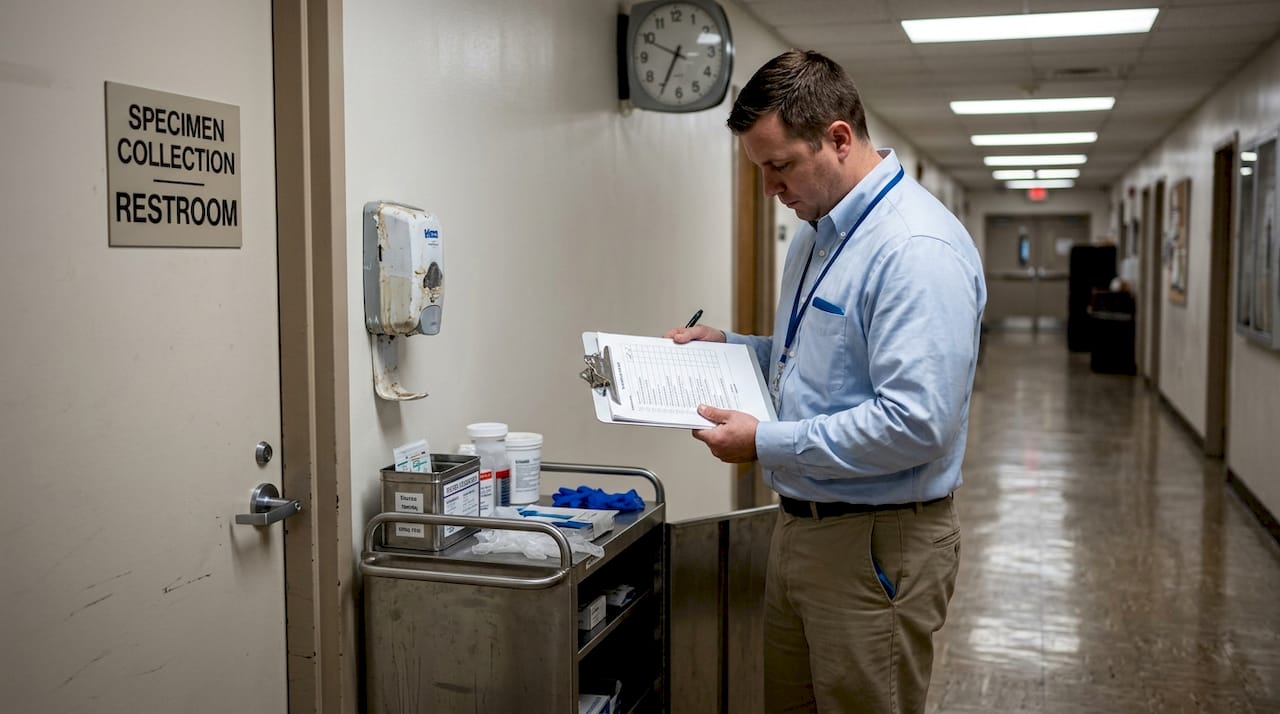
On-site immunoassay provides rapid results within 5-10 minutes using lateral flow devices or cup tests. These screening tools detect drug classes at federally established cutoffs but cannot differentiate specific compounds. Positive screens require lab confirmation via GC/MS or LC-MS/MS techniques that identify exact metabolites and quantify concentrations. Confirmatory testing eliminates cross-reactivity from over-the-counter medications and provides legally defensible evidence for sanctions or treatment adjustments.
Standard drug panels tested in probation:
- Amphetamines (including methamphetamine and MDMA) at 1000 ng/mL screening cutoff
- Cocaine metabolites (benzoylecgonine) at 300 ng/mL
- Opiates (morphine, codeine) at 2000 ng/mL with separate tests for oxycodone and buprenorphine
- PCP at 25 ng/mL
- THC metabolites at 50 ng/mL
- Benzodiazepines at 300 ng/mL
- Alcohol metabolites like ETG at 500 ng/mL for abstinence monitoring
You can expand panels to include synthetic cannabinoids, fentanyl analogs, or designer stimulants based on regional drug trends and participant history. Understanding these confirmatory drug testing importance protocols helps you interpret results accurately and avoid wrongful sanctions.
Evidence of effectiveness and challenges in probation drug testing
Empirical studies show drug testing with treatment reduces three-year recidivism below standard probation rates, with problem-solving courts achieving 20% recidivism versus 26.3% for traditional supervision. High treatment completion dramatically lowers rearrest risk, while failed or incomplete treatment increases it above baseline. These outcomes demonstrate that testing alone provides limited value without integrated clinical intervention and supervision adjustments.
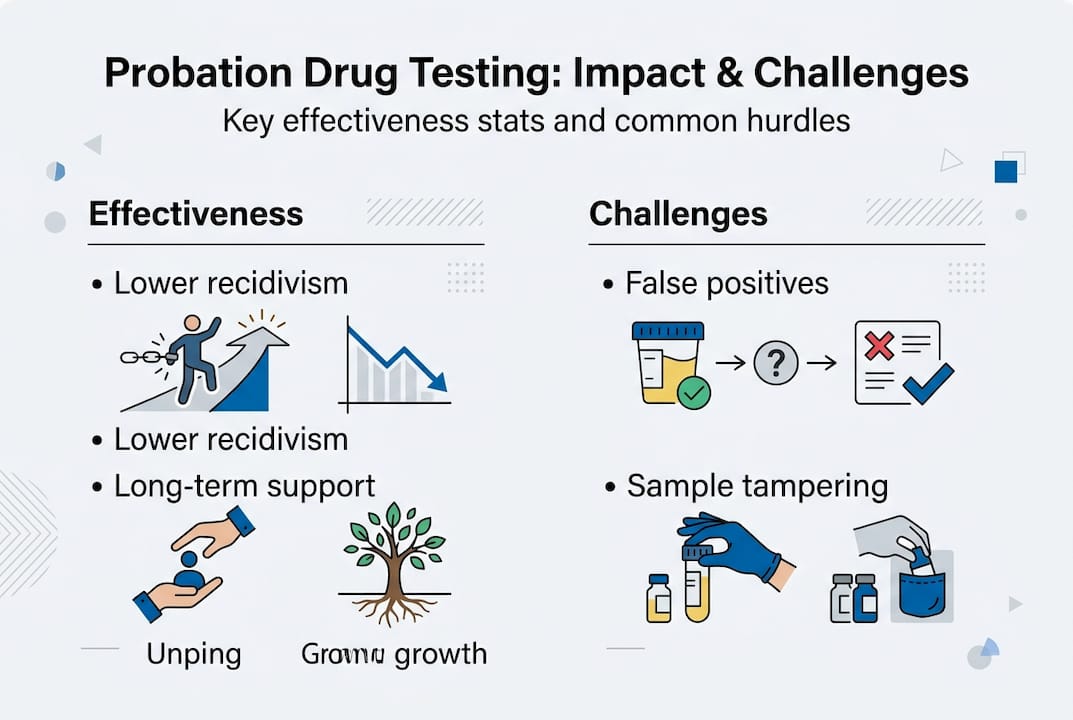
A Nebraska recidivism study found that participants completing drug court programs showed significantly lower reconviction rates than those who failed out or received standard probation. The combination of frequent testing, immediate sanctions, and treatment engagement created accountability loops that reinforced abstinence and prosocial behavior. You should view drug testing as one component within a comprehensive supervision and treatment strategy rather than a standalone deterrent.
False positives from medications and sample tampering remain frequent challenges requiring medical review and confirmatory testing. Common causes include poppy seed consumption triggering opiate positives, cold medications cross-reacting with amphetamines, and hemp products producing THC metabolites. Medical review officers (MROs) evaluate prescription records and participant interviews before finalizing positive results, protecting against wrongful sanctions.
| Challenge | Impact | Mitigation Strategy |
|---|---|---|
| False positives | Wrongful sanctions and treatment disruption | Confirmatory lab testing and MRO review |
| Sample tampering | Undetected drug use and compliance failure | Observed collection and validity checks |
| Detection windows | Missed recent or chronic use | Multiple specimen types and frequent testing |
| Cost constraints | Reduced testing frequency and panel breadth | Risk-based allocation and CLIA-waived devices |
Sample tampering methods like adulterants, synthetic urine, and dilution are frequent and require diligent oversight. Participants purchase products marketed to defeat drug tests, including oxidizing agents that destroy metabolites and synthetic urine with correct temperature and creatinine. You can counter these tactics by verifying specimen temperature immediately, testing for adulterants, and observing collection without privacy barriers. Maintaining strict drug testing rehabs relapse reduction protocols minimizes evasion and ensures accurate monitoring.
Pro Tip: Always verify positives with lab confirmation and maintain chain-of-custody to mitigate legal challenges and ensure sanctions withstand appellate review.
Understanding first failed drug test response procedures helps you apply graduated sanctions that balance accountability with treatment engagement, avoiding premature revocation that disrupts rehabilitation progress.
Best practices for implementing effective and fair drug testing in probation
Randomized and risk-based drug testing schedules optimize compliance monitoring and reduce predictability. Best practices recommended include randomized risk-based testing, multiple specimen use, frequent testing initially, rapid results, and participant contracts integrating with supervision. High-risk participants with recent relapses or treatment noncompliance receive 1-3 weekly tests, while stable participants transition to monthly or quarterly checks. Randomization prevents participants from timing drug use around predictable test dates, maintaining deterrent effects throughout supervision.
Using multiple specimen types enhances detection sensitivity and reduces evasion. Urine captures 1-3 day windows for most drugs, saliva detects recent use within 24-48 hours, and hair reveals 90-day chronic patterns. Combining these methods closes detection gaps and prevents participants from exploiting single-specimen limitations. You should select specimen types based on monitoring goals, with urine for routine compliance, saliva for random roadside checks, and hair for intake assessments or suspected chronic use.
| Practice | Benefit | Implementation Tip |
|---|---|---|
| Randomized scheduling | Eliminates predictability and maintains deterrence | Use call-in systems or electronic notifications |
| Multiple specimen types | Closes detection windows and prevents evasion | Combine urine, saliva, and hair based on risk |
| Frequent initial testing | Reinforces abstinence during high-risk early phase | Test 1-3 times weekly for first 90 days |
| Validity checks | Detects tampering and ensures sample integrity | Verify temperature, pH, creatinine, and adulterants |
| Participant contracts | Clarifies expectations and consequences | Document testing protocols and graduated sanctions |
Early frequent testing helps reinforce abstinence and supports treatment retention. Testing 1-3 times weekly during the first 90 days creates accountability that discourages relapse and signals supervision intensity. As participants demonstrate sustained compliance, you can reduce frequency to monthly or quarterly checks, reserving resources for higher-risk cases. This graduated approach aligns testing intensity with clinical need and supervision risk.
Validity tests for pH, creatinine, and oxidative adulterants detect tampering and ensure sample integrity. Standard validity ranges include pH 4.5-8.0, creatinine above 20 mg/dL, and negative oxidant tests. Specimens outside these ranges indicate dilution, substitution, or adulteration requiring immediate recollection or escalation. Implementing these checks at every collection prevents undetected drug use and maintains testing credibility.
Participant contracts defining testing protocols and consequences boost engagement and clarify expectations. Contracts specify testing frequency, specimen types, cutoff levels, and graduated sanctions for positive results. Participants sign acknowledgment before supervision begins, creating informed consent and reducing disputes over procedures. You should review contracts during orientation and provide written copies for participant reference.
Key elements of effective probation drug testing programs:
- Randomized risk-based scheduling with call-in systems to eliminate predictability
- Multiple specimen types (urine, saliva, hair) matched to monitoring goals and detection windows
- Observed collection with immediate temperature and validity checks to prevent tampering
- On-site screening followed by lab confirmation for all positives to ensure accuracy
- Medical review officer oversight to interpret results and rule out false positives
- Graduated sanctions integrated with treatment adjustments rather than automatic revocation
- Participant contracts documenting protocols, expectations, and consequences
Pro Tip: Combine CLIA-waived point-of-care testing with lab confirmation for rapid yet reliable results that support timely clinical decisions without sacrificing accuracy.
Integrating your rehab drug testing checklist with supervision plans ensures testing aligns with treatment milestones and clinical progress. Reviewing drug screening workflow for clinics helps you streamline collection, analysis, and reporting processes that minimize delays and maximize intervention timeliness. Following NIJ drug testing guidelines provides evidence-based frameworks for specimen selection, cutoff determination, and quality assurance that meet legal and clinical standards.
Enhance your probation drug testing with Countrywide Testing solutions
Implementing effective probation drug testing requires reliable partners who understand compliance monitoring and chain-of-custody requirements. Countrywide Testing offers nationwide laboratory drug testing services designed for probation compliance, providing SAMHSA-certified lab analysis with rapid turnaround and legally defensible documentation. Their services support urine, saliva, and hair testing with comprehensive drug panels tailored to probation monitoring needs.
For rapid onsite results, the QuickScreen 10 Panel Saliva Drug Test provides accurate detection of amphetamines, opiates, THC, cocaine, PCP, oxycodone, benzodiazepines, barbiturates, methamphetamine, and buprenorphine within minutes. This CLIA-waived device enables probation officers to conduct observed collections without privacy concerns and obtain immediate preliminary results for timely intervention decisions. Professionals benefit from integrated solutions supporting chain-of-custody and confirmatory lab testing when positives require verification. Explore Countrywide Testing to find comprehensive drug testing services that meet your probation monitoring requirements.
FAQ
What types of drug tests are commonly used in probation?
Urine is the most common due to accuracy and established protocols that detect recent drug use within 1-3 days. Saliva and hair testing supplement urine for random and longer-term detection, with saliva offering 24-48 hour windows and hair revealing 90-day chronic use patterns. Choice depends on monitoring goals, risk level, and logistical feasibility, with urine serving routine compliance checks and hair used for intake assessments. Review your probation drug screening guide to select appropriate specimen types based on participant risk and supervision objectives.
How can probation officers reduce false positives in drug testing?
Use confirmatory lab testing for all positives to rule out cross-reactivity from medications or dietary sources like poppy seeds. Implement medical review officer oversight for interpreting potential false positives, evaluating prescription records, and interviewing participants before finalizing results. Maintain strict collection procedures to avoid contamination or adulteration, including observed collection, temperature verification, and validity checks for pH and creatinine. Understanding confirmatory drug testing importance protects against wrongful sanctions and ensures accurate compliance monitoring.
What is the recommended testing frequency for probation drug testing?
Testing frequency should be risk-based and randomized to eliminate predictability and maintain deterrent effects. Initial stages often involve 1-3 tests per week to enforce abstinence during the high-risk early supervision phase. Frequency may be reduced over time with demonstrated compliance, transitioning stable participants to monthly or quarterly checks while reserving intensive testing for higher-risk cases. Consult your probation drug screening guide for evidence-based frequency recommendations aligned with treatment court standards.
How does drug testing support rehabilitation in probation?
Drug testing provides objective data that treatment providers use to adjust counseling intensity, medication protocols, and supervision levels based on participant progress. Early detection of substance use enables timely intervention before relapse escalates into criminal behavior or treatment dropout. Testing combined with treatment creates accountability loops that reinforce abstinence and prosocial behavior, with studies showing significantly lower recidivism for participants completing integrated programs. You should view testing as one component within comprehensive supervision and treatment strategies rather than a standalone deterrent.
What validity checks prevent sample tampering in probation drug testing?
Validity checks include temperature verification within 90-100°F within four minutes of voiding, pH testing between 4.5-8.0, creatinine levels above 20 mg/dL, and adulterant tests detecting oxidants, nitrites, and glutaraldehyde. Specimens outside these ranges indicate dilution, substitution, or adulteration requiring immediate recollection or escalation to confirmatory testing. Observed collection without privacy barriers prevents substitution with synthetic urine or clean samples. Implementing these checks at every collection prevents undetected drug use and maintains testing credibility throughout probation supervision.