
Why confirmatory drug testing matters for compliance
Imagine terminating an employee based on a drug test result, only to discover later the positive was triggered by their daily ibuprofen. Presumptive screening tests produce false positives from common medications like sertraline, pseudoephedrine, and efavirenz, creating serious legal risks for employers. Many organizations act on initial immunoassay screens without realizing these tests lack the specificity needed for defensible employment decisions. Confirmatory testing verifies initial results through precise laboratory analysis, protecting both employers and employees from costly mistakes. This approach ensures compliance with evolving regulations while maintaining workplace safety and fairness.
Table of Contents
- Understanding Drug Screening Techniques And Their Limitations
- Legal And Compliance Importance Of Confirmatory Testing In 2026
- Confirmatory Testing’S Role In Reducing Wrongful Terminations And Improving Safety
- Balancing Costs And Operational Considerations With Confirmatory Testing
- Explore Reliable Confirmatory Drug Testing Services
Key takeaways
| Point | Details |
|---|---|
| False positives are common | Presumptive screening tests frequently flag legal medications and substances as illicit drugs |
| Legal protection required | Many jurisdictions mandate confirmatory testing after positive screens to ensure defensibility |
| Prevents wrongful termination | Secondary testing identifies specific compounds, eliminating cross-reactivity errors |
| Safety-sensitive compliance | Industries like aviation require confirmed results to balance safety with employee rights |
| Cost-effective long term | Avoiding litigation and wrongful termination claims outweighs confirmatory testing expenses |
Understanding drug screening techniques and their limitations
Presumptive immunoassay screening tests deliver fast, affordable results, making them popular for initial workplace drug testing. However, these tests identify drug classes rather than specific substances, creating opportunities for cross-reactivity with legitimate medications and foods. The technology relies on antibody reactions that sometimes mistake similar molecular structures for target drugs.
Common substances trigger false positives regularly. Hemp seeds can register as THC, ibuprofen may show as marijuana, rifampin appears as opiates, and buprenorphine sometimes indicates amphetamine use. These cross-reactions occur because immunoassays detect chemical similarities rather than exact drug compounds. Without confirmatory testing, employers risk disciplinary action based on inaccurate information.
Confirmatory methods like gas chromatography-mass spectrometry (GC-MS) and liquid chromatography-mass spectrometry (LC-MS) provide definitive identification. These laboratory techniques separate and analyze specific molecular structures, eliminating interference from similar compounds. The precision ensures that only actual drug metabolites trigger positive results, not innocent substances.
Implementing proper drug testing workplace compliance protocols requires understanding these technical differences. Employers who rely solely on presumptive screens expose themselves to legal challenges and damage employee trust. The screening phase identifies potential positives quickly, while confirmatory analysis verifies which results represent genuine drug use.
Pro Tip: Always inform employees that initial positive results require laboratory confirmation before any employment action occurs, reducing anxiety and demonstrating commitment to fairness.
Key substances causing false positives include:
- Antidepressants like sertraline triggering amphetamine results
- Decongestants containing pseudoephedrine showing as methamphetamine
- Poppy seed consumption registering as opiate use
- Certain antibiotics creating false positive opiate readings
- CBD products and hemp foods indicating THC presence
The immunoassay cross-reactivity problem affects all presumptive testing platforms. Even advanced immunoassay systems cannot match the specificity of confirmatory laboratory analysis. Organizations serious about accuracy recognize that screening tests serve as preliminary filters, not final arbiters of drug use.
Legal and compliance importance of confirmatory testing in 2026
Regulatory frameworks increasingly mandate confirmatory testing to protect employee rights and employer interests. Minnesota drug testing compliance requires confirmatory analysis after any positive screening result, setting a precedent other states follow. Federal workplace drug testing programs similarly demand laboratory verification before adverse employment actions.
Legal defensibility depends on confirmatory results when employees challenge terminations or disciplinary measures. Courts recognize that presumptive tests alone lack the scientific rigor needed for employment decisions affecting careers and livelihoods. Employers who skip confirmation face wrongful termination lawsuits with substantial damages and reputational harm.
Confirmatory testing creates admissible evidence in legal proceedings. Laboratory documentation following chain of custody protocols and quality assurance standards withstands courtroom scrutiny. Screening results without confirmation rarely meet evidentiary standards, leaving employers vulnerable during litigation.
Comprehensive drug testing policy requirements incorporate mandatory confirmation steps. These policies demonstrate good faith efforts to balance workplace safety with employee fairness. Written procedures outlining when and how confirmatory testing occurs protect organizations from claims of arbitrary or discriminatory practices.
“Confirmatory testing is not optional in regulated industries and safety-sensitive positions. It represents the minimum standard for scientifically valid, legally defensible drug testing programs that respect employee rights while maintaining workplace safety.”
The drug testing compliance guide 2026 emphasizes evolving standards. State legislatures continue refining drug testing laws, with many expanding confirmation requirements beyond federal minimums. Staying current with these changes prevents costly compliance failures.
Essential legal protections from confirmatory testing:
- Shields against wrongful termination liability by ensuring accuracy
- Meets evidentiary standards for unemployment hearings and civil litigation
- Demonstrates reasonable care in employment decisions affecting worker rights
- Satisfies regulatory agency requirements during audits and investigations
- Reduces discrimination claims by applying objective scientific standards
Employers operating across multiple jurisdictions must implement confirmatory testing as standard practice. The patchwork of state regulations makes universal confirmation the safest approach. Organizations that treat screening results as preliminary and confirmation as definitive avoid most legal pitfalls associated with workplace drug testing.
Confirmatory testing’s role in reducing wrongful terminations and improving safety
Presumptive tests in safety-sensitive positions show low positive predictive values without confirmation, meaning many initial positives prove false after laboratory analysis. California pre-employment screening data revealed that confirmatory testing eliminated the majority of presumptive positives, demonstrating how many workers would face wrongful denial without secondary verification.
Wrongful termination costs extend beyond legal settlements. Organizations lose trained employees, damage workplace morale, and suffer reputational harm when firing workers based on false positives. Confirmatory testing prevents these outcomes by distinguishing actual drug use from cross-reactive interference.

Safety-sensitive industries like aviation, transportation, and healthcare face unique challenges. These sectors require absolute certainty about impairment while protecting employees from unjust accusations. Confirmatory analysis provides the precision needed to maintain both safety standards and workforce trust.
The following data illustrates confirmatory testing impact:
| Screening Phase | Initial Positives | Confirmed Positives | False Positive Rate |
|---|---|---|---|
| Pre-employment (10,000 tests) | 450 | 127 | 71.8% |
| Random testing (5,000 tests) | 180 | 89 | 50.6% |
| Post-accident (1,200 tests) | 95 | 73 | 23.2% |
| Reasonable suspicion (800 tests) | 340 | 298 | 12.4% |
These numbers reveal that context matters. Pre-employment screening shows the highest false positive rates because candidates often take legitimate medications. Post-accident drug testing produces fewer false positives but still requires confirmation to ensure fairness.
Pro Tip: Establish a medical review officer (MRO) relationship to evaluate confirmed positives with employee medication history, adding another layer of accuracy and compliance.
Confirmatory testing improves workplace safety by ensuring impaired workers are accurately identified while protecting sober employees. This precision enables appropriate interventions like substance abuse programs rather than automatic termination. Organizations gain confidence that safety decisions rest on solid scientific evidence rather than preliminary screening artifacts.
Employee rights receive meaningful protection through confirmatory protocols. Workers taking prescribed medications or using legal supplements avoid career damage from false accusations. The process demonstrates employer commitment to fair treatment, strengthening organizational culture and reducing turnover.
Balancing costs and operational considerations with confirmatory testing
Some employers view confirmatory testing as operationally burdensome, citing costs ranging from $50 to $150 per test and turnaround times of 2 to 5 business days. These concerns seem valid until compared against wrongful termination settlements averaging $40,000 to $150,000 plus legal fees. A single avoided lawsuit justifies years of confirmatory testing expenses.
Cannabis legalization complicates testing policies in many states. Workplace drug testing evolution shows some jurisdictions limiting pre-employment marijuana screening while maintaining requirements for safety-sensitive roles. Confirmatory testing remains essential even in legalized states because it distinguishes recent use from residual metabolites and verifies other substances.
Regulatory requirements override cost concerns in many scenarios. Federal contractors, DOT-regulated employers, and safety-sensitive industries must conduct confirmatory testing regardless of expense. For these organizations, the question is not whether to confirm but how to do so efficiently.
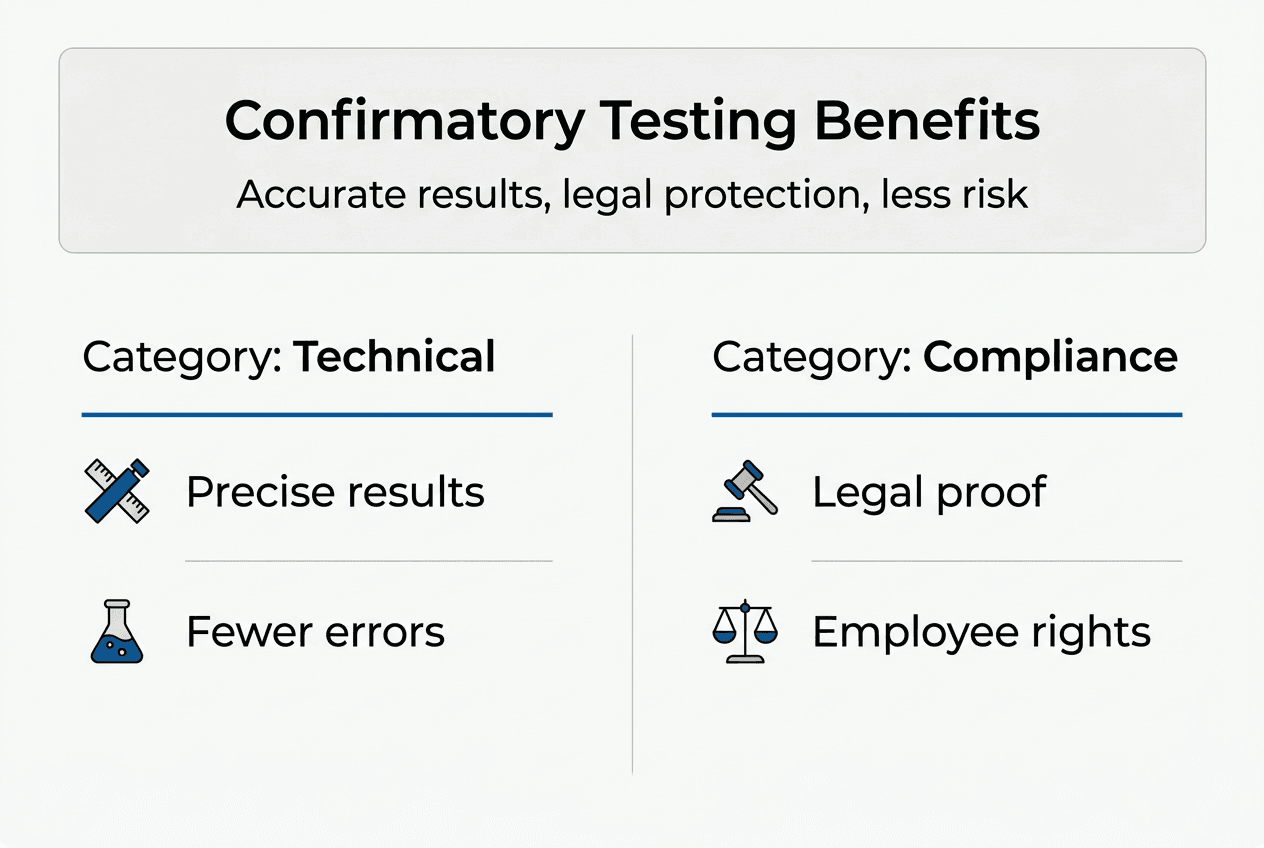
The following comparison shows cost versus risk:
| Scenario | Confirmatory Cost | Potential Liability | Risk Ratio |
|---|---|---|---|
| False positive termination | $100 | $75,000 average settlement | 750:1 |
| Workplace accident (missed impairment) | $100 | $500,000+ liability | 5,000:1 |
| Compliance violation fine | $100 | $10,000 per incident | 100:1 |
| Reputational damage | $100 | Immeasurable | N/A |
Streamlining confirmatory testing workflows reduces operational friction. Partnering with laboratories offering rapid turnaround and electronic reporting minimizes delays. Clear written policies explaining the confirmation process to employees prevent confusion and resistance.
Best practices for efficient confirmatory testing:
- Establish standing accounts with SAMHSA-certified laboratories for quick processing
- Implement electronic chain of custody to reduce paperwork and errors
- Train supervisors on proper sample collection and handling procedures
- Communicate confirmation timelines clearly so employees understand the process
- Use random drug testing insights to optimize program design
Education reduces stigma and improves acceptance. When employees understand that confirmatory testing protects them from false accusations, resistance decreases. Transparent communication about the two-stage process builds trust and demonstrates organizational commitment to fairness.
Legalization trends do not eliminate confirmatory testing needs. Even in states with recreational marijuana laws, employers maintain the right to enforce drug-free workplace policies, especially for safety-sensitive positions. Confirmatory analysis remains the gold standard for scientifically valid results regardless of legal status changes.
Operational efficiency comes from viewing confirmatory testing as risk management rather than expense. The investment protects organizational assets, employee welfare, and legal standing. Smart employers integrate confirmation into standard procedures rather than treating it as an optional add-on.
Explore reliable confirmatory drug testing services
Navigating 2026 compliance requirements demands a testing partner with comprehensive laboratory capabilities and regulatory expertise. Countrywide Testing provides lab testing services meeting SAMHSA, ISO, CLIA, and CAP standards, ensuring your confirmatory results withstand legal scrutiny and regulatory audits.
Their nationwide drug testing network simplifies program management across multiple locations while maintaining consistent quality. Whether you need pre-employment screening, random testing protocols, or post-accident verification, their platform offers accessible solutions including the 12 panel multiple drug test kit for initial screening paired with laboratory confirmation services. Expert guidance helps you design compliant testing programs balancing operational needs with employee rights.
Frequently asked questions
What is confirmatory drug testing and why is it important?
Confirmatory drug testing uses advanced laboratory techniques like GC-MS or LC-MS to verify initial screening results by identifying specific drug compounds rather than drug classes. This secondary analysis eliminates false positives from cross-reactive substances, providing legally defensible results. It protects employees from wrongful accusations while ensuring employers act on accurate information, making it essential for compliance and fairness.
How does confirmatory testing reduce wrongful termination risks?
Confirmatory analysis identifies exact drug metabolites, eliminating false positives from medications, foods, and supplements that trigger presumptive screens. By verifying which initial positives represent actual drug use, employers avoid terminating workers based on inaccurate results. This precision reduces legal liability from wrongful termination lawsuits while supporting fair disciplinary processes grounded in scientific evidence.
Are employers required by law to conduct confirmatory testing?
Many states mandate confirmatory testing after positive screening results to ensure legal defensibility and protect employee rights. Federal drug testing programs, including DOT regulations and federal contractor requirements, require laboratory confirmation before adverse employment actions. Even where not explicitly required, confirmatory testing represents best practice for minimizing legal risk and maintaining scientifically valid testing programs.
What substances most commonly cause false positives in initial screening?
Antidepressants like sertraline trigger amphetamine results, while decongestants containing pseudoephedrine show as methamphetamine. Ibuprofen and hemp seeds can indicate marijuana use, and rifampin produces false opiate positives. Poppy seeds, certain antibiotics, and CBD products also cause cross-reactivity in immunoassay screens. Confirmatory testing eliminates these interference errors by identifying specific molecular structures.
How can employers streamline confirmatory testing while managing costs?
Implement written policies clearly outlining confirmation procedures and timelines to set proper expectations. Partner with certified laboratories offering rapid electronic reporting to minimize turnaround delays. Educate employees about the two-stage testing process to reduce stigma and resistance. Calculate confirmatory testing as risk management investment rather than pure expense, recognizing that avoiding a single wrongful termination lawsuit justifies years of confirmation costs.