
Probation drug screening guide: effective testing 2026
Probation officers face a critical challenge every day: ensuring individuals under supervision remain drug-free while navigating complex legal requirements and limited budgets. Choosing the wrong test can lead to false negatives, costly legal disputes, or missed violations that endanger public safety. This guide walks you through proven drug screening methods, legal frameworks governing testing authority, and practical strategies to maintain compliance while protecting the integrity of community supervision programs.
Table of Contents
- Understanding Probation Drug Screening: What You Need To Know
- Preparing For Probation Drug Screening: Tools And Methods Overview
- Executing Drug Screening: Best Practices And Compliance Tips For Probation Officers
- Verifying Results And Managing Follow-Up Actions On Probation Drug Screening
- Learn About Laboratory And On-Site Drug Testing Solutions
- Frequently Asked Questions About Probation Drug Screening
Key takeaways
| Point | Details |
|---|---|
| Urinalysis remains the most cost-effective option | It detects multiple substances affordably but offers moderate detection windows of 2 to 7 days for most drugs. |
| Hair follicle testing provides extended detection | This method identifies drug use up to 90 days prior, making it ideal for long-term monitoring despite higher costs. |
| Saliva tests excel at detecting recent use | These screenings identify substance use within 48 hours and are highly resistant to tampering or adulteration. |
| Legal authority stems from statutes and court orders | Probation officers derive testing power from specific laws, supervision agreements, and judicial mandates. |
| Drug violations drive probation revocations | Substance-related noncompliance remains a leading cause of supervision failures, making accurate testing essential. |
Understanding probation drug screening: what you need to know
Probation drug testing is a key tool used to monitor compliance with court-ordered supervision conditions. When judges place individuals on probation, they typically include specific requirements prohibiting illegal drug use, mandating periodic testing, and sometimes requiring participation in treatment programs. These conditions form the backbone of community supervision contracts that probation officers enforce daily.
The power to demand drug tests comes from specific laws and court orders that grant officers authority to verify compliance. State statutes outline general testing protocols, while individual court orders specify frequency, methods, and consequences for particular cases. This dual framework ensures testing remains legally defensible while allowing flexibility to address unique supervision needs.
Typical supervision agreements include several drug-related provisions:
- Complete abstinence from illegal substances and unauthorized prescription medications
- Submission to random or scheduled drug screening at officer discretion
- Participation in substance abuse treatment or counseling when ordered
- Payment of testing fees or cost-sharing arrangements
- Immediate reporting of any medication changes to supervising officers
“Conditions of community supervision prohibit drug use and require testing and treatment to ensure public safety and individual rehabilitation.”
Drug-related violations carry serious consequences that probation officers must understand thoroughly. A positive test result can trigger graduated sanctions ranging from increased reporting requirements and intensified testing schedules to treatment mandates or even revocation hearings. Understanding the consequences of failed probation drug tests helps officers make informed decisions about appropriate responses.
The stakes extend beyond individual cases. When officers fail to detect substance use through inadequate testing methods, they risk public safety incidents that undermine confidence in community supervision programs. Conversely, false positives from unreliable tests can lead to wrongful sanctions and costly legal challenges. Selecting appropriate testing methods and following proper protocols protects both the supervised individual’s rights and community safety.
Preparing for probation drug screening: tools and methods overview
Probation officers have three primary testing methods at their disposal, each offering distinct advantages for different supervision scenarios. Urinalysis detects multiple drugs affordably, making it the standard choice for routine monitoring in most jurisdictions. Standard urine screens identify marijuana, cocaine, opiates, amphetamines, and PCP with detection windows ranging from 2 to 7 days for most substances, though marijuana can appear up to 30 days in frequent users.
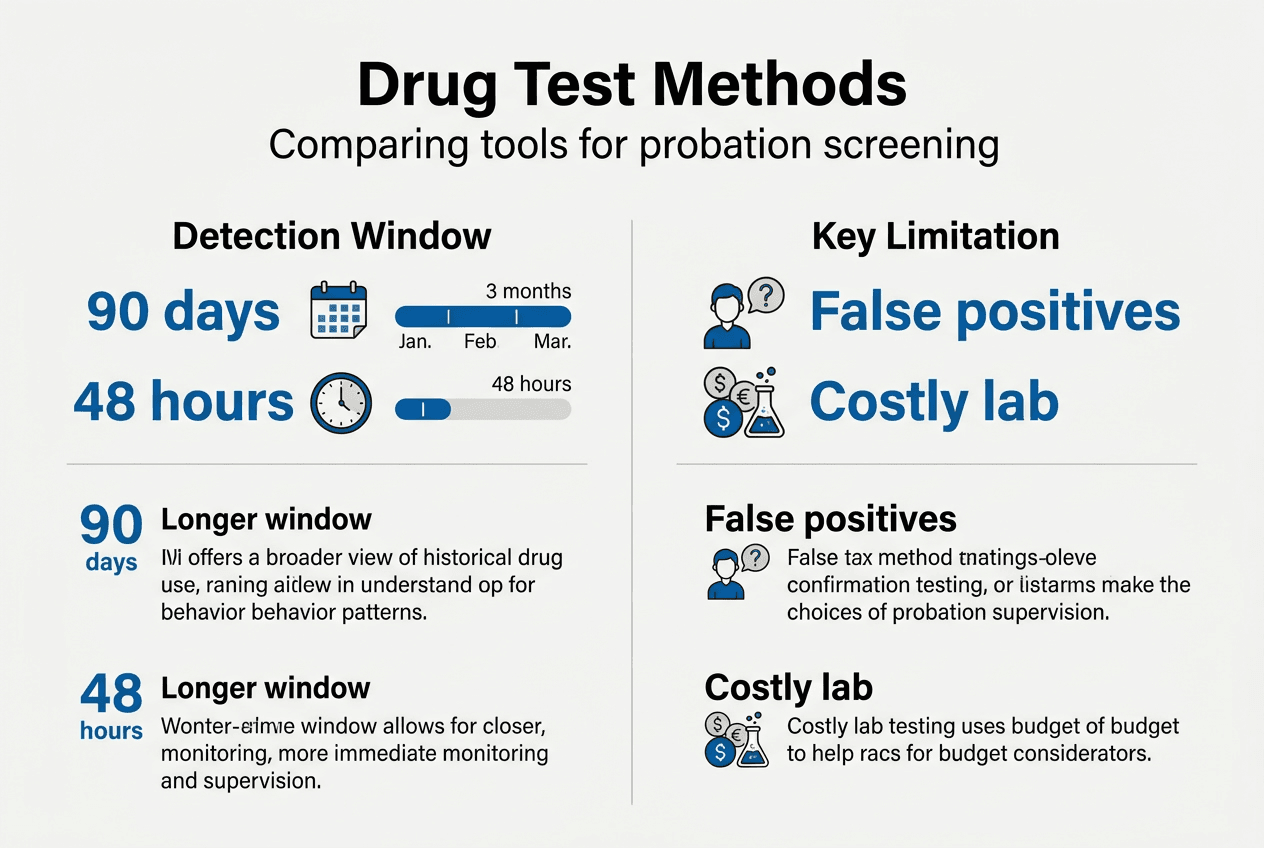
Hair follicle testing detects drug use up to 90 days, providing the longest detection window available. This method analyzes a small hair sample, typically 1.5 inches from the scalp, to identify drug metabolites incorporated into the hair shaft during growth. The extended timeframe makes hair testing invaluable for establishing patterns of use or verifying long-term abstinence, though costs run significantly higher than urinalysis.
Saliva testing identifies recent drug use within 48 hours, filling a critical gap in supervision strategies. Officers can administer oral fluid tests quickly with minimal privacy concerns, and the method proves extremely difficult to adulterate or substitute. The hair follicle test detection window makes it ideal for historical analysis, while saliva excels at confirming very recent consumption.
| Test Type | Detection Window | Cost Range | Key Advantages | Primary Limitations |
|---|---|---|---|---|
| Urinalysis | 2 to 7 days (30 for marijuana) | $10 to $50 | Affordable, detects multiple drugs, widely accepted | Moderate window, privacy requirements, tampering risk |
| Hair Follicle | Up to 90 days | $100 to $150 | Longest detection, tamper-resistant, historical patterns | Higher cost, slower results, cannot detect very recent use |
| Saliva | 12 to 48 hours | $20 to $60 | Detects recent use, non-invasive, difficult to fake | Short window, limited substance panel on some tests |
Choosing the right test depends on your specific supervision goals and available resources. For standard monitoring of low-risk individuals, urinalysis provides cost-effective routine screening. When you need to verify abstinence over extended periods or investigate suspected chronic use, hair testing justifies the additional expense. Saliva tests work best for roadside or field testing situations where you need immediate results about very recent consumption.
Pro Tip: Combining methods creates a comprehensive monitoring strategy that addresses different timeframes. Use urinalysis for routine monthly checks, add random saliva tests to catch recent use between scheduled appointments, and order hair follicle analysis when investigating compliance concerns or transitioning someone off intensive supervision.
Many officers find success with the 10 panel saliva drug test for field screening because it detects amphetamines, opiates, THC, cocaine, PCP, oxycodone, benzodiazepines, barbiturates, methamphetamine, and buprenorphine in a single, easy-to-administer format. This broad panel catches most substances of concern while maintaining the convenience and tamper resistance that make saliva testing valuable.
Executing drug screening: best practices and compliance tips for probation officers
Proper test administration begins long before you collect the first sample. Establish clear protocols that your entire supervision team follows consistently to maintain legal defensibility and ensure reliable results. Document your testing policy in writing, including selection criteria for test types, frequency schedules, and chain of custody procedures that meet your jurisdiction’s evidentiary standards.
Follow these steps for reliable urine collection:
- Verify the individual’s identity using photo identification before beginning the collection process.
- Instruct the person to empty pockets and remove outer garments that could conceal adulterants or substitute samples.
- Add bluing agent to toilet water and secure the collection area to prevent dilution or contamination.
- Provide the sealed collection cup and observe the collection process according to your jurisdiction’s privacy requirements.
- Check temperature immediately after collection, as valid samples should read between 90 and 100 degrees Fahrenheit within four minutes.
- Seal and label the specimen in the donor’s presence, having them initial the seal to establish chain of custody.
- Complete all documentation including date, time, collector identity, and any observations about the collection process.
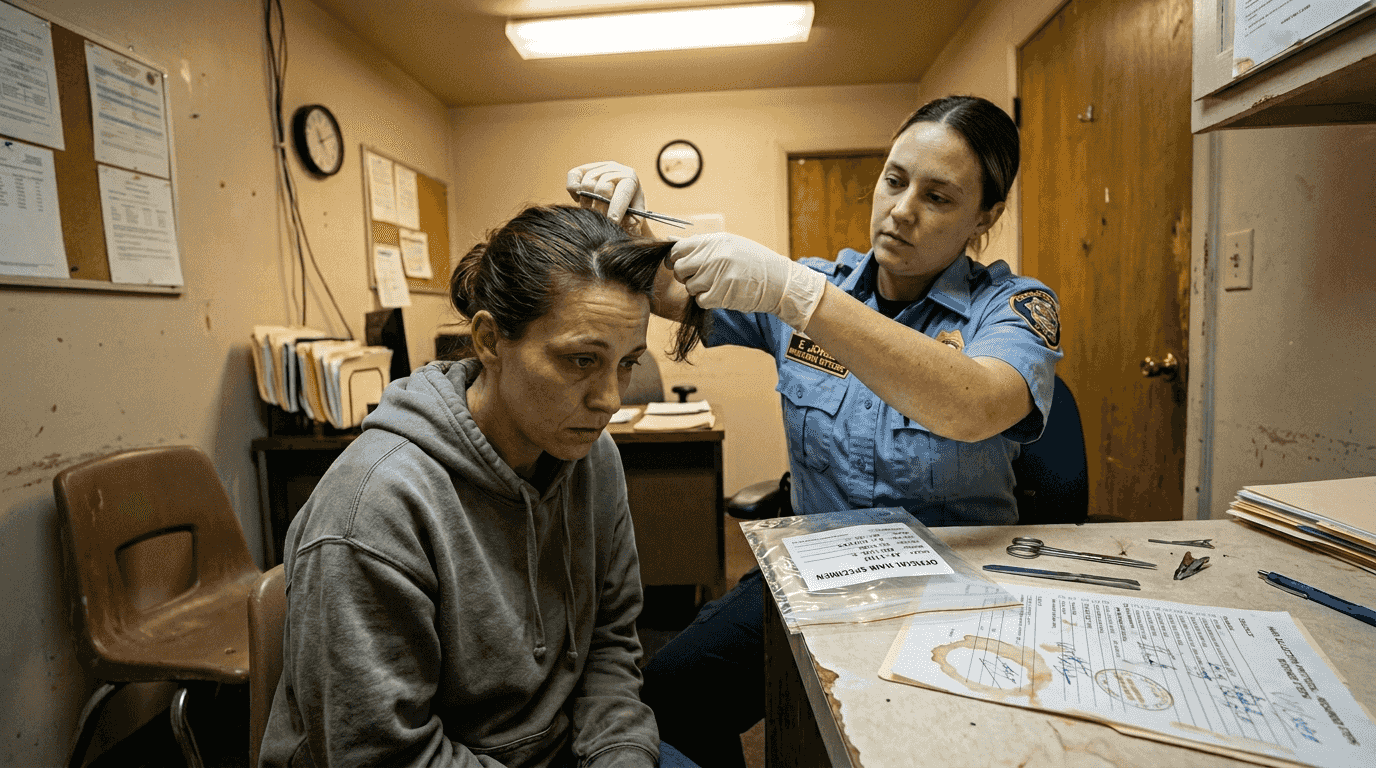
Hair collection requires different handling but similar attention to detail. Cut approximately 100 to 120 strands as close to the scalp as possible from the crown of the head, where growth rates remain most consistent. Secure the sample in the provided foil envelope with the root end clearly marked, and complete chain of custody forms immediately. If head hair proves insufficient due to length or availability, body hair can substitute, though detection windows may vary.
Saliva collection offers the simplest process. Have the individual place the collection swab between the lower cheek and gum, moving it gently for the manufacturer’s specified time, usually 2 to 3 minutes. Ensure they avoid eating, drinking, or smoking for at least 10 minutes before collection to prevent contamination. The swab changes color when sufficient sample volume has been absorbed, eliminating guesswork about adequacy.
The Texas Department of Criminal Justice requires testing for parolees under specific protocols that illustrate best practices many jurisdictions have adopted. Their guidelines emphasize random selection to prevent anticipation, witnessed collection when tampering is suspected, and immediate documentation of all results and observations.
Common tampering methods you should watch for include:
- Dilution through excessive water consumption before testing, detectable through specific gravity and creatinine measurements
- Substitution using synthetic urine or another person’s sample, preventable through temperature checks and observed collection
- Adulteration using household chemicals or commercial products added to the sample, identifiable through validity testing
- External application of detox shampoos before hair testing, though these rarely defeat modern testing methods
Pro Tip: Document every step meticulously to support legal proceedings if results are challenged. Your notes should include collection conditions, any unusual circumstances, the individual’s demeanor, and exact times for each procedural step. Courts scrutinize testing procedures intensely, and thorough documentation often makes the difference between admissible and excluded evidence.
When you encounter resistance or refusal during collection, remain professional while clearly explaining the legal consequences. Refusal to submit typically constitutes a violation equivalent to a positive result under most supervision agreements. Contact your supervisor immediately and document the refusal thoroughly, including exact words used and any reasons given. Understanding how to properly handle failed drug tests prepares you for these challenging interactions.
Verifying results and managing follow-up actions on probation drug screening
Test results typically arrive within 24 to 72 hours for instant or lab-based screening, though confirmation testing for positive results adds several days to the timeline. Instant tests provide preliminary results immediately but require laboratory confirmation before you take formal action. Never impose sanctions based solely on preliminary positive results, as confirmatory testing using gas chromatography/mass spectrometry eliminates false positives from cross-reactive substances.
When you receive a confirmed positive result, your response should follow a graduated sanctions model that balances accountability with rehabilitation. First-time violations often warrant increased testing frequency, additional treatment requirements, or enhanced reporting obligations rather than immediate revocation. Repeat violations or positive results for particularly dangerous substances may justify more severe consequences including detention or revocation proceedings.
Drug activity is a very common reason for violations of community supervision, making systematic result management essential. Develop a consistent approach that treats similar situations similarly while allowing flexibility for individual circumstances. Your jurisdiction’s policies should outline specific responses for various scenarios, ensuring fairness and legal compliance.
| Test Result | Immediate Action | Follow-Up Within 7 Days | Long-Term Monitoring |
|---|---|---|---|
| Negative | Document in case file | Continue regular schedule | Maintain current supervision level |
| Positive (first time) | Confirm via lab testing | Increase testing frequency, assess treatment needs | Monitor for pattern development |
| Positive (repeat) | Initiate violation process | Court notification, treatment referral | Consider supervision modification |
| Refused/Tampered | Document as violation | Schedule violation hearing | Evaluate for detention or revocation |
| Dilute/Invalid | Immediate retest observed | Investigate tampering intent | Add observed collections |
Coordinate with courts promptly when positive results require judicial notification or supervision modification. Most jurisdictions mandate reporting within specific timeframes, often 24 to 48 hours for serious violations. Prepare comprehensive violation reports that include testing history, previous interventions attempted, and your recommendation for appropriate sanctions. Judges rely heavily on officer assessments when determining proportionate responses.
Treatment provider coordination becomes critical when substance use issues emerge. Share relevant testing information with counselors while respecting confidentiality requirements, and request regular progress reports to inform your supervision decisions. Effective collaboration between supervision and treatment creates accountability while supporting genuine behavior change.
Implement this results management checklist to ensure consistent handling:
- Verify all positive results through confirmatory laboratory testing before imposing sanctions
- Document results and your response in the case management system within 24 hours
- Notify the court and relevant parties according to jurisdiction timelines and requirements
- Schedule face-to-face contact with the individual to discuss results and expectations
- Assess treatment needs and make appropriate referrals when substance use issues are identified
- Update the supervision plan to reflect any modifications in testing frequency or conditions
- Follow up on all referrals and requirements to ensure compliance with modified conditions
Some individuals will dispute positive results, claiming false positives from legitimate medications or other substances. Maintain professionalism while explaining that confirmatory testing eliminates most innocent explanations. Request documentation of any prescriptions or over-the-counter medications, and consult with the testing laboratory’s medical review officer about potential cross-reactivity. The MRO can often resolve disputes by reviewing medication lists and interviewing the individual about legitimate explanations.
Understanding proper responses to failed drug screening helps you balance accountability with rehabilitation goals. Your goal remains supporting successful supervision completion while protecting public safety, and thoughtful result management advances both objectives simultaneously.
Learn about laboratory and on-site drug testing solutions
Now that you understand effective drug screening protocols, finding reliable testing partners becomes your next priority. Countrywide Testing provides laboratory drug testing services designed specifically for probation and legal compliance needs, with certified labs meeting SAMHSA, ISO, CLIA, and CAP standards that courts recognize and accept.
Whether you need the convenience of instant QuickScreen 10 panel saliva tests for field screening or comprehensive laboratory confirmation services, nationwide drug testing services support supervision officers across all jurisdictions. Quick turnaround times, competitive pricing, and expert support help you maintain rigorous testing schedules without straining limited budgets.
Frequently asked questions about probation drug screening
How often should probation drug tests be conducted?
Testing frequency depends on risk level and supervision phase. High-risk individuals typically require weekly or biweekly testing during early supervision, while low-risk cases may need only monthly screens. Random testing between scheduled appointments increases deterrence and catches intermittent use that regular schedules might miss.
What legal standards govern consent for probation drug screening?
Consent becomes a condition of probation through the court order and supervision agreement signed at sentencing. Individuals waive certain Fourth Amendment protections against searches when they accept probation instead of incarceration. However, testing must still relate to legitimate supervision purposes and follow established protocols to remain legally defensible.
Can probationers refuse a drug test?
Refusal constitutes a violation of supervision conditions in virtually all jurisdictions. Officers should clearly explain that refusal carries the same consequences as a positive result, typically initiating violation proceedings. Document any refusal thoroughly, including the exact circumstances and any reasons provided, to support subsequent legal action.
What are the best practices for handling disputed positive results?
Always confirm preliminary positive results through laboratory testing using gas chromatography/mass spectrometry before imposing sanctions. Request documentation of any prescription medications and consult with the laboratory’s medical review officer about potential explanations. Maintain detailed records of the entire testing process, including chain of custody, to address challenges effectively.
Which drug tests are most resistant to tampering?
Hair follicle testing offers the greatest tamper resistance because collection happens under direct observation and adulterating hair proves extremely difficult. Saliva tests also resist tampering well due to the observed collection process and immediate sample adequacy verification. Observed urine collection eliminates substitution but requires careful attention to privacy and dignity considerations.
How do detection windows affect supervision strategies?
Matching detection windows to supervision goals maximizes effectiveness. Use hair testing’s 90-day window to verify long-term abstinence when transitioning someone to lower supervision levels. Deploy saliva testing’s 48-hour window for random checks that catch very recent use. Urinalysis provides a middle ground suitable for routine monitoring of most substances over several days.