
Why random drug testing matters: safety & compliance
Most employers assume random drug testing is mainly about catching people who use drugs. That assumption misses the bigger picture entirely. The real power of a well-designed program is deterrence, not detection. When employees know a test could happen at any time, behavior shifts before any test is ever administered. Empirical data shows a correlation between random testing and reduced drug positivity rates, though high-quality studies directly linking testing to injury prevention remain limited. This guide walks you through the evidence, the legal landscape, and the practical steps to build a program that genuinely protects your workforce and keeps you compliant.
Table of Contents
- Why random drug testing: context and misconceptions
- Evidence and effectiveness of random drug testing
- Legal and compliance factors for employers
- Balancing deterrence, privacy, and workplace culture
- Crafting a random drug testing policy that works
- Supporting your drug testing program: trusted partners and services
- Frequently asked questions
Key Takeaways
| Point | Details |
|---|---|
| Safety and compliance | Random drug testing helps reduce risks and meet regulatory requirements in many industries. |
| Evidence-based deterrence | Frequent testing is linked to lower drug positivity, even if direct injury data is limited. |
| Balance privacy and trust | Transparent policies and careful handling of results encourage employee buy-in and reduce legal risk. |
| Legal complexities matter | Staying current on federal and state rules is essential for effective and lawful testing programs. |
Why random drug testing: context and misconceptions
Random drug testing did not emerge from a desire to surveil employees. It grew out of real safety crises in industries where impaired workers put lives at risk. Transportation accidents, construction site injuries, and industrial disasters pushed regulators to act. Today, DOT and OSHA mandate or strongly recommend random testing for regulated industries like transportation and construction, making compliance a legal obligation rather than a management preference.
Yet misconceptions persist. Many HR teams still frame their programs around catching offenders, which creates an adversarial culture and misses the point. The primary goal is prevention. A worker who knows they could be tested on any given Tuesday is far less likely to use substances that impair their judgment on Monday night.
Here are the most common misconceptions employers carry into policy design:
- Random testing is only for large companies. False. Small businesses in safety-sensitive industries face the same regulatory exposure.
- It only matters if you have a drug problem. False. Prevention works precisely because problems have not yet surfaced.
- Any positive test means termination. Not necessarily. Policies must account for prescription medications and rehabilitation pathways.
- Privacy concerns make it legally risky. Properly designed programs, reviewed by legal counsel, manage this effectively.
“The goal of random drug testing is not punishment. It is the creation of a workplace environment where safety is the default, not the exception.”
Understanding random drug testing impact at the policy level helps you move from reactive enforcement to proactive safety management.
Evidence and effectiveness of random drug testing
Understanding the context allows us to objectively evaluate the effectiveness of these programs. The most rigorous analysis available comes from a Cochrane systematic review, which found that higher testing frequency is inversely linked to positive test rates. Specifically, workplaces testing 25% of their pool annually saw a 0.07% positivity rate, compared to 0.11% at a 10% testing rate. That is a meaningful difference when scaled across hundreds or thousands of employees.
Testing frequency vs. drug positivity rates
| Annual testing rate | Drug positivity rate |
|---|---|
| 10% of workforce | 0.11% |
| 25% of workforce | 0.07% |
The data suggests deterrence is real. Employees tested more frequently are less likely to test positive, which implies behavioral change rather than just detection. However, the same review notes that direct evidence linking random testing to reduced workplace injuries is still limited. This does not mean testing fails to prevent injuries. It means the research has not yet caught up with the practice.
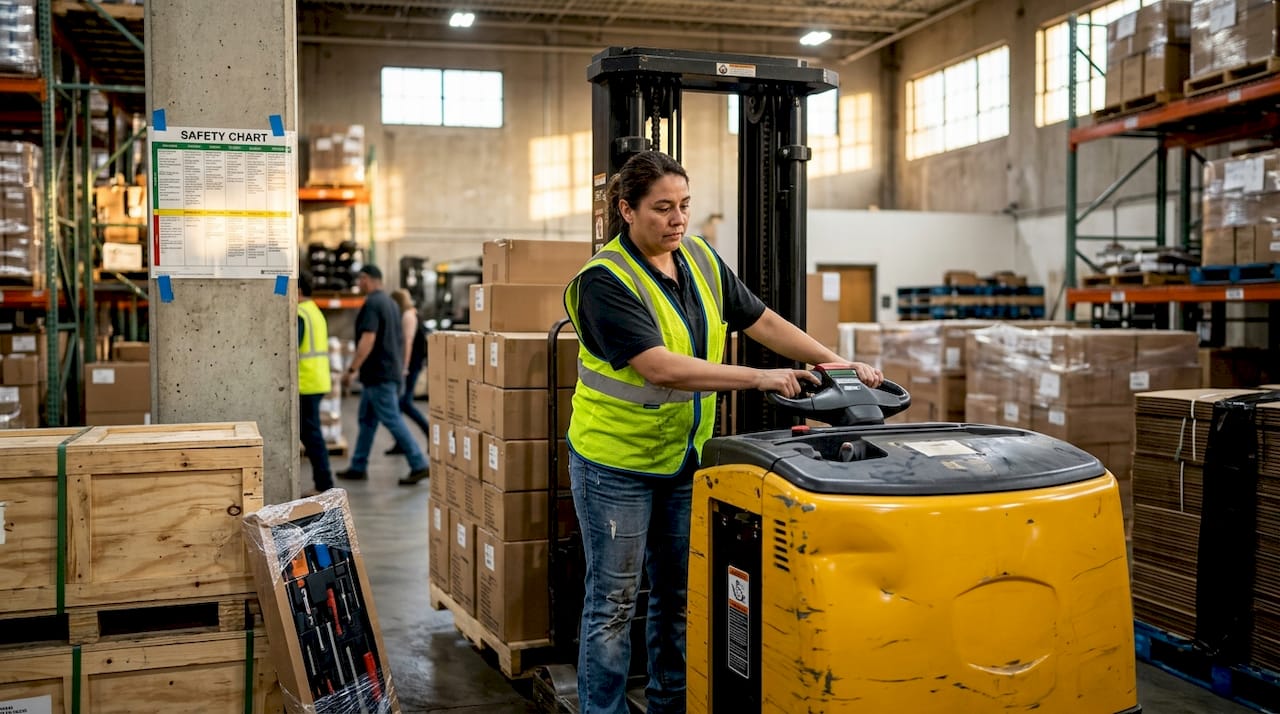
For safety-sensitive environments, the logic is straightforward. A forklift operator, a commercial truck driver, or a crane operator working while impaired creates catastrophic risk. The drug testing accident reduction argument is strongest in these roles, where the margin for error is essentially zero. Reviewing random testing workplace data helps you benchmark your program against industry norms and set realistic expectations.
Legal and compliance factors for employers
Effectiveness aside, successful random drug testing also depends on navigating complex legal landscapes. Federal regulations set the floor, but state laws often add layers that catch employers off guard.
DOT and OSHA regulations are the most familiar framework. DOT requires specific testing rates by industry, ranging from 25% to 50% of covered employees annually depending on the substance and sector. OSHA’s post-accident testing guidance adds another dimension, requiring employers to distinguish between punitive testing and genuine safety investigation.
The Supreme Court addressed the privacy tension directly in National Treasury Employees Union v. Von Raab, upholding suspicionless testing for safety-sensitive federal roles involving firearms and drug interdiction. The Court balanced public safety against individual privacy, establishing that the government’s interest in a drug-free safety-sensitive workforce can outweigh the intrusion of testing. Private employers use this precedent as a framework for their own policy design.
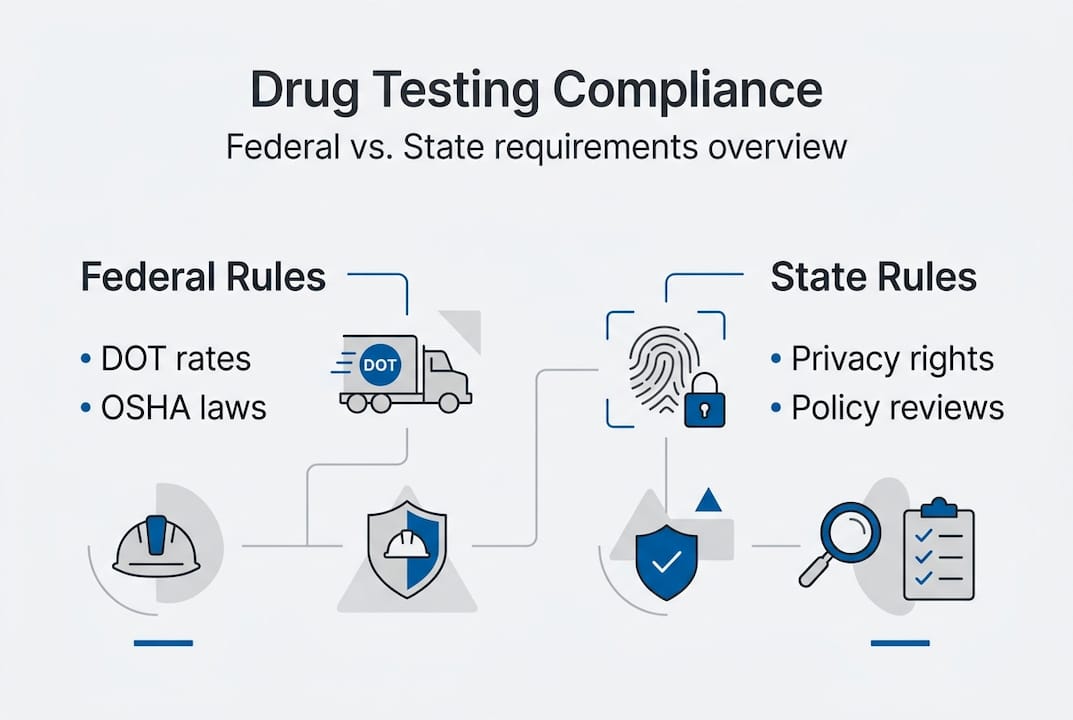
Federal vs. state requirements: a quick comparison
| Factor | Federal (DOT/OSHA) | State level |
|---|---|---|
| Testing mandate | Required for regulated industries | Varies; some states restrict random testing |
| Testing rate | 25-50% annually (DOT) | May set minimums or prohibit certain sectors |
| Employee pool rules | Covered employees only | Some states exclude off-duty workers |
| Result handling | Strict confidentiality required | Additional privacy protections may apply |
Steps to keep your policy legally sound:
- Consult legal counsel before drafting or updating your policy.
- Identify which regulations apply to your industry and state.
- Define your covered employee pool clearly and in writing.
- Document your random selection process to demonstrate it is genuinely random.
- Train supervisors on what they can and cannot say or do during the testing process.
Pro Tip: Review your drug testing policy with HR and legal advisors at least once a year. Regulations change, and an outdated policy can expose you to liability even if your intentions are sound. Setting up a DOT drug testing program correctly from the start saves significant legal headaches later. Strong HR policies for safety also reduce your exposure in post-accident drug testing situations.
Balancing deterrence, privacy, and workplace culture
Beyond the regulations, how employers approach implementation determines if random testing is accepted or resented. A technically compliant program that destroys employee trust is not a success. Culture matters as much as compliance.
One of the most common legal and cultural pitfalls involves pool management. Iowa law requires employers to exclude off-duty or excused employees from random selection pools before the draw happens, not after. Selecting someone who is on approved medical leave and then removing them post-selection is not compliant. This distinction matters both legally and culturally because employees notice when the process feels arbitrary or unfair.
Here is how to build a program employees actually respect:
- Communicate the why. Explain that the program exists to protect everyone, not to catch individuals.
- Apply testing consistently. Managers and executives should be in the same pool as frontline workers.
- Protect test result confidentiality. Results should go to HR and the MRO, not to supervisors or coworkers.
- Offer support resources. An Employee Assistance Program (EAP) signals that the company cares about recovery, not just punishment.
- Train managers on appropriate responses to a positive result, including what they are legally permitted to say.
Pro Tip: Use a Medical Review Officer (MRO) to handle all positive results before any action is taken. An MRO can determine whether a positive test reflects legitimate prescription use, protecting both the employee and the employer from wrongful action. Understanding employee drug testing facts and following a clear drug screening workflow keeps your process defensible. A program grounded in workplace drug testing safety principles earns employee trust over time.
Crafting a random drug testing policy that works
To help you get started, here is a simple step-by-step approach for building a robust and fair program.
- Define the scope. Identify which positions are covered, focusing first on safety-sensitive roles. Determine whether your industry falls under federal mandates.
- Draft the written policy. Include the purpose, covered employees, substances tested, testing frequency, consequences for positive results, and the appeals process.
- Build your random selection pool. Use a genuinely random method, such as a computer-generated draw. Per Iowa court guidance, exclude off-duty and excused employees before selection, not after.
- Engage legal review. Have employment counsel review the policy against federal, state, and local requirements before implementation.
- Communicate with employees. Distribute the policy in writing, hold a Q&A session, and get signed acknowledgments from all covered employees.
- Partner with a certified testing provider. Choose a lab or collection site that meets SAMHSA, CLIA, or CAP standards to ensure results hold up legally.
- Designate an MRO. Understand the role of an MRO in reviewing positive results and protecting prescription privacy.
- Track and review program data. Monitor positivity rates, testing frequency, and any incidents. Adjust your program annually based on what the data shows.
Continuous improvement is not optional. A policy written in 2022 may not reflect 2026 regulations or your current workforce composition. Build in a formal annual review cycle from day one.
Supporting your drug testing program: trusted partners and services
Once your policy is ready, finding the right support makes execution straightforward and reliable. A well-written policy is only as strong as the testing infrastructure behind it.
At CountryWideTesting.com, we work with employers across industries to simplify the compliance side of drug testing. Our lab testing services are processed through SAMHSA, ISO, CLIA, and CAP certified laboratories, so your results meet the evidentiary standards required by DOT, OSHA, and state regulators. Whether you need a straightforward 12 panel drug test for a small team or a fully managed nationwide drug testing program for a distributed workforce, we have the products and partnerships to support you. Reach out to discuss a testing solution tailored to your industry, your workforce size, and your compliance requirements.
Frequently asked questions
What is considered a safety-sensitive position?
A safety-sensitive position is any job where impaired performance could put people at risk, such as driving, operating machinery, or handling hazardous materials. The Supreme Court has upheld suspicionless testing for such roles, recognizing that public safety can outweigh individual privacy interests.
Do random drug tests really reduce workplace accidents?
Research suggests a lower rate of drug-positive tests with more frequent random testing, but direct links to accident rates are still being studied. Current evidence points to deterrence as the primary mechanism, particularly in safety-sensitive industries.
Are there privacy rules employers must follow for random drug testing?
Yes, employers must exclude off-duty or excused employees from random pools and handle test results confidentially to respect privacy laws. Iowa court rulings clarify that exclusions must happen before selection, not after the draw.
How is prescription medication handled in random drug testing?
A Medical Review Officer reviews positive results to determine whether they reflect legitimate prescription use before any employment action is taken. This step protects both the employee’s privacy and the employer’s legal standing under Iowa and federal guidelines.