
Streamline insurance drug testing workflow for compliance
Managing an effective insurance drug testing workflow is a complex challenge for HR professionals and compliance officers. You must balance federal and state regulations, maintain accurate documentation, and ensure testing protocols meet insurance carrier requirements. Mistakes can lead to legal exposure, denied claims, and higher premiums. This guide provides actionable steps to build a compliant, efficient drug testing workflow that reduces risk and potentially lowers your workers’ compensation costs. You’ll learn how to structure testing programs, execute proper procedures, and leverage insurance incentives available in multiple states.
Table of Contents
- Key takeaways
- Preparing your insurance drug testing workflow
- Executing the drug testing process step by step
- Verifying compliance and leveraging insurance incentives
- Optimize your drug testing with Countrywide Testing
- FAQ
Key Takeaways
| Point | Details |
|---|---|
| Test type variety | Different test types address pre employment, random, post incident, reasonable suspicion, return to duty, and follow up to fit workplace scenarios. |
| Regulatory compliance | Policies must meet federal and state drug free workplace laws and regulations. |
| Certified labs required | Partner with accredited laboratories to ensure test accuracy and regulatory compliance. |
| Insurance discount potential | A well documented compliant workflow can qualify organizations for premium discounts from insurers. |
| Focus safety sensitive roles | Line up testing activities with safety critical positions to maximize effectiveness. |
Preparing your insurance drug testing workflow
Before implementing any testing program, you need a solid foundation. Understanding test types, legal requirements, and policy development ensures your workflow aligns with both regulatory standards and insurance carrier expectations.
Workplace drug testing workflows typically include pre-employment, random, post-accident, reasonable suspicion, return-to-duty, and follow-up testing. Each serves a distinct purpose. Pre-employment screening establishes baseline expectations. Random testing deters ongoing use. Post-accident testing determines if substances contributed to incidents. Reasonable suspicion addresses observable behaviors. Return-to-duty and follow-up testing monitor employees after policy violations.
Your written policy must comply with federal drug-free workplace laws and state-specific regulations. Federal contractors face Drug-Free Workplace Act requirements. Department of Transportation regulations govern safety-sensitive positions in transportation industries. State laws vary significantly on permissible testing circumstances, notice requirements, and marijuana policies. Consult your drug testing laws reference to understand jurisdiction-specific obligations.
Develop comprehensive documentation before launching your program. Your policy should specify which positions are subject to testing, testing circumstances, substances screened, consequences of positive results, and employee rights. Integrate this policy into your employee handbook with clear acknowledgment procedures. Train supervisors on recognizing signs of impairment and documenting reasonable suspicion observations objectively.
Pro Tip: Create a supervisor checklist with specific behavioral indicators rather than subjective impressions. Document observations like slurred speech, unsteady gait, or unusual odors rather than conclusions like “appears intoxicated.”
Essential preparation materials include:
- Written drug testing policy reviewed by employment counsel
- Supervisor training program on reasonable suspicion indicators
- Employee acknowledgment forms for policy receipt
- Vendor contracts with certified laboratories
- Chain of custody forms and secure storage
- Medical Review Officer (MRO) service agreement
| Requirement | Purpose | Responsible Party |
|---|---|---|
| Written policy | Legal compliance and transparency | HR with legal review |
| Certified lab partnership | Accurate, defensible results | Procurement/HR |
| MRO services | Medical review of positives | Third-party physician |
| Supervisor training | Proper reasonable suspicion documentation | HR/Training |
| Employee education | Understanding rights and consequences | HR/Communications |
Establishing these elements creates a defensible foundation. Insurance carriers scrutinize program structure when evaluating premium discount eligibility. Missing documentation or untrained supervisors create liability exposures that negate potential savings. Your drug testing compliance guide employers 2026 provides additional implementation details.
Executing the drug testing process step by step
Proper execution transforms your policy into practice. Each workflow stage requires attention to procedural details that ensure results hold up under legal scrutiny and insurance review.
Follow these sequential steps for every test:
- Initiate testing based on policy triggers (pre-employment offer, random selection, post-accident protocol, or documented reasonable suspicion)
- Provide employee with testing authorization and collection site information
- Employee reports to certified collection facility within specified timeframe
- Trained collector verifies identity and explains procedures
- Employee provides specimen under direct observation protocols when required
- Collector completes chain of custody documentation with employee signatures
- Specimen sealed and transported to certified laboratory
- Laboratory conducts screening analysis
- Negative results reported directly to employer
- Positive or adulterated results forwarded to MRO for review
- MRO contacts employee to discuss legitimate medical explanations
- MRO reports verified results to employer with actionable recommendations
Testing methodologies involve presumptive (qualitative screening e.g., immunoassay) followed by definitive (quantitative confirmation e.g., GC-MS or LC-MS) with chain-of-custody, MRO review for positives. This two-stage process minimizes false positives while maintaining cost efficiency. Initial immunoassay screens are inexpensive and fast. Confirmation testing using gas chromatography-mass spectrometry or liquid chromatography-mass spectrometry provides legally defensible specificity.
| Testing Method | Purpose | Accuracy | Cost | Timeline |
|---|---|---|---|---|
| Immunoassay screening | Initial detection of drug classes | 95-98% sensitivity | Low | 24-48 hours |
| GC-MS/LC-MS confirmation | Definitive identification and quantification | 99%+ specificity | Higher | 3-5 days |
The chain of custody drug testing employer compliance process protects specimen integrity from collection through analysis. Each person handling the specimen documents transfer with signatures, dates, and times. This unbroken documentation chain proves the tested specimen belongs to the identified employee and wasn’t tampered with or contaminated. Courts and insurance carriers reject results lacking proper chain of custody.
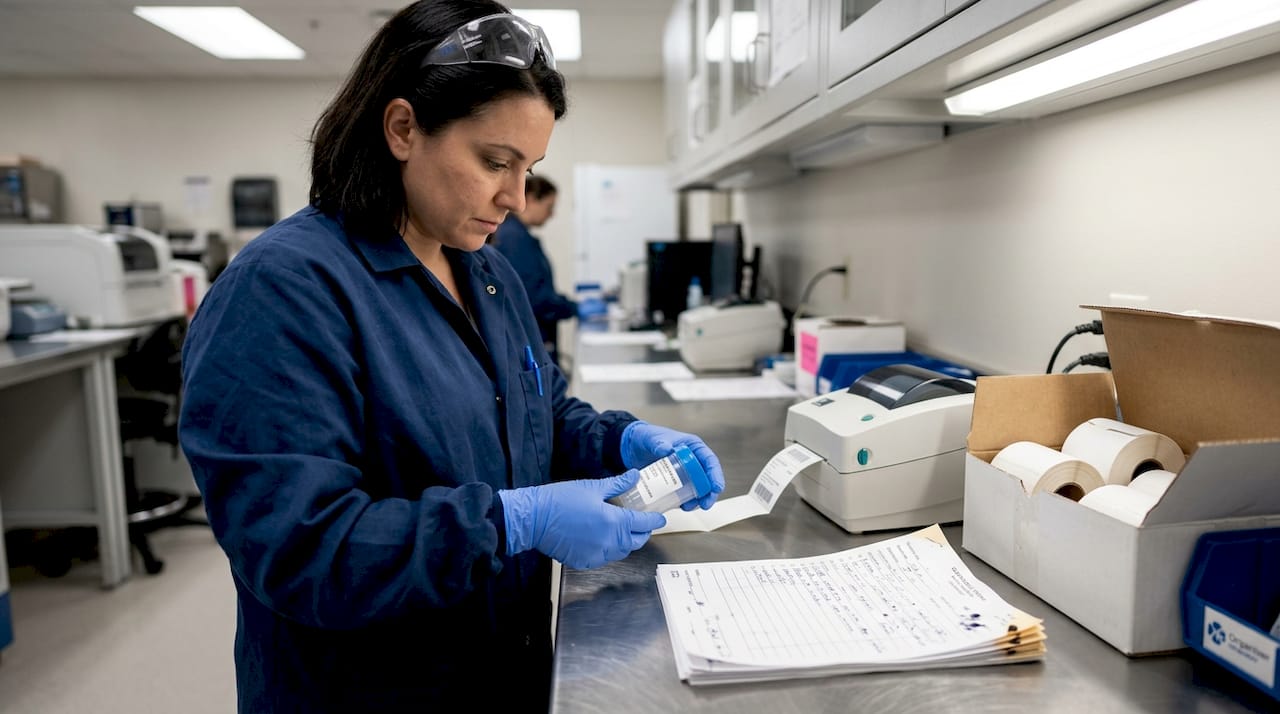
The medical review officer process provides crucial medical interpretation. When laboratories report positive results, the MRO contacts employees confidentially to discuss potential legitimate medical explanations. Prescription medications, over-the-counter products, and dietary supplements can trigger positive screens. The MRO determines whether positive results indicate prohibited drug use or legitimate medical therapy. This physician review protects employees’ medical privacy while ensuring accurate reporting to employers.
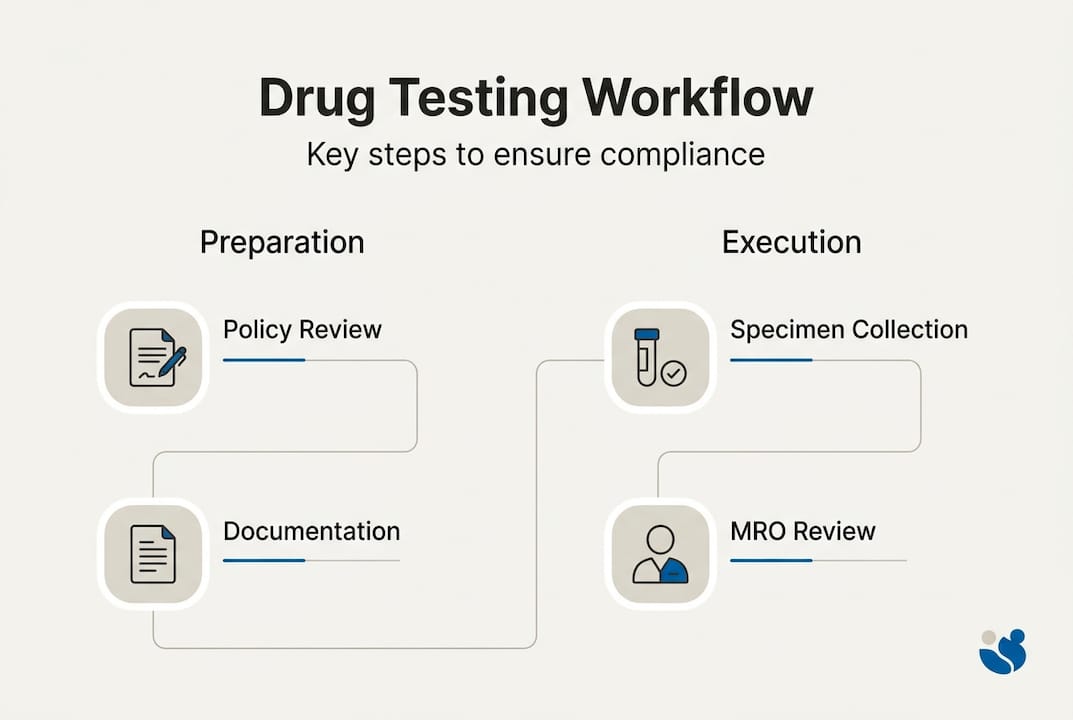
Pro Tip: Never take employment action based solely on preliminary positive results. Wait for MRO verification to avoid wrongful termination claims and ensure you’re acting on medically verified information.
Your step by step drug screening workflow resource provides detailed procedures for each testing scenario. Consistency across all tests demonstrates program integrity to insurance carriers and regulatory auditors. Document every step, maintain confidential medical files separate from personnel records, and restrict result access to designated personnel only.
Verifying compliance and leveraging insurance incentives
Ongoing compliance verification protects your program’s integrity and maximizes insurance benefits. Regular reviews catch procedural drift before it creates liability.
Schedule quarterly compliance audits covering:
- Policy adherence in actual testing practices
- Supervisor training completion and refresher needs
- Chain of custody documentation completeness
- MRO communication protocols
- Confidentiality safeguards for medical information
- Reasonable suspicion documentation quality
Annual policy reviews ensure your program keeps pace with evolving regulations. State marijuana legalization creates particular challenges. While cannabis remains federally prohibited, many states now protect off-duty use for medical or recreational purposes. Your policy must balance safety concerns with state employment protections. Focus on impairment during work hours rather than positive tests alone for marijuana. The workplace drug testing after legalization landscape requires careful navigation.
Reasonable suspicion testing demands especially rigorous documentation. Supervisors must record specific, contemporaneous observations of behavior, appearance, or performance indicating possible impairment. Vague statements like “acting strange” won’t withstand legal challenge. Detailed notes describing slurred speech, coordination problems, or safety violations create defensible records.
“When documenting reasonable suspicion, describe what you observed with your senses: what you saw, heard, or smelled. Include the time, location, and any witnesses. Avoid diagnostic conclusions or assumptions about substance use. Let the test results and MRO review provide the medical determination.”
States like FL, GA, VA, TN offer workers’ comp premium discounts for certified drug-free programs up to 7.5%. These incentives reward compliant programs that reduce workplace injuries and insurance claims. Qualifying typically requires:
- Written policy meeting state specifications
- Employee education on policy and assistance programs
- Supervisor training on reasonable suspicion
- Testing protocols using certified laboratories
- Program certification through state agency
- Annual recertification with updated documentation
Premium discounts vary by state. Florida offers up to 5% workers’ compensation premium reductions. Georgia provides up to 7.5% discounts. Tennessee and Virginia offer similar incentives. Even states without mandated discounts may allow carriers to offer voluntary reductions for certified programs. Contact your insurance carrier and state workers’ compensation board to understand available incentives and certification requirements.
The return on investment extends beyond premium savings. Effective drug testing programs reduce workplace accidents, lower turnover, decrease absenteeism, and improve productivity. Insurance carriers recognize these benefits through lower experience modification rates over time. Your why comply with federal drug testing analysis shows the full financial impact of comprehensive programs.
Maintain detailed program records demonstrating compliance. Insurance audits and state certification reviews require documentation proving policy distribution, training completion, testing procedures, and result handling. Organized records streamline recertification and defend against challenges. Designate a compliance coordinator responsible for maintaining current documentation and tracking regulatory changes.
Optimize your drug testing with Countrywide Testing
Implementing the workflow strategies outlined above requires reliable testing partners who understand compliance requirements and insurance standards. Countrywide Testing provides comprehensive solutions that streamline your drug testing program while ensuring regulatory adherence.
Our laboratory drug testing services connect you with SAMHSA-certified labs meeting all federal and state requirements. We handle chain of custody documentation, coordinate MRO reviews, and deliver results through secure portals. Nationwide drug testing access means your employees can complete testing conveniently regardless of location.
For immediate screening needs, our 12 panel multiple drug at home test provides rapid preliminary results. While not suitable for employment decisions requiring laboratory confirmation, these tests help supervisors determine whether sending an employee for formal testing is warranted. Streamline your compliance workflow and maximize insurance benefits with trusted testing solutions designed for HR professionals.
FAQ
What are the common types of drug tests in workplace workflows?
Workplace drug testing includes pre-employment screening before job offers become final, random testing of employees in safety-sensitive positions, post-accident testing after workplace injuries or incidents, reasonable suspicion testing when supervisors observe impairment indicators, return-to-duty testing before employees resume work after policy violations, and follow-up testing to monitor continued sobriety. Each type serves specific purposes in maintaining a drug-free workplace and complying with insurance carrier requirements.
How can I ensure my drug testing workflow complies with federal and state laws?
Develop a written policy reviewed by employment counsel that addresses federal requirements like the Drug-Free Workplace Act and DOT regulations if applicable, plus state-specific laws governing testing circumstances, notice requirements, and marijuana policies. Train supervisors thoroughly on documenting reasonable suspicion with objective behavioral observations rather than subjective conclusions. Obtain written employee consent, maintain strict confidentiality of medical information, and partner with certified laboratories using proper chain of custody procedures. Regular compliance audits catch procedural gaps before they create liability.
What steps help qualify my company for insurance premium discounts?
Certify your drug-free workplace program through your state workers’ compensation board by submitting documentation of your written policy, employee education materials, supervisor training records, and laboratory certification. Maintain detailed records proving policy distribution to all employees, annual training completion, testing procedures following state specifications, and program updates. Schedule recertification reviews before expiration dates. Contact your insurance carrier to understand their specific documentation requirements and discount calculation methods, as requirements vary by state and carrier.