
Compliant drug testing workflow for schools in 2026
Implementing drug testing policies in schools is complex due to legal and ethical challenges. School administrators must navigate Supreme Court precedents, state regulations, parental consent requirements, and student privacy protections while maintaining an effective substance abuse prevention program. Effective workflows must balance student privacy, compliance, and detection accuracy. This guide provides a clear, practical framework for school administrators to design and execute compliant drug testing programs in 2026 that protect students, satisfy legal obligations, and support health outcomes.
Table of Contents
- Understanding The Legal Framework For School Drug Testing
- Preparing For Drug Testing: Policies, Consent, And Privacy Considerations
- Executing The Drug Testing Workflow: Methods, Procedures, And Vendor Coordination
- Monitoring, Results Management, And Outcomes Evaluation
- Explore Expert Drug Testing Solutions Tailored For Schools
- Frequently Asked Questions About Drug Testing Workflows For Schools
Key takeaways
| Point | Details |
|---|---|
| Legal foundation | Drug testing workflows must align with U.S. Supreme Court standards from Vernonia and Earls cases. |
| Testing method | Urine tests are the most cost-effective and accurate for school drug detection needs. |
| Policy discretion | School districts hold discretion on testing policies where no statewide mandates exist. |
| Consent requirements | Parental consent and clear communication are critical for legal and ethical compliance. |
| Program effectiveness | Random testing programs have demonstrated reductions in student substance use. |
Understanding the legal framework for school drug testing
Before designing any drug testing workflow, you must understand the constitutional and statutory foundations governing student testing. The legal landscape shapes every aspect of your program, from who can be tested to how results are handled.
The Supreme Court’s Vernonia decision upheld random drug testing for student athletes under certain narrow conditions in 1995. This landmark ruling established that schools have a legitimate interest in protecting student health and safety, but testing must be reasonable in scope and execution. The Court emphasized that student athletes have diminished privacy expectations due to communal locker rooms and the physical nature of sports participation.
Board of Education v. Earls extended drug testing authority to all extracurricular participants in 2002. This broader ruling allows schools to test students involved in competitive activities beyond athletics, including debate, choir, and academic clubs. However, testing all students remains constitutionally questionable without individualized suspicion.
No U.S. state mandates drug testing for all high school athletes, and few have statewide programs. Most testing policies are discretionary decisions made by individual school districts. New Jersey stands as an exception with more comprehensive state guidance, but even there, implementation varies by district. This decentralized approach means you must research your specific state laws and district policies before proceeding.
Parental consent is emphasized by legal experts as crucial for non-athlete students subject to drug testing. While Vernonia and Earls provide constitutional authorization, obtaining informed consent from parents or guardians adds an extra layer of legal protection and builds community trust. Many districts require signed consent forms before students participate in tested activities.
Key legal considerations for your workflow include:
- Limiting testing to students in extracurricular activities rather than the general student population
- Documenting reasonable suspicion if testing outside extracurricular contexts
- Ensuring testing procedures respect Fourth Amendment protections against unreasonable search
- Maintaining strict confidentiality of all results to protect student privacy rights
- Reviewing policies annually as case law and state regulations evolve
Understanding whether schools can drug test students in your jurisdiction is the essential first step. Consult with your district’s legal counsel to ensure your proposed workflow aligns with current Supreme Court drug testing rulings and state drug testing mandates.
Preparing for drug testing: policies, consent, and privacy considerations
Having reviewed legal foundations, focus now on practical preparatory steps essential before testing begins. Preparation determines whether your program succeeds or fails, both legally and operationally.
Draft clear, written drug testing policies approved by school boards. Your policy document should specify who will be tested, when testing occurs, which substances are screened, consequences for positive results, and appeal procedures. Board approval provides official authorization and demonstrates institutional commitment. Involve legal counsel, student health experts, and parent representatives in policy development to ensure comprehensive stakeholder input.
Obtain informed consent from parents or guardians prior to testing. Consent forms must explain the testing program’s purpose, procedures, substances tested, result handling, and potential consequences. Parents should understand that consent is typically required for extracurricular participation, creating a voluntary choice rather than a mandate. Provide consent forms in multiple languages if your student population is diverse.
Communicate testing purpose, scope, and procedures transparently. Host informational meetings for parents and students before program launch. Explain that testing aims to deter substance use and identify students who need support, not to punish. Transparency builds trust and reduces resistance. Provide written materials that families can review at home and opportunities to ask questions.
Respect student privacy with confidential handling of results. Limit access to test results to essential personnel such as the school nurse, designated administrator, and counselor. Never disclose results to teachers, coaches, or other students. Store results in secure, locked files separate from academic records. Develop protocols for discussing positive results privately with students and parents.
Regularly review legal compliance as laws evolve. Schedule annual policy reviews with legal counsel to ensure your workflow remains current with case law, state legislation, and regulatory guidance. Subscribe to education law updates and participate in professional networks where administrators share compliance strategies.
Follow these numbered steps to prepare your program:
- Research applicable federal case law, state statutes, and local board policies governing student drug testing
- Draft comprehensive written policy with input from legal, health, and community stakeholders
- Obtain school board approval through formal vote with policy adoption in meeting minutes
- Develop consent forms that clearly explain all aspects of the testing program
- Create communication materials including parent letters, FAQ documents, and presentation slides
- Establish confidential record keeping systems with restricted access controls
- Train all staff involved in testing on procedures, privacy requirements, and ethical obligations
- Schedule parent information sessions and student assemblies before program launch
Pro Tip: Create a testing policy committee with rotating parent and student representatives to review program effectiveness annually and recommend improvements. This ongoing stakeholder engagement maintains community support and identifies issues before they become problems.
Learning how to implement drug testing in schools requires careful attention to preparation. Review comprehensive schools drug testing guidelines and Fourth Amendment guidelines to ensure your preparation phase covers all legal and ethical requirements.
Executing the drug testing workflow: methods, procedures, and vendor coordination
With policies and consent in place, now focus on the detailed execution workflow for drug testing. Operational excellence in this phase determines program credibility and legal defensibility.
Urine drug tests are preferred by schools due to cost effectiveness and reliable multi-substance detection. Urine tests can detect marijuana, cocaine, amphetamines, opioids, and other substances with high accuracy at a lower cost than blood tests. The detection window of 1 to 3 days for most substances aligns well with school testing goals. While oral fluid tests offer easier collection, urine remains the gold standard for comprehensive screening in educational settings.
Establish secure, private specimen collection protocols to maintain integrity. Designate a private bathroom or health office area for collections with same-gender monitors present. The monitor should not directly observe urination but must prevent specimen tampering. Provide clear instructions to students about the process before collection begins. Use tamper-evident collection cups and temperature strips to verify specimen validity immediately after collection.
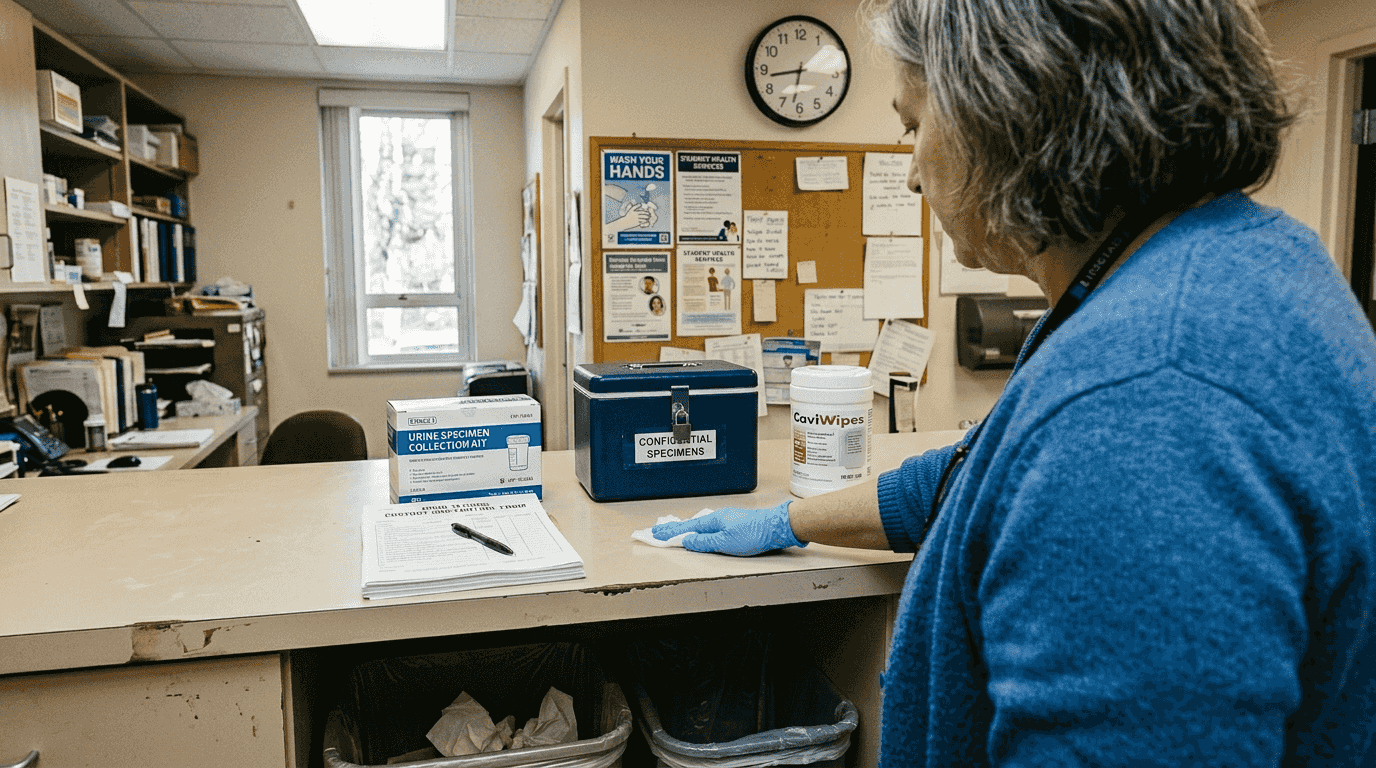
Document each step carefully: selection, consent, collection, chain of custody. Create standardized forms that track every specimen from student selection through final result reporting. Record the date, time, student identifier, collector name, and any irregularities observed. Maintain an unbroken chain of custody with signatures at each transfer point. This documentation protects your program legally and ensures result reliability.
Coordinate with reputable labs or vendors experienced in student testing. Select partners who understand educational privacy requirements and provide SAMHSA-certified laboratory analysis. Verify that vendors carry appropriate liability insurance and comply with CLIA, CAP, and ISO standards. Establish clear service agreements specifying turnaround times, reporting formats, and confidentiality protections.
Train staff on procedures and confidentiality requirements. All personnel involved in testing need thorough training on collection techniques, documentation, privacy laws, and ethical obligations. Conduct annual refresher training and provide written procedure manuals. Designate a program coordinator responsible for quality assurance and staff supervision.
| Test Type | Detection Window | Cost Per Test | Substances Detected | School Suitability |
|---|---|---|---|---|
| Urine | 1-3 days | $30-50 | 5-12 substances | Excellent |
| Oral fluid | 24-48 hours | $40-70 | 6-10 substances | Good |
| Hair | 90 days | $100-150 | 5-12 substances | Limited |
| Blood | Hours to days | $200+ | Variable | Poor |
Your execution workflow should include these operational elements:
- Random selection process using computer-generated lists to ensure fairness and eliminate bias
- Notification procedures that give students and parents appropriate notice while preventing evasion
- Collection site preparation with necessary supplies, privacy measures, and documentation materials
- Specimen handling protocols including labeling, sealing, storage, and transportation to the lab
- Result receipt and verification procedures with designated personnel authorized to access findings
- Confirmation testing protocols for all positive results using gas chromatography/mass spectrometry
Pro Tip: Conduct a pilot test with volunteer students and staff before full program launch to identify procedural gaps and refine your workflow. This trial run reveals logistical issues in a low-stakes environment and builds staff confidence in procedures.
Understanding student drug testing steps and reviewing student drug test types helps you select appropriate methods. Consult comprehensive resources on drug test methods for schools to make informed decisions about testing technology and vendor partnerships.
Monitoring, results management, and outcomes evaluation
After conducting tests, this section addresses managing and evaluating results to complete the workflow cycle. How you handle results determines whether your program achieves its health and safety objectives.
Keep all results confidential and comply with FERPA and other privacy laws. The Family Educational Rights and Privacy Act protects student records, including drug test results. Store results separately from academic files with access limited to essential personnel. Never share results with law enforcement without a court order or parental consent. Develop clear protocols for who receives results and under what circumstances.
Communicate findings sensitively to students and parents as appropriate. When results are negative, a simple notification suffices. For positive results, schedule private meetings with the student and parents to discuss findings, answer questions, and explain next steps. Approach these conversations with empathy rather than judgment. Emphasize that the goal is student health and support, not punishment.
Use counseling and support services for positive cases instead of punitive actions alone. Connect students with substance abuse counselors, mental health professionals, or community treatment programs. Many successful programs require counseling participation and follow-up testing rather than immediate suspension from activities. This supportive approach addresses underlying issues and demonstrates genuine concern for student welfare.
Mandatory random drug testing programs have been linked to lower reported substance use among tested students. Research shows that testing can deter experimentation and provide students with a reason to refuse peer pressure. However, effectiveness depends on program design, consistency, and integration with broader prevention efforts.
Regularly assess program results to measure reductions in substance use. Track metrics including positive test rates over time, student participation in extracurricular activities, self-reported substance use in anonymous surveys, and disciplinary incidents related to drugs. Compare these metrics to baseline data collected before program implementation. Share aggregated, de-identified results with stakeholders to demonstrate program value.
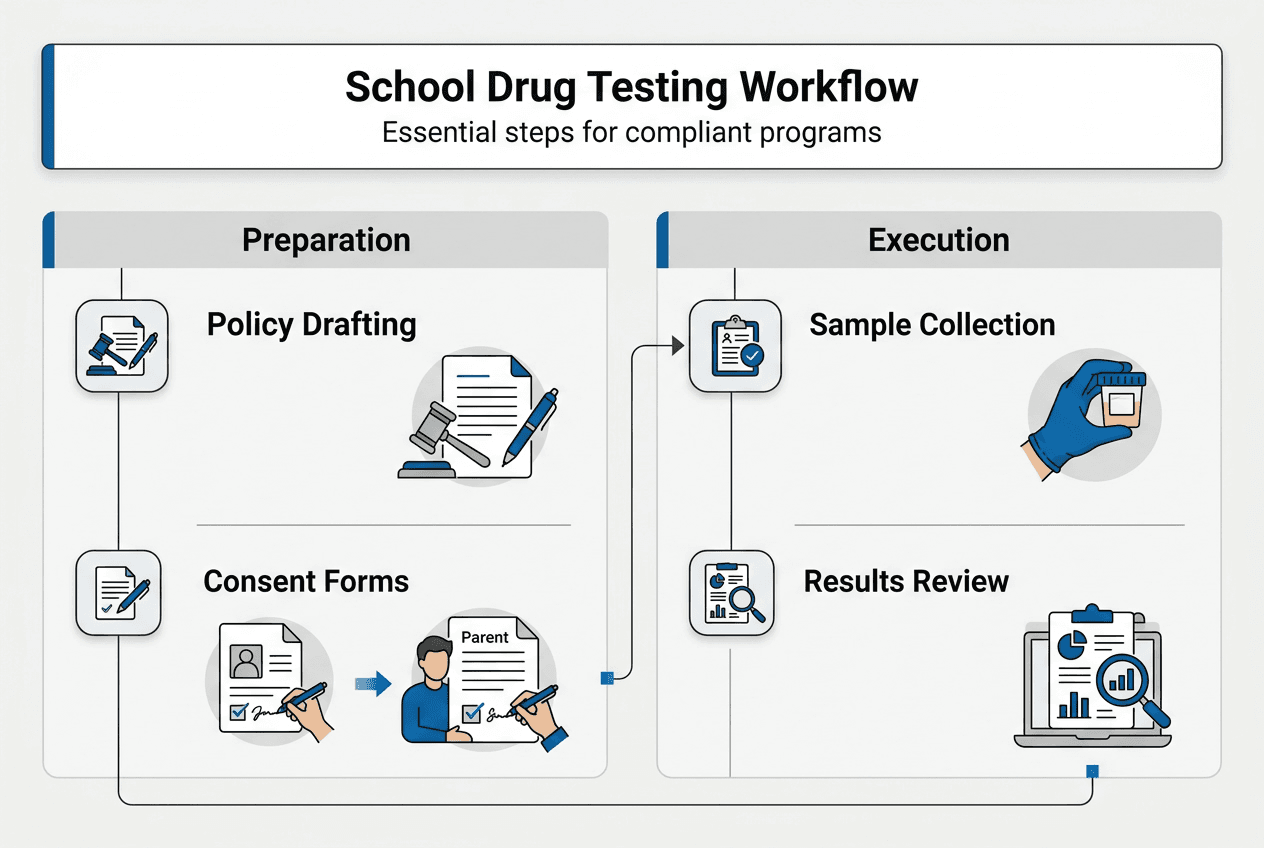
Adjust testing protocols based on evaluation data for continuous improvement. If certain substances show increasing prevalence, consider expanding your testing panel. If positive rates decline significantly, you might reduce testing frequency while maintaining deterrent effect. Use evaluation findings to refine policies, improve procedures, and allocate resources effectively.
| Outcome Metric | Measurement Method | Target Benchmark | Review Frequency |
|---|---|---|---|
| Positive test rate | Lab result tracking | <5% positive rate | Quarterly |
| Student participation | Activity enrollment data | Maintain or increase enrollment | Annually |
| Substance use perception | Anonymous student surveys | Decreased perceived use | Annually |
| Policy compliance | Audit of procedures | 100% protocol adherence | Annually |
Key evaluation activities include:
- Quarterly review of testing statistics including number tested, positive rates, and substance trends
- Annual surveys of students, parents, and staff regarding program perceptions and effectiveness
- Comparison of disciplinary data before and after program implementation
- Assessment of whether testing deters substance use or simply detects existing use
- Cost-benefit analysis weighing program expenses against health and safety outcomes
Recognizing signs of student drug use helps you evaluate whether your testing program complements other prevention efforts. Learn how to conduct student drug testing effectively and review research on student drug testing effectiveness to benchmark your program against evidence-based practices.
Explore expert drug testing solutions tailored for schools
After understanding the legal, operational, and evaluation requirements for compliant school drug testing, you need a reliable partner to execute your program. Implementing these workflows requires specialized expertise and laboratory capabilities that most schools lack internally.
Countrywide Testing provides comprehensive laboratory drug testing services designed specifically for educational institutions. Our SAMHSA-certified labs ensure accurate results while maintaining strict confidentiality protocols that comply with FERPA and student privacy requirements. We understand the unique challenges schools face and offer lab screening and urine tests with fast turnaround times that fit academic schedules. Our nationwide drug testing network means consistent service quality whether you operate a single school or a multi-district program. Partner with experts who understand compliance, respect student privacy, and deliver reliable results that support your health and safety mission.
Frequently asked questions about drug testing workflows for schools
Is random drug testing of students legally allowed in all states?
Random drug testing is constitutionally permitted for students participating in athletics and competitive extracurricular activities based on Supreme Court precedent. However, no state mandates testing for all students, and implementation varies significantly by district. Schools must obtain parental consent and follow district policies that comply with state law and Fourth Amendment protections.
What types of drug tests are most effective for school programs?
Urine drug tests offer the best combination of accuracy, cost effectiveness, and detection capability for school settings. They reliably detect multiple substances including marijuana, cocaine, amphetamines, and opioids within a 1 to 3 day window. While oral fluid tests provide easier collection, urine remains the preferred method for comprehensive screening programs.
How should schools handle parental consent for drug testing?
Schools should provide detailed written consent forms explaining the testing program’s purpose, procedures, substances screened, and potential consequences. Host informational meetings where parents can ask questions before signing. Make consent a condition of extracurricular participation rather than a general school requirement to maintain the voluntary nature that courts have upheld.
What are best practices for communicating test results to families?
Communicate negative results through simple written notification. For positive results, schedule private meetings with the student and parents to discuss findings sensitively and explain support resources available. Never disclose results to anyone beyond essential personnel, and store all documentation in secure, confidential files separate from academic records.
Can drug testing really reduce student substance use on campus?
Research demonstrates that well-designed random testing programs correlate with lower substance use rates among tested student populations. Testing provides students with a reason to refuse peer pressure and deters experimentation. However, effectiveness depends on consistent implementation, integration with counseling services, and a supportive rather than purely punitive approach. Learn more about how to implement drug testing effectively in your school.
How often should schools conduct random drug tests?
Testing frequency depends on your program goals, budget, and student population size. Most effective programs test 10 to 20 percent of eligible students monthly or quarterly. Consistent, unpredictable testing maintains deterrent effect better than infrequent testing. Adjust frequency based on positive test rates and program evaluation data to optimize both effectiveness and resource allocation.