
Step by Step Student Drug Testing for Schools
Choosing the right approach to student-athlete drug testing can feel overwhelming for any school administrator. American schools must balance legal rights, privacy concerns, and educational goals while building trust across their communities. This guide will help you create a compliant drug testing protocol that addresses key concerns, supports student welfare, and meets federal standards at every step.
Table of Contents
- Step 1: Establish School Drug Testing Policy
- Step 2: Select Testing Methods and Labs
- Step 3: Communicate Procedures to Stakeholders
- Step 4: Conduct and Monitor Drug Testing
- Step 5: Verify Results and Maintain Records
Quick Summary
| Key Point | Explanation |
|---|---|
| 1. Establish clear drug testing policy | Review legal frameworks and define the scope of your drug testing policy to ensure it aligns with goals and legal requirements. |
| 2. Choose appropriate testing methods | Select testing methods based on detection windows and invasiveness, ensuring methods are compatible with your school’s needs and legal obligations. |
| 3. Communicate openly with stakeholders | Provide clear information to parents and students about testing procedures, rationale, and privacy protections to foster trust and support. |
| 4. Follow strict verification and record-keeping | Implement confirmatory testing and maintain secure records to protect student privacy and comply with legal standards. |
| 5. Monitor and evaluate program effectiveness | Regularly assess the outcomes of your drug testing program to ensure it meets its objectives and make necessary adjustments. |
Step 1: Establish School Drug Testing Policy
Establishing a school drug testing policy requires careful planning and alignment with your institution’s goals. This step lays the foundation for a legally sound, educationally effective program that protects both student welfare and privacy rights.
Start by reviewing the legal framework that governs your state. The U.S. Supreme Court has established that schools can test student athletes and those in extracurricular activities, but the specifics vary by jurisdiction. Consult your school’s legal counsel to understand what’s permissible and required in your area.
Next, define your policy’s scope clearly. Will testing cover only athletes, or all extracurricular participants? What about random versus cause-based testing? Your answers shape the entire program. A well-defined scope prevents confusion and legal challenges later.
Your policy must balance substance use prevention with student privacy protections—this balance determines both compliance and community support.
Develop a comprehensive policy document that addresses these critical areas:
- Testing methods (urine, mouth swab, or other approved techniques)
- Substances screened (marijuana, cocaine, amphetamines, etc.)
- Consequences and support pathways (not just punishment, but intervention)
- Student notification and consent processes
- Confidentiality protections for results
- Appeal procedures for disputed findings
Incorporate evidence-based prevention strategies that extend beyond testing alone. Your policy should integrate prevention education, early intervention, and support systems alongside testing. This comprehensive approach addresses substance use from multiple angles and demonstrates educational intent rather than punitive focus.
Involve stakeholders in development. Meet with administrators, coaches, parents, and student representatives. Their input strengthens the policy and builds community buy-in. Schools that include diverse perspectives encounter fewer resistance and implementation challenges.
Document everything thoroughly. Your written policy becomes your guide and your legal protection. It should be specific enough that any staff member can implement it consistently, yet flexible enough to address unique situations. Include clear language about how testing procedures protect student privacy while maintaining program integrity.
Pro tip: _Schedule your policy review for annual updates before the school year begins, allowing time to address any legal changes or operational adjustments from the previous year’s implementation.
Step 2: Select Testing Methods and Labs
Choosing the right testing method and laboratory partner is critical to your program’s credibility and effectiveness. This decision directly impacts accuracy, student privacy, legal compliance, and your school’s ability to identify students who need support.
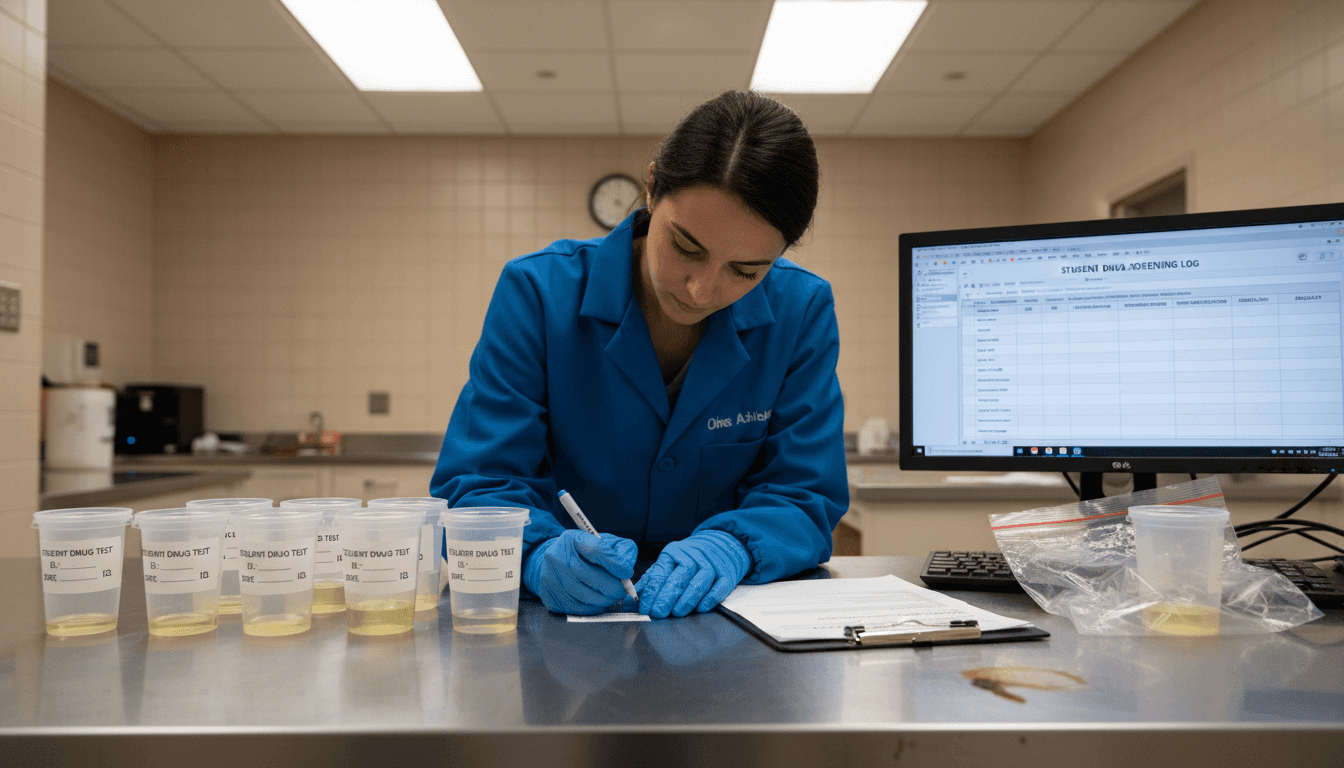
Start by understanding your testing options. Urine testing remains the most common method in schools because it balances privacy concerns with accuracy and feasibility. Saliva and hair tests are less invasive in some ways but raise different privacy issues. Blood tests are rarely used in schools due to invasiveness and legal concerns.
Consider your specific needs when selecting a method. Urine tests detect drug use within a 3 to 5 day window, making them ideal for regular screening. Hair tests can detect use over months but require longer processing times. Saliva tests offer quick results but may miss some substances.
Here’s a comparison of common school drug testing methods and their characteristics:
| Testing Method | Detection Window | Invasiveness Level | Common School Usage |
|---|---|---|---|
| Urine Test | 3-5 days | Moderate | Most widely used |
| Saliva Test | 1-2 days | Low | Occasional |
| Hair Test | Up to 90 days | High | Rarely used |
| Blood Test | Hours to days | Very High | Almost never used |
The testing method you choose shapes your entire program, from student comfort to result reliability to community acceptance.
Evaluate laboratory partners carefully. Your chosen lab must meet specific certifications and standards:
Use this summary to understand key laboratory certification standards:
| Certification/Accreditation | Purpose | Key Requirement |
|---|---|---|
| SAMHSA | Federal drug testing regulation | Strict laboratory protocols |
| CLIA | Clinical lab improvement | Quality assurance for tests |
| CAP | Laboratory accreditation | High standards for accuracy |
| ISO | Quality management systems | Consistent operational quality |
- SAMHSA certification (Substance Abuse and Mental Health Services Administration)
- CLIA compliance (Clinical Laboratory Improvement Amendments)
- CAP accreditation (College of American Pathologists)
- ISO standards for quality management
Verify that any lab you select performs confirmatory testing. A positive initial screening requires a second test to rule out false positives. Schools must understand how laboratory protocols protect accuracy and ensure findings are defensible if challenged.
Request detailed information about turnaround times, reporting methods, and support services. A quality lab provides clear documentation, accessible staff, and willingness to explain procedures to school personnel. They should offer guidance on chain-of-custody procedures and result interpretation.
Compare costs across qualified providers, but don’t choose solely based on price. The cheapest option often means slower results or less thorough confirmatory testing. Partner with a lab that demonstrates commitment to accuracy and student privacy.
Pro tip: Request a sample report from any lab candidate before committing, and verify they can integrate results into your school’s existing health management system for seamless documentation.
Step 3: Communicate Procedures to Stakeholders
Clear communication builds trust and reduces resistance before your program launches. Stakeholders need to understand the rationale, procedures, privacy protections, and what happens after testing occurs.
Start with parents and guardians. Schedule information sessions before the school year begins, allowing time for questions and concerns. Provide written materials explaining the testing policy, methods, rationale, and privacy safeguards. Parents should know exactly what substances you’re testing for and what the consequences are.
Be transparent about the program’s supportive intent. Communicating testing policies effectively helps address stakeholder concerns and reinforces that testing serves prevention and intervention, not punishment. Explain how positive results lead to counseling, education, or treatment referrals rather than automatic expulsion.
Design your parent communication to cover:
- Why testing (safety, prevention, early identification)
- How testing works (method, timeline, confidentiality)
- What happens next (positive result procedures, support resources)
- Privacy protections (who sees results, how records are stored)
- Student rights (consent, appeals, confidentiality)
Honest, compassionate communication reduces stigma and encourages families to view testing as a health and safety measure, not surveillance.
Communicate with students directly and age appropriately. Explain the procedures, what to expect, and why the school is implementing testing. Address common fears about privacy and embarrassment. Students should understand that positive results connect them to support, not punishment.
Ensure staff understand their roles. Coaches, teachers, counselors, and administrators all need consistent messaging about procedures and expectations. Train staff on how to discuss testing confidentially with students and parents, and how to respond supportively if a student tests positive.
Use science-based education that’s culturally sensitive and interactive. Avoid fear-based messaging that damages credibility. Instead, focus on facts about substances, health impacts, and recovery resources. This approach helps students make informed decisions and trust school messaging.
Provide multiple communication channels. Not everyone attends in-person meetings. Offer written materials, website information, video explanations, and one-on-one conversations. Make it easy for stakeholders to ask questions and voice concerns.
Pro tip: Create a FAQ document addressing common questions about privacy, positive results, and appeals procedures, then distribute it alongside your initial policy communication to prevent repetitive questions.
Step 4: Conduct and Monitor Drug Testing
Actual implementation requires careful attention to legal procedures, student privacy, and consistent documentation. This step transforms your policy into practice while maintaining ethical standards and building accountability.
Establish clear protocols before testing begins. Legal and ethical standards require obtaining consent where required, ensuring confidentiality, and following established collection procedures. Create a detailed checklist that staff use during every testing session to maintain consistency and reduce errors.
Handle the collection process professionally. Designate trained staff members to oversee testing. Minimize embarrassment by allowing privacy during sample collection. Maintain chain-of-custody documentation from collection through laboratory analysis to ensure defensibility if results are challenged.
Your collection protocol should include:
- Student identification verification before testing begins
- Witness requirements for sample collection
- Sealed sample labeling with student identifiers
- Secure transportation to the laboratory
- Written documentation of all steps and times
Fair administration of tests protects your school legally and maintains student trust in the program’s integrity.
Respond promptly to positive results. Develop a clear timeline for notifying parents, conducting confirmatory testing, and initiating support services. Avoid delays that increase anxiety or allow rumors to spread. Communicate results confidentially and compassionately.
Monitor program outcomes systematically. Track participation rates, positive result percentages, and student responses over time. Collect data on whether testing correlates with changes in drug use behaviors or school climate. Use this information to evaluate program effectiveness and identify needed adjustments.
Assess adherence to constitutional standards consistently. Are you maintaining privacy protections? Are positive results leading to support rather than just punishment? Are all students treated fairly? Regular self-evaluation prevents mission drift and ensures your program stays true to its prevention and intervention goals.
Document everything meticulously. Keep detailed records of testing dates, substances screened, results, follow-up actions, and student outcomes. These records demonstrate program accountability and provide evidence if your procedures are ever questioned legally.
Pro tip: Conduct quarterly reviews of your testing data and implementation procedures, checking that staff are following protocols consistently and that positive results are leading to documented support services, not just disciplinary actions.
Step 5: Verify Results and Maintain Records
Proper result verification and secure record management protect your school legally while safeguarding student privacy. This step ensures your testing data is accurate, confidential, and compliant with federal regulations.
Require confirmatory testing for all positive results. Initial screening tests can produce false positives due to cross-reactions or testing errors. Confirmatory testing by certified laboratories reduces false positives significantly and ensures results are defensible if challenged. Never act on a screening result alone.
Establish a clear verification timeline. Results should flow from your lab to your school within a defined period, typically 24 to 48 hours for initial screening and 5 to 7 days for confirmatory testing. Faster results allow quicker intervention and support for affected students.
Your verification process should address:
- Chain-of-custody verification confirming samples traveled securely
- Lab certification review ensuring continued compliance
- Result accuracy checks comparing screening and confirmatory results
- Documentation of all findings with dates and responsible personnel
- Quality assurance procedures to catch procedural errors
Accurate verification builds confidence in your program and protects students from consequences based on faulty test results.
Handle record storage with the same care as medical records. Drug testing results are sensitive health information requiring security, confidentiality, and limited access. Store physical records in locked cabinets. Store electronic records in password-protected, encrypted systems with audit trails showing who accessed what information and when.
Understand FERPA requirements thoroughly. The Family Educational Rights and Privacy Act governs how schools store and share student records, including drug testing results. Maintain detailed policies on who can access results, under what circumstances, and for how long. Generally, results should be kept separate from educational records and destroyed after a set period, typically three to five years.
Limit access strictly. Only administrators, counselors, and staff directly involved in student support need access to results. Athletic directors may need information about their athletes, but coaches typically should not view raw results. Create access logs documenting who reviewed which records and when.
Develop a secure disposal process. When retention periods expire, destroy records completely through shredding or secure digital deletion. Document the destruction date and method in your files.
Pro tip: Use a dedicated student management system with built-in privacy controls rather than storing test results in email or shared drives, which reduces security risks and simplifies compliance documentation.
Simplify Your School’s Drug Testing Program with Reliable Solutions
Implementing a thorough and legally compliant student drug testing program can be overwhelming for schools aiming to balance prevention, privacy, and accuracy. From establishing clear policies to choosing the right testing methods and trusted laboratories, many administrators struggle to find dependable resources that support every step of this process. Key challenges include selecting certified testing options, protecting sensitive student data, and ensuring confirmatory testing is done efficiently—all of which are critical for maintaining trust and program integrity.
CountryWideTesting.com understands these pain points and offers a comprehensive range of testing products and laboratory services tailored to meet the unique requirements outlined in “Step by Step Student Drug Testing for Schools.” Our partnerships with certified labs that meet SAMHSA, ISO, CLIA, and CAP standards ensure your school’s drug testing program benefits from accuracy, confidentiality, and regulatory compliance. Whether you need reliable urine or mouth swab drug tests or full laboratory testing solutions, CountryWideTesting.com is your trusted partner for safe and effective school drug testing programs.
Take the next step toward a seamless student drug testing process. Discover our wide selection of testing options and expert lab services designed to support your school’s goals today. Visit CountryWideTesting.com to explore how we can help you implement a confident, compliant, and compassionate drug testing program that truly makes a difference.
Explore Our Testing Products
Learn About Our Laboratory Services
Frequently Asked Questions
What steps should schools take to establish a drug testing policy?
Establishing a drug testing policy requires reviewing the legal framework, defining the policy’s scope, and developing a comprehensive policy document. Involve stakeholders like parents, students, and school staff to ensure broad support and effective implementation.
How can schools choose the right drug testing methods and laboratories?
Select the testing method based on privacy concerns and detection windows, such as urine testing for a reliable and commonly used method. Evaluate laboratory partners for certifications and ensure they provide confirmatory testing to avoid false positives.
What should schools communicate to parents about drug testing procedures?
Schools should clearly outline why testing is being implemented, how it works, and what happens after results are received. Organize information sessions and distribute written materials to address concerns and ensure parents understand the supportive nature of the program.
How can schools ensure the integrity of the drug testing process?
Maintain consistent protocols by training staff, verifying student identification, and keeping detailed chain-of-custody documentation. This approach promotes trust and accountability while ensuring results can withstand scrutiny.
What privacy protections must schools implement when conducting drug testing?
Schools must ensure that drug testing results are stored securely and shared only with authorized personnel. Adhere to privacy regulations and maintain clear policies on how long records are kept and when they are destroyed, usually after three to five years.
How should schools respond to positive drug test results?
Develop a timely process for notifying parents of positive results and provide support options rather than punitive measures. Acting quickly helps students receive necessary counseling or intervention, improving their overall well-being.
Recommended
- How to Conduct Student Drug Testing: A Step-by-Step Guide
- Drug Testing in Schools: Policies, Procedures, and Impact
- 7 Types of Drug Tests for Students: A Guide for Schools
- Can Schools Drug Test Students — And Should Yours? Info for Educators
- Passaggi preparazione esame di stato: guida pratica al successo - Recupero Anni Scolastici e Diploma Online