
Why Transit Agencies Require Drug Testing: 2026 Guide
TL;DR:
- Transit agencies are required by federal law to conduct drug testing for safety-sensitive employees to ensure public safety. The program includes six testing categories and a five-substance panel, with penalties for non-compliance reaching $27,500 per violation. Proper management, updated policies, and staff training are essential to maintain compliance and foster a safety-oriented culture.
Drug testing in transit agencies is a federally mandated safety program designed to prevent impairment among employees who operate vehicles, maintain equipment, and make real-time safety decisions for the public. The Federal Transit Administration requires compliance with 49 CFR Part 655, setting annual random testing rates at 50% for drugs and 10% for alcohol across all safety-sensitive roles. Understanding why transit agencies require drug testing goes beyond checking a regulatory box. It defines the safety culture of every agency that moves people from point A to point B.
Why do transit agencies require drug testing under federal law?
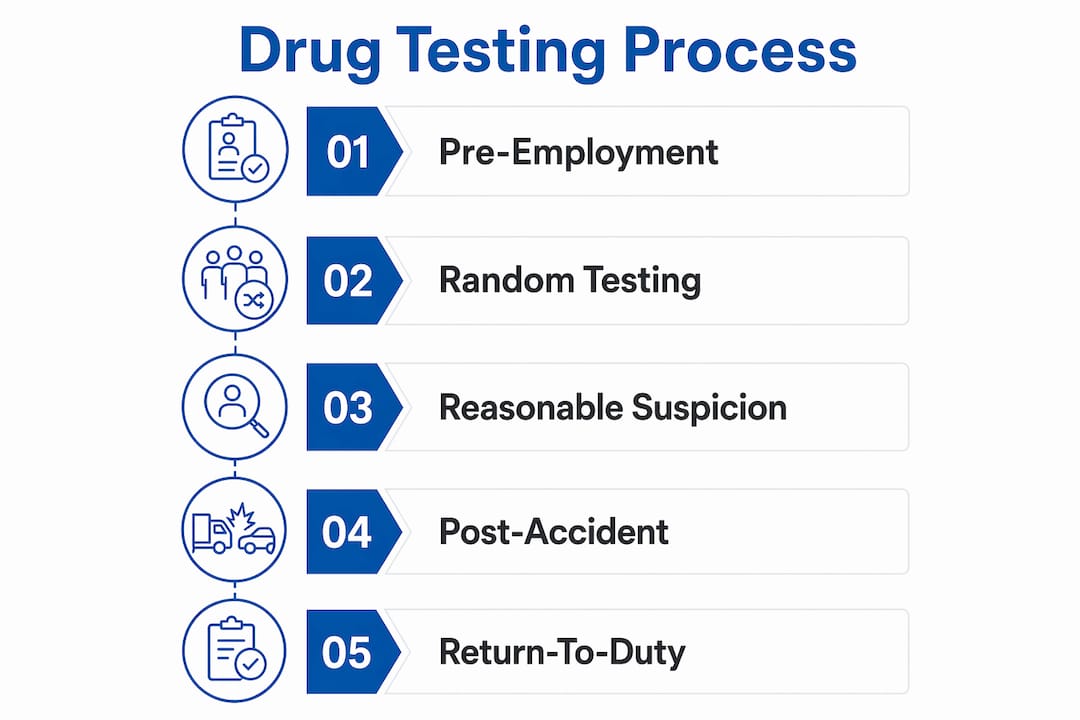
Transit agency drug testing is grounded in the Omnibus Transportation Employee Testing Act of 1991, the law that first established federal authority to mandate substance testing across transportation sectors. That legislation directed the FTA to create specific rules for public transit, which became 49 CFR Part 655. The regulation applies to any agency receiving federal financial assistance under the Federal Transit Act, which covers the vast majority of public transit systems in the United States.
The rule defines “safety-sensitive” positions broadly. Any employee who operates a revenue service vehicle, dispatches those vehicles, maintains them, or carries a firearm falls under the program. That definition captures bus drivers, rail operators, maintenance technicians, and control room dispatchers. The breadth is intentional. Impairment in any of these roles creates direct risk to passengers and the public.
The regulation requires six distinct testing categories:
- Pre-employment: Required before any safety-sensitive duty begins
- Random: Conducted throughout the year at federally set rates
- Post-accident: Triggered by specific accident thresholds involving injury, fatality, or vehicle damage
- Reasonable suspicion: Ordered when a trained supervisor observes signs of impairment
- Return-to-duty: Required before an employee resumes safety-sensitive work after a violation
- Follow-up: Ongoing unannounced testing after return-to-duty, for a minimum of 12 months
Non-compliance carries severe consequences. Fines reach $27,500 per occurrence, and agencies risk suspension of federal transit funding. For most agencies, federal funding is not optional. Losing it would halt operations.
How does drug testing protect public safety in transit?
The safety rationale behind transit drug testing is direct. Workplace drug testing deters substance misuse, identifies impairment before accidents happen, and provides a defensible record when post-accident investigations begin. Transit employees operate multi-ton vehicles on fixed schedules in dense urban environments. The margin for impaired judgment is zero.
“Training alone is insufficient for workplace safety. Drug testing identifies risks before accidents occur and ensures policies are enforced realistically.”
Organizations with consistent drug testing programs show measurably reduced workplace accident rates. That reduction matters in transit because a single incident involving a bus or rail vehicle can injure dozens of people simultaneously. The stakes are categorically higher than in most other industries.
Drug testing also serves a function that safety training cannot. Training changes knowledge. Testing changes behavior. An employee who knows random testing is active and enforced makes different decisions than one who believes impairment goes undetected. The deterrent effect is a core part of why the program works.
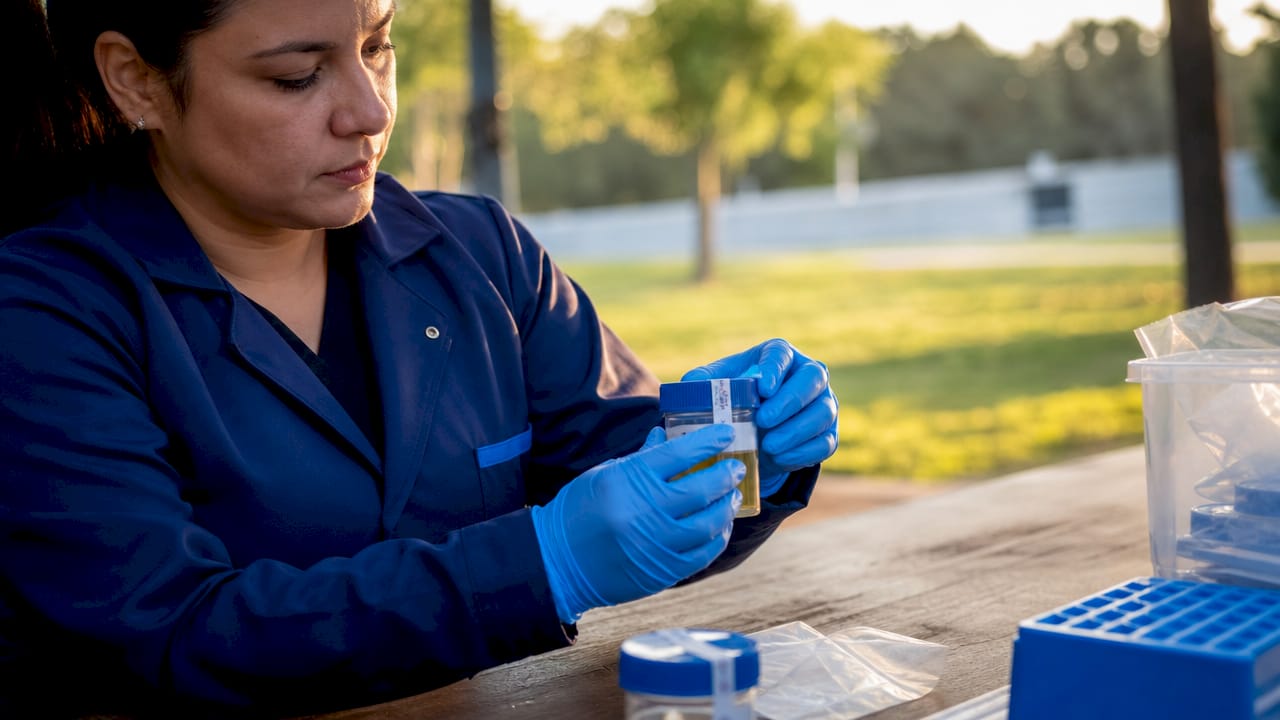
Pro Tip: Document every supervisor observation that triggers a reasonable suspicion test. Written records of specific behaviors, times, and witnesses protect the agency if the employee challenges the test in arbitration or litigation.
The importance of drug testing extends to employee trust. A fair, consistently applied program signals that the agency treats all employees equally and takes safety seriously. Agencies that apply testing selectively or inconsistently create legal exposure and erode workforce confidence. Consistent clinical oversight removes ambiguity and builds the kind of predictable workplace that retains good employees.
What substances are tested and how is testing conducted?
Federal guidelines require transit agencies to test for five substance categories. As of march 2026, the mandatory testing panel covers amphetamines, cocaine, marijuana metabolites, opioids, and phencyclidine (PCP). Cutoff levels for each substance remain unchanged for 2026 reporting requirements. Agencies cannot substitute this panel or reduce it without federal authorization.
The role of HHS-certified laboratories
All specimens must be processed by HHS-certified laboratories. These labs operate under strict chain-of-custody protocols and quality standards that make results defensible in legal and regulatory proceedings. Using an uncertified lab invalidates the test result and creates a compliance gap that auditors will flag immediately.
Medical Review Officers and result accuracy
Medical Review Officers (MROs) are licensed physicians who review every positive, adulterated, or substituted result before it is reported to the agency. An MRO contacts the employee directly to determine whether a legitimate medical explanation exists for the result. This step prevents false positives from prescription medications from triggering disciplinary action. SAMHSA guidelines establish the MRO’s authority and the clinical standards that govern this review process.
The primary collection method remains urine testing. Federal rules now also permit oral fluid testing, giving agencies a collection option that is harder to adulterate and easier to observe. New oral fluid methods carry an 18-month grace period after HHS certifies a second qualified laboratory, allowing agencies to transition without penalty.
| Testing method | Collection type | Key advantage |
|---|---|---|
| Urine | Lab-analyzed specimen | Established chain of custody |
| Oral fluid | Mouth swab, observed collection | Harder to adulterate |
Pro Tip: When transitioning to oral fluid testing, update your written drug testing policy and notify employees in writing before the first collection. Policy documents must reflect the method in use to survive an FTA audit.
What are the biggest compliance pitfalls for transit agencies?
Compliance failures in transit drug testing programs cluster around a few predictable problems. Manual tracking methods are the most common. Roughly 34% of agencies still use spreadsheets to manage random selection pools, test scheduling, and result documentation. Spreadsheets miss tests, create gaps in the random selection audit trail, and cannot generate the reports FTA auditors expect.
The consequences of these gaps are not theoretical. Missed random tests count as compliance failures. A single missed post-accident test, which must occur within two hours for alcohol and eight hours for drugs, can trigger a finding that jeopardizes federal funding. The financial exposure is direct and immediate.
Common compliance pitfalls include:
- Incomplete random pools: Failing to include all safety-sensitive employees in the selection pool
- Late post-accident testing: Missing the two-hour alcohol window or eight-hour drug window after a qualifying incident
- Inadequate supervisor training: Supervisors who cannot document reasonable suspicion observations create legally indefensible referrals
- Poor record retention: FTA requires agencies to retain testing records for two to five years depending on the record type
- Over-testing: Testing employees outside the random selection process without documented cause creates legal risk
Pro Tip: Set calendar alerts for your annual random testing rate deadlines. The FTA calculates compliance based on the number of tests completed relative to your covered employee count. Falling short by even a few tests triggers a finding.
Automated compliance management systems solve most of these problems. They generate random selections from verified employee pools, track test completion against required rates, and produce audit-ready reports. The upfront investment is small compared to a single $27,500 fine.
How can transit agencies stay compliant as regulations evolve?
Staying compliant requires active management, not passive adherence. The FTA requires agencies to submit annual Management Information System (MIS) reports documenting their testing activity for the prior calendar year. These reports capture the number of tests conducted by category, the number of violations, and the outcomes of return-to-duty processes. Errors in MIS reporting signal poor program management and invite closer scrutiny.
Agencies that maintain compliance through regulatory changes follow a consistent process:
- Monitor Federal Register updates for changes to testing panels, cutoff levels, and approved methodologies
- Update written policies within 60 days of any regulatory change that affects collection procedures or covered substances
- Retrain supervisors annually on reasonable suspicion documentation and post-accident testing timelines
- Audit your random selection pool quarterly to confirm all safety-sensitive employees are included and terminated employees are removed
- Verify laboratory and MRO credentials at least annually to confirm continued HHS certification and licensure
The transition to new testing methods requires particular attention. Grace periods exist for a reason. Agencies that adopt oral fluid testing before the grace period expires must still maintain urine testing infrastructure as a backup. Running parallel systems temporarily is operationally complex but far less costly than a compliance failure.
Transparency with employees matters as much as technical compliance. Agencies that communicate testing policies clearly, explain the rationale, and provide access to Employee Assistance Programs (EAPs) for those who need support build programs that hold up under both regulatory and workforce scrutiny. The role of drug testing in transportation is most effective when employees understand it as a safety measure rather than a surveillance tool.
Key Takeaways
Transit agencies require drug testing because federal law mandates it, public safety demands it, and the consequences of impairment in safety-sensitive roles are too severe to manage through policy alone.
| Point | Details |
|---|---|
| Federal mandate | 49 CFR Part 655 requires drug and alcohol testing for all safety-sensitive transit employees. |
| Six testing categories | Pre-employment, random, post-accident, reasonable suspicion, return-to-duty, and follow-up tests are all required. |
| Five-substance panel | Agencies must test for amphetamines, cocaine, marijuana, opioids, and PCP under current federal guidelines. |
| Non-compliance costs | Fines reach $27,500 per occurrence and agencies risk losing federal transit funding entirely. |
| Manual tracking risk | Spreadsheet-based programs miss tests and create audit vulnerabilities that threaten funding eligibility. |
Drug testing is a safety culture decision, not just a compliance task
I’ve worked with enough transit compliance officers to know that the agencies with the strongest drug testing programs share one trait. They stopped treating testing as a paperwork obligation years ago. They treat it as a statement about what kind of organization they are.
The compliance framework matters. The MIS reports, the random rates, the MRO reviews. All of it is necessary. But the agencies that actually move the needle on safety are the ones that pair testing with supervisor training, employee education, and real access to EAP services. Testing catches impairment. Culture prevents it.
What concerns me most heading into the next few years is the gap between evolving drug use patterns and static testing panels. Fentanyl analogs, synthetic cannabinoids, and novel stimulants are not always captured by standard five-panel tests. Agencies that rely solely on the minimum required panel may be missing real impairment risks. The regulatory floor is not the safety ceiling.
The shift toward oral fluid testing is genuinely promising. Observed collection reduces adulteration attempts, and the detection window for recent use is better suited to identifying impairment at the time of duty. Agencies that invest in understanding the methodology now will be ahead of the curve when the grace period ends and oral fluid becomes standard practice.
My honest recommendation: treat every audit finding as a system failure, not an employee failure. If your program is generating compliance gaps, the gap is in your process. Fix the process, and the compliance follows.
— Alan
Countrywidetesting supports transit agency compliance
Transit agencies need testing partners who understand federal standards, not just testing products.
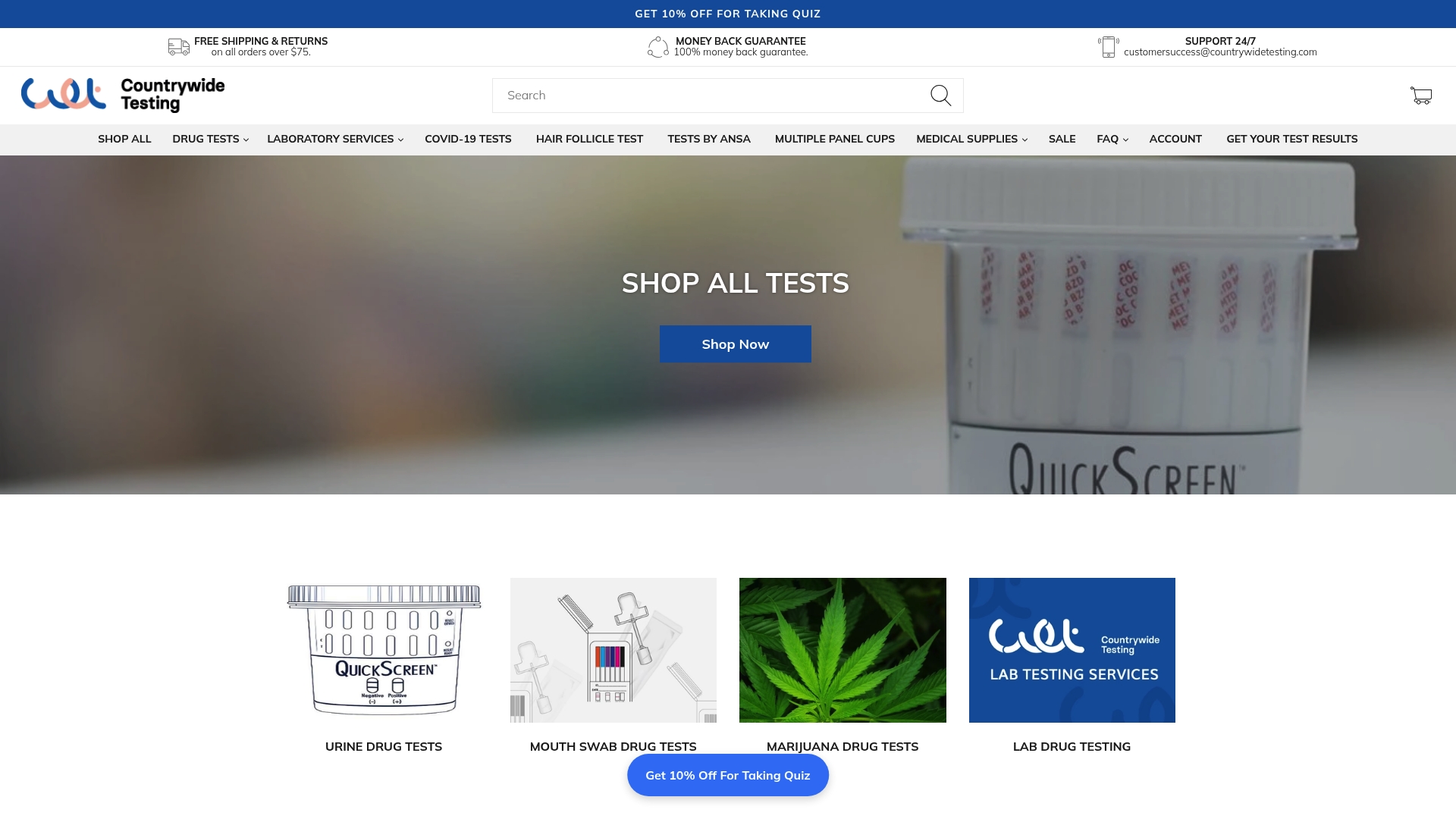
Countrywidetesting works with HHS-certified laboratories that meet SAMHSA, CLIA, CAP, and ISO standards, giving agencies the certified chain of custody that FTA audits require. Whether your program relies on urine collection or you are preparing to transition to oral fluid methods, Countrywidetesting offers lab testing services built for federal compliance. The platform also carries rapid screening options like the QuickScreen saliva panels for agencies that need on-site preliminary results before confirmatory lab analysis. Audit-ready documentation starts with the right testing partner.
FAQ
What federal regulation governs drug testing in transit agencies?
The FTA enforces 49 CFR Part 655, which requires drug and alcohol testing programs for all transit agencies receiving federal financial assistance. The regulation sets testing categories, random rates, and reporting requirements.
Who is considered a safety-sensitive employee under FTA rules?
Safety-sensitive employees include bus and rail operators, vehicle maintenance technicians, dispatchers, and armed security personnel. Any employee whose duties directly affect the safe operation of transit vehicles falls under the program.
What happens if a transit agency fails a drug testing audit?
Non-compliance with 49 CFR Part 655 can result in fines up to $27,500 per occurrence and suspension of federal transit funding. Agencies with repeated findings risk losing access to the federal grants that fund most of their operations.
Can transit agencies use oral fluid testing instead of urine testing?
Yes. Federal rules now permit oral fluid testing, with an 18-month grace period after HHS certifies a second qualified laboratory. Agencies must update their written policies before switching collection methods.
What substances must transit agencies test for in 2026?
The mandatory panel covers amphetamines, cocaine, marijuana metabolites, opioids, and PCP. Cutoff levels for each substance remain unchanged for 2026 reporting under current federal guidelines.