
Drug Testing in Transportation – Ensuring Global Safety
A single impaired driver on a busy highway can create consequences that ripple across entire communities in seconds. For transportation companies, the stakes are too high to ignore robust compliance protocols. Drug testing protects both public safety and your company’s reputation, ensuring only qualified drivers operate vehicles in North America, Europe, and beyond. This article delivers practical guidance and highlights the mandatory FMCSA drug testing requirements that HR managers must understand to minimize risk and maximize safety.
Table of Contents
- Defining Drug Testing in Transportation
- Types and Methods of Drug Testing Programs
- Global Legal Standards and Compliance Needs
- Key Benefits and Practical Applications
- Risks, Common Mistakes, and Cost Implications
Key Takeaways
| Point | Details |
|---|---|
| Safety Assurance | Drug testing is essential for ensuring that transportation personnel operate vehicles without impairment, directly protecting public safety. |
| Compliance Requirements | Companies must adhere to stringent federal and international regulations that dictate drug testing protocols and procedures. |
| Operational Benefits | Effective drug testing programs lead to reduced incidents of impaired driving, lower operational costs, and improved liability protection. |
| Potential Risks | Failing to implement comprehensive testing or inadequately complying with regulations can expose companies to significant legal and financial risks. |
Defining Drug Testing in Transportation
Drug testing in transportation refers to the systematic screening of drivers and safety-sensitive personnel to detect the presence of controlled substances or alcohol. This practice exists to protect public safety and maintain the integrity of transportation operations across multiple industries.
Transportation is a safety-critical sector. A driver impaired by drugs or alcohol can cause catastrophic accidents involving vehicles, cargo, and multiple people. Unlike other industries where errors might result in financial losses, transportation incidents often result in loss of life.
Why Transportation Requires Specialized Testing Protocols
Transportation differs from other industries because the stakes are immediate and severe. A single lapse in judgment from an impaired driver can affect hundreds of people in seconds.
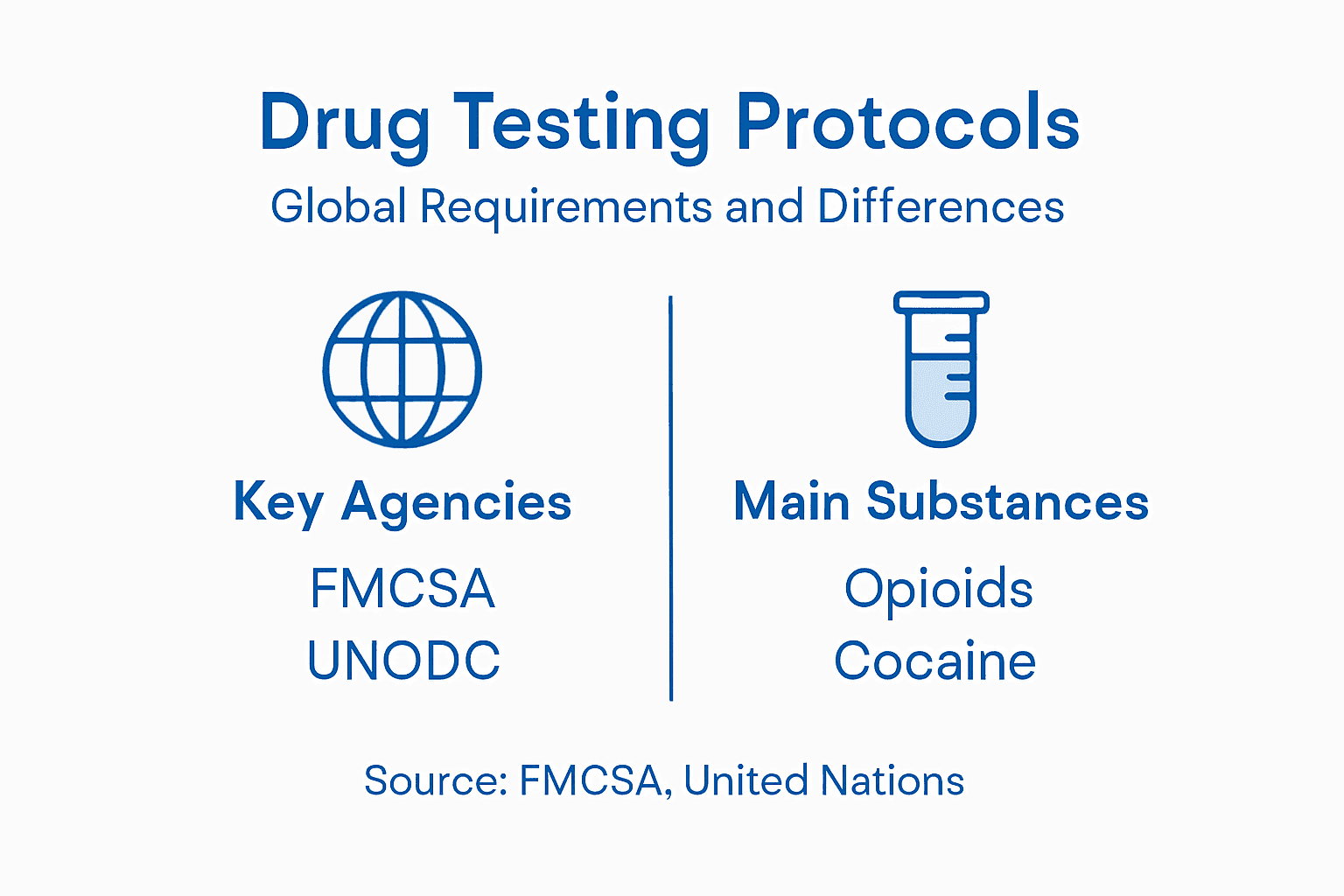
The regulatory framework reflects this reality. Government agencies like the Federal Motor Carrier Safety Administration (FMCSA) have established mandatory testing programs for commercial driver’s license holders. These aren’t suggestions—they’re legal requirements that apply to anyone operating commercial motor vehicles.
The Core Purpose of Drug Testing in Transportation
Drug testing serves multiple purposes in your industry:
- Safety assurance: Confirming that drivers can operate vehicles safely without impairment
- Regulatory compliance: Meeting DOT, FMCSA, and state-level legal requirements
- Workplace accountability: Creating clear consequences and deterrence for substance use
- Insurance and liability protection: Reducing your company’s exposure to negligent hiring and retention claims
- Public confidence: Demonstrating that your organization prioritizes safety over convenience
Drug testing is fundamentally about preventing preventable accidents before they occur.
Key Components of Transportation Drug Testing
When you implement drug testing in your transportation company, you’re typically screening for specific substances. The DOT drug test includes standard screening for five drug categories plus alcohol testing.
The testing process itself involves collecting biological samples (urine or oral fluid), sending them to certified laboratories, and comparing results against established thresholds. Results aren’t simply “positive” or “negative”—they follow specific interpretation guidelines that protect both your company and employees.
International standards on drug prevention also emphasize that testing must be part of a broader strategy. United Nations prevention standards highlight that effective safety depends on combining testing with education, treatment access, and clear policies.
Global Context: Transportation Testing Differs by Region
Drug testing requirements vary significantly across countries and regions. North American standards are stricter than European standards. Some countries focus heavily on alcohol testing; others prioritize illicit drug screening.
Your company’s testing program must align with regulations in every jurisdiction where you operate. What’s mandatory in the United States might be prohibited in certain European countries without proper legal framework.
The FMCSA Clearinghouse: A Game-Changer for Your Compliance
If you manage commercial drivers, you need to understand the Commercial Driver’s License Drug and Alcohol Clearinghouse. This database tracks all DOT drug and alcohol violations and requires employers to report violations and query driver records.
It’s not optional. The Clearinghouse represents a centralized system ensuring that drivers cannot simply move to another company after violating DOT testing requirements.
Pro tip: Establish a dedicated compliance person who regularly queries the Clearinghouse for your current and prospective drivers—this single action prevents hiring drivers with undisclosed violations and keeps your company protected.
Types and Methods of Drug Testing Programs
Your transportation company can choose from several testing approaches, each designed for different situations and regulatory requirements. The method you select determines detection windows, accuracy levels, and cost implications for your operation.
FMCSA mandates that commercial driver employers implement six distinct testing categories. These aren’t interchangeable—each serves a specific compliance purpose and triggers under different circumstances.
The Six Mandatory Testing Categories
The Federal Motor Carrier Safety Administration requires employers to conduct testing at specific points in a driver’s employment and career:
To clarify the six mandatory FMCSA testing categories, see how each serves the compliance process:
| Testing Category | Trigger Event | Compliance Role |
|---|---|---|
| Pre-employment | Before hiring | Screens new drivers |
| Random | Year-round, unannounced | Maintains ongoing deterrence |
| Post-accident | After incident | Investigates cause, liability |
| Reasonable Suspicion | Observable impairment | Validates concern |
| Return-to-Duty | After violation | Confirms readiness |
| Follow-up | Post-treatment/rehabilitation | Ensures sustained compliance |
- Pre-employment testing: Before hiring any driver to screen for substance use history
- Random testing: Unannounced tests throughout the year to maintain deterrence
- Post-accident testing: Required after accidents meeting specific severity criteria
- Reasonable suspicion testing: When supervisors observe signs of impairment or policy violations
- Return-to-duty testing: Before a driver resumes safety-sensitive duties after a violation
- Follow-up testing: Ongoing monitoring after a driver completes treatment or rehabilitation
Each testing type serves a distinct safety function—skipping any one of them creates compliance gaps and liability exposure.
Testing Methods: Understanding Your Options
Different biological samples provide different detection capabilities. The method you choose affects accuracy, cost, and how far back you can detect substance use.
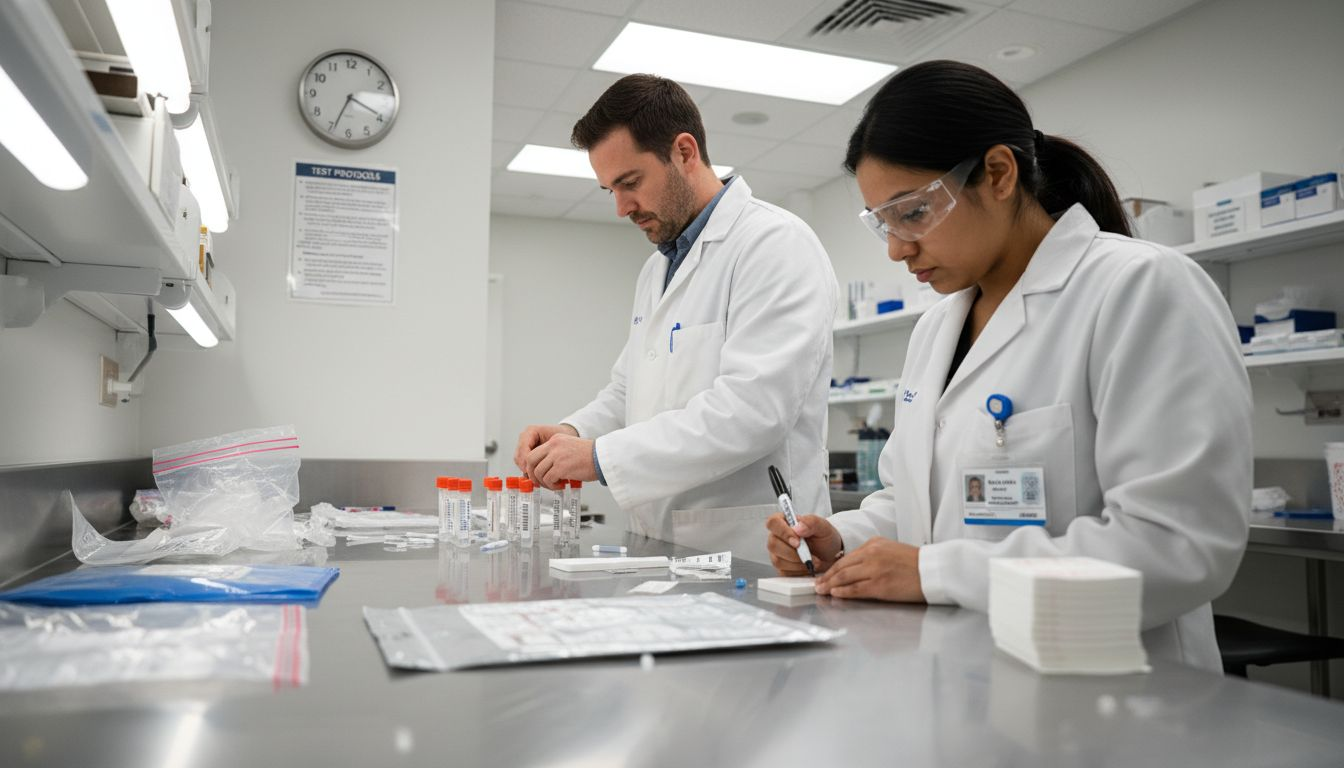
Urine testing remains the most common approach in transportation. It detects marijuana, cocaine, opioids, PCP, and amphetamines within a typical 2-3 day window for most substances.
Breath-alcohol testing is the standard for alcohol detection. It provides immediate results and reflects current impairment rather than past consumption.
Oral fluid (saliva) testing detects recent drug use and provides results quickly. Hair testing extends detection windows to 90 days but costs more and requires careful handling for legal defensibility.
Blood testing is considered the gold standard for accuracy but is invasive and typically reserved for post-accident or legal situations.
Here’s an at-a-glance comparison of drug testing methods commonly used in transportation:
| Testing Method | Detection Window | Typical Use Case | Advantages |
|---|---|---|---|
| Urine Screening | 2–3 days for most drugs | Pre-employment, random testing | Cost-effective, reliable |
| Breath-Alcohol Test | Immediate | Accident, random, suspicion | Non-invasive, instant result |
| Oral Fluid (Saliva) | Several hours–2 days | Recent use confirmation | Quick, less invasive |
| Hair Testing | Up to 90 days | Follow-up, legal investigations | Long history, tamper-resistant |
| Blood Testing | Hours to days | Post-accident, legal | Highest accuracy, court-defensible |
Why Testing Methods Matter for Your Program
You can’t simply pick one method for all scenarios. Different situations demand different approaches for practical and legal reasons.
Pre-employment testing often uses urine screening because it’s cost-effective and reliable. Random testing typically follows the same protocol for consistency. Post-accident testing might escalate to blood testing if litigation is anticipated, since it provides court-defensible evidence.
Your chosen testing partner—like a certified laboratory meeting SAMHSA and ISO standards—can guide you on appropriate methods for each testing category.
Building a Compliant Testing Schedule
Compliance requires planning. You must establish clear policies specifying when each testing type occurs and under what conditions.
Random testing should occur year-round with no predictable pattern. Annual minimum rates are mandated by federal regulation. Post-accident criteria should be documented clearly so supervisors know exactly when testing is required.
Sample collection must follow strict chain-of-custody procedures. Results must be reviewed by a Medical Review Officer before being reported to drivers. These procedural safeguards protect your company from legal challenges.
Pro tip: Document every testing decision and result in your driver records—regulatory audits will request this documentation, and thorough records demonstrate your commitment to compliance and employee fairness.
Global Legal Standards and Compliance Needs
Drug testing requirements aren’t created in a vacuum. Your transportation company operates within a complex web of international treaties, national laws, and regional regulations that all intersect at the driver level.
Understanding these standards isn’t optional—it’s the foundation of legal protection for your organization. Non-compliance exposes you to regulatory penalties, liability claims, and operational disruptions.
The International Treaty Framework
Three major United Nations conventions shape global drug control policy and directly affect transportation safety standards. These aren’t recommendations; they’re binding international agreements that signatory nations enforce through domestic law.
The Single Convention on Narcotic Drugs (1961) established baseline controls for drug production, distribution, and use prevention. The Convention on Psychotropic Substances (1971) expanded controls to synthetic drugs. The United Nations Convention against Illicit Traffic (1988) focuses on enforcement cooperation and trafficking prevention.
Your company must comply with regulations shaped by these treaties, even if you operate only domestically.
United States Federal Requirements
The Department of Transportation mandates specific testing protocols through FMCSA regulations. These requirements apply to any company operating commercial vehicles across state lines.
Federal standards specify:
- Which substances must be tested (marijuana, cocaine, opioids, PCP, amphetamines, plus alcohol)
- Minimum testing rates for random and follow-up testing
- Chain-of-custody procedures for sample handling
- Medical Review Officer review processes before results are communicated
- Reporting obligations to the Commercial Driver’s License Drug and Alcohol Clearinghouse
Non-compliance can result in substantial fines, loss of operating authority, and personal liability for company leadership.
International Variations: The Complexity You Face
Different countries enforce starkly different standards. What’s mandatory in North America may be restricted or prohibited in Europe.
Some regions emphasize alcohol testing. Others focus heavily on illicit substances. A few nations restrict hair testing or require different detection thresholds. Canada has stricter marijuana policies than some U.S. states, while European Union standards often emphasize rehabilitation over punishment.
If your company operates internationally, you must maintain separate testing protocols for each jurisdiction. This isn’t a single-policy situation.
Harmonized Testing Standards Across Industries
International standards for testing procedures ensure consistent sample collection, security, transport, and laboratory analysis. These harmonized protocols protect your company by ensuring defensible testing practices.
Using certified laboratories that follow these standards—meeting SAMHSA, ISO, CLIA, and CAP certifications—provides legal protection. Your laboratory partner should demonstrate compliance with international testing protocols, not just national ones.
Building Your Global Compliance Strategy
Compliance requires mapping your operational footprint. Identify every jurisdiction where your drivers operate and the specific requirements in each.
You’ll likely need multiple testing protocols:
- One for U.S. federal requirements (FMCSA mandates)
- One for Canada (Canadian transportation regulations)
- Modified approaches for any other countries where you operate
Document these differences in your driver handbook and training materials. Ensure supervisors understand which rules apply in which locations.
Treating compliance as a cost-saving exercise instead of a safety and legal necessity leads to violations that cost far more than prevention ever would.
Pro tip: Partner with a testing provider familiar with multi-jurisdictional requirements who can guide you on protocol differences by location—this prevents costly compliance mistakes and reduces your exposure during regulatory audits.
Key Benefits and Practical Applications
Drug testing programs deliver concrete, measurable benefits for your transportation company beyond legal compliance. The safety improvements, operational efficiencies, and risk reductions directly impact your bottom line and reputation.
When implemented correctly, testing becomes a proactive tool rather than a reactive obligation. Your drivers know the standards, and your company demonstrates genuine commitment to safety.
Reducing Substance-Impaired Driving Incidents
The most obvious benefit is prevention. Drug testing programs significantly reduce substance-impaired driving incidents and enhance public safety on roadways.
A driver who knows random testing occurs every month behaves differently than one who assumes no testing will happen. The deterrent effect works because consequences feel real and immediate.
Accidents prevented mean lives saved. That’s not hyperbole—it’s the operational reality of transportation safety.
Protecting Your Company’s Liability Exposure
If an impaired driver causes an accident and your company knew about substance use but failed to test or act, you face negligent hiring and retention claims. Juries award massive damages in these cases.
A documented drug testing program demonstrates that you took reasonable precautions. It protects you legally when incidents occur, and it prevents many incidents from occurring in the first place.
Insurance premiums often decrease when you implement robust testing protocols. Underwriters view comprehensive programs as risk mitigation.
Improving Operational Reliability and Costs
Impaired drivers cause more accidents, more equipment damage, and more schedule disruptions. Fewer incidents mean:
- Lower insurance claims and premiums
- Reduced vehicle maintenance costs from preventable accidents
- Fewer schedule delays and missed deliveries
- Better customer satisfaction and retention
- Improved driver retention among quality operators
These aren’t intangible benefits—they directly reduce operational expenses month after month.
Supporting Law Enforcement and Public Safety
Accurate drug testing supports forensic toxicology investigations and law enforcement efforts to reduce drug-impaired driving across all transportation sectors.
Your testing data helps authorities understand drug use patterns, inform policy decisions, and train Drug Recognition Experts. You’re contributing to broader public safety infrastructure.
Creating Data-Driven Safety Culture
Testing generates data about substance use trends among your workforce. This information helps you:
- Identify whether certain routes or driver populations need additional support
- Measure the effectiveness of your testing and education programs
- Document compliance for regulatory audits
- Make informed decisions about hiring and retention
- Demonstrate accountability to employees and stakeholders
A company that tests consistently, fairly, and transparently builds trust with its workforce and regulators alike.
Practical Implementation Benefits
Implementing testing correctly creates operational advantages:
- Clear expectations reduce conflicts and grievances
- Transparent policies demonstrate fairness and consistency
- Drug-free workplace status improves recruitment of quality drivers
- Documented procedures protect supervisors who must make difficult decisions
- Regular testing catches problems early, before catastrophic incidents occur
Pro tip: Communicate your testing program transparently to all drivers during onboarding—drivers appreciate clarity about expectations, and companies that explain the “why” behind testing face fewer legal challenges and grievances.
Risks, Common Mistakes, and Cost Implications
Drug testing programs require careful implementation. Mistakes in execution can expose your company to legal liability, damage employee relationships, and waste significant resources without delivering safety benefits.
Understanding the common pitfalls helps you avoid costly errors. The risks are real, but they’re manageable with proper planning and oversight.
The False Positive Problem
Testing isn’t perfect. False positives occur when laboratory results incorrectly indicate drug use, leading to wrongful disciplinary actions against innocent drivers.
Certain medications, foods, and supplements can trigger positive results on screening tests. This is why the Medical Review Officer process exists—to distinguish legitimate medication use from illicit drug use.
Skipping MRO review before disciplining a driver can result in wrongful termination lawsuits. You’ll pay attorney fees, settlement costs, and damage to your reputation.
Procedural Errors and Chain of Custody Failures
How you collect, handle, and transport samples matters legally. Procedural errors in specimen collection and handling can render results inadmissible in court and indefensible to regulators.
Common mistakes include:
- Failing to use certified collectors
- Not documenting the chain of custody properly
- Storing samples incorrectly before shipment
- Sending samples to non-certified laboratories
- Not following split specimen procedures
These oversights seem minor until you’re defending a termination decision in court.
Non-Compliance With Federal Regulations
Transportation testing has specific federal requirements. Non-compliance with federal regulations can lead to legal challenges and increased operational costs.
Common compliance failures include:
- Testing for substances not on the DOT list
- Failing to report violations to the Clearinghouse
- Not conducting random testing at federally mandated rates
- Skipping required return-to-duty tests
- Ignoring post-accident testing requirements
Regulatory agencies audit these programs. Non-compliance results in fines and potential loss of operating authority.
Cost Considerations and Budget Reality
Testing costs money. Direct expenses include laboratory fees, collection supplies, Medical Review Officer services, and administrative time.
Budget approximately $50-$100 per test for basic urine screening, depending on your volume and location. Certified collections, confirmatory testing, and MRO review add costs. Annual random testing for a fleet of 100 drivers costs $5,000-$10,000 or more.
But here’s the reality: accident costs dwarf testing costs. A single serious accident involving an impaired driver can exceed $1 million in damages, medical costs, and liability exposure. Testing is insurance against catastrophic incidents.
Recruitment and Retention Challenges
Some drivers avoid companies with testing programs. Quality drivers don’t mind testing because they know they’ll pass.
The trick is communicating that your program is fair, consistent, and applied equally. Drivers who see testing as arbitrary or unfairly enforced leave for competitors. Drivers who understand the safety rationale stay.
A poorly explained testing program drives away quality drivers; a well-explained program attracts drivers who prioritize safety.
Avoiding the Mistake of Partial Implementation
Half-measures fail. If you test pre-employment but never conduct random testing, drivers know they’re safe after hiring. If you test but fail to report results to the Clearinghouse, you lose regulatory protection.
Commit fully to testing or don’t bother. Partial programs create the appearance of compliance without delivering safety or legal benefits.
Pro tip: Partner with a compliance specialist or testing service provider who handles procedural details—this investment in expertise prevents costly errors that far exceed the consulting cost.
Enhance Your Transportation Drug Testing Program with Trusted Solutions
Managing comprehensive drug testing for transportation demands strict adherence to regulatory standards such as FMCSA mandates and global compliance frameworks. Ensuring accurate, timely, and legally defensible results while balancing operational costs is a critical challenge your company faces. Key pain points include maintaining consistent random testing, navigating different international regulations, protecting against false positives, and securely reporting to the Clearinghouse.
At CountryWideTesting.com, we understand these industry-specific challenges and offer reliable, certified drug and alcohol testing services tailored for transportation professionals. Our partnerships with licensed laboratories meeting SAMHSA, ISO, CLIA, and CAP standards empower you to implement compliant testing across all mandated categories including pre-employment, random, post-accident, and return-to-duty. We provide a variety of trusted testing options from urine screens to oral fluid collections ensuring your program is both cost-effective and defensible.
Take control of your safety culture today with testing programs built on transparency and regulatory expertise. Discover how our compliance-focused solutions can reduce your liability, protect your drivers, and promote workplace accountability.
Start building a safer transportation operation now by visiting CountryWideTesting.com and securing your company’s compliance and confidence with expert drug testing services.
Frequently Asked Questions
What are the main purposes of drug testing in transportation?
Drug testing in transportation serves to ensure safety by confirming that drivers can operate vehicles without impairment, maintain regulatory compliance with legal requirements, establish workplace accountability, protect against liability claims, and build public confidence in transportation safety.
What types of substances are typically tested for in transportation drug testing programs?
Transportation drug testing programs generally screen for five main drug categories including marijuana, cocaine, opioids, PCP, and amphetamines, along with alcohol testing.
How does the FMCSA Clearinghouse impact drug testing for commercial drivers?
The FMCSA Clearinghouse tracks all DOT drug and alcohol violations, requiring employers to report violations and verify driver records. This centralized system prevents drivers from simply moving to a new company after violating testing requirements, enhancing overall safety in the transportation industry.
What are the consequences of non-compliance with drug testing regulations in transportation?
Non-compliance with drug testing regulations can lead to substantial fines, loss of operating authority, exposure to liability claims, and potential legal disputes if an impaired driver is involved in an accident. It’s crucial for transportation companies to adhere strictly to federal requirements to ensure both safety and legal protection.