
Types of Drug Screening: Choosing the Right Test
Choosing the right drug screening program is one of the most important steps for any Human Resources manager working to protect their organization in the United States. Mistakes or misconceptions about testing can expose your company to lawsuits or compliance issues that go far beyond a failed result. Understanding the true purpose of drug testing, how results should be interpreted, and the distinct limits of each testing method reveals the difference between workplace compliance and preventable legal risk.
Table of Contents
- Defining Drug Screening and Common Misconceptions
- Key Types of Drug Screening Explained
- How Different Drug Tests Work in Practice
- Legal Compliance and Testing Standards for Employers
- Employer Responsibilities and Risk Management
Key Takeaways
| Point | Details |
|---|---|
| Understanding Limitations | Drug screening detects substances but does not measure impairment or job performance. A positive test does not automatically indicate addiction or current use. |
| Testing Strategies | Integrate drug testing with a comprehensive workplace program, including education and policies, to enhance safety rather than relying solely on increased testing frequency. |
| Legal Compliance | Adhere to applicable state and federal regulations when designing your testing program to avoid legal liability and ensure proper procedures are followed. |
| Confirmatory Testing | Always require confirmatory tests for positive results to protect against wrongful termination and ensure accurate decision-making. |
Defining Drug Screening and Common Misconceptions
Drug screening is a straightforward process: it detects the presence of specific substances in a person’s body at a particular moment in time. As an HR manager, understanding this foundational definition is critical because it shapes your expectations about what these tests can and cannot tell you. Drug testing detects substances in the body but does not measure impairment, job performance, or fitness for duty. This distinction matters more than you might realize. An employee could test positive for a substance yet pose no immediate workplace safety risk, while someone could be impaired and still pass a test depending on timing and detection windows.
The misconceptions around drug screening run deep, and they often create problems for HR departments that expect too much from their testing programs. One of the most damaging myths is that a positive drug test proves substance abuse or addiction. The reality is far more nuanced. Drug testing is not definitive for diagnosing substance use disorders, which means a single positive result should never be the sole basis for employment decisions without proper follow-up investigation and clinical guidance. A positive result could indicate recent use, past use that lingers in the system, or even cross-contamination in some cases. Another pervasive misconception is that drug testing serves as a complete substance use assessment tool. It does not. Testing tells you whether certain substances are present, nothing more. It cannot determine when the substance was used, how much was consumed, or whether the person has a substance use disorder requiring treatment.
Many employers also mistakenly believe that more frequent testing automatically creates a safer workplace. Testing itself does not prevent substance use any more than a scale prevents weight gain. What matters is how you integrate testing into a comprehensive drug-free workplace program that includes education, clear policies, and support resources. Understanding how drug tests work and their specific limitations helps you design a program that actually reduces risk rather than simply creating the appearance of one. Your testing strategy should align with your industry requirements, federal regulations if applicable, and genuine workplace safety needs. When HR managers recognize these distinctions, they make smarter testing decisions that protect their organizations legally while treating employees fairly.
Pro tip: Before implementing any drug screening program, clearly document your testing policy, establish legitimate reasons for testing (pre-employment, post-accident, reasonable suspicion), and outline how you’ll handle positive results with fair procedures that include opportunities for employees to explain results or request confirmatory testing.
Key Types of Drug Screening Explained
Drug screening comes in several distinct forms, each designed for different purposes, populations, and substances. As an HR manager, you need to understand the primary categories because your choice directly impacts accuracy, cost, and legal compliance. The main screening methods break down into two fundamental approaches: biological specimen testing and clinical assessment tools. Biological tests examine urine, saliva, hair, or blood to detect the presence of drugs or their metabolites. Clinical assessment tools, by contrast, are questionnaire-based screening instruments that evaluate substance use patterns and risk. Both serve valuable purposes, but they answer different questions. A urine test tells you whether a substance is present. A clinical screening tool helps identify whether someone may have a substance use problem requiring intervention or treatment.
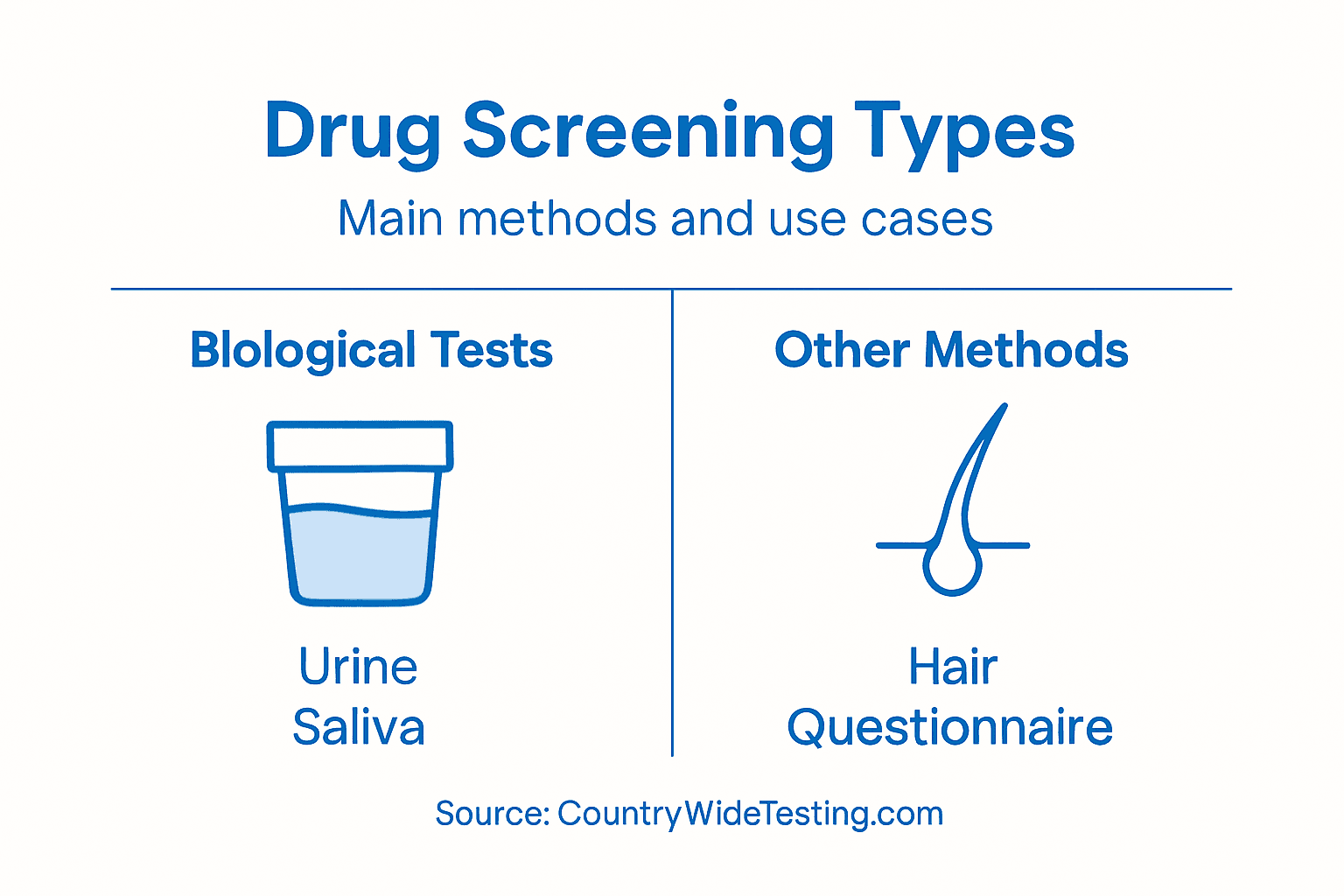
Biological specimen testing is what most employers think of as standard drug testing. Urine drug tests remain the most common choice in workplace settings because they’re cost effective, non-invasive, and have established detection windows for most substances. Oral fluid or saliva tests detect drugs in the mouth and throat area, offering a shorter detection window but greater convenience and less invasiveness. Hair testing can reveal drug use patterns over months because drugs become incorporated into hair as it grows, though it cannot pinpoint when use occurred. Blood tests provide the most accurate measurement of current impairment and substance concentration, but they’re expensive, invasive, and generally reserved for situations where impairment is suspected or legal requirements demand it. Each specimen type has distinct detection windows. For example, THC typically shows up in urine for 3 to 30 days depending on use frequency, while in saliva it may only be detectable for 24 hours. Different screening tools serve various populations and detect different substances, making selection critical for your specific needs.
Here’s a quick comparison of common biological drug test types and their workplace implications:
| Test Type | Detection Window | Typical Use Cases | Limitations |
|---|---|---|---|
| Urine | 3–30 days (THC varies) | Pre-employment, routine | Cannot prove impairment timing |
| Saliva | Up to 24 hours | Post-accident, onsite | Short detection period |
| Hair | Up to 90 days | Long-term use patterns | Cannot detect recent use |
| Blood | Minutes to hours | Impairment, legal cases | Invasive, costly, less practical |
Clinical screening instruments like ASSIST, AUDIT, CAGE, CRAFFT, and DAST-10 are questionnaire based and serve primarily to identify individuals who may benefit from further assessment or intervention. These tools ask about substance use frequency, consequences, and patterns. They’re valuable in healthcare settings and situations where you need to understand behavioral aspects of substance use, but they’re rarely appropriate for routine workplace screening. Your choice of screening type should align with your business objectives. If you need to maintain a drug-free workplace and comply with Department of Transportation or other federal regulations, biological testing is non-negotiable. If you’re designing an employee assistance program or pre-employment health assessment, clinical screening tools combined with biological testing might be more appropriate. The most important decision is matching the right tool to your actual need rather than defaulting to the most common option.
Pro tip: Start with pre-employment urine testing for all positions, then customize your ongoing testing strategy based on specific job hazards, industry regulations, and safety-sensitive roles rather than testing everyone at the same frequency.
How Different Drug Tests Work in Practice
Understanding the mechanics of drug testing helps you make informed decisions about which tests to implement and why. Most drug testing programs use a two-step process that mirrors how forensic labs actually work. First comes the presumptive test, which is the initial screening that provides a quick yes or no answer about whether drugs might be present. Second comes the confirmatory test, which definitively identifies whether a substance is actually there and at what concentration. This two-step approach protects you legally because a positive presumptive result alone should never trigger employment action. Only a confirmed positive result should drive any decisions. Think of it like this: the presumptive test is your first alert system, and the confirmatory test is your verification system.
Presumptive tests like immunoassay or colorimetric reagent tests work quickly and inexpensively, which is why they’re standard in point-of-collection testing. These tests use antibodies or chemical reactions to detect drug metabolites in urine or saliva. They’re designed to be sensitive, meaning they catch most positives, but they can also produce false positives when substances with similar chemical structures are present. That’s why they’re called presumptive. A positive result merely presumes the presence of a drug. If an employee tests positive on a presumptive test, you need confirmatory testing before making any employment decision. Confirmatory tests use advanced instrumentation like gas chromatography-mass spectrometry to provide definitive identification with extreme accuracy. These tests are more expensive and time-consuming, which is why labs only run them on samples that test positive presumptively. They separate individual drug compounds from the sample and identify each one specifically, eliminating cross-reactivity issues that plague presumptive tests.
Here’s what happens in real-world practice at a workplace testing event. An employee provides a urine sample and the specimen is split into two parts. The first part undergoes presumptive testing at the collection site or a quick-processing lab. If negative, you’re done and the employee moves forward. If positive, the second part of the sample goes to a SAMHSA-certified laboratory for confirmatory testing using sophisticated equipment. This process typically takes 24 to 72 hours for complete results. During this waiting period, the employee should remain on normal duties unless your policy specifies otherwise, because that positive presumptive result is not yet confirmed. When the confirmatory results return, you finally have your answer. This two-tier approach costs more than a single test would, but it protects your organization from wrongful termination lawsuits and ensures you’re making decisions based on accurate information. The investment in proper confirmatory testing is significantly cheaper than litigation over a false positive that cost someone their job.
Pro tip: Always require confirmatory testing through a SAMHSA, CLIA, or CAP-certified laboratory before taking any adverse employment action based on a positive result, regardless of how certain the presumptive test appears.
Legal Compliance and Testing Standards for Employers
If you operate in certain industries or work with federal contractors, drug testing compliance isn’t optional. It’s a legal mandate. The challenge is that testing standards vary significantly depending on your industry, whether you have federal contracts, and which state your company operates in. Federal workplace testing programs have strict requirements that differ from private sector testing, and understanding which rules apply to your organization is essential to avoiding legal liability. The stakes are high. Non-compliance can result in contract loss, substantial fines, and wrongful termination lawsuits if you test incorrectly or fail to follow proper procedures.
Federal Testing Standards and Who Must Follow Them
If your company is a federal contractor or employs workers in safety-sensitive positions, you likely fall under federal drug testing rules. The Mandatory Guidelines for Federal Workplace Drug Testing Programs establish detailed requirements for specimen handling, chain of custody procedures, testing panel specifications, and Medical Review Officer qualifications. These guidelines apply if you have a federal contract worth any amount, conduct testing for Department of Transportation positions, or work under other federal agency requirements. The rules specify which drugs must be tested for, how specimens must be collected and stored, and exactly how results must be reported. Deviation from these standards can invalidate your entire testing program and expose your organization to legal challenges. If you’re in the transportation industry, the stakes are even higher. The Department of Transportation drug and alcohol testing rules require specific testing panels, set limits on when you can test (pre-employment, random, post-accident, reasonable suspicion, and return to duty), and mandate that only certified Medical Review Officers can interpret results.
Private Sector Compliance and State Variations
If you’re not a federal contractor, your obligations are somewhat lighter but far from non-existent. Private sector employers have broader flexibility in designing testing programs, but you must still comply with state and local laws that often impose strict requirements around consent, privacy, timing, and result communication. Some states prohibit random testing entirely. Others require specific notice before testing begins. A few states have legalized marijuana, which complicates everything because federal law still considers it illegal while some states don’t. This disconnect creates real challenges. An employee can legally use marijuana in Colorado on their own time and still test positive for THC, potentially violating your federal compliance obligations if you have contracts requiring drug-free workplaces. Your testing program must navigate these competing requirements carefully.
Building Your Compliant Testing Program
Start by determining which legal framework actually applies to your organization. Are you a federal contractor? Do you have DOT-regulated positions? What state are you in? These questions determine your baseline requirements. Once you know your obligations, partner with a qualified testing provider that understands your specific regulatory environment. Make sure your provider uses SAMHSA, CLIA, or CAP-certified laboratories for confirmatory testing. Document your testing policy in writing, communicate it clearly to all employees, and ensure consistent application across all employees in similar positions. Never make exceptions based on job level or personal relationships because that inconsistency creates legal vulnerability. Your testing procedures should include proper chain of custody documentation, Medical Review Officer involvement for any positive results, and clear procedures for employee notice and response.
Pro tip: Consult with an employment law attorney in your state before launching any testing program, because state-specific requirements often differ significantly from federal standards and non-compliance can nullify your entire program.
Employer Responsibilities and Risk Management
Your responsibilities as an employer go far beyond simply ordering drug tests. When you implement a testing program, you’re entering a complex legal and operational landscape where mistakes can be costly. Your organization becomes responsible for ensuring proper procedures are followed, records are maintained securely, and results are handled confidentially. One poorly executed test can trigger wrongful termination lawsuits, breach of privacy claims, or discrimination allegations that cost far more than the testing program ever saved. Understanding your obligations upfront helps you build a program that actually protects your organization rather than exposing it to risk.
Core Employer Obligations Under Federal and State Law
If you conduct drug testing, you have specific legal duties that vary depending on your industry and location. Employer responsibilities under drug and alcohol testing regulations include maintaining proper testing procedures, ensuring chain of custody is followed, managing service agents who collect and process samples, keeping detailed records, and protecting employee confidentiality. You must ensure that only qualified people collect samples, that specimens are stored properly, and that results are reported accurately to authorized personnel only. If you’re in a federally regulated industry like transportation, these requirements become extremely specific. You must use only certified laboratories, employ qualified Medical Review Officers to interpret results, and follow strict procedures for notifying employees of positive results. Beyond the testing process itself, you have ongoing documentation responsibilities. Every test must be recorded with dates, times, who performed it, and what the results were. These records must be kept secure and separate from personnel files in most cases. You cannot casually discuss an employee’s drug test results with supervisors or coworkers because that violates privacy requirements and exposes you to liability.
Risk Management Through Proper Implementation
Many employers create risk by cutting corners on testing procedures. They might skip confirmatory testing to save money, test employees inconsistently based on personal relationships, or fail to follow proper notice requirements. These shortcuts create legal vulnerabilities that often cost more to defend against than proper implementation would have cost upfront. Establish clear policies before you test anyone. Document what you’ll test for, when you’ll test, who you’ll test, and how you’ll handle results. Apply these policies consistently to all employees in similar positions. Never make exceptions based on job level, tenure, or personal factors because inconsistency becomes evidence of discrimination if a termination follows. Train your managers on what they can and cannot say about drug testing to avoid creating hostile work environment claims. Implement safeguards around confidentiality so that positive results don’t become gossip around the office. Partner with reputable testing providers who understand your legal obligations and will flag issues before they become problems.
Mitigating Workplace Safety Risks
While drug testing alone doesn’t create a safe workplace, it’s one component of a comprehensive safety program. Employer responsibility includes maintaining safe workplace conditions through training, hazard communication, proper equipment, and procedures that prevent accidents. Drug testing supports this goal by identifying individuals who shouldn’t be in safety-sensitive roles while impaired, but it must work alongside other safety measures. Combine testing with clear consequences for positive results. Will you terminate immediately, offer treatment and monitoring, or follow a different path? Establish your policy in advance and apply it uniformly. Communicate the policy to all employees before implementing the testing program so there are no surprises. Document everything about your testing program and its outcomes so you can demonstrate good faith compliance if you’re ever challenged legally.
This summary outlines key employer responsibilities to minimize risk in drug screening programs:
| Responsibility | Why It Matters | Example of Best Practice |
|---|---|---|
| Policy Documentation | Ensures legal compliance | Written, accessible testing policy |
| Confidentiality | Prevents privacy violations | Results stored separately, restricted |
| Manager Training | Reduces legal liability | Annual training on policies/processes |
| Consistent Application | Avoids claims of bias | All similar roles treated the same |
Pro tip: Maintain a separate, secure file for all drug testing records including requisition forms, test results, Medical Review Officer documentation, and any correspondence related to testing, kept apart from personnel files and accessible only to HR and authorized personnel.
Find the Right Drug Screening Solution for Your Needs Today
Choosing the correct drug screening method can be confusing given the variety of tests and their unique detection windows. Whether you need urine, saliva, hair, or blood testing, understanding the differences is only the first step. The real challenge lies in selecting reliable tests that comply with regulations like SAMHSA while fitting your specific workplace or personal requirements.
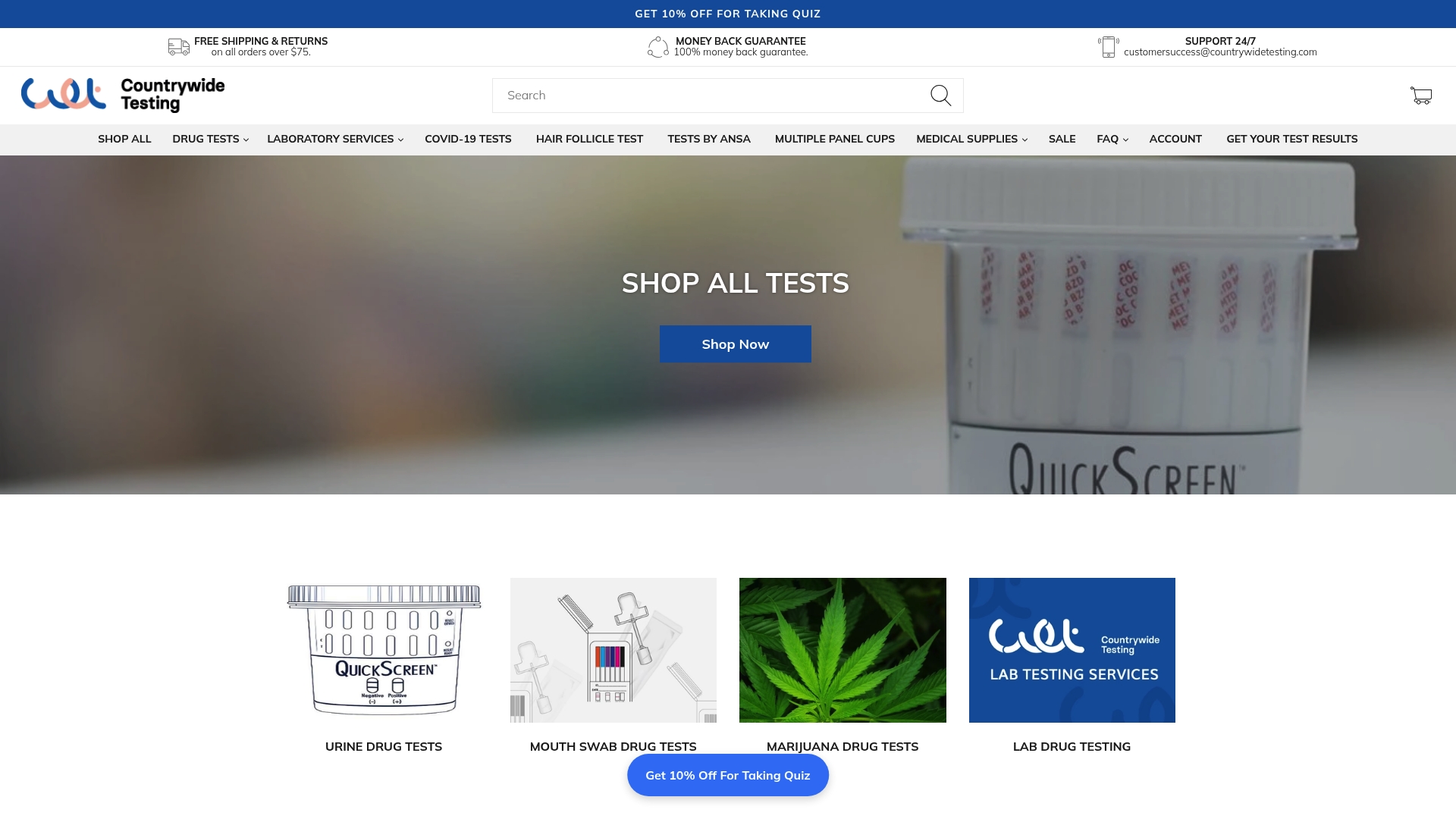
At CountryWideTesting.com, we simplify the process by offering a broad range of drug and alcohol testing options paired with licensed laboratories certified under SAMHSA, ISO, CLIA, and CAP standards. This ensures your results are accurate and legally defensible. Start your journey with pre-employment urine or saliva tests and customize your ongoing program with confidence. Visit CountryWideTesting.com now to explore testing devices and certified lab services designed to make compliance easy and to protect your workforce and organization effectively.
Frequently Asked Questions
What types of drug screening methods are available?
Drug screening methods include biological specimen testing and clinical assessment tools. Biological tests examine urine, saliva, hair, or blood, while clinical assessment tools consist of questionnaire-based screenings to evaluate substance use patterns.
How do urine drug tests compare to saliva tests?
Urine drug tests are the most common because they are cost-effective and have longer detection windows, typically ranging from 3 to 30 days. Saliva tests, while less invasive and more convenient, have a shorter detection window of up to 24 hours.
What factors should be considered when choosing a drug test?
When choosing a drug test, consider the specific substances you need to detect, the detection windows of different tests, the appropriateness for your workplace needs, and any legal compliance factors related to your industry.
Why is confirmatory testing necessary in drug screening?
Confirmatory testing is necessary because it provides definitive identification of substances and their concentrations, ensuring that employment decisions are based on accurate information. A positive presumptive test should never trigger action without a confirmed positive result.