
Advantages of Court-Ordered Substance Screening
TL;DR:
- Court-ordered substance screening monitors compliance and promotes rehabilitation through reliable, certifiable testing. It helps courts make informed decisions, protects public safety, and supports targeted health interventions. Proper understanding and adherence to procedures can improve outcomes for individuals under judicial supervision.
Court-ordered substance screening is a legally mandated process that detects drug or alcohol use in individuals under judicial supervision, including probation, bond, or supervised release. The advantages of court-ordered substance screening extend well beyond simple compliance. They include reduced recidivism, improved public safety, and access to targeted rehabilitation. Standards from SAMHSA, CLIA, and CAP govern the laboratory processes behind these tests, giving courts reliable, defensible results. Countrywidetesting connects individuals and professionals to certified lab services that meet these exact standards, making compliance straightforward and credible.
1. How court-ordered substance screening improves legal compliance
Court-ordered drug tests serve as a direct condition of probation, bond, or supervised release. When you accept bail or probation, you enter a binding agreement that waives some Fourth Amendment rights, permitting warrantless, random testing under supervision. That legal framework is what gives courts the authority to test without prior notice or individualized suspicion.
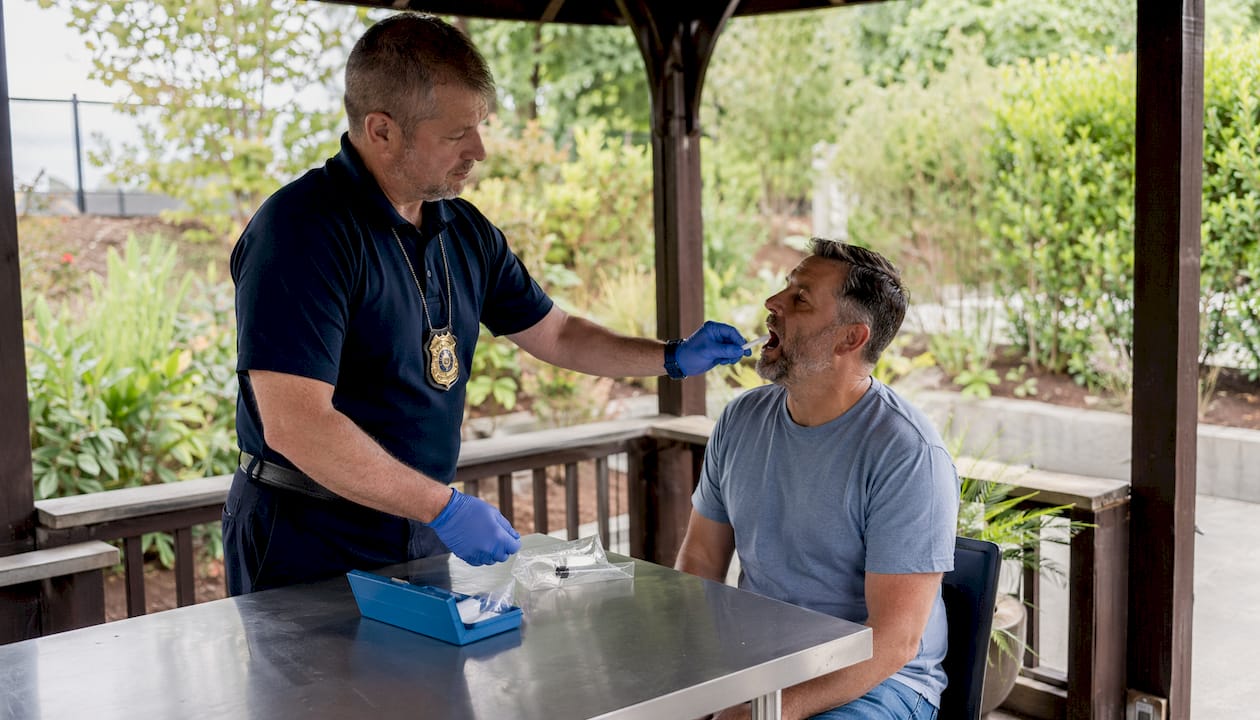
Random testing is the compliance engine behind this system. Predictable testing schedules create windows for evasion. Random schedules eliminate those windows and produce more honest results. Courts use this unpredictability deliberately, because consistent monitoring changes behavior over time.
The benefits of substance screening in compliance contexts include:
- Deterrence. Knowing a test can happen at any time reduces the likelihood of use.
- Documentation. Clean test results build a verifiable record that supports early termination of supervision.
- Accountability. Repeated violations create a documented pattern that informs judicial decisions.
- Structure. Regular check-ins give individuals a routine that supports sobriety.
Pro Tip: Read your bond or probation contract carefully before signing. It will specify which substances are tested, how often, and what happens if you miss a scheduled test. Knowing the terms prevents avoidable violations.
2. What are the public safety benefits of court-ordered substance screening?
Court-ordered screening protects communities by monitoring high-risk individuals in DUI cases, domestic violence proceedings, and family law disputes. In family law cases, courts use substance screening to protect children during custody disputes by verifying that a parent’s substance use does not endanger the child. The test result becomes objective evidence, removing guesswork from judicial decisions.
Continuous monitoring tools extend this protection further. Alcohol ankle bracelets, for example, detect transdermal alcohol output around the clock. Courts assign them in DUI cases or domestic violence situations where intermittent testing alone is insufficient. This level of monitoring creates a real-time safety net for vulnerable family members.
Public safety benefits of court-ordered drug tests include:
- Identifying active substance use in individuals with violent offense histories
- Protecting children in custody cases through documented sobriety monitoring
- Reducing impaired driving incidents through DUI program compliance testing
- Flagging relapse early so courts can intervene before a new offense occurs
Court-ordered rehab shows up to 45% higher success than incarceration. That figure reflects what happens when courts pair screening with treatment rather than punishment alone.
3. How screening facilitates targeted health interventions
Court-ordered evaluations are clinical, objective assessments that prioritize rehabilitation over punishment. The screening result is not the endpoint. It triggers a clinical evaluation that determines the appropriate level of care, ranging from an eight-hour educational class to full inpatient rehabilitation.
Court-mandated interventions guide treatment decisions based on severity, reducing repeat offenses and diverting individuals away from incarceration. That diversion is significant. Incarceration without treatment does not address the underlying disorder. A clinically guided intervention does.
“Court-ordered evaluations are not designed to catch people. They are designed to understand them. The goal is to match the severity of the problem to the intensity of the response, so that the intervention actually works.” — Clinical perspective on court substance abuse evaluations
Early detection through screening also shortens the path to treatment. A person who tests positive early in a legal case can be referred to services before their situation worsens. That early entry into care improves long-term outcomes and reduces the cost burden on the justice system. Drug testing in rehab settings reinforces this by maintaining accountability throughout the recovery process.
4. What are the procedural and technical advantages of modern screening methods?
Different test types serve different legal purposes. Understanding which method courts use, and why, helps you prepare and respond appropriately.
| Test Type | Detection Window | Key Advantage | Common Court Use |
|---|---|---|---|
| Oral fluid | 24–48 hours | Noninvasive, observed collection | Recent use detection |
| Urine (standard) | 1–7 days | Cost-effective, widely accepted | Routine probation testing |
| Urine (EtG alcohol) | Up to 80 hours | Extended alcohol detection | DUI and alcohol-related cases |
| Hair follicle | Up to 90 days | Long history of use | Custody and high-stakes cases |
| Blood | Hours | Most accurate for current impairment | DUI arrest scenarios |
Oral fluid testing is a preferred court tool because it is noninvasive and detects recent substance use within 24–48 hours. EtG urine tests detect alcohol use up to 80 hours after ingestion, which far exceeds the window of a standard breathalyzer. Courts use EtG specifically because it catches alcohol consumption that would otherwise go undetected between scheduled tests.
Courts also use elevated EtG cutoff thresholds to reduce false positives triggered by incidental ethanol exposure from hand sanitizer or mouthwash. That calibration protects individuals from unjust violations while keeping the test sensitive enough to catch actual drinking.
Chain of custody documentation is the legal backbone of every court-admissible result. Every transfer of the sample, from collection to laboratory analysis, must be recorded. Any break in that chain creates grounds for a legal challenge and can result in the test being discarded entirely. Tamper-evident packaging and SAMHSA-certified laboratory processing close those gaps.
Pro Tip: If you take prescription medications, disclose them to the testing facility before your sample is collected. Legitimate prescriptions can cause positive results on initial screens. Documented disclosure protects you from a violation based on a false positive.
5. What common misconceptions exist about court-ordered screening?
The most persistent misconception is that court-ordered screening is purely punitive. It is not. Courts reduce privacy protections in supervised-release contexts, but the purpose is compliance and safety, not surveillance for its own sake. The legal framework exists to support rehabilitation, not to create additional penalties.
A second misconception is that refusing a test carries no consequence. Refusal is treated as a positive result in most jurisdictions. Courts interpret refusal as an attempt to conceal use, which triggers the same sanctions as a confirmed positive. Tampering with a sample carries even steeper consequences, including potential criminal charges for obstruction.
Common misunderstandings about court-ordered drug tests include:
- “I can refuse without consequence.” Refusal equals a positive result in most court programs.
- “The test only matters if I fail.” Clean results build a compliance record that can shorten supervision.
- “My prescription will automatically protect me.” Undisclosed prescriptions can still trigger violations without prior documentation.
- “All tests are the same.” Test type, detection window, and cutoff thresholds vary significantly by case type.
Understanding the probation drug screening process in detail before your first test removes most of these risks. Knowledge of the rules is itself a compliance tool.
Key Takeaways
Court-ordered substance screening is most effective when individuals understand its clinical purpose, procedural requirements, and the specific test methods courts use.
| Point | Details |
|---|---|
| Compliance is contractual | Accepting probation or bond waives certain privacy rights and requires testing on demand. |
| Test type determines detection window | EtG urine tests detect alcohol up to 80 hours; oral fluid tests catch recent drug use within 24–48 hours. |
| Chain of custody is non-negotiable | Any break in sample documentation can invalidate results and create legal disputes. |
| Screening drives rehabilitation | Clinical evaluations following a positive result match individuals to appropriate treatment, not just punishment. |
| Disclosure protects you | Reporting valid prescriptions before testing prevents false positive violations. |
Why I think courts get more right than wrong with substance screening
People often frame court-ordered testing as an intrusion. I understand that reaction. Having your sobriety monitored by a legal system feels adversarial. But after years of working with testing data and legal compliance cases, I have come to see it differently.
The objective data that screening provides is genuinely valuable. Judges make better decisions when they have documented evidence rather than testimony alone. Drug courts combine frequent court appearances, intensive treatment, and rigorous testing for better legal and health outcomes. That combination works because it replaces guesswork with facts.
The challenge I see most often is interpretation. Clinical toxicology screening requires expert interpretation to avoid false positives and negatives. A positive screen is not a conviction. It is a data point that needs context. Courts that treat it as the final word make errors. Courts that pair it with clinical evaluation make progress.
Cost is a real barrier for some individuals. Testing fees accumulate over months of supervision. That financial pressure can create stress that undermines the very stability courts are trying to build. Policymakers should take that tension seriously.
My honest view is that court-ordered screening, done well, is one of the more compassionate tools in the justice system. It gives people a documented path back. The key word is “done well.” That means certified labs, proper chain of custody, and clinical follow-through, not just a positive result and a sanction.
— Alan
Countrywidetesting: certified lab services for court compliance
Navigating court-ordered testing requirements is easier when you have a reliable, certified testing partner behind you.
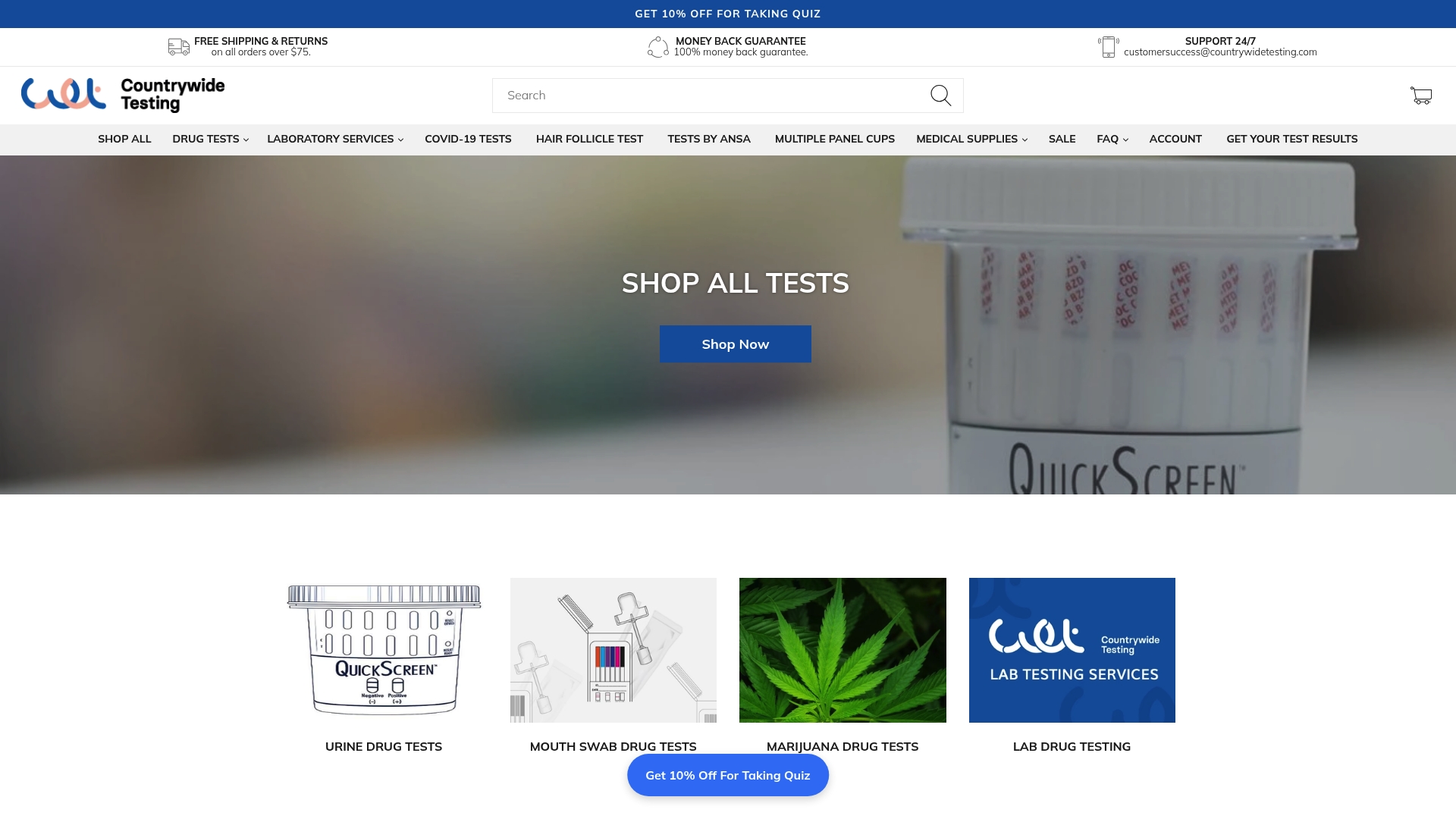
Countrywidetesting provides lab screening and urine test services processed through laboratories certified under SAMHSA, ISO, CLIA, and CAP standards. Those certifications matter in court. Results from non-certified labs can be challenged and discarded. Countrywidetesting’s nationwide reach means individuals and professionals across the country can access compliant, defensible testing without delays. Whether you need a standard urine panel or a mail-in confirmation test for a specific substance, Countrywidetesting offers options built for legal contexts. Visit Countrywidetesting to find the right testing solution for your situation.
FAQ
What is court-ordered substance screening?
Court-ordered substance screening is a legally mandated drug or alcohol test required as a condition of probation, bond, or supervised release. Courts use it to monitor compliance and guide rehabilitation decisions.
Can a court drug test you without warning?
Yes. Courts reduce privacy expectations for individuals on probation or supervised release, allowing random testing without notice or individualized suspicion under the terms of the supervision agreement.
What happens if you refuse a court-ordered drug test?
Refusal is treated as a positive result in most jurisdictions and triggers the same sanctions as a confirmed failed test, including potential revocation of probation or bond.
Which drug test type is most common in court cases?
Urine testing is the most widely used method due to its cost and broad detection window. Oral fluid tests are increasingly used for their noninvasive collection and ability to detect recent substance use within 24–48 hours.
How does court-ordered screening support rehabilitation?
A positive screening result triggers a clinical evaluation that matches the individual to an appropriate level of care, from educational programs to inpatient treatment. That process diverts individuals from incarceration toward structured recovery.