
Why Employer Drug Test Policies Matter for Safety
TL;DR:
- Employer drug test policies are formal frameworks that regulate how and when companies screen for substance use to enhance safety and legal compliance. Implementing clear, preventative testing programs reduces workplace accidents, costs, and legal risks by focusing on early detection and support rather than punishment. HR teams must tailor policies to local laws, choose appropriate testing methods, and integrate them into broader safety strategies to ensure effectiveness and enforceability.
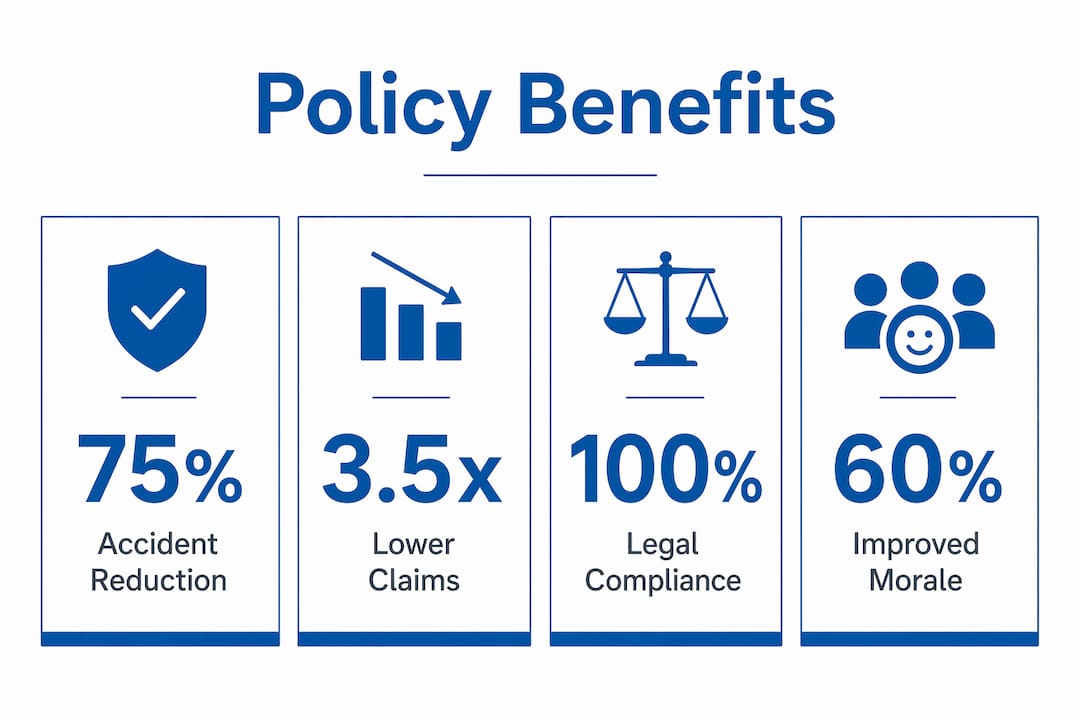
Employer drug test policies are defined as formal, written frameworks that govern how, when, and why a company screens employees for substance use. These policies directly protect workplace safety, control costs, and satisfy legal requirements that vary by industry and state. Employees with untreated substance use disorders incur 3.5 times higher workers’ compensation costs and experience 2.5 times more absenteeism than their peers. That financial exposure alone explains why understanding why employer drug test policies matter is a priority for every HR team. Nearly 50% of U.S. employers conduct some form of drug testing, driven by regulatory mandates from agencies like SAMHSA, DOT, and the National Safety Council.
Why employer drug test policies matter for workplace safety
Drug use at work is not a fringe concern. Substance use is directly linked to higher rates of workplace accidents, near misses, and performance failures. The connection is not theoretical. Employers who implement structured testing programs see measurable reductions in incident rates and a stronger overall safety culture.
The financial case is equally clear:
- Workers’ compensation costs rise sharply when substance use goes unaddressed. Employees with untreated disorders cost 3.5 times more in claims.
- Absenteeism runs 2.5 times higher among employees with substance use disorders, draining productivity and burdening coworkers.
- Productivity losses compound over time, affecting project timelines, customer service quality, and team morale.
- Liability exposure increases when employers cannot demonstrate a documented, consistently enforced testing program.
These numbers represent real budget lines, not abstract risk. A single serious workplace accident involving an impaired employee can trigger OSHA investigations, civil litigation, and reputational damage that far exceeds the cost of a prevention program.
Pro Tip: Track your workers’ compensation claims by department and cross-reference them with your testing data. Patterns often reveal where policy gaps exist before an incident forces the issue.
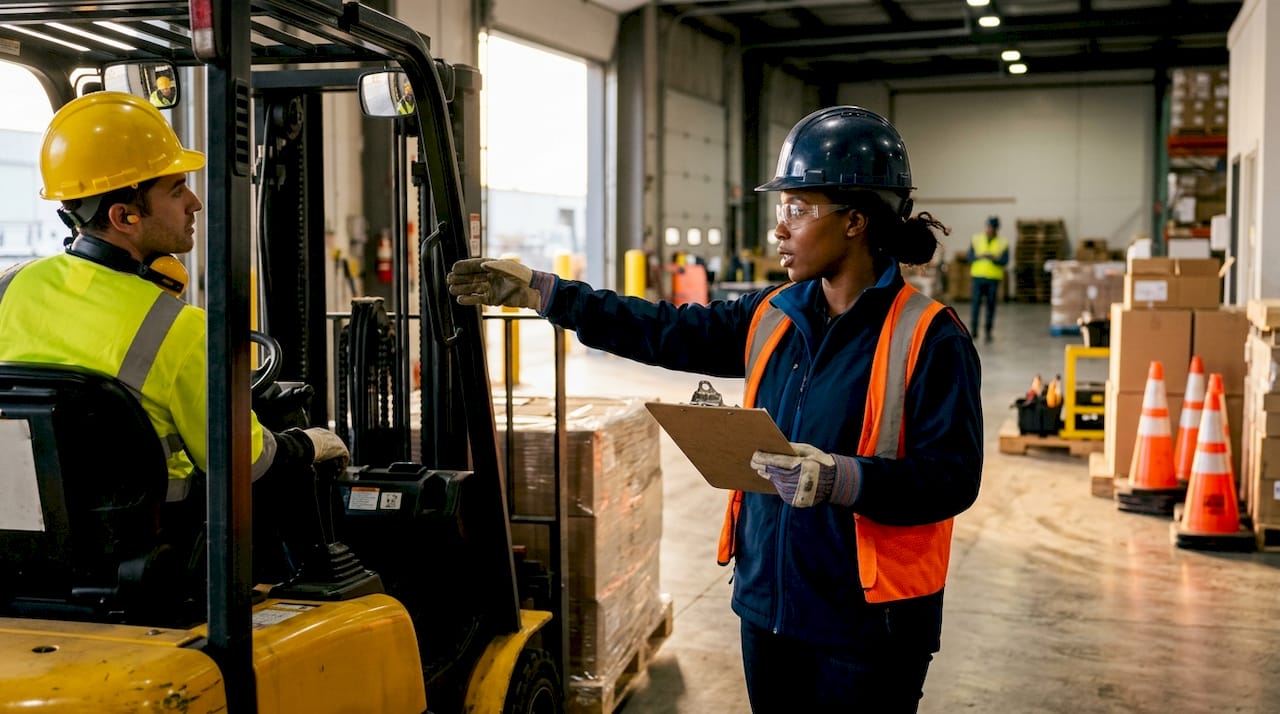
Risk management professionals recognize drug testing as a core safety tool, not an optional HR add-on. Integrating testing into your broader safety management system, alongside incident reporting and hazard assessments, creates a layered defense against impairment-related accidents.
What legal and regulatory factors make drug test policies essential in 2026?
The legal framework around workplace drug testing is more complex than most HR professionals expect. Federal requirements, state laws, and industry-specific mandates all pull in different directions, and a policy that works in one state may expose you to litigation in another.
Federal rules are the clearest starting point. DOT regulations mandate drug and alcohol testing for safety-sensitive positions in transportation, aviation, and pipeline industries. Federal contractors must comply with the Drug-Free Workplace Act, which requires written policies and employee education programs. SAMHSA guidance stresses that clear, written policies specifying “who, what, when, and where” are essential to reduce legal liability and maintain consistent enforcement.
State law is where complexity multiplies. State laws around marijuana testing and pre-employment screens vary so much that national uniform policies are often unenforceable. Some states prohibit adverse employment actions based solely on off-duty marijuana use. Others require reasonable suspicion before any testing. A policy written for Texas may violate California or New York law on its face.
Key legal requirements HR teams must address:
- Written policy documentation covering all testing circumstances, consequences, and employee rights
- DOT compliance for any safety-sensitive roles in regulated industries
- State-specific marijuana provisions reviewed annually as legislation continues to shift
- Accommodation procedures for employees who disclose substance use disorders under ADA guidelines
- Consistent enforcement records to defend against discrimination claims
Pro Tip: Conduct a localized policy audit for every state where you have employees. A single template policy applied nationally is one of the most common and costly compliance mistakes HR teams make.
The drug testing compliance checklist approach, reviewing each regulatory layer systematically, is the most reliable way to catch gaps before a regulator or plaintiff does.
Why shift from punitive to preventive drug testing?
The punitive model of drug testing treats a positive result as an endpoint. The employee is disciplined or terminated, the file is closed, and the underlying risk goes unaddressed. This approach carries serious problems that most employers do not fully account for.
Punitive-only testing models discourage self-reporting and early intervention, reducing trust and effectiveness while increasing litigation risks. When employees fear automatic termination for any positive result, they hide problems rather than seek help. That silence is where accidents happen.
The preventive model works differently. It focuses on impairment risk and early detection rather than punishment after the fact. Here is how the shift looks in practice:
- Define the goal as safety, not discipline. Policy language should frame testing as a tool to protect everyone on the job, not to catch and punish individuals.
- Train supervisors on behavioral observation. Supervisors who can recognize impairment signs reduce reliance on testing alone and catch risks in real time.
- Build in supportive pathways. Employees who self-report or test positive for the first time should have access to Employee Assistance Programs before termination is considered.
- Communicate the policy clearly and repeatedly. Employees who understand the policy and its purpose are more likely to comply and less likely to challenge enforcement decisions.
- Review outcomes regularly. Track whether incidents, claims, and absenteeism rates change after policy updates. Data drives better decisions.
Preventive drug testing programs improve safety culture and reduce incidents by focusing on impairment risk rather than solely punitive responses. The most effective programs in 2026 move beyond punishment toward prevention, emphasizing safety culture and early risk detection.
Clear communication, supervisor training, and supportive pathways are the hallmarks of effective drug test policies integrated into broader safety management. These are not soft HR concepts. They are measurable practices that reduce incident rates and litigation exposure.
Pro Tip: Pair your drug testing policy with a formal Employee Assistance Program referral process. Employees who receive treatment return to full productivity far more often than those who are simply terminated.
How can employers implement effective drug test policies?
Building a policy that actually works requires more than copying a template. The policy must fit your workforce, your industry, your legal obligations, and your safety culture. Employers who skip this customization step end up with policies that are either unenforceable or counterproductive.
Defining scope and testing circumstances
Start by answering four questions: Who gets tested? When are they tested? What substances are included? Where does testing occur? SAMHSA’s written policy framework treats these four elements as the minimum foundation for any defensible program. Pre-employment, random, post-accident, and reasonable-suspicion testing each serve different purposes and carry different legal requirements.
Aligning testing methods with job risk
Not every role carries the same impairment risk. A forklift operator and a remote data analyst present very different safety profiles. Urine drug tests detect past use rather than real-time impairment, which creates fairness concerns if applied without context. Oral fluid tests offer a shorter detection window that more closely aligns with recent use. Matching the test type to the job risk and the legal context produces fairer and more defensible outcomes.
Consistency, documentation, and communication
Inconsistent enforcement is the fastest path to a discrimination claim. Every testing decision must be documented, and every employee must receive the same policy information at the same point in the employment process. The drug testing HR policy framework that works best treats documentation as a non-negotiable step, not an afterthought.
Navigating multistate and marijuana complexity
Employers with workers in multiple states need localized addenda to their core policy. State-level marijuana legislation has introduced complex employer responsibilities to balance accommodation, discipline, and legal compliance. Review each state’s current law at least annually. What was legal to enforce in 2024 may expose you to liability in 2026.
Pro Tip: Use your post-accident testing data as a feedback loop. If certain job categories or shifts show repeated incidents, your policy may need more targeted random testing or supervisor training in those areas.
The complete employer drug screening workflow covers each of these steps in sequence, from policy drafting through result management and employee communication.
Key Takeaways
Employer drug test policies reduce workplace accidents, control costs, and satisfy legal requirements when they are written clearly, enforced consistently, and updated for state-specific law.
| Point | Details |
|---|---|
| Financial impact is measurable | Substance use disorders drive 3.5x higher workers’ comp costs and 2.5x more absenteeism. |
| Written policies are legally required | SAMHSA mandates clear documentation of who, what, when, and where for any defensible program. |
| State law varies significantly | Marijuana and pre-employment testing rules differ by state, requiring localized policy audits. |
| Preventive models outperform punitive ones | Punitive-only policies increase litigation risk and discourage self-reporting before accidents occur. |
| Test type must match job risk | Urine tests detect past use, not impairment. Align the testing method to the role and legal context. |
The policy question most employers are asking wrong
Most HR teams I speak with frame drug testing as a compliance checkbox. They ask, “Are we covered?” when the better question is, “Are we actually safer?” Those two questions lead to very different policies.
A policy designed purely to satisfy a federal contractor mandate will look very different from one designed to genuinely reduce impairment-related accidents. The first produces paperwork. The second produces outcomes. The distinction matters because the legal environment in 2026 rewards employers who can demonstrate a good-faith safety effort, not just a signed acknowledgment form in every personnel file.
The marijuana question is where I see the most confusion. Employers want a simple rule, and there is not one. A positive urine test for THC tells you almost nothing about whether someone was impaired at work last Tuesday. Acting on that result without context, supervisor observations, and a clear policy framework is how wrongful termination claims get filed and won. The answer is not to abandon testing. The answer is to build a policy sophisticated enough to use test results as one data point among several.
The employers who get this right treat their drug testing program the way they treat their safety training program: as a living system that gets reviewed, updated, and measured. They track whether incident rates change. They ask whether employees understand the policy. They train supervisors to observe behavior, not just wait for a test result. That approach is harder to build, but it is the one that actually reduces risk.
— Alan
Countrywidetesting supports compliant employer drug programs
Employers who need reliable, lab-confirmed results to back their policies need a testing partner that meets the same standards their policies require.
Countrywidetesting provides laboratory drug testing services processed through SAMHSA-certified, CLIA-compliant, and CAP-accredited labs. Results are accurate, confidential, and defensible in any compliance or legal review. The platform covers urine and oral fluid testing for employers of any size, with options for pre-employment, random, post-accident, and reasonable-suspicion programs. Whether you manage a single-site operation or a multistate workforce, Countrywidetesting delivers the testing infrastructure your policy needs to function as written. Visit Countrywidetesting to review employer testing options and get your program aligned with 2026 standards.
FAQ
Why do employer drug test policies matter legally?
Clear, written drug test policies reduce legal liability by establishing consistent enforcement standards. SAMHSA identifies documented policies as the foundation of any legally defensible drug-free workplace program.
Should companies drug test employees in safety-sensitive roles?
Yes. DOT regulations require drug and alcohol testing for safety-sensitive positions in transportation, aviation, and pipeline industries. Employers in other high-risk sectors face significant liability without a formal testing program.
What is the difference between punitive and preventive drug testing?
Punitive models discipline or terminate employees after a positive result. Preventive models focus on impairment risk, early detection, and supportive intervention, which reduces accidents and litigation more effectively.
How does marijuana legalization affect employer drug policies?
State marijuana laws vary widely, and many prohibit adverse employment actions based on off-duty use alone. Employers must audit their policies by state and update them as legislation changes, at minimum annually.
What testing method best measures workplace impairment?
No single test measures real-time impairment directly. Urine tests detect past use over days or weeks, while oral fluid tests reflect more recent exposure. Supervisor behavioral observation remains a critical complement to any lab-based result.