
Why Choose Rapid Drug Tests for Your Workplace
TL;DR:
- Rapid drug tests provide immediate results in 5 to 30 minutes, offering a fast and cost-effective screening option. They are reliable when FDA-approved and paired with confirmatory lab testing for positives, ensuring legal defensibility. These tests are most effective when integrated into a broader safety program and used with appropriate sample collection protocols.
Rapid drug tests are defined as immunoassay-based screening tools that deliver results in as little as 5 to 30 minutes, making them the fastest practical option for workplace drug screening. For employers and HR professionals, that speed is not a convenience. It is a competitive advantage in hiring, incident response, and daily safety management. The industry standard term for these devices is “point-of-collection testing” or POCT, and they operate without laboratory equipment or specialized technicians. This guide covers how rapid tests work, what they detect, how accurate they are, and what you need to know before building them into your screening program.
Why choose rapid drug tests over traditional lab testing?
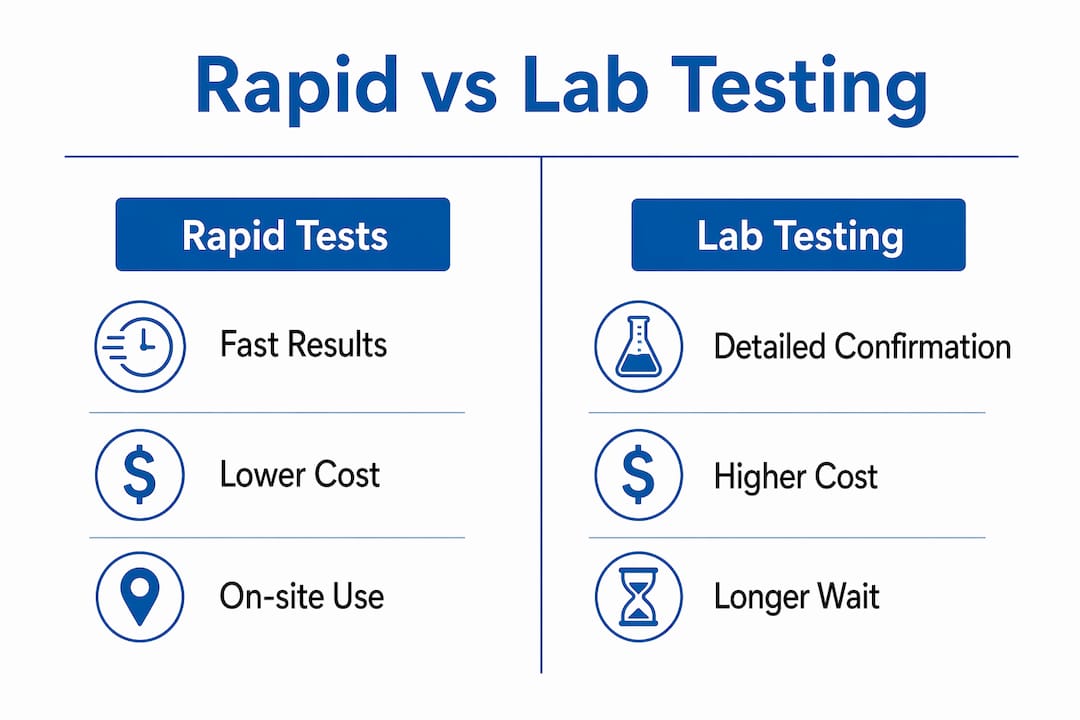
Rapid drug tests give employers an immediate answer where traditional lab testing gives them a wait. A lab-based urine screen typically takes 24–72 hours to return results. A rapid test delivers a negative result on-site in minutes, letting you clear a candidate and move forward the same day.
The cost difference is equally significant. A single rapid test strip costs between $0.50 and $2.00, while confirmatory lab tests run $100 to $300 per specimen. That gap matters most when you are screening dozens or hundreds of applicants per month. Rapid tests act as a first filter, and only the positives move to the lab for confirmation.
Speed and cost savings also support incident response. When a workplace accident occurs, federal regulations and internal safety policies often require immediate post-incident testing. A rapid test produces a result before the end of a shift. A mailed lab specimen cannot.
How do rapid drug tests work and what do they detect?
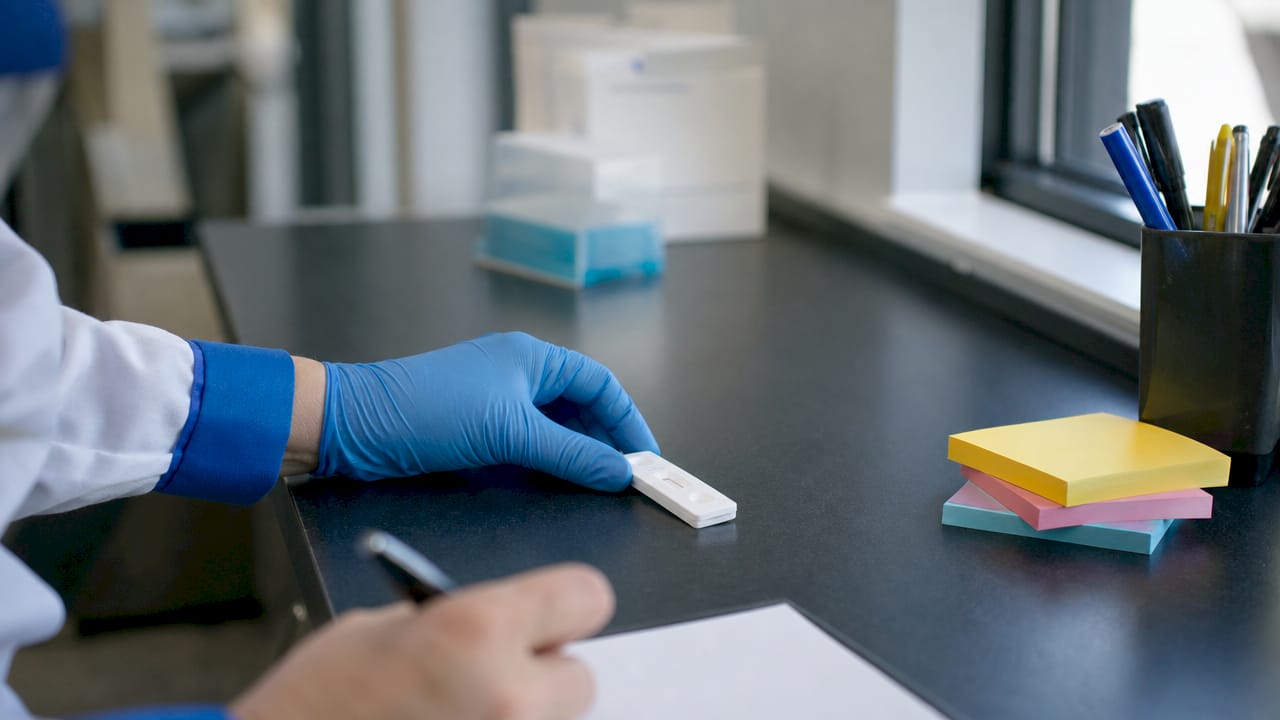
Rapid drug tests use immunoassay technology. The test strip contains antibodies that bind to specific drug molecules or their metabolites. When a sample contains a substance above the cutoff concentration, the antibody reaction blocks a line from appearing on the strip. A missing line signals a presumptive positive.
The two most common sample types are urine and oral fluid. Urine collection is the standard for most workplace programs because it offers longer detection windows and is well-established under SAMHSA guidelines. Oral fluid collection is less invasive and harder to adulterate, but requires direct observation to prevent dilution.
Immunoassay-based rapid strips detect a broad range of substances, including:
- Opioids (including heroin and prescription painkillers)
- Fentanyl
- Cocaine
- Amphetamines and methamphetamines
- Marijuana (THC)
- Benzodiazepines
- Barbiturates
Detection windows vary by substance and sample type. THC, for example, can appear in urine for up to 30 days in heavy users, while cocaine metabolites typically clear within 2–4 days. Oral fluid tests detect more recent use but have shorter windows, generally 24–48 hours for most substances.
Rapid tests are screening tools, not definitive results. A negative result clears the individual. A presumptive positive requires confirmation by GC-MS or LC-MS before any employment action is taken.
What are the key advantages of choosing rapid drug tests?
The benefits of rapid drug tests go beyond speed. Here is what actually drives adoption among HR teams and safety managers:
- Immediate results. Results arrive in 5 to 30 minutes, which means hiring decisions and safety responses do not stall waiting for a lab report.
- Significant cost savings. At $0.50 to $2.00 per strip, rapid tests cost a fraction of lab confirmation. Employers who use rapid tests as gatekeepers prevent 70–80% of specimens from ever reaching the lab, saving substantial sums daily.
- No specialized equipment required. Any trained HR staff member or safety officer can administer a rapid urine or oral fluid test. There is no centrifuge, no refrigeration chain, and no laboratory license needed for CLIA-waived devices.
- Supports a two-tier testing model. Rapid tests handle the bulk screening. Confirmatory lab testing handles the positives. This structure keeps costs down without sacrificing legal defensibility.
- Faster hiring cycles. Pre-employment screening no longer creates a multi-day bottleneck. A negative result clears a candidate on the spot.
- Improved workplace safety. Timely identification of substance use reduces the risk of impairment-related accidents, particularly in safety-sensitive industries like construction, transportation, and manufacturing.
Pro Tip: Run rapid tests on-site during pre-shift checks in high-risk environments. Clearing workers before they access heavy equipment takes minutes and can prevent serious incidents.
How reliable and accurate are rapid drug tests?
Rapid drug tests are reliable screening tools when you buy the right ones. FDA-approved and CLIA-waived devices meet federal standards for accuracy and are the only products appropriate for workplace use. Devices without these designations carry no regulatory guarantee of performance.
The limitation of immunoassay tests is their qualitative nature. They return a positive or negative, not a concentration. Immunoassays carry a higher rate of false positives and false negatives than confirmatory methods. Cross-reactive substances, such as certain over-the-counter medications, can trigger a false positive for amphetamines or opioids.
That is exactly why GC-MS remains the reference standard for confirming positive results. Gas chromatography-mass spectrometry and liquid chromatography-mass spectrometry identify specific compounds at precise concentrations. No employment action should rest on a rapid test result alone.
| Feature | Rapid test | Lab-based confirmation |
|---|---|---|
| Turnaround time | 5–30 minutes | 24–72 hours |
| Cost per test | $0.50–$2.00 | $100–$300 |
| Result type | Qualitative (positive/negative) | Quantitative (specific compound and concentration) |
| False positive risk | Moderate | Very low |
| Legal defensibility | Screening only | Legally defensible for employment action |
| Best use case | Initial bulk screening | Confirming presumptive positives |
Pro Tip: Always pair your rapid testing program with a written policy that specifies confirmatory testing for all presumptive positives. This protects you legally and protects employees from wrongful termination based on a false positive.
What should employers keep in mind when implementing rapid testing?
Effective rapid drug testing programs require more than buying strips and handing them to a supervisor. These are the practical factors that determine whether your program holds up legally and operationally.
- Panel selection matters. A 5-panel test covers the SAMHSA standard substances. A 12-panel test adds fentanyl, benzodiazepines, and synthetic opioids. Match your panel to your workforce risk profile. A transportation company has different needs than a retail employer. Review your workplace drug testing compliance requirements before selecting a panel.
- Only use FDA-approved, CLIA-waived products. This is not optional. Using unapproved strips exposes your organization to legal liability and produces results that no medical review officer will certify. Check the CLIA impact on employer testing before purchasing devices.
- Collection environment controls accuracy. Urine collection requires a private space with controlled access to water sources to prevent adulteration. Oral fluid collection requires direct observation of the swab placement. Skipping these controls undermines the test.
- Federal and state regulations vary. Some states restrict random testing or require specific notice periods. Federal programs under DOT have their own panel and procedure requirements. Review your 2026 employer compliance obligations before launching any program.
- Train your collectors. Improper collection is the most common source of invalid results. Staff who administer tests need documented training on chain-of-custody procedures, temperature checks for urine specimens, and proper swab handling.
- Document everything. Chain-of-custody forms, test results, and confirmation records must be retained. If a termination is ever challenged, your documentation is your defense.
Cutting costs by buying unverified strips from unregulated suppliers is the single most common mistake employers make. The savings evaporate when a contested result leads to litigation or when a false negative misses an impaired employee.
How do rapid tests compare to other fast drug testing options?
Not all fast drug testing options work the same way. The right method depends on what you are trying to detect and when.
| Method | Turnaround | Detection window | Best use case |
|---|---|---|---|
| Rapid urine test | 5–30 minutes | 1–30 days (varies by substance) | Pre-employment, random, post-incident |
| Rapid oral fluid test | Under 20 minutes | 2–48 hours | Post-accident, reasonable suspicion |
| Lab urine confirmation | 24–72 hours | 1–30 days | Confirming presumptive positives |
| Lab oral fluid confirmation | 24–72 hours | 2–48 hours | Legal proceedings, DOT compliance |
Rapid oral fluid tests detect very recent use, which makes them the better choice for post-accident and reasonable suspicion scenarios. If an employee appears impaired right now, a saliva test is more likely to catch it than a urine test. Urine tests, by contrast, catch use that occurred days or weeks ago, which is more relevant for pre-employment screening.
The cost and operational differences between these methods are real. Oral fluid tests require no restroom, no privacy setup, and no temperature strip. Urine tests require a controlled collection environment but offer a much longer detection window. Neither method replaces the other. A well-designed program uses both strategically.
Key Takeaways
Rapid drug tests are the most cost-effective first-line screening tool available to employers, but their value depends entirely on using FDA-approved devices and pairing them with confirmatory lab testing for any presumptive positive.
| Point | Details |
|---|---|
| Speed is the primary advantage | Rapid tests return results in 5–30 minutes, enabling same-day hiring and immediate post-incident response. |
| Cost savings are substantial | At $0.50–$2.00 per strip versus $100–$300 for lab confirmation, rapid tests cut screening costs significantly. |
| Accuracy requires the right product | Only FDA-approved, CLIA-waived devices meet federal reliability standards for workplace use. |
| Positives always need confirmation | GC-MS or LC-MS confirmation is legally required before any employment action based on a positive result. |
| Method selection affects what you catch | Oral fluid tests detect recent use; urine tests detect use over a longer window. Match the method to the scenario. |
Rapid testing works best when it is part of a system
The employers I have seen get the most out of rapid drug testing are not the ones who simply buy the cheapest strips. They are the ones who treat rapid testing as one layer of a broader safety program. The test is fast. The decision behind it still requires structure.
The biggest mistake I see is treating a negative rapid result as a final answer and a positive result as grounds for immediate termination. Neither is correct. A negative clears someone for the moment. A positive opens an investigation. That distinction matters legally and ethically.
I also think the oral fluid versus urine debate gets oversimplified. Most HR teams default to urine because it is familiar. But if your concern is catching someone who showed up impaired this morning, a urine test from three days ago tells you nothing useful. Oral fluid testing deserves more attention in post-incident and reasonable suspicion contexts than it currently gets.
The cost argument for rapid tests is real, but it only holds if you buy quality products. A $0.75 strip from an unverified supplier that produces a false positive costs you far more in confirmation testing, legal review, and potential litigation than a $2.00 FDA-approved strip ever would. Buy certified. Document everything. Confirm every positive.
— Alan
Rapid and lab drug testing solutions at Countrywidetesting
Countrywidetesting provides both rapid screening products and certified lab confirmation services, so your program does not have to choose between speed and accuracy.
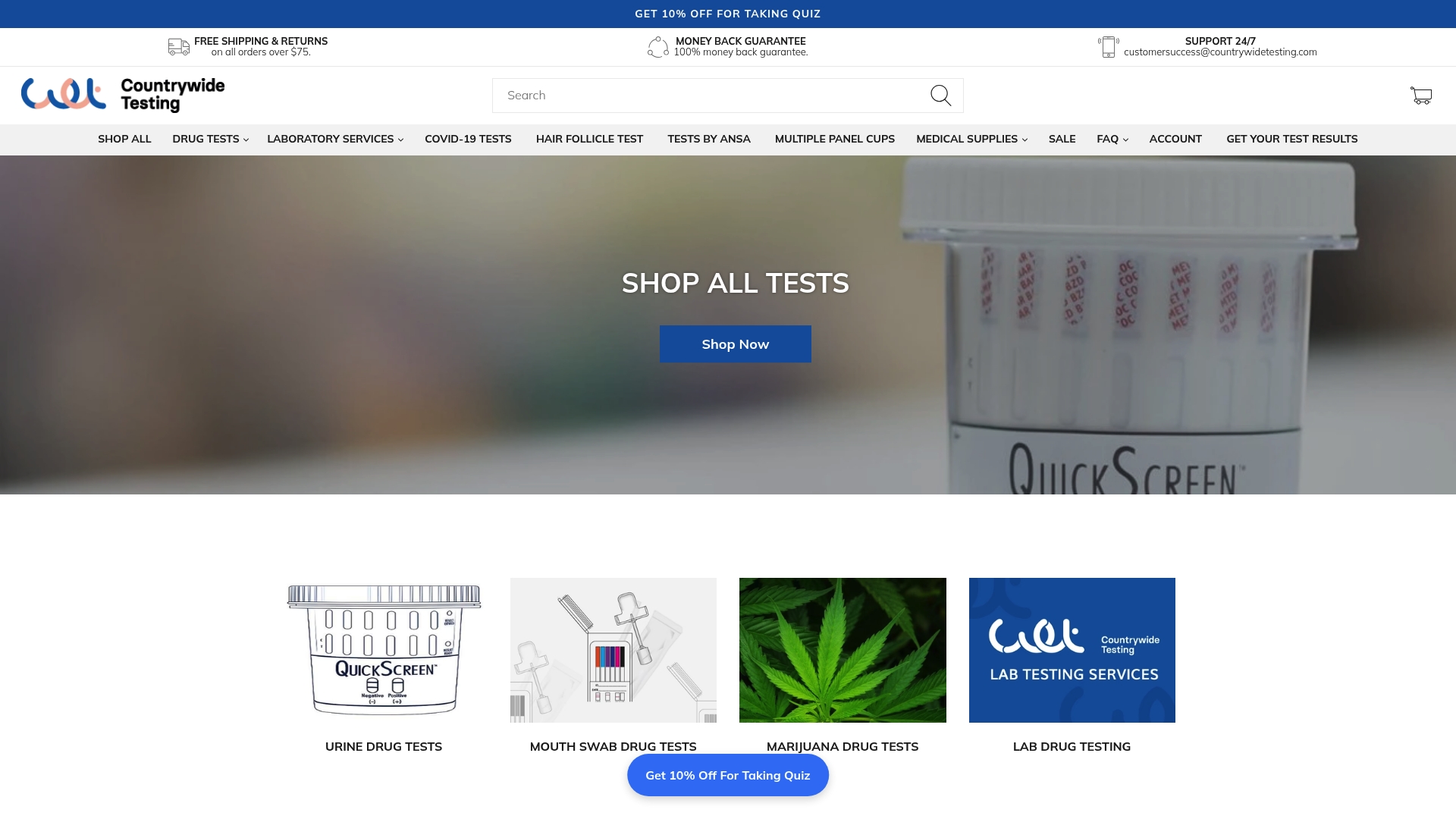
Whether you need a 12-panel rapid urine test for pre-employment screening or a lab confirmation service backed by SAMHSA, ISO, CLIA, and CAP-certified laboratories, Countrywidetesting has the products and the compliance infrastructure to support your program. Every product on the platform meets federal regulatory standards, which means your results hold up when they need to. HR teams and safety managers can order online, scale up for bulk screening, and access educational resources to keep their programs current with 2026 compliance requirements.
FAQ
How fast do rapid drug tests return results?
Rapid drug tests deliver results in 5 to 30 minutes, depending on the device and sample type. Oral fluid tests typically return results in under 20 minutes.
Are rapid drug test results legally defensible?
Rapid test results are screening results only. Any presumptive positive must be confirmed by GC-MS or LC-MS before an employer can take adverse employment action.
What substances do rapid drug tests detect?
Standard rapid tests detect opioids, cocaine, amphetamines, methamphetamines, marijuana, benzodiazepines, and fentanyl. Multi-panel tests can screen for 12 or more substances simultaneously.
How do I know if a rapid test is reliable enough for workplace use?
Only purchase devices that carry FDA approval and CLIA-waived status. These designations confirm the product meets federal accuracy and reliability standards for point-of-collection testing.
What is the difference between a rapid urine test and a rapid oral fluid test?
Urine tests detect drug use over a longer window, up to 30 days for some substances. Oral fluid tests detect more recent use within approximately 2–48 hours, making them better suited for post-accident and reasonable suspicion testing.