
Why Choose Accredited Drug Testing Labs for HR
Every HR manager knows the stress of choosing a drug testing provider who delivers results you can truly rely on. With so many testing options, the challenge lies in finding laboratories that operate under strict scientific standards and offer legally defensible outcomes. By working with labs accredited to international benchmarks like ISO/IEC 17025, you gain access to validated, consistent, and trustworthy results that help protect your company’s interests and keep your workplace safe.
Table of Contents
- Accredited Drug Testing Labs Defined
- Types of Accreditation and Standards
- Reliability and Accuracy in Lab Results
- Legal Compliance for Employers
- Risks of Unaccredited Testing Providers
- Comparing Lab Testing vs. Rapid Onsite Options
Key Takeaways
| Point | Details |
|---|---|
| Importance of Accreditation | Accredited drug testing labs ensure reliability and compliance with national and international standards. They provide HR professionals with scientifically validated results. |
| Types of Accreditation | Key standards include ISO/IEC 17025 for testing labs, ISO 15189 for medical labs, CLIA for U.S. medical labs, and CAP for pathology labs. Each focuses on specific quality assurance areas. |
| Legal Compliance Considerations | Employers must develop clear drug testing policies that are fair, transparent, and compliant with federal and state laws to protect employee rights and ensure workplace safety. |
| Risks of Unaccredited Providers | Using unaccredited testing providers may lead to inaccurate results, legal risks, and potential violations of employee rights, making accreditation crucial for ethical testing practices. |
Accredited Drug Testing Labs Defined
Drug testing laboratories play a critical role in ensuring workplace safety and regulatory compliance for HR professionals. Laboratory accreditation standards represent a comprehensive process that validates a testing facility’s technical competence and analytical reliability.
At its core, an accredited drug testing lab meets rigorous national and international quality standards through a meticulous assessment process. These laboratories must demonstrate consistent performance by:
- Maintaining precise measuring equipment
- Participating in ongoing proficiency testing
- Adhering to standardized testing protocols
- Implementing strict quality control measures
- Ensuring accurate and reproducible results
Accreditation involves formal recognition by authorized bodies that a laboratory meets specific technical competence requirements. National accreditation programs like ANAB provide comprehensive evaluation against established standards such as ISO/IEC 17025 and ISO 15189.
These standards ensure laboratories can consistently produce reliable test results across multiple domains, including medical testing, forensic analysis, and workplace drug screening. The accreditation process involves comprehensive reviews of:
- Technical competence
- Quality management systems
- Staff qualifications
- Equipment calibration
- Documentation practices
Verification and Confidence are the fundamental goals of laboratory accreditation. By meeting these stringent requirements, drug testing labs provide HR professionals with scientifically validated results they can trust.
Pro tip: When selecting a drug testing laboratory, always verify their current accreditation status and specific certification standards to ensure the highest level of testing accuracy and reliability.
Types of Accreditation and Standards
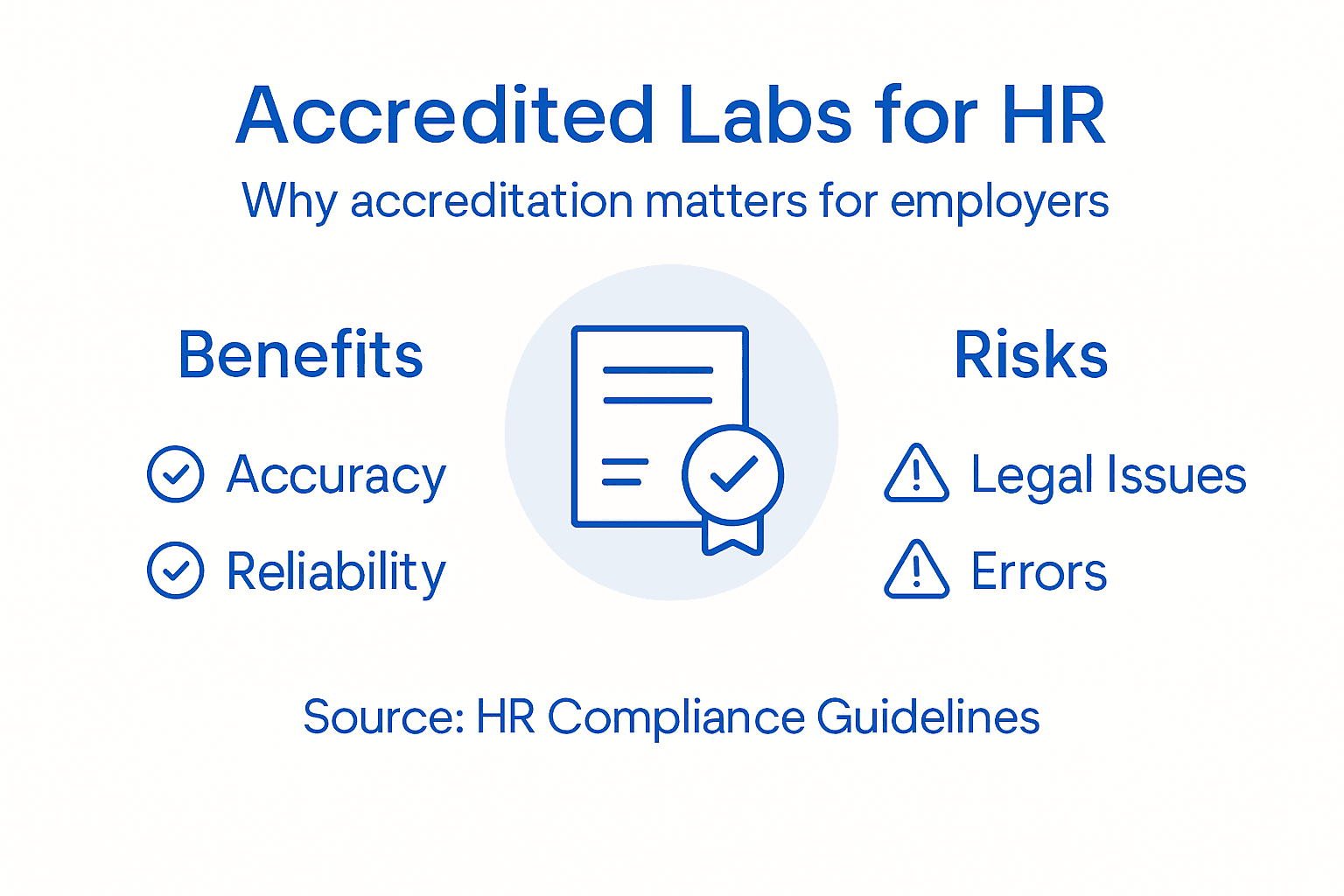
In the realm of drug testing, multiple rigorous accreditation standards ensure laboratory reliability and precision for HR professionals. International accreditation guidelines provide comprehensive frameworks that validate technical competence across different testing domains.

The primary accreditation standards for drug testing laboratories include:
Here’s a summary of major drug testing lab accreditations and their key areas of focus:
| Standard | Applies To | Primary Focus | Typical Users |
|---|---|---|---|
| ISO/IEC 17025 | Testing/calibration labs | Measurement reliability | Forensic & industrial labs |
| ISO 15189 | Medical labs | Clinical competence | Hospitals, clinics |
| CLIA | All U.S. medical labs | Federal compliance | Physicians, hospitals |
| CAP | Pathology labs | Inspection & quality | Clinical pathologists |
- ISO/IEC 17025: Establishes general competence requirements for testing and calibration laboratories
- ISO 15189: Focuses specifically on medical laboratory quality and competence
- CLIA (Clinical Laboratory Improvement Amendments): Ensures laboratory testing quality in medical settings
- CAP (College of American Pathologists): Provides comprehensive laboratory accreditation and inspection standards
Laboratory Accreditation involves a comprehensive evaluation process that examines multiple critical aspects of scientific testing. Workplace drug testing guidelines highlight the importance of maintaining strict protocols across several key areas:
- Specimen collection procedures
- Chain of custody documentation
- Analysis methodology
- Quality assurance protocols
- Proficiency testing requirements
These standards serve multiple crucial functions for HR departments, including legal defensibility, consistent result accuracy, and compliance with regulatory requirements. Each accreditation type provides specific benefits tailored to different testing environments and organizational needs.
Verification Parameters are the cornerstone of these accreditation standards, ensuring that drug testing laboratories maintain the highest levels of scientific integrity and professional performance.
Pro tip: Always request documentation of a laboratory’s current accreditation status and specific certifications before initiating any drug testing program.
Reliability and Accuracy in Lab Results
Ensuring precision in drug testing is paramount for HR professionals seeking dependable screening results. Rigorous testing protocols guarantee that laboratory findings meet the highest standards of scientific integrity and legal defensibility.
Key factors contributing to lab result reliability include:
- Validated testing methodologies
- Calibrated scientific equipment
- Skilled and trained personnel
- Consistent quality control processes
- Comprehensive proficiency testing
- Adherence to national regulatory standards
Technical Competence forms the foundation of accurate drug testing. Medical lab compliance demands meticulous attention to multiple critical parameters that minimize potential errors and enhance result trustworthiness.
Laboratories committed to exceptional accuracy implement multiple verification strategies:
- Regular equipment calibration
- Mandatory staff training programs
- Continuous performance monitoring
- Standardized sample collection protocols
- Comprehensive documentation practices
These systematic approaches ensure that every drug test result provides HR departments with reliable, scientifically validated information they can confidently use in workplace decision-making.
Precision in drug testing is not just about technology, but about creating a systematic approach that eliminates potential sources of error.
Pro tip: Request detailed documentation about a laboratory’s quality control processes and recent proficiency testing results to verify their commitment to accuracy.
Legal Compliance for Employers
Navigating the complex landscape of workplace drug testing requires HR professionals to understand intricate legal requirements. Employer drug testing obligations demand a comprehensive approach that balances organizational safety with employee rights and legal protections.
Key legal compliance considerations include:
- Developing clear, written drug testing policies
- Ensuring non-discriminatory testing procedures
- Maintaining strict confidentiality of test results
- Understanding federal and state regulatory variations
- Accommodating potential disability-related substance use
- Implementing consistent testing protocols
Workplace Safety represents a critical legal imperative for employers. Legal boundaries in drug testing require organizations to craft policies that are transparent, fair, and aligned with evolving legal standards.
Employers must navigate multiple legal dimensions when implementing drug testing programs:
- Respect employee privacy rights
- Follow state-specific marijuana regulations
- Provide clear communication about testing procedures
- Ensure consistent application of testing policies
- Maintain comprehensive documentation
Legal compliance in drug testing is not about creating obstacles, but about protecting both organizational interests and employee rights.
Pro tip: Consult with legal counsel to review your drug testing policies annually and ensure they remain current with changing state and federal regulations.
Risks of Unaccredited Testing Providers
Choosing unaccredited drug testing providers exposes organizations to significant legal and operational risks. Ethical drug testing practices emphasize the critical importance of using validated and certified testing methods to prevent potential harm.
The primary risks associated with unaccredited testing providers include:
- Inaccurate test result interpretations
- Potential for false positive/negative outcomes
- Compromised legal defensibility
- Increased vulnerability to workplace litigation
- Potential violation of employee rights
- Unreliable scientific methodologies
Compliance Vulnerabilities represent a major concern for HR professionals utilizing unverified testing sources. Unaccredited providers may lack:
- Rigorous quality control protocols
- Standardized testing procedures
- Comprehensive staff training
- Advanced analytical equipment
- Proper documentation practices
Unaccredited testing providers can transform a routine screening into a potential legal and ethical minefield for organizations.
Pro tip: Always request and verify a testing provider’s current accreditation credentials before initiating any workplace drug screening program.
Comparing Lab Testing vs. Rapid Onsite Options
Employers face critical decisions when selecting drug testing methods that balance accuracy, speed, and legal compliance. Instant drug testing comparison reveals significant differences between rapid onsite screening and comprehensive laboratory analysis.
Key distinctions between lab and rapid testing include:
Compare laboratory testing and rapid onsite testing methods at a glance:
| Feature | Laboratory Testing | Rapid Onsite Testing |
|---|---|---|
| Result Precision | 99%–99.9% accuracy | 85%–92% reliability |
| Legal Admissibility | Valid in court | Questionable in court |
| Result Turnaround | 24–72 hours | Within minutes |
| Detection Scope | Broad substance range | Limited, fewer substances |
-
Accuracy Levels
- Lab testing: 99-99.9% precision
- Rapid testing: 85-92% reliability
-
Detection Window
- Lab: Extensive substance detection
- Rapid: Limited substance identification
-
Confirmation Process
- Lab: Includes secondary verification
- Rapid: Initial screening only
-
Legal Defensibility
- Lab: Highly admissible in legal proceedings
- Rapid: Limited legal standing
Testing Methodologies vary significantly between these two approaches. Rapid onsite options provide immediate results but sacrifice comprehensive scientific validation, while laboratory testing offers meticulous, court-defensible analysis.
Employers must consider multiple factors when choosing between testing methods:
- Workplace safety requirements
- Budgetary constraints
- Legal compliance needs
- Speed of result turnaround
- Specific industry regulations
Choosing between rapid and laboratory testing is not just about speed, but about ensuring workplace safety and legal protection.
Pro tip: Implement a hybrid testing strategy that uses rapid screening for initial detection and confirmatory laboratory testing for definitive results.
Ensure Accurate and Compliant Drug Testing with CountryWideTesting.com
Navigating the challenges of selecting accredited drug testing labs is critical to protect your organization from legal risks and ensure reliable results. The article highlights the importance of choosing laboratories that meet rigorous standards like ISO 17025, CLIA, and CAP to guarantee precision, legal defensibility, and workplace safety. HR professionals face key concerns such as maintaining strict quality control, verifying accreditation, and adhering to national regulations—all essential to avoid false positives and costly litigation.
At CountryWideTesting.com, we understand these challenges and offer comprehensive drug and alcohol testing solutions backed by licensed laboratories that comply with SAMHSA, ISO, CLIA, and CAP standards. Whether you need urine or mouth swab drug tests, or sophisticated laboratory testing services tailored to your workplace safety requirements, our platform delivers trusted, scientifically validated results with convenient online access. Explore our range of testing products and services to empower your drug testing program with expert compliance support and unwavering accuracy.
Safeguard your workplace today with accredited labs you can trust. Visit CountryWideTesting.com now to choose reliable drug testing options that protect your employees and your organization from costly errors and legal challenges.
Frequently Asked Questions
What is an accredited drug testing lab?
Accredited drug testing labs are facilities that have been formally recognized by authorized bodies for meeting specific technical competence requirements, ensuring reliable and accurate testing results.
Why is accreditation important for drug testing laboratories?
Accreditation ensures that labs adhere to rigorous national and international quality standards, which enhances the reliability of test results and provides confidence to HR professionals in their usage for workplace safety and compliance.
What are the risks of using unaccredited drug testing providers?
Using unaccredited providers can lead to inaccurate test results, potential legal issues, and non-compliance with regulatory standards, which puts both employers and employees at risk.
How do laboratory testing and rapid onsite testing differ?
Laboratory testing offers higher accuracy (99-99.9%) and more comprehensive analysis, while rapid onsite testing provides immediate results but is less reliable (85-92%) and may lack legal defensibility.