
Railroad alcohol screening: safety, compliance & key stats
TL;DR:
- Railroad alcohol testing is mandated by FRA regulations for safety-sensitive employees.
- Compliance involves multiple testing types, proper documentation, and regular program audits.
- Effective programs rely on strong culture, supervisor training, and reliable testing solutions.
The Federal Railroad Administration cited 173 violations in alcohol and drug use inspections in FY2024 alone, down from 325 in FY2023 but still a serious signal that gaps persist. For HR professionals and safety officers in the railroad industry, that number is not a statistic to file away. It represents real exposure: regulatory penalties, potential accidents, and the kind of liability that can define a career. This guide gives you a clear, practical look at how alcohol screening works in railroad operations, what the regulations actually require, and how to build a program that holds up under scrutiny.
Table of Contents
- The regulatory backbone: FRA rules and industry mandates
- How railroad alcohol screening actually works
- Why alcohol screening matters: Human and operational risks
- Building an effective alcohol screening program: Best practices
- A railroad safety expert’s take: What compliance data doesn’t tell you
- Where to find trusted railroad alcohol screening solutions
- Frequently asked questions
Key Takeaways
| Point | Details |
|---|---|
| FRA mandates screening | Federal rules require alcohol testing for key railroad employees to prevent accidents. |
| Multiple screening methods | Railroads use post-accident, random, reasonable suspicion, and pre-employment tests per law. |
| Strict BAC thresholds | Anyone with a BAC of 0.04% or higher is barred from duty; lower results may require removal. |
| Violations still happen | Regular enforcement finds hundreds of drug and alcohol violations annually in the industry. |
| Continuous improvement | Strong protocols, documentation, and buy-in help ensure safer railroads and compliance. |
The regulatory backbone: FRA rules and industry mandates
Alcohol screening in the railroad industry is not optional or discretionary. It is mandated by FRA under 49 CFR Part 219, a federal regulation specifically designed to prevent accidents caused by impaired employees in safety-sensitive roles. If your railroad operation employs covered workers, you are legally required to have a compliant alcohol testing program in place.
Understanding who is covered is the first step. Regulated employees include hours-of-service employees such as train and engine crew members, roadway workers, and certain mechanical staff who perform safety-critical functions. If someone’s job could directly affect the safe movement of trains or the safety of people on or near the tracks, they are almost certainly covered.
Here is a quick breakdown of what the regulation covers:
- Who is regulated: Train and engine crews, dispatchers, signal workers, roadway workers, and mechanical employees in safety-sensitive roles
- What is required: Pre-employment, random, post-accident, reasonable suspicion, return-to-duty, and follow-up testing
- Penalties for non-compliance: Civil penalties, increased federal oversight, and potential liability in accident investigations
- Reporting obligations: Railroads with significant employee hours must submit annual Management Information System (MIS) reports to the FRA
For a deeper look at how these rules apply to your operation, reviewing railroad alcohol testing regulations can help clarify your specific obligations.
Comparison: Covered vs. non-covered railroad employees
| Employee category | Covered under 49 CFR Part 219? |
|---|---|
| Locomotive engineers | Yes |
| Train conductors | Yes |
| Signal maintainers | Yes |
| Roadway workers | Yes |
| Administrative staff (office only) | No |
| Contract vendors (non-safety roles) | No |
The distinction matters because misclassifying employees can leave real gaps in your program. If you are unsure whether a role qualifies, err on the side of inclusion and consult your legal or compliance team. Staying current on alcohol screening compliance requirements is one of the most practical ways to protect your organization.
How railroad alcohol screening actually works
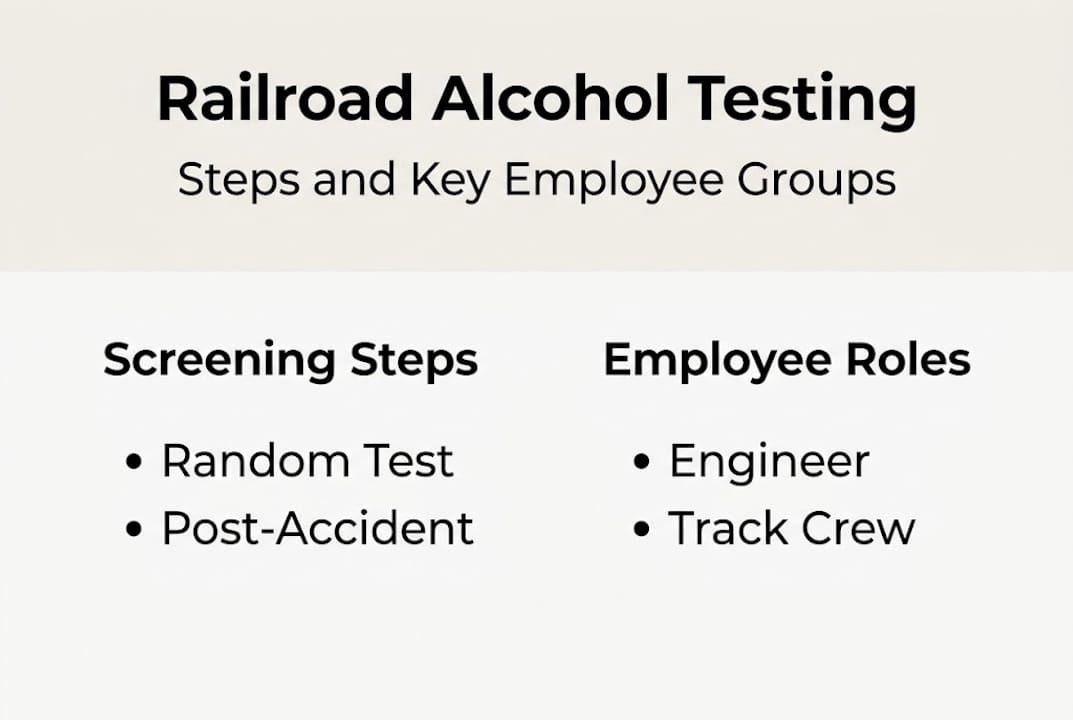
Knowing the regulation exists is one thing. Understanding how screening actually plays out on the ground is what separates compliant programs from ones that fail audits. The key testing methodologies under 49 CFR Part 219 include post-accident, reasonable suspicion, pre-employment, and random testing. Each serves a distinct purpose.
The four main testing types, explained:
- Pre-employment testing: Required before a covered employee begins safety-sensitive duties. A positive result or refusal disqualifies the applicant from that role.
- Random testing: Conducted throughout the year using a scientifically valid random selection process. Employees can be selected multiple times or not at all in a given year.
- Reasonable suspicion testing: Triggered when a trained supervisor observes specific, documented signs of alcohol use or impairment. This is not a gut feeling. It requires observable behavioral or physical indicators.
- Post-accident testing: Mandatory after qualifying accidents or incidents. Timing is critical. Breath alcohol testing must occur within two hours of the event, and if it does not happen within eight hours, the railroad must document why.
BAC thresholds and what they mean for duty status:
| BAC result | Required action |
|---|---|
| Below 0.02 | Employee may continue safety-sensitive duties |
| 0.02 to 0.039 | Removed from duty for at least 8 hours or until BAC drops below 0.02 |
| 0.04 or above | Prohibited from safety-sensitive duties; violation documented |
Chain of custody is non-negotiable. Every test must be documented from the moment the employee is selected to the point the result is recorded. Any break in that chain can invalidate the test and expose your program to legal challenge. Reviewing alcohol screening methods used in workplace settings can help your team understand what proper procedure looks like in practice.
Pro Tip: Train your supervisors specifically on reasonable suspicion documentation. Vague notes like “seemed off” will not hold up. Require specific, observable descriptions such as slurred speech, unsteady gait, or the odor of alcohol. Detailed alcohol testing protocol examples can serve as a template for your internal training materials.
Why alcohol screening matters: Human and operational risks
Regulatory compliance is the floor, not the ceiling. The real reason alcohol screening exists in railroad operations is to prevent tragedies that are entirely avoidable. Alcohol causes drowsiness and fatigue, slows reaction time, and impairs judgment, all of which are catastrophic in an environment where a split-second decision can mean the difference between a safe stop and a derailment.
Consider what is at stake in a single incident:
- A freight train traveling at speed requires over a mile to stop. An impaired engineer who reacts two seconds late is not making a minor error.
- Roadway workers depend on their colleagues to follow precise safety protocols. One impaired team member can endanger an entire crew.
- Signal maintainers who miss a fault because their judgment is compromised can set off a chain of failures that affects trains miles away.
“Impairment in transportation remains one of the most persistent and preventable causes of serious accidents. The Canadian TSB impairment watchlist continues to flag it as a systemic risk across all modes, including rail.”
The connection between missed testing and real harm is not theoretical. When random or post-accident testing is skipped, delayed, or improperly conducted, impaired employees can return to duty before the risk is identified. That is how near misses become accidents. Understanding the importance of workplace alcohol testing goes beyond checking a regulatory box. It is about building a system that catches problems before they escalate.
Pro Tip: After any qualifying incident, assign a designated testing coordinator before the event happens. Scrambling to find someone who knows the protocol in the aftermath of an accident is how timing requirements get missed and violations occur.
The human cost of a preventable accident is immeasurable. But the operational cost is also severe: federal investigations, service shutdowns, civil litigation, and reputational damage that can affect your organization for years.
Building an effective alcohol screening program: Best practices
A strong alcohol screening program does not happen by accident. It is built through deliberate planning, consistent execution, and a willingness to review and improve. Here is a practical checklist for HR and safety officers who want to implement or strengthen their program.
- Audit your current program against 49 CFR Part 219. Identify any gaps in testing types, employee coverage, or documentation practices before an FRA inspector does.
- Verify your random testing pool is accurate. Every covered employee should be in the pool. Outdated rosters are a common and costly mistake.
- Confirm your annual testing rates meet FRA minimums. FRA sets annual random testing rates based on prior year positive results. If your positivity rate exceeds certain thresholds, your required testing rate increases.
- Train all supervisors on reasonable suspicion protocols. Documentation quality directly affects whether a test result is defensible.
- Review your chain of custody procedures. Every step from selection to result must be logged and verifiable.
- Submit your annual MIS report on time. Railroads must submit annual MIS reports if they meet the threshold for significant employee hours. Missing this deadline draws regulatory attention.
- Conduct internal mock audits. Do not wait for the FRA to find problems. Run your own review at least once a year.
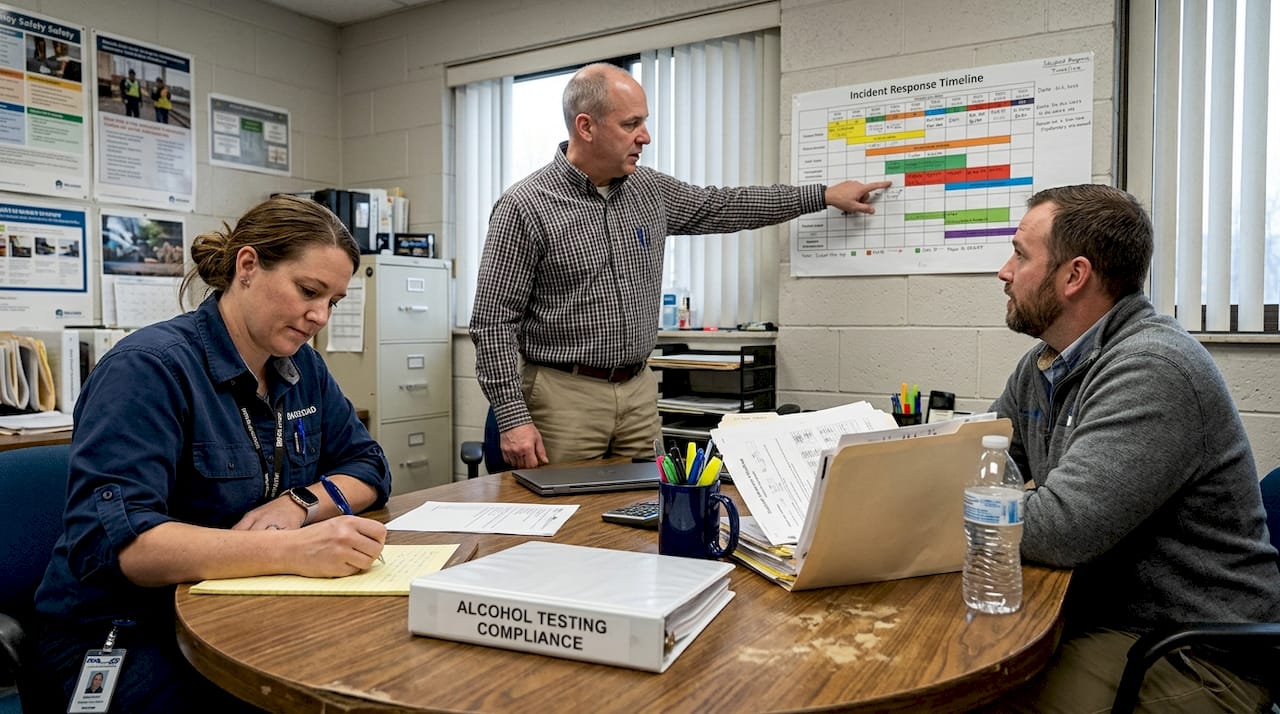
Pro Tip: Keep a dedicated compliance binder or digital folder for each testing cycle. Include your random selection documentation, all test results, supervisor training records, and your MIS report submission confirmation. When an audit arrives, you want to hand over a complete record, not spend days reconstructing one.
For additional guidance on structuring your program, alcohol testing protocol examples and compliance best practices are solid starting points for benchmarking your approach.
A railroad safety expert’s take: What compliance data doesn’t tell you
Enforcement data shows consistent violations year after year, and that pattern tells a story most compliance checklists miss. Following the rules is necessary. It is not sufficient.
The organizations that reduce real-world risk are not just the ones that pass audits. They are the ones where frontline supervisors feel empowered to act on reasonable suspicion without fear of pushback. They are the ones where HR managers review near-miss reports, not just confirmed violations. They are the ones where accountability is a cultural norm, not a reaction to an investigation.
Conventional wisdom says: build the program, train the staff, submit the reports. What that misses is the informal layer where most risk actually lives. An employee who shows up impaired and is not tested because a supervisor was not sure, or did not want the paperwork, represents a failure that no MIS report will capture. The compliance guide matters, but so does the conversation a safety officer has with a crew chief on a Tuesday morning. Build both.
Where to find trusted railroad alcohol screening solutions
If your program needs reliable testing products or lab support that meets federal standards, CountryWideTesting.com is built for exactly that. Whether you need lab testing services backed by SAMHSA and CAP-certified laboratories or fast, field-ready saliva drug testing kits for on-site screening, the platform gives you audit-ready options without the sourcing headache.
Railroad HR teams and safety officers trust CountryWideTesting.com because the products and lab partners meet the regulatory standards that matter in federal testing environments. Staying audit-ready means having the right tools before you need them, not scrambling after an incident. Visit CountryWideTesting.com to explore more railroad testing resources and find the right fit for your compliance program.
Frequently asked questions
What is the minimum BAC that triggers removal from duty in railroad alcohol screening?
A breath alcohol concentration of 0.04 or higher prohibits an employee from performing safety-sensitive duties. A result between 0.02 and 0.039 requires removal from duty for at least eight hours or until the BAC drops below 0.02.
Who is required to undergo alcohol screening in railroad operations?
Hours-of-service employees, roadway workers, and mechanical workers in safety-sensitive roles are all required to comply with FRA alcohol screening under 49 CFR Part 219.
How are annual random testing rates for alcohol screening in railroads determined?
FRA sets minimum random testing rates annually based on the prior year’s positive results. If your railroad’s positivity rate exceeds the established threshold, your required testing rate increases for the following year.