
Alcohol screening methods for workplace safety in 2026
Selecting the right alcohol screening methods is critical for workplace safety and compliance. Employers and HR professionals face a complex landscape of testing options, from breath analyzers to validated questionnaires, each designed for different purposes. Some methods detect immediate impairment for safety-sensitive roles, while others identify long-term hazardous use patterns for employee wellness programs. Understanding which screening approach fits your workplace needs, regulatory requirements, and employee health goals can be challenging. This article explains common alcohol screening methods, compares their strengths and limitations, and offers practical guidance to help you make informed decisions that protect your workforce while respecting employee privacy and dignity.
Table of Contents
- Criteria For Choosing Alcohol Screening Methods In The Workplace
- Common Examples Of Biochemical Alcohol Screening Methods
- Questionnaire-Based Alcohol Screening Tools For Risk And Health Management
- Comparing Alcohol Screening Methods: Pros, Cons, And Best Uses
- Enhance Your Workplace Safety With Expert Alcohol Screening Solutions
Key takeaways
| Point | Details |
|---|---|
| Multiple screening methods exist | Breath and saliva tests detect current impairment, while questionnaires like AUDIT assess long-term risk patterns. |
| Regulatory compliance matters | DOT standards mandate specific biochemical testing protocols for safety-sensitive positions. |
| Combining approaches improves outcomes | Using both immediate detection tests and risk assessment tools enhances workplace safety and employee health monitoring. |
| Detection windows vary significantly | Breath and saliva tests identify recent use within hours, while questionnaires evaluate consumption patterns over months. |
| Cost and invasiveness differ | Biochemical tests require equipment and trained staff, while questionnaires are low-cost but less objective. |
Criteria for choosing alcohol screening methods in the workplace
Selecting effective alcohol screening methods requires evaluating several critical factors that align with your workplace safety goals and legal obligations. The right choice depends on whether you need to detect immediate impairment or identify employees at risk for alcohol-related problems.
Compliance with regulations stands as the primary consideration. Direct biochemical tests like breath and saliva are preferred for acute impairment detection in safety-sensitive roles, while questionnaires like AUDIT and AUDIT-C work better for identifying risky use in employee assistance programs. DOT-regulated industries must follow specific testing protocols that dictate method selection.
Test accuracy and detection windows matter significantly. Breath and saliva tests provide objective measurements of current blood alcohol concentration but only detect recent use within a few hours. Questionnaires assess consumption patterns over weeks or months but rely on self-reporting, which introduces potential bias. Consider what you actually need to measure: current fitness for duty or patterns indicating health risks.
Employee privacy and consent requirements shape implementation. Biochemical tests are more invasive and require clear policies, proper consent procedures, and trained collectors. Questionnaires feel less intrusive but still need confidentiality protections and voluntary participation frameworks, especially outside safety-sensitive contexts.
Cost and logistics influence practical deployment. Breath analyzers require equipment investment and certified technicians. Saliva tests offer simpler on-site administration. Questionnaires cost almost nothing to administer but need trained staff to interpret results and connect employees with appropriate resources. Your alcohol testing protocols for HR should balance effectiveness with operational feasibility.
Key selection criteria include:
- Regulatory requirements for your industry and job roles
- Purpose: detecting current impairment versus identifying at-risk employees
- Detection window needed: hours versus weeks or months
- Accuracy requirements and acceptable false positive/negative rates
- Invasiveness and employee acceptance considerations
- Budget for equipment, training, and ongoing administration
- Staff availability and expertise for proper implementation
Common examples of biochemical alcohol screening methods
Biochemical tests provide objective measurements of alcohol presence in the body, making them the gold standard for detecting current impairment in workplace settings. These methods deliver rapid, quantifiable results that support immediate fitness-for-duty decisions.
Breath alcohol tests, also called evidential breath testers (EBTs), measure blood alcohol concentration by analyzing breath samples. Breath alcohol testing uses evidential breath testers or saliva for screening in DOT-regulated workplaces. These devices provide results in minutes and are non-invasive, making them ideal for pre-shift screening, post-accident testing, and reasonable suspicion situations. The technology is mature, widely accepted in legal proceedings, and calibrated to meet strict accuracy standards.
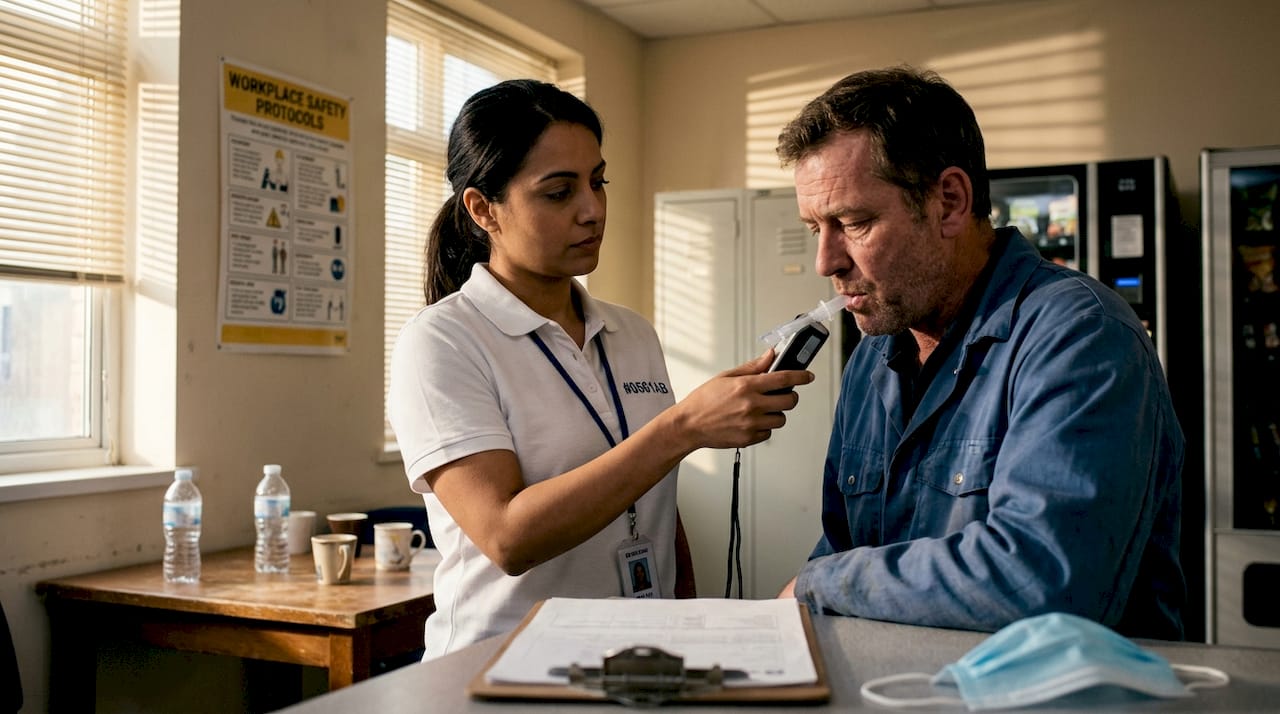
Saliva alcohol tests offer a similarly non-invasive alternative with comparable detection capabilities. These tests use chemically treated strips or swabs that change color based on alcohol concentration in oral fluids. A saliva alcohol test strip can detect alcohol levels as low as 0.02% BAC within minutes, making it suitable for DOT screening protocols. Saliva testing is particularly useful for workplaces without dedicated testing facilities, as the process requires minimal equipment and simpler training than breath testing.
Both methods require certified technicians or trained collectors to ensure accuracy and legal defensibility. DOT breath alcohol testing follows strict protocols including two-step processes: an initial screening test followed by a confirmatory test if results exceed 0.02% BAC. This two-tier approach reduces false positives while maintaining efficiency.
Pro Tip: Always use DOT-approved devices and follow manufacturer calibration schedules. A poorly maintained or uncalibrated device can produce unreliable results that undermine your entire testing program and expose you to legal challenges.
Key advantages of biochemical methods:
- Objective, quantifiable results that hold up in legal proceedings
- Rapid turnaround from sample collection to results
- Detection of current impairment rather than past use
- High accuracy when properly administered
- Regulatory acceptance for safety-sensitive positions
Understanding your alcohol testing methods for HR options helps you select the right biochemical approach for your specific workplace scenarios and compliance requirements.
Questionnaire-based alcohol screening tools for risk and health management
Questionnaires provide a different screening approach focused on identifying hazardous drinking patterns and alcohol use disorders rather than current impairment. These validated tools support employee wellness initiatives and early intervention programs.
The Alcohol Use Disorders Identification Test (AUDIT) stands as the most widely used screening questionnaire globally. AUDIT is a 10-item, internationally validated questionnaire to identify risky and harmful drinking patterns. It covers three domains: alcohol consumption, drinking behaviors, and alcohol-related problems. Scores range from 0 to 40, with scores of 8 or higher indicating hazardous use that warrants intervention. AUDIT excels at detecting both early-stage risky drinking and established dependence.
AUDIT-C offers a shorter alternative that focuses specifically on consumption patterns. AUDIT-C is a shorter 3-item tool with high accuracy for identifying problem use. It asks about drinking frequency, typical quantity, and binge drinking episodes. This brevity makes AUDIT-C practical for busy clinical settings or workplace health screenings where time is limited. Scores of 4 or higher for men and 3 or higher for women suggest risky drinking.
Other specialized questionnaires serve specific populations or purposes:
- CRAFFT screens adolescents and young adults using six questions about riding in vehicles with impaired drivers, using alcohol to relax, drinking alone, forgetting things while drinking, and pressure from family or friends to cut down.
- TAPS (Tobacco, Alcohol, Prescription medication, and other Substance use) provides a broader four-item screening tool that covers multiple substances including alcohol, useful for comprehensive workplace wellness assessments.
- Single-question screens like “How many times in the past year have you had 5 or more drinks in a day?” offer ultra-brief options with surprisingly good sensitivity for identifying at-risk individuals.
Questionnaires work best in employee assistance programs, voluntary wellness screenings, and health risk assessments rather than safety-sensitive testing. They require voluntary participation and honest self-reporting to be effective. Results should trigger supportive interventions like brief counseling, educational resources, or referrals to treatment rather than disciplinary action.
Pro Tip: Train your HR and occupational health staff to administer questionnaires in a non-judgmental manner that emphasizes health and support rather than surveillance. Creating a safe, confidential environment dramatically improves response honesty and program effectiveness.
Your alcohol screening tests HR should know extend beyond biochemical methods to include these valuable assessment tools for comprehensive employee health management.
Comparing alcohol screening methods: pros, cons, and best uses
Understanding how different screening methods stack up helps you select the right tool for each workplace scenario. Each approach offers distinct advantages and limitations that make it suitable for specific purposes.
| Method | Detection Window | Accuracy | Invasiveness | Best Use Case | Regulatory Status |
|---|---|---|---|---|---|
| Breath Test (EBT) | 6-12 hours | Very High | Low | Current impairment, safety-sensitive roles | DOT approved |
| Saliva Test | 6-12 hours | High | Very Low | Quick screening, field testing | DOT approved |
| AUDIT | Lifetime patterns | Moderate (self-report) | Very Low | Risk assessment, wellness programs | Clinical standard |
| AUDIT-C | Recent months | Moderate (self-report) | Very Low | Quick risk screening | Clinical standard |
| TAPS | Recent months | Moderate (self-report) | Very Low | Multi-substance screening | Emerging standard |
Questionnaires better identify long-term risk while biochemical tests excel at detecting current impairment, and multi-substance tools trade alcohol-specific sensitivity for broader coverage. This fundamental difference drives method selection based on your screening objectives.
Biochemical tests deliver objective, legally defensible results that support immediate fitness-for-duty decisions. They detect alcohol presence in real time, making them essential for pre-shift screening, post-accident testing, and reasonable suspicion situations. However, they only capture a snapshot of recent use and miss chronic problematic drinking that occurs outside work hours.
Questionnaires reveal consumption patterns and risk levels that biochemical tests cannot detect. An employee might pass a breath test every morning but still have hazardous drinking habits that increase health risks, absenteeism, and long-term safety concerns. AUDIT and similar tools identify these individuals for early intervention before problems escalate. The tradeoff is reliance on self-reporting, which can be inaccurate if employees fear consequences or lack self-awareness about their drinking.
Multi-substance screening tools provide efficiency when alcohol is one of several substance concerns. TAPS and similar instruments screen for alcohol, tobacco, prescription medication misuse, and illicit drugs in a single brief questionnaire. This comprehensive approach works well for general health assessments but may miss nuances that alcohol-specific tools would catch.
Cost considerations vary dramatically:
- Breath analyzers require $200-$1,500 device investment plus maintenance and calibration
- Saliva test strips cost $2-$5 per test with no equipment needed
- Questionnaires are essentially free but require staff time for administration and interpretation
- Multi-substance tools add minimal cost over single-substance questionnaires
Regulatory constraints limit choices in certain contexts. DOT-regulated positions must use approved biochemical methods with specific protocols. Non-regulated positions offer more flexibility to combine approaches based on organizational goals. Your alcohol testing protocols for HR should reflect these regulatory realities while maximizing effectiveness.
Workplace culture influences method acceptance. Biochemical testing in non-safety-sensitive roles may feel invasive and damage trust. Voluntary questionnaires in wellness programs typically receive better reception. Consider employee perspectives and involve them in policy development to build buy-in.
Enhance your workplace safety with expert alcohol screening solutions
Implementing effective alcohol screening requires more than just choosing the right method. You need reliable testing products, compliant procedures, and expert support to ensure accurate results and legal defensibility.
Countrywide Testing provides comprehensive alcohol screening solutions tailored to workplace safety needs. Whether you require DOT-compliant testing for safety-sensitive positions or wellness screening for general employee health, we offer the tools and expertise to support your program.
Our lab testing services deliver certified, accurate results processed by SAMHSA, ISO, CLIA, and CAP accredited laboratories. For immediate on-site screening needs, our saliva alcohol test strips provide fast, reliable detection at 0.02% BAC threshold, meeting DOT requirements while offering simple administration.
Partner with nationwide drug testing experts who understand regulatory requirements, workplace safety challenges, and employee health priorities. We help you design testing protocols that protect your workforce, maintain compliance, and support early intervention for at-risk employees. Our team provides training, consultation, and ongoing support to ensure your alcohol screening program achieves its safety and wellness objectives.
FAQ
What is the difference between breath and saliva alcohol tests?
Breath tests measure blood alcohol concentration by analyzing exhaled air using evidential breath testing devices, providing direct BAC readings that are the DOT standard for confirmatory testing. Saliva tests detect alcohol in oral fluids using chemically treated strips or swabs, offering similar detection windows with less invasive collection. Both methods are DOT-approved for workplace screening, but saliva tests are simpler for field testing and require less equipment investment while breath tests are preferred for confirmatory testing due to their direct BAC measurement.
How do questionnaires like AUDIT help in workplace screening?
AUDIT identifies hazardous drinking patterns, risky consumption levels, and potential alcohol dependence through validated questions about drinking frequency, quantity, and consequences. It detects long-term problematic use that might not appear in biochemical tests, enabling early intervention before health problems or workplace incidents occur. Questionnaires complement biochemical testing by addressing chronic risk rather than current impairment, making them valuable for employee assistance programs and wellness initiatives focused on prevention and health management rather than immediate safety decisions.
Are multi-substance screening tools effective for alcohol detection?
Multi-substance tools like TAPS provide reasonable alcohol screening sensitivity while also detecting tobacco, prescription medication misuse, and illicit drug use in a single assessment. They work well for comprehensive health risk assessments where efficiency matters and multiple substance concerns exist. However, alcohol-specific tools like AUDIT typically offer slightly better sensitivity and more detailed risk stratification for alcohol use disorders. Consider using multi-substance tools for initial broad screening and alcohol-specific questionnaires for follow-up when alcohol concerns are identified.
What compliance requirements should HR consider for alcohol screening?
DOT-regulated positions require specific testing protocols including approved devices, certified breath alcohol technicians, two-step screening and confirmation processes, and medical review officer oversight for results above 0.02% BAC. Non-regulated testing should still follow best practices including clear written policies, informed consent procedures, trained collectors, confidential result handling, and consistent application across similar job categories. Maintain documentation of all testing procedures, calibration records, training certifications, and chain of custody forms to ensure legal defensibility and regulatory compliance.