
Why Alcohol Testing Matters for Workplace Safety
Busy HR managers know that workplace safety means more than just ticking off compliance checklists. In industries subject to strict federal regulations, alcohol testing is a powerful tool for reducing liability risks and safeguarding employee well-being. Yet, misconceptions around workplace alcohol testing often complicate implementation. This guide clarifies the true purpose of testing, dispels common misunderstandings, and highlights the strategies needed for legally compliant, effective alcohol screening.
Table of Contents
- Alcohol Testing: Core Purpose And Misconceptions
- Types Of Alcohol Tests And Detection Methods
- Regulatory Standards And Legal Requirements
- Workplace Applications And Compliance Strategies
- Risks Of Neglecting Alcohol Testing Policies
- Minimizing Liability And Protecting Reputation
Key Takeaways
| Point | Details |
|---|---|
| Purpose of Testing | Workplace alcohol testing aims to maintain safety and prevent impairment, extending beyond mere detection. |
| Common Misconceptions | Misunderstandings about testing legality and accuracy can undermine the effectiveness of alcohol testing programs. |
| Testing Methods | Various methods exist, each with distinct advantages, requiring careful selection to match safety needs. |
| Legal Compliance | Employers must balance legal requirements with employee privacy, ensuring fair and scientifically valid testing protocols. |
Alcohol testing: Core purpose and misconceptions
Workplace alcohol testing is a critical safety protocol designed to prevent accidents, protect employees, and maintain professional standards. While many organizations implement these programs, significant misconceptions persist about their purpose, methodology, and legal implications.
The primary objective of alcohol testing extends far beyond simple detection. Employers aim to ensure a safe working environment by identifying potential impairment that could compromise workplace safety. Workplace testing approaches must balance employee privacy rights with organizational safety requirements, making the process more nuanced than many realize.
Key misconceptions about alcohol testing include:
- A positive breathalyzer result automatically proves current workplace impairment
- Testing is always legally permissible without restrictions
- All testing methods provide identical reliability and accuracy
- Employee rights are secondary to organizational testing needs
In reality, workplace alcohol testing involves complex legal and ethical considerations. Employers must establish clear protocols that demonstrate actual impairment during work hours, not merely the presence of alcohol. This requires comprehensive evidence beyond a single test result, including behavioral observations and physical signs of intoxication.
Effective alcohol testing protects both employees and organizations by creating a safe, professional environment where performance and safety are prioritized.
Modern alcohol testing strategies recognize that detection is just one component of a broader workplace safety approach. Successful programs integrate testing with education, support resources, and clear communication about expectations and consequences.
Pro tip: Develop comprehensive alcohol testing policies that balance scientific accuracy, legal compliance, and employee dignity.
Types of alcohol tests and detection methods
Workplace alcohol testing involves multiple detection methods, each with unique characteristics and applications. Understanding these alcohol testing protocols helps organizations select the most appropriate approach for their specific safety requirements.
Breathalyzer Tests represent the most immediate and commonly used method for detecting alcohol consumption. These portable devices measure Blood Alcohol Content (BAC) through breath samples, providing rapid results that can identify potential impairment during work hours. Despite their convenience, breathalyzer tests have limitations in establishing long-term alcohol use patterns.
Various alcohol testing methods include:
- Breathalyzer Tests: Quick, non-invasive screening
- Blood Tests: Most legally precise measurement
- Urine Tests: Extended detection window
- Oral Fluid/Saliva Tests: Rapid on-site screening
- Hair Follicle Tests: Long-term usage detection
Each testing method offers distinct advantages and challenges. Blood alcohol tests provide the most accurate measurement of current intoxication, making them crucial for legal and medical documentation. However, they are more invasive and require professional medical administration.
Effective workplace alcohol testing balances accuracy, employee privacy, and organizational safety requirements.
Urine and oral fluid tests offer alternative approaches with different detection windows. Urine tests can reveal alcohol consumption from several hours to days prior, while oral fluid tests provide more immediate results with shorter detection periods.
Pro tip: Consult with legal and medical professionals to develop a comprehensive alcohol testing strategy tailored to your workplace’s specific needs and regulatory environment.
Here’s a comparison of workplace alcohol testing methods and when each is most effective:
| Testing Method | Best Use Case | Detection Window | Invasiveness |
|---|---|---|---|
| Breathalyzer | Immediate impairment checks | Minutes to hours | Non-invasive |
| Blood Test | Legal/medical evidence | Up to 12 hours | Invasive (requires medical professional) |
| Urine Test | Historical use verification | 6-48 hours | Moderately invasive |
| Oral Fluid | Recent use detection | 12-24 hours | Minimally invasive |
| Hair Follicle | Long-term monitoring | Weeks to months | Invasive (requires hair sample) |
Regulatory standards and legal requirements
Workplace alcohol testing navigates a complex legal landscape that requires carefully balanced approaches to employee safety and individual privacy. Legal standards for testing demand that employers justify their screening processes through clear safety needs and transparent policies.

Federal and state regulations create a nuanced framework for alcohol testing that varies significantly across different industries and workplace contexts. Key legal considerations include maintaining employee dignity, preventing discriminatory practices, and ensuring that testing methods are scientifically valid and professionally administered.
Critical legal requirements for alcohol testing include:
- Obtaining clear, informed consent from employees
- Maintaining strict confidentiality of test results
- Applying testing policies consistently across all employees
- Documenting precise testing procedures and rationales
- Ensuring testing methods meet scientific and legal standards
Workplace privacy laws play a crucial role in determining the legality of alcohol testing. Courts consistently evaluate testing policies based on principles of necessity, proportionality, and non-discrimination. Employers must demonstrate that alcohol testing serves legitimate safety objectives and does not unnecessarily infringe on individual privacy rights.
Successful alcohol testing programs balance organizational safety needs with fundamental employee rights and legal protections.
Different industries face unique regulatory requirements. Safety-sensitive sectors like transportation, healthcare, and manufacturing typically have more stringent testing mandates compared to other professional environments. Understanding these industry-specific regulations is essential for developing compliant testing strategies.
Pro tip: Consult with legal experts specializing in employment law to develop alcohol testing policies that are both legally defensible and respectful of employee rights.
Workplace applications and compliance strategies
Implementing effective alcohol testing requires a comprehensive approach that goes beyond simple screening procedures. Workplace alcohol testing strategies must be carefully designed to balance safety, legal compliance, and employee respect.
Comprehensive testing programs typically incorporate multiple approaches to address different workplace scenarios. Organizations must develop clear protocols that specify exact conditions for testing, including pre-employment screenings, random checks, post-incident investigations, and reasonable suspicion evaluations.
Key elements of a robust alcohol testing strategy include:
- Establishing clear, transparent testing policies
- Defining precise triggers for alcohol testing
- Creating consistent disciplinary procedures
- Training supervisors on policy implementation
- Maintaining strict confidentiality of test results
- Providing employee support and rehabilitation options
Risk management stands at the core of effective workplace alcohol testing. Different industries require tailored approaches, with safety-sensitive sectors like transportation and manufacturing typically implementing more rigorous screening protocols. The goal extends beyond punishment, focusing on creating a safe, productive work environment.
Successful alcohol testing programs prioritize prevention, support, and organizational safety over punitive measures.
Employers must navigate complex legal and ethical considerations when developing testing strategies. This involves balancing organizational safety needs with individual privacy rights, ensuring that testing procedures are scientifically valid, legally defensible, and applied consistently across all employees.
Pro tip: Develop a comprehensive alcohol testing policy that includes clear guidelines, support resources, and a compassionate approach to addressing potential substance use issues.
Risks of neglecting alcohol testing policies
Neglecting alcohol testing in the workplace creates substantial risks that extend far beyond simple compliance issues. Workplace alcohol testing risks demonstrate the critical importance of comprehensive screening protocols for organizational safety and operational integrity.
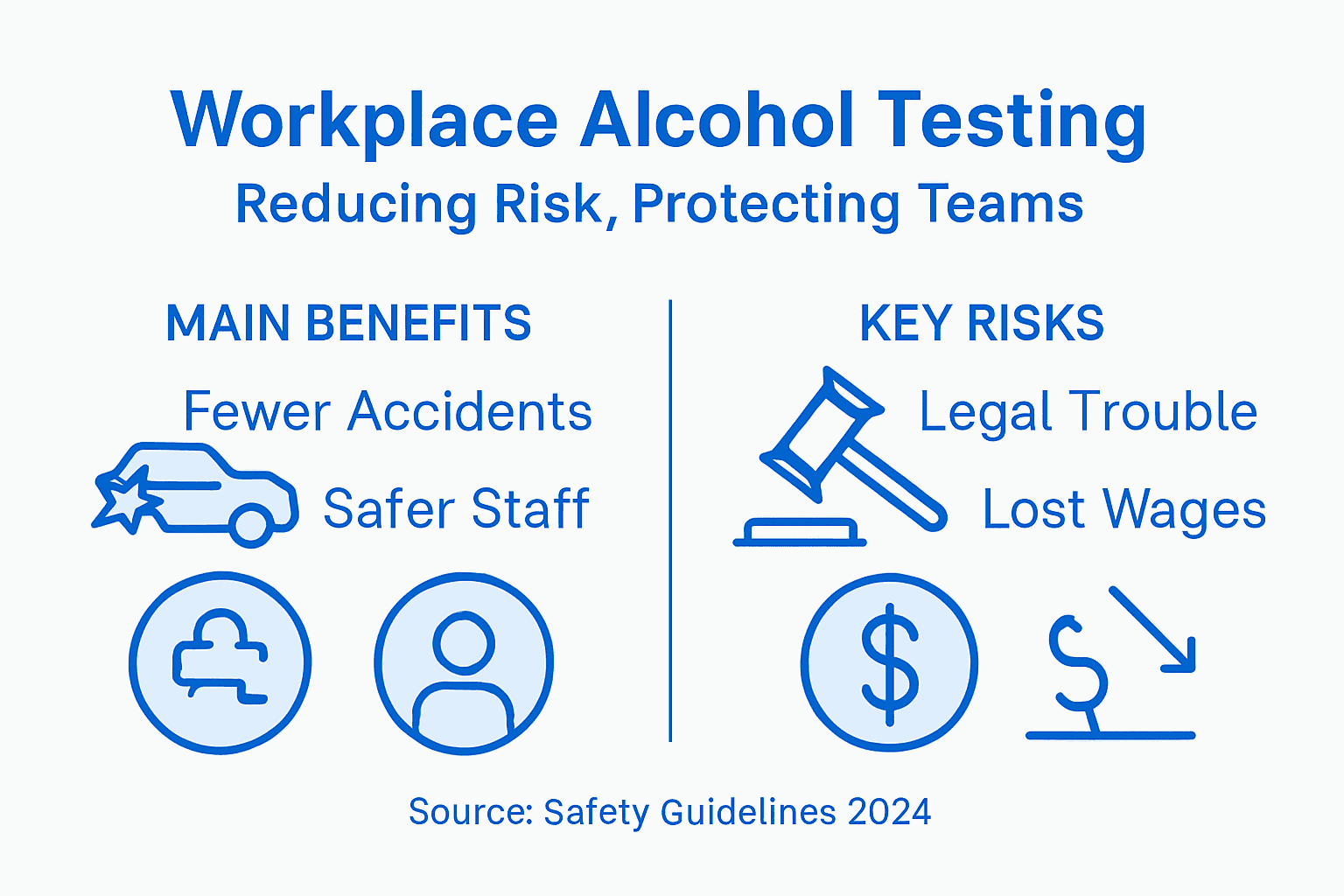
Operational vulnerabilities emerge when alcohol testing policies are inadequate or nonexistent. Impaired employees can create dangerous scenarios across multiple workplace dimensions, potentially compromising safety, productivity, and organizational reputation.
Significant risks of neglecting alcohol testing include:
- Increased workplace accident rates
- Higher potential for employee injuries
- Substantial legal and financial liabilities
- Reduced overall workplace productivity
- Potential violations of safety regulations
- Increased employee turnover
- Compromised organizational reputation
Financial consequences can be particularly devastating. Workplace incidents involving impaired employees may result in significant direct costs through medical expenses, workers’ compensation claims, potential lawsuits, and productivity losses. Insurance premiums could dramatically increase, creating long-term financial strain for the organization.
Proactive alcohol testing is an investment in workplace safety, not merely an expense to be avoided.
Beyond financial implications, neglecting alcohol testing exposes organizations to serious legal risks. Employers can be held liable for incidents caused by impaired employees, potentially facing substantial damages and regulatory penalties. The legal landscape increasingly expects organizations to demonstrate reasonable care in maintaining a safe working environment.
Pro tip: Conduct a comprehensive risk assessment to understand the specific alcohol-related vulnerabilities in your workplace and develop targeted testing strategies accordingly.
This table summarizes the consequences of not having strong workplace alcohol testing policies:
| Risk Area | Example Impact |
|---|---|
| Workplace Safety | Increased workplace accidents |
| Legal Exposure | Costly lawsuits, regulatory fines |
| Financial Stability | Higher insurance premiums, lost productivity |
| Employee Retention | Higher turnover, decreased morale |
| Company Reputation | Negative public perception |
Minimizing liability and protecting reputation
Protecting organizational reputation requires a strategic approach to alcohol testing that goes beyond simple compliance. Workplace testing strategies demonstrate how proactive policies can significantly reduce legal risks and enhance corporate credibility.
Reputation management in alcohol testing involves creating transparent, fair, and consistently applied policies that protect both the organization and its employees. This approach requires carefully balancing legal requirements, safety concerns, and employee privacy rights.
Key strategies for minimizing liability include:
- Developing clear, comprehensive testing policies
- Ensuring consistent policy enforcement
- Maintaining strict confidentiality of test results
- Providing employee support and rehabilitation options
- Documenting all testing procedures meticulously
- Training supervisors on policy implementation
- Regularly reviewing and updating testing protocols
Legal defensibility hinges on demonstrating due diligence and a genuine commitment to workplace safety. Organizations must show that alcohol testing policies are implemented fairly, scientifically validated, and designed to protect employee and organizational interests.
Effective alcohol testing policies protect both organizational reputation and employee well-being by creating a safe, supportive work environment.
Communication plays a critical role in reputation management. Transparent policies that clearly explain the purpose, procedures, and potential consequences of alcohol testing help build trust and reduce potential conflicts. This approach transforms alcohol testing from a punitive measure to a proactive safety initiative.
Pro tip: Develop a comprehensive communication strategy that explains alcohol testing policies as a mutual commitment to workplace safety and employee health.
Strengthen Workplace Safety with Trusted Alcohol Testing Solutions
Maintaining a safe and compliant workplace starts with reliable alcohol testing that respects employee rights and meets legal standards. This article highlights the challenges organizations face, including balancing safety, privacy, and regulatory compliance while addressing risks like impaired performance and legal liability. CountryWideTesting.com offers a comprehensive range of alcohol and drug testing products and lab services designed to support these critical workplace goals. From quick breathalyzer alternatives to scientifically validated urine and oral fluid tests, our offerings help you implement effective screening strategies with peace of mind.
Take control of your workplace safety by choosing testing solutions from CountryWideTesting.com that comply with SAMHSA, ISO, CLIA, and CAP standards. Explore laboratory testing services tailored to your specific needs and access convenient options for employers and individuals. Act now to protect your employees, reduce risks, and demonstrate your commitment to a safe work environment with trusted partners and clear policies.
Frequently Asked Questions
What is the core purpose of alcohol testing in the workplace?
The primary objective of alcohol testing is to ensure a safe working environment by identifying potential impairment that could compromise workplace safety. It extends beyond merely detecting the presence of alcohol and involves comprehensive protocols to assess actual impairment during work hours.
What are the common misconceptions about workplace alcohol testing?
Common misconceptions include the belief that a positive breathalyzer result automatically proves current impairment, that testing is always legally permissible, and that all testing methods are equally reliable and accurate. It’s important for employers to establish clear protocols that reflect these realities.
What types of alcohol testing methods are available for workplace safety?
Workplace alcohol testing includes various methods such as breathalyzer tests, blood tests, urine tests, oral fluid tests, and hair follicle tests. Each method has its unique advantages and challenges, suitable for different workplace scenarios and safety requirements.
How can organizations develop a compliant alcohol testing policy?
Organizations can create a compliant alcohol testing policy by obtaining clear, informed consent from employees, maintaining confidentiality of test results, applying policies consistently, and ensuring that all testing methods meet scientific and legal standards.