
Alcohol testing regulations for railroads: compliance guide
Many HR managers and railroad supervisors believe alcohol testing regulations are a maze of confusing rules and paperwork. The truth is simpler. Federal regulations provide a clear framework that, once understood, streamlines compliance and protects your workforce. This guide breaks down the essential requirements under DOT and FRA rules, covering testing types, employee coverage, violation thresholds, and practical compliance strategies. You’ll learn how to navigate post-accident protocols, random testing rates for 2026, and return-to-duty procedures with confidence.
Table of Contents
- Key takeaways
- Overview of alcohol testing regulations and employee coverage
- Types of alcohol testing and violation thresholds
- Random testing rates and regulatory adjustments for 2026
- Best practices for compliance and managing post-accident testing
- Ensure compliance with professional alcohol testing services
- Frequently asked questions about alcohol testing regulations for railroads
Key Takeaways
| Point | Details |
|---|---|
| Regulatory framework coverage | 49 CFR Part 219 and Part 40 establish which railroad employees are covered and standard testing procedures. |
| Test types and timing | The rules authorize post accident, reasonable suspicion, random, pre employment, return to duty, and follow up tests to support safety. |
| Violation threshold and retest | A violation occurs at or above 0.04 BAC, and results from 0.02 to 0.039 require temporary removal and a retest below 0.02. |
| Random testing adjustments | Random testing rates vary by employee category and are adjusted annually, with updates for 2026 noted. |
| Refusal consequences | Refusal to test triggers mandatory withdrawal from safety sensitive duties and a return to duty process. |
Overview of alcohol testing regulations and employee coverage
Alcohol testing for railroads is governed by 49 CFR Part 219, which mandates compliance with 49 CFR Part 40 procedures. These regulations establish a comprehensive framework that applies to specific categories of railroad employees whose roles directly impact safety. Understanding which employees fall under these rules is the first step toward building an effective compliance program.
Regulated employees include covered service workers subject to hours-of-service laws, roadway workers performing maintenance-of-way duties, and mechanical employees conducting safety-critical inspections. Each category carries distinct responsibilities and testing requirements. Misclassifying employees or overlooking a regulated group can expose your organization to compliance gaps and safety risks.
The main regulated employee groups include:
- Covered service employees operating trains, locomotives, and performing dispatching duties
- Maintenance-of-way workers responsible for track inspection, repair, and roadway equipment operation
- Mechanical employees conducting brake, air brake, and mechanical inspections on rolling stock
- Signal employees maintaining and testing signal systems critical to train operations
49 CFR Part 40 serves as the procedural backbone for all DOT-mandated testing. It standardizes collection processes, chain of custody, laboratory analysis, and medical review officer responsibilities across transportation modes. Railroads must follow these procedures precisely to ensure test results hold up under scrutiny and meet federal standards. Any deviation from Part 40 protocols can invalidate results and trigger regulatory penalties.
Employee classification errors are common. A worker who occasionally performs covered service duties may still require inclusion in your testing pool. Review job descriptions annually and consult alcohol testing protocols for HR to align your classifications with regulatory definitions. Clear documentation of employee roles and testing eligibility protects your organization during audits.
Types of alcohol testing and violation thresholds
Federal regulations mandate or permit several distinct testing types: post-accident, reasonable suspicion, random, pre-employment (optional for alcohol), return-to-duty, and follow-up. Each serves a specific purpose in maintaining workforce safety and regulatory compliance. Understanding when and how to deploy each test type is essential for HR personnel and supervisors.
Alcohol testing methodologies follow a two-step process. An initial screening uses an approved breath testing device. If the screening result is 0.02 BAC or higher, a confirmation test with an evidential breath testing device (EBT) is required. Only the confirmation result determines whether a violation occurred. This dual-step approach reduces false positives and ensures accuracy.
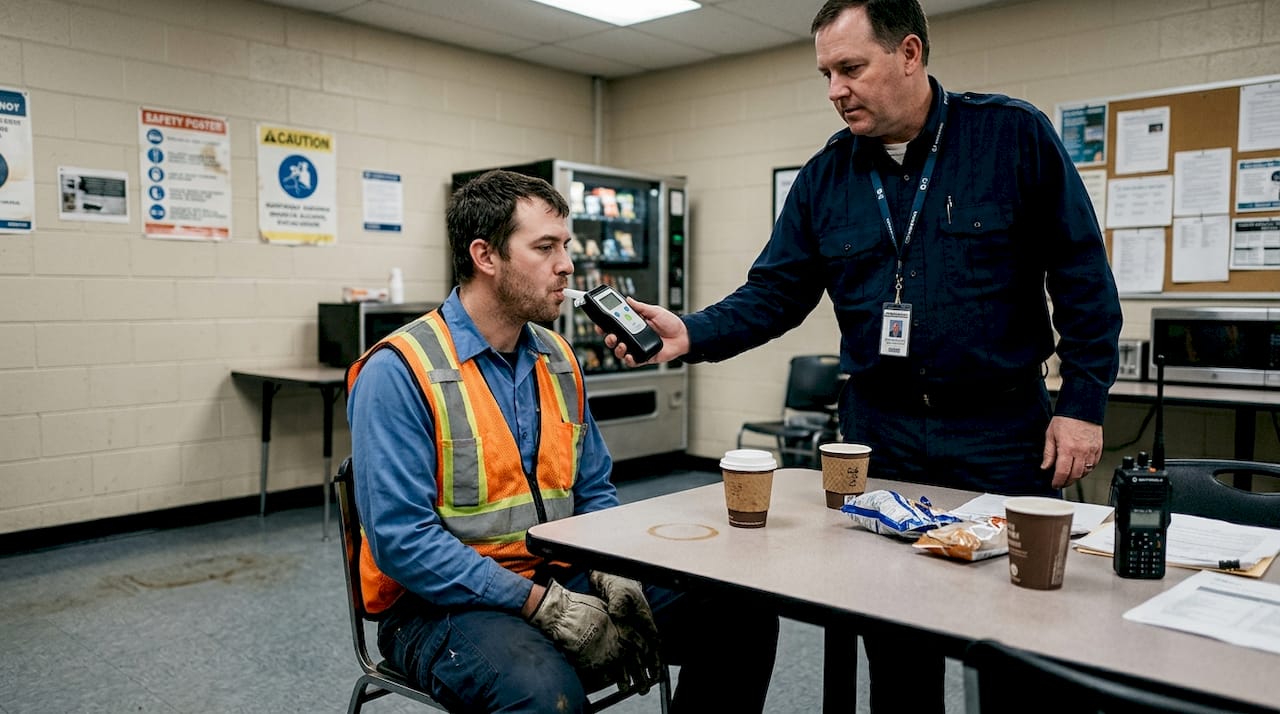
A violation occurs at 0.04 BAC or above. Results between 0.02 and 0.039 require temporary removal from safety-sensitive duties but do not constitute a regulatory violation. Employees in this range must be retested before returning to work, and the retest must show a result below 0.02. Document every step to demonstrate compliance during audits.
The sequential alcohol testing procedure follows these steps:
- Supervisor or designated employer representative initiates testing based on regulatory trigger (post-accident, reasonable suspicion, random selection, etc.)
- Employee proceeds to testing location with a trained breath alcohol technician (BAT)
- BAT conducts initial screening test using approved device and records result
- If screening is 0.02 or higher, BAT performs confirmation test with EBT after 15-minute waiting period
- Confirmation result is documented on federal custody and control form
- Medical review officer reviews results and contacts employee if needed
- Employer receives verified result and takes appropriate action based on BAC level
Test types and their applications:
- Post-accident testing is required after major train accidents, injuries, or property damage exceeding regulatory thresholds
- Reasonable suspicion testing occurs when trained supervisors observe behavior or appearance consistent with alcohol use
- Random testing uses scientifically valid selection methods to test employees unannounced throughout the year
- Pre-employment testing for alcohol is optional under Part 219, though many railroads include it in hiring protocols
- Return-to-duty testing is mandatory before an employee returns to safety-sensitive work after a violation
- Follow-up testing involves unannounced tests for a minimum period after return-to-duty, typically 12 months
Pre-employment alcohol testing remains optional because alcohol metabolizes quickly and does not indicate chronic use like drug testing can. Many railroads still conduct pre-employment alcohol screens as part of comprehensive hiring protocols. If you choose to implement pre-employment alcohol testing, apply it consistently to avoid discrimination claims.
Pro Tip: Establish clear communication channels between supervisors, HR, and your testing provider. Delays in reasonable suspicion or post-accident testing can compromise results and compliance. Ensure supervisors know exactly who to contact and what steps to take the moment a testing situation arises.
Random testing rates and regulatory adjustments for 2026
Random testing rates are set annually by the FRA based on violation data from the previous two years. For 2026, the MECH alcohol random rate lowered to 10% as the violation rate fell below 0.5% in 2023-2024. This reduction reflects improved compliance across the mechanical employee category and allows railroads to allocate resources more efficiently while maintaining safety standards.
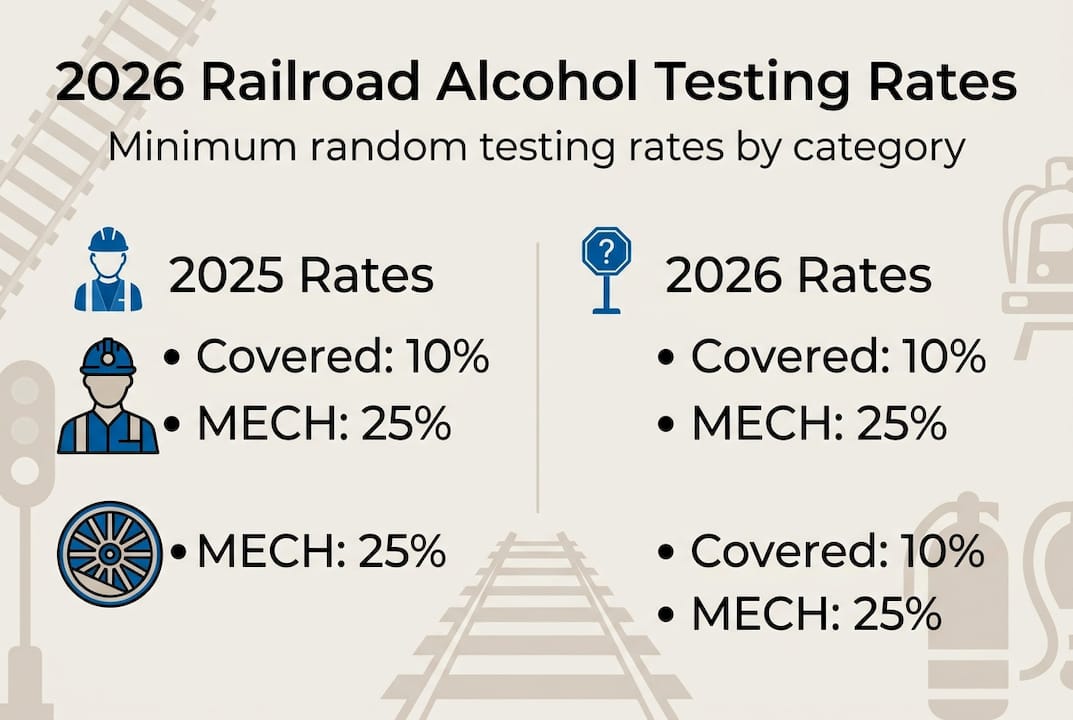
The 2025 minimum random alcohol rates were covered service 10%, MOW 10%, and MECH 25%. Rates are adjusted based on prior two years of Management Information System data if violation rates remain below 0.5%. When violation rates exceed this threshold, the FRA increases minimum rates to 25% or 50% depending on severity. Understanding this mechanism helps you anticipate regulatory changes and plan testing budgets accordingly.
| Employee Category | 2025 Rate | 2026 Rate | Change |
|---|---|---|---|
| Covered Service | 10% | 10% | No change |
| Maintenance-of-Way | 10% | 10% | No change |
| Mechanical | 25% | 10% | Decreased |
Violation rate thresholds drive these adjustments. If your railroad’s internal violation rate approaches 0.5%, proactively increase random testing frequency beyond the federal minimum. This demonstrates commitment to safety and may prevent costly incidents. Conversely, consistently low violation rates can justify focusing resources on training and prevention programs rather than increasing test volumes.
Random selection must be truly random and unannounced. Use computerized systems that generate selections without bias or predictability. Employees cannot know in advance when they will be selected. Tests must be conducted immediately after notification, with no opportunity for the employee to delay or prepare. Document your selection methodology and maintain records of all random tests for FRA review.
Pro Tip: Track your internal violation rates quarterly using the same methodology the FRA applies. This early warning system lets you adjust testing protocols, enhance supervisor training, or implement targeted interventions before rates trigger regulatory increases. Share aggregate data with leadership to maintain focus on alcohol detection compliance as a strategic priority.
Railroads operating in multiple regions should apply the highest applicable rate across all locations to simplify administration. While Part 219 allows different rates by employee category, applying varying rates by geography creates confusion and increases the risk of compliance errors. Consistency in testing protocols strengthens your program and reduces administrative burden.
Best practices for compliance and managing post-accident testing
Supervisor training is the foundation of effective reasonable suspicion testing. Train supervisors to recognize alcohol use indicators such as odor, slurred speech, unsteady gait, and behavioral changes. Document observations in detail using objective, factual language. Vague descriptions like “acting strange” will not withstand legal scrutiny. Instead, record specific behaviors: “Employee swayed while standing, repeated questions three times, strong odor of alcohol on breath.”
The Designated Employer Representative plays a critical role in testing administration. This individual serves as the primary contact for testing providers, medical review officers, and substance abuse professionals. Ensure your DER is available 24/7 or establish backup coverage. Gaps in DER availability can delay post-accident testing and create compliance vulnerabilities. Provide DERs with comprehensive training on Part 40 and Part 219 requirements.
Timely collection of post-accident specimens is critical to compliance. Breath or blood alcohol tests must be conducted within 4 hours for breath and 8 hours for blood after the accident. Missing these windows requires written documentation explaining the delay and efforts made to conduct testing. The FRA scrutinizes missed post-accident tests closely. Prioritize immediate notification of testing providers and transportation of employees to testing sites.
“Railroads must prioritize timely post-accident testing and notify the FRA when tests cannot be completed within required timeframes. Documentation of good faith efforts is essential to demonstrate compliance intent.” — Federal Railroad Administration
Refusal to test is treated as a positive result. Refusal includes failing to appear for testing, leaving the testing site before completion, failing to provide sufficient breath, adulterating or substituting specimens, and obstructing the testing process. Employees who refuse face 9-month withdrawal from regulated service and must complete the full return-to-duty process before resuming safety-sensitive duties. Make refusal consequences crystal clear in your policy and during employee training.
Key compliance steps and documentation requirements:
- Maintain written alcohol testing policies accessible to all employees
- Train supervisors on reasonable suspicion indicators and documentation annually
- Establish 24/7 DER coverage with clear contact protocols
- Use only DOT-qualified breath alcohol technicians and approved testing devices
- Document every testing event with federal custody and control forms
- Retain testing records for minimum periods specified in Part 40 (typically 5 years)
- Report testing data to FRA Management Information System annually by March 15
- Conduct internal audits of testing procedures quarterly
Return-to-duty procedures require a substance abuse professional evaluation, completion of recommended treatment or education, a negative return-to-duty test, and ongoing follow-up testing. The SAP determines the appropriate intervention based on the violation circumstances and employee history. HR must coordinate closely with the SAP and ensure all requirements are met before the employee resumes safety-sensitive work. Cutting corners on return-to-duty procedures exposes your railroad to liability and regulatory penalties.
Pro Tip: Create a one-page quick reference guide for supervisors covering reasonable suspicion indicators, who to contact for testing, and documentation requirements. Laminate it and ensure every supervisor carries it. When suspicion arises, supervisors need immediate access to clear guidance, not a dense policy manual. Review post-accident drug testing guidance and setting up DOT drug testing to build comprehensive protocols that integrate alcohol and drug testing seamlessly.
Ensure compliance with professional alcohol testing services
Navigating alcohol testing regulations demands precision, timeliness, and reliable testing partnerships. Professional laboratory drug testing services provide the accuracy and regulatory compliance your railroad needs. These services connect you with SAMHSA-certified labs that process specimens according to federal standards, ensuring results hold up under scrutiny.
Supplement your workplace program with convenient at-home testing options for non-regulated screening or educational purposes. Products like the steroid abuse urine test kit and 12 panel multiple drug at home test offer flexibility for preliminary screening or employee assistance programs. While these cannot replace DOT-mandated testing, they provide additional tools for comprehensive workforce safety initiatives. Contact trusted testing providers to streamline your compliance efforts and protect your employees.
Frequently asked questions about alcohol testing regulations for railroads
What happens if an employee refuses an alcohol test?
Refusal is treated as a positive test result. The employee faces immediate withdrawal from safety-sensitive duties for 9 months and must complete a substance abuse professional evaluation, recommended treatment, and return-to-duty testing before resuming work. Document the refusal thoroughly with witness statements.
How soon must post-accident alcohol tests be conducted?
Breath or blood alcohol tests must occur within 4 hours of the accident for breath samples and 8 hours for blood samples. If these timeframes cannot be met, document why and notify the FRA. Delays without valid justification constitute compliance failures that trigger regulatory scrutiny.
Are pre-employment alcohol tests mandatory for all railroad employees?
No, pre-employment alcohol testing is optional under Part 219. Many railroads include it in hiring protocols for consistency with drug testing, but federal regulations do not require it. If you choose to conduct pre-employment alcohol tests, apply the policy uniformly to avoid discrimination claims.
What should HR do if reasonable suspicion arises?
Immediately remove the employee from safety-sensitive duties and contact your testing provider. Document specific, objective observations of behavior, appearance, or speech that indicate possible alcohol use. Ensure a trained supervisor makes the determination and accompanies the employee to testing. Review alcohol testing protocols for HR for detailed procedures.
Who qualifies as a roadway worker subject to alcohol testing?
Roadway workers include maintenance-of-way employees who inspect, repair, or maintain track and roadway structures, operate roadway maintenance machinery, or perform duties requiring on-track safety certification. This category encompasses track inspectors, signal maintainers, and equipment operators whose work directly affects train operations and safety.