
Drug tests for truck drivers: 2026 compliance guide
Selecting the right drug test for truck drivers in 2026 requires balancing regulatory compliance, accuracy, and cost amid evolving federal standards. The FMCSA now permits oral fluid testing alongside traditional urine specimens, and employers must consider specimen type, testing frequency, and regulatory compliance to select suitable methods. This guide clarifies test types, specimen choices, and compliance requirements to help you make confident decisions.
Table of Contents
- How To Choose The Right Drug Test For Your Trucking Workforce
- Types Of DOT Drug Tests For Truck Drivers
- Drug Panels Tested In DOT Drug Tests
- Comparison Of Urine Vs Oral Fluid Testing For Truck Drivers
- Frequency And Triggers For Drug Testing
- Testing Procedures And Compliance Requirements
- Summary Comparison Of Drug Test Types For Truck Drivers
- Situational Recommendations For Trucking Employers
- Ensure Compliance With Countrywide Testing’s Certified Lab Services
- FAQ
Key takeaways
| Point | Details |
|---|---|
| DOT mandates six test types | Pre-employment, random, post-accident, reasonable suspicion, return-to-duty, and follow-up tests are required for CDL drivers. |
| Urine remains primary specimen | Oral fluid testing is federally approved but urine remains the established DOT standard for most scenarios. |
| 2026 panel includes fentanyl | Standard DOT 5-panel now screens marijuana, cocaine, amphetamines, opiates, PCP, plus fentanyl and norfentanyl. |
| 50% random testing rate | Safety-sensitive CDL drivers face 50% annual random drug testing and 10% alcohol testing in 2026. |
| Strict chain-of-custody required | Certified collectors and labs must follow DOT Part 40 procedures to ensure specimen integrity and legal acceptance. |
How to choose the right drug test for your trucking workforce
Compliance with FMCSA and DOT regulations is mandatory for all trucking employers. Your choice of drug test type directly impacts regulatory standing, driver safety, and operational efficiency. Understanding which test fits each employment stage prevents violations and protects your company from liability.
Match your test selection to specific employment scenarios. Pre-employment screening requires urine testing before hire. Random tests occur throughout the year at mandated rates. Post-accident testing follows qualifying incidents. Each scenario demands different specimen types and turnaround times.
Specimen selection involves weighing invasiveness, detection windows, and driver acceptance. Urine testing detects drug use from days prior, while oral fluid identifies very recent consumption within hours. Consider how each method impacts your operations and driver relations when building your testing program.
Evaluate cost structures and administrative requirements carefully. Lab fees, collector training, and reporting systems vary between testing methods. Compare total program costs including initial setup, ongoing testing, and compliance documentation to find sustainable solutions for your fleet size.
Understand the critical roles of certified collectors and laboratories in maintaining chain-of-custody. These professionals ensure specimens remain legally defensible throughout the testing process. Partnering with certified providers protects your results from legal challenges and regulatory scrutiny.
Pro Tip: Compare types of drug testing for transportation compliance and evaluate 5 panel drug test vs 10 panel options to determine which configuration best serves your operational needs and budget constraints.
Types of DOT drug tests for truck drivers
The FMCSA mandates six types of drug tests for CDL drivers: pre-employment, random, post-accident, reasonable suspicion, return-to-duty, and follow-up testing. Each serves distinct safety purposes and triggers under specific circumstances.
Pre-employment testing occurs before any driver performs safety-sensitive functions. You must verify negative results before allowing a new hire to operate commercial vehicles. This initial screening establishes baseline compliance and protects your fleet from known substance users.
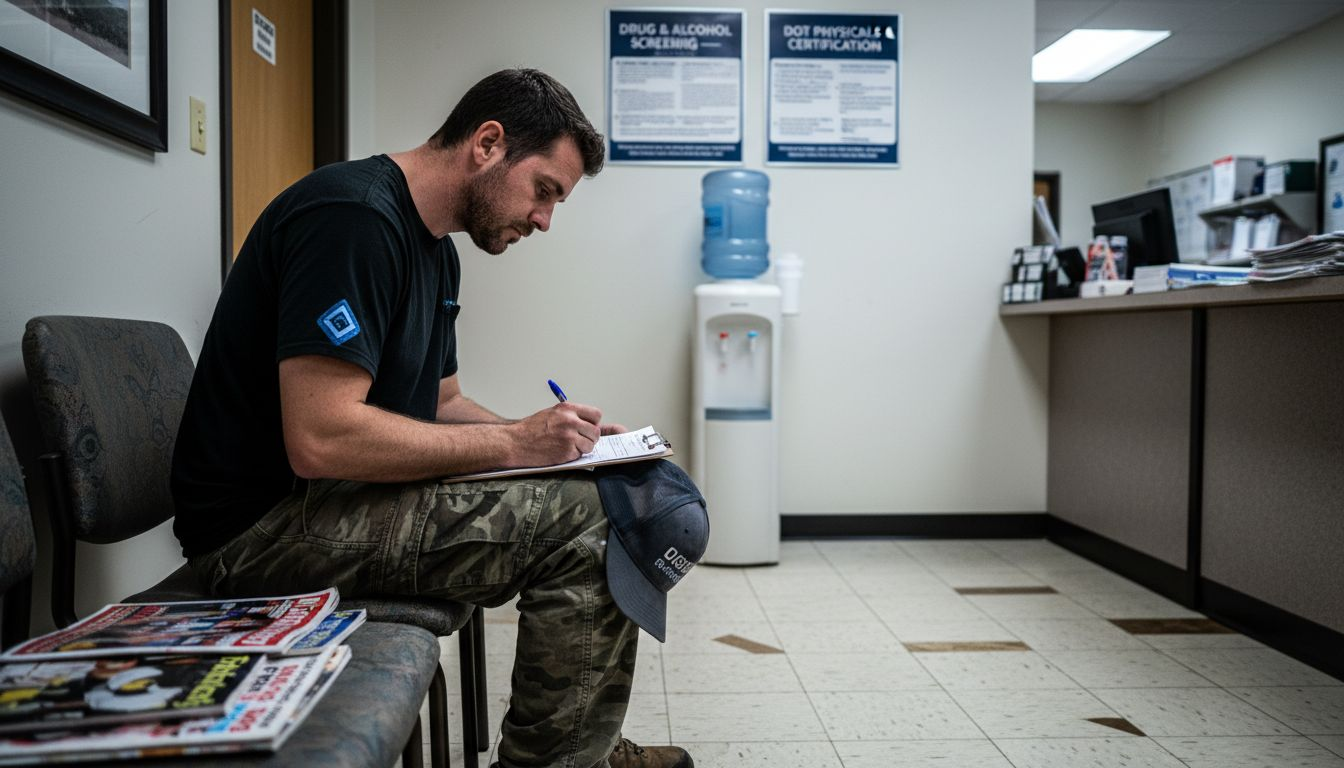
Random testing conducts unannounced tests throughout the year at a 50% annual rate for drug screening. Selection must be truly random using computer-generated methods or consortium systems. Spread tests evenly across all quarters to maintain deterrent effects.
Post-accident testing follows qualifying incidents involving fatalities, citations, or towing requirements. You must test drivers within specific timeframes after accidents meeting federal thresholds. Understanding post-accident drug testing protocols prevents compliance gaps during critical events.
Reasonable suspicion testing applies when trained supervisors observe behaviors indicating drug use. Document specific observations of appearance, behavior, speech, or body odor before requiring tests. Proper documentation protects both your decision and legal standing.
Return-to-duty testing follows positive results and requires referral to substance abuse professional and negative test before reinstatement. Drivers cannot resume safety-sensitive duties until completing SAP evaluations and receiving clearance.
Follow-up testing monitors drivers after returning to safety-sensitive work. SAPs determine the frequency and duration of follow-up tests, typically ranging from six to 60 months. These unannounced tests ensure continued sobriety and workplace safety.
Drug panels tested in DOT drug tests
The standard DOT drug test screens five classes: marijuana, cocaine, amphetamines, opiates, and PCP. This established panel targets the most common substances affecting driver safety and performance on roadways.
Marijuana (THC) testing detects cannabis use regardless of state legalization status. Federal DOT rules prohibit marijuana use for safety-sensitive employees even in states with legal recreational or medical programs. Positive THC results disqualify drivers from commercial operation.
Cocaine screening identifies recent stimulant use that impairs judgment and reaction times. Amphetamine testing covers methamphetamine and MDMA (ecstasy), which create dangerous alertness patterns and crash risks. Both substance classes pose severe safety hazards in commercial driving.
Opiate testing traditionally covered codeine, morphine, and heroin. Modern panels now include semi-synthetic opioids like hydrocodone and oxycodone to address prescription painkiller abuse. These medications significantly impair driving ability even when legally prescribed.
PCP (phencyclidine) detection remains part of DOT panels despite lower prevalence rates. This hallucinogen causes severe behavioral changes and perception distortions incompatible with safe vehicle operation.
The 2026 addition of fentanyl and norfentanyl to DOT drug panels addresses the national opioid crisis affecting transportation safety. Employers must recognize these expanded panels when interpreting results and selecting testing services. Understanding DOT drug panels comparison helps you communicate requirements clearly to testing providers.
Comparison of urine vs oral fluid testing for truck drivers
Urine testing serves as the established DOT standard with decades of regulatory protocols and legal precedent. Labs process urine specimens using well-documented procedures that courts and regulators accept without question. Most testing infrastructure and collector training focuses on urine collection methods.
Oral fluid drug testing federally approved in December 2024 as alternative to urine testing gains adoption throughout 2026. This newer method offers less invasive collection and faster processing in certain scenarios. However, implementation requires updated training and procedural adjustments.
Detection windows differ significantly between specimen types. Oral fluid testing detects recent use within hours versus days for urine, making it valuable for post-accident investigations where immediate impairment matters most. Urine testing captures longer historical use patterns better suited for random screening programs.
Collection procedures impact driver acceptance and operational flow. Oral fluid collection involves supervised mouth swabbing without privacy concerns of urine collection. This reduces collection time and eliminates bathroom access requirements. However, employers using oral fluid testing must follow DOT Part 40 procedures and train collectors accordingly.
| Specimen Type | Detection Window | Collection Time | Privacy Required | Best Use Case |
|---|---|---|---|---|
| Urine | 2-4 days | 15-30 minutes | Yes | Pre-employment, random testing |
| Oral Fluid | 24-48 hours | 5-10 minutes | No | Post-accident, reasonable suspicion |
Cost considerations vary by testing volume and infrastructure. Urine testing leverages established lab networks and lower per-test fees at scale. Oral fluid testing may cost more per test but saves time in collection and reduces facility requirements. Evaluate total program costs beyond individual test prices.
Regulatory acceptance remains strongest for urine testing across all DOT scenarios. Oral fluid testing gains ground but check current 2026 drug screening standards and verify your testing provider meets federal certification requirements. Consult with your Medical Review Officer about specimen selection for specific situations.
Pro Tip: Consider maintaining both urine and oral fluid testing capabilities to optimize your program for different scenarios. Use urine for routine pre-employment and random tests, then deploy oral fluid for post-accident situations requiring rapid recent-use detection.
Frequency and triggers for drug testing
Mandatory drug test reasons include pre-employment, random, post-accident, and reasonable suspicion scenarios throughout driver employment. Each trigger serves specific regulatory purposes and occurs under defined circumstances you must recognize and implement correctly.
The random drug testing rate for CDL drivers remains 50% in 2026, meaning you must test at least half your safety-sensitive workforce annually. The random alcohol testing rate stays at 10% for 2026. These percentages represent minimum requirements, and you may test more frequently if desired.
Random selection must be truly unpredictable using computer-generated processes or consortium random pools. Never allow supervisors to hand-pick drivers for random tests. Distribute testing evenly across all calendar quarters to maintain year-round deterrent effects and regulatory compliance.
Post-accident testing requirements activate after incidents meeting specific federal thresholds. Test drivers within 32 hours for drugs and 8 hours for alcohol following qualifying accidents. Understanding post-accident drug testing requirements ensures you act within critical timeframes.
Reasonable suspicion testing occurs whenever trained supervisors document specific observable behaviors. Return-to-duty and follow-up testing frequencies depend on SAP recommendations following positive results. Some drivers may require monthly follow-up tests for years after violations.
Testing procedures and compliance requirements
Chain-of-custody protocols protect specimen integrity from collection through laboratory analysis and legal proceedings. Certified collectors and labs must follow strict chain-of-custody protocols to ensure specimen integrity and regulatory compliance. Breaking chain-of-custody renders test results legally inadmissible and useless for enforcement.
Collectors must complete DOT-approved training and maintain current certification to conduct compliant specimen collection. They verify driver identity, observe collection procedures, properly seal specimens, and complete detailed custody documentation. Never allow uncertified staff to collect specimens for DOT testing.
Laboratories processing DOT specimens must be certified by HHS National Laboratory Certification Program for DOT testing. These facilities maintain strict quality controls, equipment calibration, and proficiency testing to ensure accurate results. Confirm your testing provider uses only certified laboratories.
Split specimen testing allows drivers to request confirmatory analysis of the second specimen portion if initial results are positive. This safeguard protects drivers from false positives while maintaining testing integrity. Ensure your testing provider properly splits and stores specimens per DOT requirements.
Medical Review Officers review all test results before reporting them to employers. These licensed physicians verify positive results, rule out legitimate medical explanations, and interview drivers about prescription medications. The Medical Review Officer role remains critical for defensible testing programs.
Substance Abuse Professionals evaluate drivers after positive tests and determine return-to-duty requirements. They assess substance abuse problems, recommend treatment, and authorize return-to-duty testing. SAPs serve as independent gatekeepers protecting both driver welfare and public safety. Some results may require further testing explanations from laboratory personnel or MROs.
Summary comparison of drug test types for truck drivers
| Test Type | Trigger | Specimen Options | Detection Window | Primary Strength | Best Use Case |
|---|---|---|---|---|---|
| Pre-employment | Before hire | Urine (standard) | 2-4 days | Baseline screening | All new CDL hires |
| Random | Unannounced selection | Urine, oral fluid | Varies by specimen | Ongoing deterrent | Safety-sensitive workforce |
| Post-accident | Qualifying incidents | Urine, oral fluid | Hours to days | Immediate impairment detection | Accident investigations |
| Reasonable suspicion | Observed behaviors | Urine, oral fluid | Hours to days | Supervisor-initiated safety | Behavioral concerns |
| Return-to-duty | After positive test | Urine (required) | 2-4 days | SAP-verified sobriety | Reinstatement clearance |
| Follow-up | Post-violation monitoring | Urine (standard) | 2-4 days | Long-term compliance | Ongoing recovery support |
This comparison illustrates how each test type serves distinct compliance and safety purposes throughout driver employment. Match specimen selection to operational needs while maintaining strict adherence to DOT Part 40 requirements. Consider detection windows when investigating specific incidents versus conducting routine screening.
Situational recommendations for trucking employers
Use DOT 5-panel urine testing for pre-employment screening per federal regulations. This established method provides reliable baseline screening and enjoys universal regulatory acceptance. Build your pre-employment process around urine testing to avoid complications.
Leverage oral fluid testing for post-accident screening when detecting immediate impairment matters most. The shorter detection window identifies very recent drug use more accurately than urine in time-sensitive investigations. Deploy this method strategically for maximum investigative value.
Employ urine testing for cost-effective random screening within consortium programs. The lower per-test cost and established infrastructure make urine ideal for high-volume routine testing. Join a consortium to simplify random selection and reduce administrative burden.
Apply reasonable suspicion testing immediately when trained supervisors document concerning behaviors. Choose specimen type based on suspected substance and timing of observed behaviors. Never delay testing due to specimen availability concerns.
Manage return-to-duty and follow-up testing following SAP recommendations and regulatory mandates. Urine testing typically serves these scenarios given regulatory preference and longer detection windows. Maintain consistent follow-up schedules to support driver recovery and workplace safety.
Balance operational practicality with driver acceptance when designing your comprehensive testing program. Consider facility access, collection scheduling, and driver privacy concerns alongside regulatory requirements. Review drug testing for transportation compliance options regularly and update programs as regulations evolve.
Pro Tip: Document your testing program policies clearly in writing and train all supervisors on proper implementation. Consistent application protects you from discrimination claims while ensuring every driver receives fair treatment under your testing protocols. Consult post-accident drug testing guidance when developing incident response procedures.
Ensure compliance with Countrywide Testing’s certified lab services
Navigating 2026 DOT drug testing requirements demands reliable partners who understand trucking industry compliance. Countrywide Testing offers federally certified labs meeting current DOT standards with both urine and oral fluid testing options for truck drivers. Our nationwide coverage and expert support tailor testing programs to your fleet size and operational needs.
We simplify program implementation with streamlined reporting systems that track testing frequencies and deadlines automatically. Our certified collectors and Medical Review Officers ensure chain-of-custody integrity throughout every specimen’s journey. Access comprehensive laboratory drug testing services designed specifically for transportation employers facing complex federal requirements. Partner with Countrywide Testing to build defensible testing programs that protect your drivers, your company, and the traveling public.
FAQ
What drugs are included in the 2026 DOT drug test panel?
The standard DOT panel screens for marijuana, cocaine, amphetamines, opiates, and PCP. Fentanyl and norfentanyl were added in 2026 due to the opioid crisis affecting transportation safety. Employers must recognize these seven substances when interpreting test results and selecting testing services.
Can oral fluid testing replace urine testing for DOT compliance?
Oral fluid testing is federally approved as an alternative but urine remains the primary DOT standard. Most pre-employment and random testing still uses urine specimens given established procedures and infrastructure. Oral fluid works best for post-accident and reasonable suspicion scenarios requiring recent-use detection.
How often must random drug tests be conducted for truck drivers in 2026?
The random drug testing rate is 50% annually for safety-sensitive CDL drivers in 2026. Random alcohol testing remains at 10% per year. These percentages represent minimum requirements and you must distribute tests evenly throughout all four calendar quarters.
What are employer responsibilities after a positive drug test result?
You must immediately remove the driver from safety-sensitive duties upon receiving a verified positive result. Refer the driver to a Substance Abuse Professional for evaluation and treatment recommendations. The driver cannot return to safety-sensitive work until completing SAP requirements and passing a return-to-duty test.
Do state marijuana laws affect DOT drug testing requirements?
Federal DOT regulations prohibit marijuana use for safety-sensitive employees regardless of state legalization status. Positive marijuana tests disqualify drivers from commercial operation even in states with legal recreational or medical cannabis programs. Federal law supersedes state marijuana laws for CDL holders.