
Alcohol Detection: Ensuring Compliance in Logistics
Choosing the right alcohol detection method can feel complex when your logistics operation spans borders and safety-sensitive roles. As federal transportation rules tighten across the United States and Canada, your compliance decisions directly impact risk and business continuity. This guide explains the core principles of alcohol detection in the workplace, helping you understand which testing strategies meet regulatory demands while keeping your drivers and company protected.
Table of Contents
- Alcohol Detection Methods And Core Principles
- Common Types Of Workplace Alcohol Testing
- Legal Standards For Transportation Compliance
- Detection Windows And Accuracy Factors
- Risks, Liabilities, And Compliance Mistakes
Key Takeaways
| Point | Details |
|---|---|
| Understand Testing Methods | Familiarize yourself with various alcohol detection methods, including breath and blood testing, to select the best strategy for your logistics operation. |
| Balance Speed and Accuracy | Use quick breath tests for pre-shift screening while reserving blood or urine tests for legal situations, ensuring compliance with federal regulations. |
| Establish Consistent Policies | Develop clear policies that outline testing protocols to minimize legal liabilities and ensure consistent enforcement among all employees. |
| Partner with Certified Laboratories | Collaborate with SAMHSA-certified labs to maintain the integrity of your testing results and protect against legal challenges. |
Alcohol Detection Methods and Core Principles
Alcohol detection in transportation logistics relies on identifying ethanol presence through multiple scientific approaches. Your job as an HR manager is understanding how these methods work so you can choose the right testing strategy for your operation.
Each detection method operates on the same fundamental principle: measuring ethanol concentration or its metabolic byproducts. Different approaches vary in accuracy, speed, and invasiveness, which impacts how your team implements them.
How Detection Works
Alcohol moves through the human body in predictable ways. When someone consumes alcohol, ethanol circulates through the bloodstream, exhales through the lungs, and breaks down into measurable compounds. Detection methods target one of these pathways.
The six major detection categories include:
- Breath alcohol devices that measure vapor concentration in exhaled air
- Bodily fluid testing analyzing blood or urine samples in laboratories
- Transdermal sensors detecting alcohol through skin perspiration
- Mathematical algorithms calculating impairment based on consumption data
- Optical techniques using light absorption to identify ethanol presence
- Enzymatic and electrochemical sensors leveraging chemical reactions for rapid detection
Your logistics company will typically use breath and bodily fluid methods because they’re federally accepted, reliable, and meet Department of Transportation standards.
Speed and Accuracy Trade-offs
Breath tests deliver results in minutes, making them ideal for roadside screening. However, they measure current impairment, not recent consumption. A driver who drank eight hours ago might fail a breath test even though alcohol has cleared their system.
Urine and blood tests take longer because samples need laboratory processing. The advantage? They’re admissible in legal proceedings and detect alcohol metabolites that persist longer in the body.
Choose breath tests for quick pre-shift screening, and reserve blood or urine testing for post-accident investigations or federal compliance documentation.
Transdermal sensors represent emerging technology. They detect alcohol through sweat without invasiveness, though court acceptance still varies by jurisdiction.
Integrating Methods Into Your Compliance Program
Your federal mandate requires testing protocols that catch impairment consistently. Combining multiple methods strengthens your defense against liability while protecting your drivers and other road users.
Many operations use different alcohol testing methods in sequence. Pre-employment screening uses one method, post-accident testing uses another, and random testing uses a third depending on your company’s risk profile.
The science supports this layered approach. No single method catches every situation, but combining breath screening with periodic urine testing creates comprehensive coverage that federal auditors expect.
Pro tip: Partner with a SAMHSA-certified laboratory like those on CountryWideTesting.com so your test results withstand regulatory scrutiny and legal challenges if incidents occur.
Common Types of Workplace Alcohol Testing
Logistics companies rely on five primary alcohol testing methods, each with distinct advantages and limitations. Your choice depends on when you’re testing, what you need to detect, and whether results must hold up in legal proceedings.
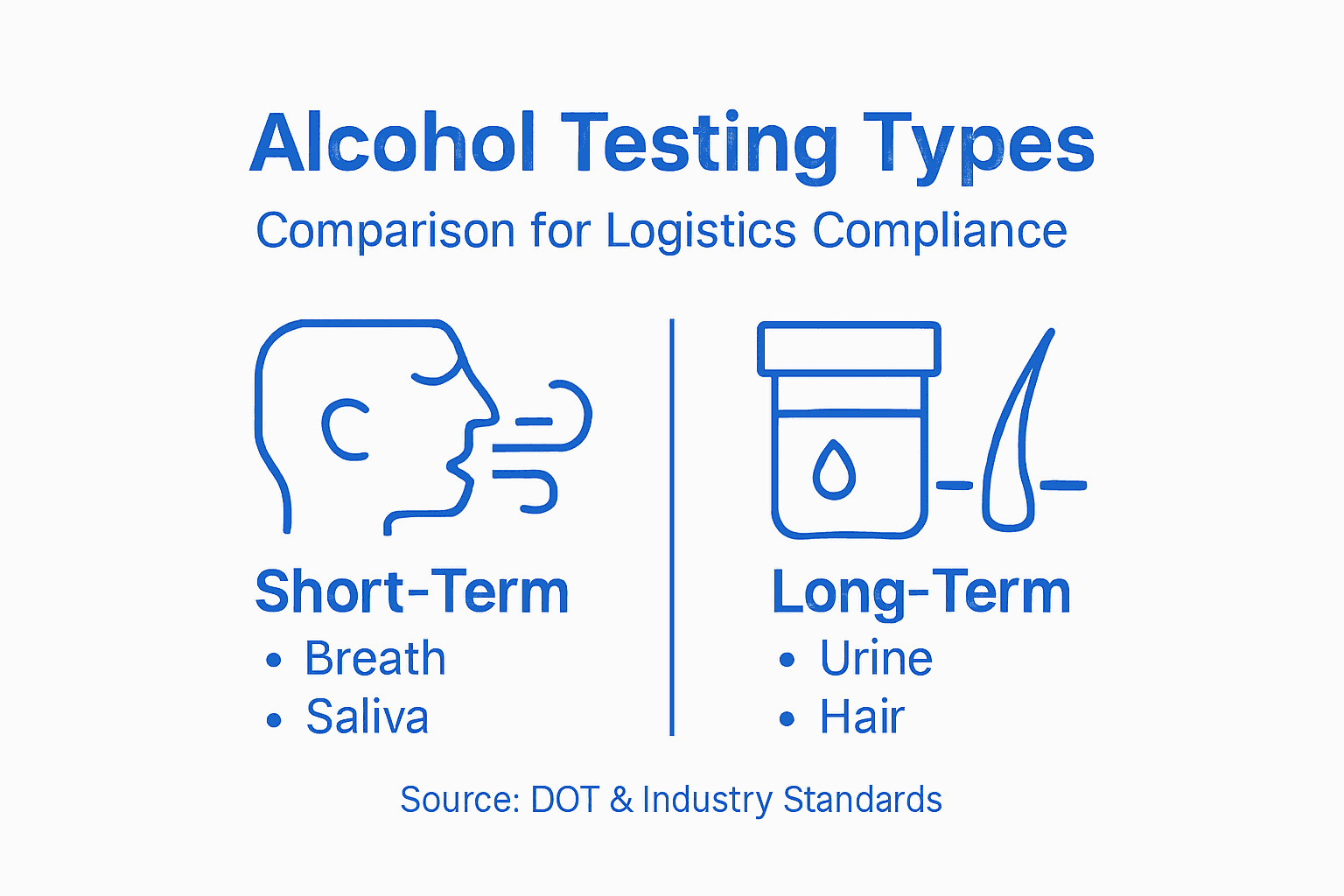
Breath testing dominates logistics operations because it’s fast, non-invasive, and accepted by the Department of Transportation. Urine and blood tests take longer but capture a broader detection window. Saliva and hair tests offer emerging alternatives, though their legal acceptance varies across states.
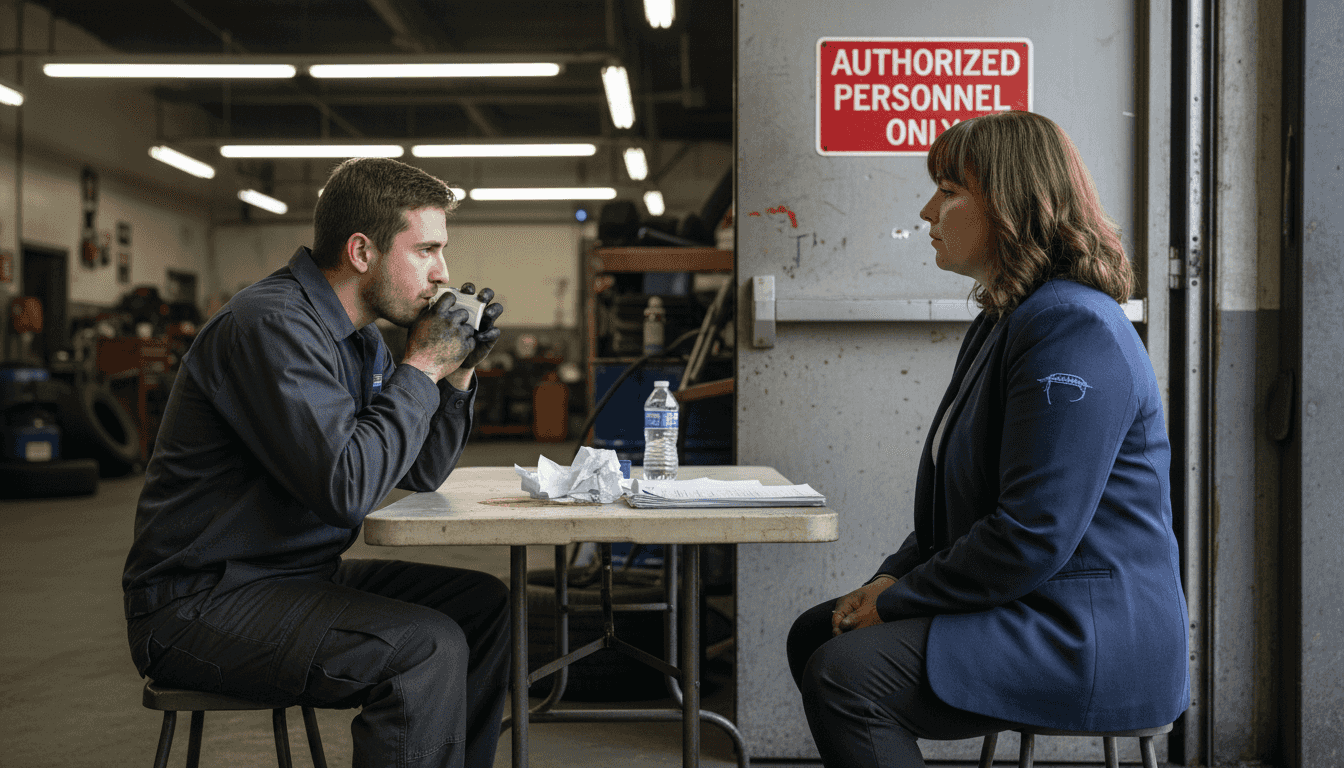
The Five Main Testing Methods
Breath alcohol tests measure ethanol vapor in exhaled air within minutes. They show current impairment levels, making them ideal for pre-shift screening and roadside assessments. The drawback? Results fade as quickly as the alcohol does.
Urine tests detect alcohol metabolites and remain positive for 24 to 48 hours after consumption. They’re laboratory-based, more expensive, and admissible in court. Drivers can’t pass by waiting out the detection window.
Blood tests represent the gold standard for legal proceedings. They’re highly accurate and measure actual blood alcohol concentration, but require medical personnel and take days for results. Federal accident investigations often use this method.
Saliva tests work similarly to breath tests but detect ethanol in mouth fluid. They’re less common in logistics because they have shorter detection windows and limited legal precedent.
Hair tests detect alcohol metabolites in hair shaft proteins and can show alcohol use over 90 days. However, they’re expensive, have slower results, and testing for alcohol in safety-critical roles requires careful policy documentation.
Below is a summary contrasting key workplace alcohol testing methods and their practical implications:
| Test Method | Ideal Usage Scenario | Detection Window | Legal Strength |
|---|---|---|---|
| Breath | Pre-shift/random screening | 12–24 hours | Widely admissible |
| Urine | Post-accident confirmation | 24–48 hours (metabolites) | High, if chain of custody followed |
| Blood | Legal investigations | 24–48 hours | Gold standard |
| Saliva | Immediate, less common | 12–24 hours | Limited case law support |
| Hair | Assess long-term use | Up to 90 days | Useful for patterns, not impairment |
Matching Tests to Your Testing Scenarios
Federal regulations require different testing types for different situations. Your compliance program needs multiple methods working together.
- Pre-employment: Breath or urine to establish baseline
- Random testing: Breath for quick detection, rotating with urine annually
- Post-accident: Blood or urine for legal defensibility
- Reasonable suspicion: Breath as immediate screening tool
Use breath tests for speed and accessibility, but pair them with urine testing annually so your program withstands federal audits and demonstrates comprehensive monitoring.
Detection windows matter more than you might think. A driver who drank last night might blow positive on a breath test even though they’re sober. Urine tests catch this ambiguity because metabolites linger longer.
Your logistics operation should document why you chose each method. Federal investigators look for consistency and logical justification, not random testing choices.
Pro tip: Use breath tests for initial screening at dispatch facilities, then confirm any positive results with laboratory urine or blood testing before terminating employment—this two-step approach protects you from wrongful termination lawsuits.
Legal Standards for Transportation Compliance
Federal transportation regulations mandate alcohol testing for safety-sensitive positions in your logistics operation. These standards exist because impaired driving kills. Your job is understanding what the law requires, not debating whether testing is fair.
The Department of Transportation sets the floor for compliance. States add their own requirements. Your company must meet whichever standard is stricter—federal or state.
Federal Testing Requirements
The Federal Motor Carrier Safety Administration requires alcohol and drug testing for commercial drivers. This applies to any employee operating a vehicle weighing over 10,000 pounds.
Federal standards mandate:
- Pre-employment testing before any driver enters your safety-sensitive role
- Random testing at least annually for all covered employees
- Post-accident testing within 32 hours of any accident involving injury or towing
- Reasonable suspicion testing when management observes signs of impairment
- Return-to-duty testing before reinstating drivers after violations
The legal blood alcohol limit for commercial drivers is 0.04 percent—half the 0.08 percent limit for regular drivers. This strict standard reflects the heightened risk commercial vehicles pose.
State and Local Variations
Some states impose stricter standards than federal requirements. California, for example, has additional testing protocols for certain logistics positions. North Carolina requires post-accident testing even for smaller vehicles.
Your company operates in multiple states, which means tracking different regulations for different locations. One driver may face 0.04 limits while another faces 0.02 limits depending on where they operate.
Documenting federal drug testing requirements and your specific state rules creates legal defensibility. Auditors expect you to know these distinctions.
Testing Protocols and Chain of Custody
Certified laboratories must process all legally admissible samples. Your testing provider must meet SAMHSA, CLIA, and CAP standards—not optional guidelines, but legal requirements.
Chain of custody documentation protects you legally. Every person handling a sample must sign off, establishing who touched the sample and when. Gaps in this chain destroy legal admissibility.
Federal law requires testing through certified laboratories using government-approved protocols—cutting corners here exposes your company to lawsuits and fines.
Direct observation for urine samples is required by federal standards. Yes, it’s uncomfortable. No, you can’t skip it. Failure to observe samples gives drivers grounds to challenge results in court.
Consequences of Non-Compliance
The FMCSA can fine your company up to $27,500 for testing violations. First-time violations typically result in mandatory compliance audits costing thousands in administrative time and testing fees.
More damaging: if an impaired driver your company failed to test causes an accident, victims can sue for negligent hiring. Insurance won’t cover this. You will.
States also suspend operating authority for companies that fail audits. This means your company stops operating entirely until compliance is documented.
Pro tip: Partner with a SAMHSA-certified testing provider from the start, document every policy decision, and retain testing records for five years—this paper trail is your legal shield if regulators or attorneys question your compliance.
Detection Windows and Accuracy Factors
Detection windows determine whether your test catches recent alcohol use or consumption from days ago. Window length varies dramatically by testing method, which affects your testing strategy and timing decisions.
Accuracy depends on more than the test itself. Sample handling, individual physiology, timing, and which biomarkers you measure all influence whether results are reliable in court or indefensible under cross-examination.
How Long Tests Detect Alcohol
Breath tests detect active ethanol for 12 to 24 hours after consumption. This narrow window means testing must happen soon after suspected drinking or results are useless.
Blood tests detect ethanol for 24 to 48 hours. They measure actual alcohol concentration in the bloodstream, making them more precise for recent consumption but equally time-sensitive.
Urine tests expand the window significantly. Standard urine testing detects alcohol metabolites for 24 to 48 hours, but indirect biomarkers extend detection windows to several days depending on which markers laboratories measure.
Hair testing captures months of use. It detects chronic alcohol consumption over 90 days, though it cannot pinpoint when consumption occurred or measure impairment levels.
Why Timing Matters
A driver who drank Friday night might test negative on Monday morning breath test. Their urine could still show metabolites. Hair testing would show nothing useful about their Monday impairment.
Your testing protocol must match your detection goal. Pre-shift screening uses breath because you need immediate results. Post-accident investigation uses blood or urine because legal admissibility matters more than speed.
Federal regulations require post-accident testing within 32 hours. Miss this window and your test results lose legal standing. The alcohol may be gone, but metabolites remain.
Factors Affecting Accuracy
Genetic differences influence how fast individuals metabolize alcohol. Two drivers with identical consumption may produce different test results based on enzyme variations. This reality matters when defending results.
Food, medications, and individual health conditions affect detection. A diabetic driver might show false positives on breath tests due to ketones. A driver on certain antibiotics might show alcohol presence without consuming any.
Sample collection and storage critically impact accuracy. Improper sealing allows evaporation, inflating results. Contamination during collection invalidates results entirely. Your testing provider’s procedures determine whether results survive legal challenge.
Accuracy depends on proper collection technique, correct lab procedures, and understanding that one positive test alone rarely proves impairment without supporting evidence.
Laboratory certification matters tremendously. SAMHSA-certified labs follow rigorous quality controls. Non-certified labs cut corners, producing results that defendants successfully challenge in court.
Pro tip: Document the exact time between suspected alcohol use and test administration, environmental conditions, and the tester’s qualifications—these details prove your results are defensible if challenged in litigation.
Risks, Liabilities, and Compliance Mistakes
One compliance mistake costs you more than six months of testing budgets. Lawsuits from wrongful termination, negligent hiring, or privacy violations drain resources faster than most HR managers anticipate.
Your biggest risk isn’t failed tests—it’s inconsistent policy enforcement and unclear communication. These lapses expose your company to litigation while failing to actually protect drivers and public safety.
Common Compliance Mistakes
Vague testing policies create legal exposure. If your written policy says “random testing” but you only test after complaints, that’s inconsistent enforcement. Employees challenge terminations based on this inconsistency.
Failing to communicate policies clearly generates liability. Drivers who claim they never knew about testing requirements have legitimate grounds to contest discipline. Documentation of policy distribution matters legally.
Inconsistent application across employees is a major vulnerability. Testing one driver for reasonable suspicion but not another creates discrimination claims. Federal courts take this seriously.
Ignoring medical certifications creates failed audits. Using non-SAMHSA laboratories or skipping chain-of-custody procedures makes results inadmissible. You’ve spent testing money with no legal protection.
Mistake number five: failing to balance safety with privacy rights. Excessive observation procedures, public testing, or sharing results with non-essential employees violate privacy rights and spawn lawsuits. Clear workplace policies establish boundaries between legitimate safety needs and employee rights.
Here are common compliance errors and their business impact:
| Mistake Type | Typical Consequence | Risk Exposure |
|---|---|---|
| Vague testing policy | Legal challenges from employees | HR time, court penalties |
| Non-certified lab use | Invalid test results in litigation | Wrongful termination claims |
| Inconsistent test enforcement | Discrimination allegations | Equal employment claims |
| Skipping chain-of-custody | Inadmissible results | Failed audits, fines |
| Neglecting privacy standards | Employee lawsuits for privacy breach | Reputational, financial loss |
Liability Exposure by Scenario
Scenario one: you skip testing an impaired driver. That driver causes an accident. Victims sue your company for negligent hiring and negligent retention. Your insurance claims the accident was foreseeable, denying coverage. You pay damages personally.
Scenario two: you terminate a driver based on a positive test from a non-certified lab. The driver sues for wrongful termination. Your test results are inadmissible, leaving you defenseless. You rehire the driver, pay back wages, and cover legal fees.
Scenario three: a driver tests positive. You don’t offer rehabilitation support as your policy requires. They claim discrimination based on disability. Americans with Disabilities Act claims are expensive to defend.
Inconsistent policies and non-certified testing create liability. Consistent enforcement through certified laboratories is your legal foundation.
What Auditors Actually Look For
Federal auditors examine your written testing policy against actual testing records. If they don’t match, violations are documented.
They verify:
- Every covered employee appears in testing records
- All tests used certified laboratories
- Chain of custody is complete and signed
- Post-accident testing occurred within required timeframes
- Reasonable suspicion is documented with specific observations
Missing documentation is treated as non-compliance. Your word means nothing. Only written records protect you.
Pro tip: Create a testing calendar tracking which employees need random testing each quarter, require supervisors to document suspicious behavior in writing before testing, and maintain a master file with all results, lab certifications, and chain-of-custody forms organized by employee and date.
Ensure Reliable Alcohol Detection With Certified Testing Solutions
Understanding the critical role of accurate alcohol detection methods is essential for logistics companies committed to safety and compliance. The challenges of balancing rapid results, legal admissibility, and federal mandates can leave HR managers overwhelmed. CountryWideTesting.com addresses these pain points by providing access to a wide range of testing options including breath, urine, and blood alcohol tests processed through licensed laboratories that meet SAMHSA, ISO, CLIA, and CAP standards. This ensures your test results are legally defensible and protect your company from costly liabilities.
Take control of your workplace safety and compliance today by utilizing trusted testing services and products from CountryWideTesting.com. Explore comprehensive solutions tailored for federal and state regulations, and partner with a platform that supports your need for dependable chain-of-custody procedures and certified laboratory processing. Make your next step a commitment to protecting your drivers, company reputation, and peace of mind with reliable alcohol testing that meets all regulatory requirements.
Frequently Asked Questions
What are the main types of alcohol detection methods used in logistics?
The main types of alcohol detection methods in logistics include breath alcohol devices, bodily fluid testing (blood or urine), transdermal sensors, mathematical algorithms, optical techniques, and enzymatic electrochemical sensors.
How do detection windows affect alcohol testing results?
Detection windows determine how long after alcohol consumption a test can still provide a positive result. Breath tests typically detect active ethanol for 12 to 24 hours, while urine tests can detect metabolites for up to 48 hours and hair tests can show alcohol use for up to 90 days.
What testing method is best for pre-employment screening in logistics?
Breath alcohol tests are ideal for pre-employment screening because they provide quick, non-invasive results. They measure current impairment, allowing for immediate assessment of an employee’s fitness to drive.
Why is chain of custody important in alcohol testing?
Chain of custody is crucial because it documents every handling step of a sample from collection to testing. This legal requirement ensures the test results are admissible in court and protects against claims of tampering or mishandling.
Recommended
- Pruebas de Alcohol para Empresas: Cumplimiento y Seguridad
- Why Alcohol Testing Matters for Workplace Safety
- Procedimiento de pruebas de alcohol en empresas paso a paso
- 7 Key Examples of Alcohol Testing Protocols for HR
- What Is Fleet Management and Why It Matters - GridOps | Charter, Limo and Shuttle Reservation System & Operating System