
Drug testing checklist for schools: ensure policy success
TL;DR:
- Effective school drug testing requires a clear legal foundation and student consent protocols.
- Combining testing with prevention programs and support leads to better long-term student outcomes.
- Confidential handling of results and supportive interventions are essential for program success.
Protecting students from drug use while respecting their privacy and legal rights is one of the most delicate challenges school administrators face. A poorly designed policy can expose your institution to lawsuits, erode student trust, and deliver no measurable reduction in drug use. A well-designed one does the opposite. Supreme Court precedent allows random suspicionless testing for student athletes and extracurricular participants, but no statewide mandates exist, meaning your district carries the full weight of policy design. This checklist walks you through every critical step, from legal foundations to intervention protocols, so your program is built to work.
Table of Contents
- Clarifying legal requirements and consent
- Building the evidence-based drug testing checklist
- Choosing testing methods and schedules
- Addressing results, intervention, and compliance
- A smarter approach: Policy for results, not just compliance
- Enhance your school’s testing program with reliable solutions
- Frequently asked questions
Key Takeaways
| Point | Details |
|---|---|
| Legal compliance first | Understand Supreme Court precedent and obtain proper consent before implementing student drug testing. |
| Checklist drives clarity | Use an evidence-based checklist to guide policy, process, and communication with students and parents. |
| Choose testing wisely | Select methods and schedules to maximize participation while respecting student rights and school goals. |
| Support over punishment | Prioritize intervention and counseling for positive cases instead of punitive measures. |
| Continuous improvement | Regularly review data and policy outcomes to refine your school’s drug testing program. |
Clarifying legal requirements and consent
Every effective school drug testing program starts with a clear legal foundation. Without it, your policy is vulnerable to challenges that can shut down the entire program, sometimes mid-year. Two landmark Supreme Court cases set the framework every administrator needs to understand.
In Vernonia School District v. Acton (1995), the Court upheld random drug testing for student athletes. In Board of Education v. Earls (2002), that right was extended to all students participating in competitive extracurricular activities. These rulings established the legal basis for drug testing in schools, but they do not create a mandate. Your district decides whether to test, who to test, and how.
Because no state requires universal student drug testing, the responsibility for policy design falls entirely on your institution. Private schools have even more flexibility than public ones, but that freedom comes with the obligation to build a policy that is fair, documented, and defensible.
Here is what your legal and consent framework must include:
- Written consent forms signed by both the student and a parent or guardian before any testing begins
- Clear scope definition stating exactly which students are subject to testing (athletes, extracurricular participants, or a broader group)
- Confidentiality protocols aligned with confidentiality standards under FERPA and 42 CFR Part 2, which restrict who can access results and under what conditions
- Safe harbor provisions that allow students to self-report substance use and seek help without facing automatic disciplinary action
- A defined appeals process so students and families have a clear path to dispute results
Parental and student consent via signed forms is not optional. It is the baseline requirement that makes your program legally sound. Skipping or rushing this step is the single most common legal vulnerability we see in school testing programs.
Pro Tip: State and local laws change. Schedule an annual legal review with your school attorney specifically focused on drug testing policy updates to close any gaps before they become liabilities. A school testing compliance workflow can help you stay on top of these requirements year over year.
Building the evidence-based drug testing checklist
With your legal compliance confirmed, the next step is building a checklist that is practical, thorough, and grounded in what actually works. A checklist is only useful if it reflects real-world complexity, including edge cases.
Here is a step-by-step framework for your program:
- Define the policy scope. Specify who is tested, under what circumstances (random, reasonable suspicion, post-incident), and what substances are screened.
- Obtain signed consent. Collect forms from students and parents before the academic year begins or before participation in covered activities.
- Establish confidentiality procedures. Designate who receives results, how they are stored, and who is authorized to act on them.
- Select a certified testing provider. Work only with labs that meet SAMHSA, CLIA, or CAP standards to ensure result integrity.
- Train collection staff. Anyone involved in sample collection must follow chain-of-custody procedures to prevent tampering claims.
- Notify students of selection. Use a randomized, documented process. Notification timing should minimize disruption while preventing evasion.
- Handle edge cases in writing. Your policy must address medical exceptions (prescription medications), dilute samples, and self-reporting scenarios before they arise.
- Connect positive results to support. Every confirmed positive should trigger a counseling referral, not just a disciplinary note.
The data on testing effectiveness is nuanced. Empirical studies show reduced use among tested students, but mixed overall effectiveness across the broader student population. One frequently cited finding compares 16% drug use among tested extracurricular students versus 22% among untested peers. That gap matters, but it is not the whole story.
“Testing alone is insufficient. Combining it with social influence and competence programs shows small but consistently favorable effects on student outcomes.”
This is why step 8 is not optional. Combining testing with prevention programs is what moves the needle. Testing identifies the problem. Programs solve it.
Pro Tip: Review the student drug testing steps and conducting drug testing resources to align your internal procedures with proven collection and notification protocols.
Choosing testing methods and schedules
Not all drug tests are created equal, and the method you choose directly affects participation rates, accuracy, and cost. Private schools have flexibility in test selection, but consent and practical considerations should guide every decision.
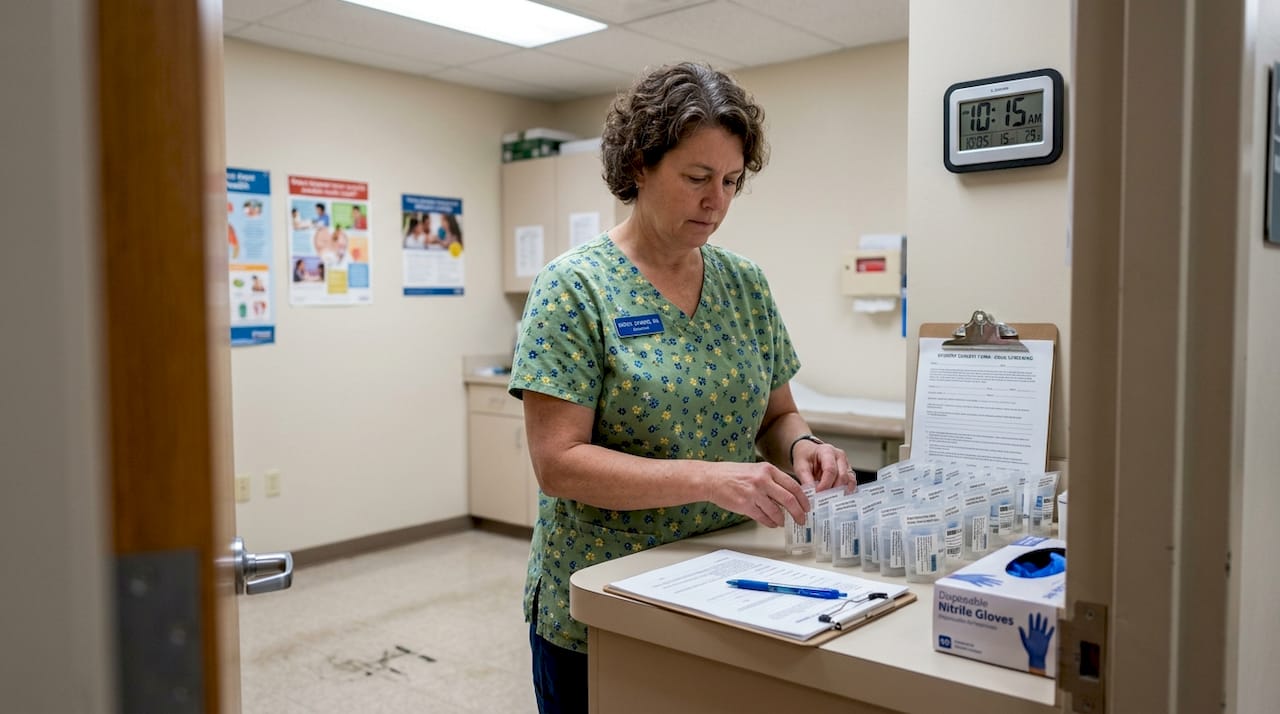
Here is a comparison of the most common testing methods:
| Method | Detection window | Ease of collection | Cost | Best use case |
|---|---|---|---|---|
| Urine (dip card) | 1 to 3 days (most substances) | Moderate | Low | Random and scheduled testing |
| Oral fluid (saliva) | 24 to 48 hours | High | Moderate | Observed collection, athletic events |
| Lab-confirmed urine | 1 to 7 days | Moderate | Higher | Confirmatory testing after positive screen |
For panel coverage, a 10 or 12 panel test screens for the substances most relevant to student populations, including marijuana, opioids, amphetamines, cocaine, and benzodiazepines. The 12-panel version adds coverage for additional prescription drugs that are increasingly misused on campuses.
Scheduling strategies and their tradeoffs:
- Random testing: Highest deterrence value because students cannot predict when they will be selected. Requires a documented randomization process.
- Scheduled testing: Easier to administer but lower deterrence since students can anticipate and prepare for test dates.
- Targeted (reasonable suspicion) testing: Applied when behavioral indicators are present. Requires documented observations to protect against bias claims.
For most schools, a combination of random testing for athletes and extracurricular participants, paired with targeted testing for documented concerns, delivers the best balance of deterrence and practicality. Explore best student testing kits to find options that fit your program’s scale and budget.
Addressing results, intervention, and compliance
Once tests are administered, careful handling of results and student well-being becomes paramount. A positive result is not the end of the process. It is the beginning of a critical decision point.
False positives are common, and punishment alone does not treat addiction. Schools that treat every positive as a disciplinary matter, without allowing for medical review or support referrals, risk harming students and facing legal challenges.
Here is how to handle results with integrity:
- Confirm before acting. Any non-negative screen should be sent to a certified lab for confirmation before any disciplinary or support action is taken.
- Allow medical documentation. Students on prescription medications must have a clear process to submit documentation to a designated medical review officer.
- Address dilute samples. A dilute result is not automatically a positive. Your policy should specify whether a dilute sample triggers a retest or is treated as inconclusive.
- Activate safe harbor for self-reporting. Students who self-report before a test should be directed to counseling without punitive consequences.
- Notify with confidentiality. Results are shared only with designated staff, never posted, announced, or discussed outside the authorized chain.
The table below outlines common sample issues and recommended resolution steps:
| Issue | Likely cause | Resolution action |
|---|---|---|
| Dilute sample | Excess water intake | Observed retest within 24 hours |
| False positive screen | Prescription medication | Medical review officer confirmation |
| Refused collection | Policy misunderstanding | Counselor meeting, policy review |
| Chain of custody gap | Collection error | Void test, recollect with supervision |
For students who test positive, integrating counseling and intervention into your response is not just best practice. It is what actually changes behavior. Review the signs of student drug use to help staff recognize when a student may need support before a test is even administered. An addiction intervention guide can also help counselors structure their first conversations with affected students. For handling edge cases like contested results or medical exceptions, documented procedures protect both the student and the institution.
A smarter approach: Policy for results, not just compliance
Here is the uncomfortable truth most drug testing vendors will not tell you: a program built purely around punishment and compliance metrics is almost guaranteed to underperform. Schools that treat testing as a deterrence tool and nothing else often see short-term behavior changes that evaporate the moment students figure out the schedule or the consequences feel manageable.
The research is clear. Testing alone is insufficient without pairing it with social influence and competence programs. The schools that see lasting improvement are the ones that use a positive test as an entry point into support, not a reason for suspension.
What does that look like in practice? It means your policy includes mandatory counseling referrals, not optional ones. It means counseling and education integration is built into the workflow from day one. And it means you review participation rates, positive rates, and student outcome data every year to see what is actually working.
Pro Tip: Set a calendar reminder each spring to pull your program’s annual metrics. If your positive rate is climbing or participation is dropping, that is a signal your policy needs adjustment, not just enforcement.
Enhance your school’s testing program with reliable solutions
Building a compliant, effective drug testing program takes more than a good policy document. You need testing products and lab services that hold up under scrutiny.
CountryWideTesting.com gives school administrators access to certified lab testing services backed by SAMHSA, CLIA, and CAP-accredited laboratories, so your results are legally defensible and accurate. For on-site screening, the 12 panel dip card test covers the substances most relevant to student populations at a cost that works for school budgets. Whether you are launching a new program or tightening an existing one, we have the tools to support every step of your compliance workflow.
Frequently asked questions
Are schools required by law to drug test all students or athletes?
No. Supreme Court cases allow random testing for athletes and extracurricular participants, but no statewide mandates exist. Local districts and private institutions set their own policies.
How effective is school drug testing in reducing student drug use?
Empirical studies show moderate reductions in targeted groups, such as 16% use among tested students versus 22% among untested peers, but overall effectiveness is limited without support programs. Pairing testing with prevention consistently improves outcomes.
What safeguards are needed to protect student privacy during drug testing?
Strict confidentiality under FERPA and 42 CFR Part 2 is required. Signed consent forms and secure, limited-access result handling are non-negotiable.
How should schools address false positives or medical exceptions?
Schools must allow students to submit medical documentation and follow up on dilute or disputed samples through a medical review officer. Safe harbor for self-reporting is also considered best practice.
Is punishment the best approach for positive drug tests?
Punishment does not treat addiction. Schools that emphasize counseling, intervention, and student support alongside testing consistently see better long-term outcomes than those relying on suspension or exclusion alone.