
Student Drug Screening Guide: 7 Steps for School Policies
School administrators face mounting pressure to detect and prevent student substance use while navigating a maze of legal, procedural, and ethical complexities. Implementing an effective drug screening program requires balancing student privacy rights with campus safety goals, understanding Supreme Court precedents, and choosing scientifically validated testing methods. This guide delivers actionable steps grounded in evidence, regulatory compliance, and best practices to help you design a fair, effective screening policy that protects students and withstands legal scrutiny.
Table of Contents
- When and why schools implement drug screening
- Before you start: Key requirements and screening methods
- How to implement a student drug screening program
- Effectiveness, controversies, and supportive interventions
- Expert support and reliable testing solutions for your school
- Frequently asked questions
Key Takeaways
| Point | Details |
|---|---|
| Check legal requirements | Always align your school drug screening policy with both federal and state laws for compliance and privacy. |
| Select proven testing methods | Choose between urine, oral fluid, or hair tests based on your needs and verify positives with certified labs. |
| Focus on education and prevention | Pair screening with prevention, education, and access to support to maximize student well-being. |
| Transparent communication | Inform students, families, and staff clearly about procedures and purpose to build trust and prevent misunderstandings. |
| Supportive interventions | After positive results, prioritize confidential help and connection to resources, not just penalties. |
When and why schools implement drug screening
After setting the context, we clarify the legal contours and driving factors for student drug screening. Federal law permits schools to test students participating in athletics and extracurricular activities, thanks to Supreme Court decisions that balanced privacy against institutional interests in deterring drug use. These rulings established that random testing of student athletes and club members does not violate Fourth Amendment protections when conducted under clear policies with parental notification.
State regulations add layers of complexity. Many jurisdictions require reasonable suspicion and parental consent before testing, while others mandate specific notification timelines or limit testing to certain student groups. You must consult your state education code and legal counsel before drafting any screening policy to ensure compliance with local statutes.
Schools typically launch drug screening programs in response to several drivers:
- Recent incidents involving student substance use or overdoses that alarm parents and community members
- Proactive prevention efforts to deter experimentation before habits form
- Community expectations for visible action on campus safety
- Grant funding or athletic conference requirements that mandate testing protocols
Screening is a tool, not a cure. Research shows effectiveness depends heavily on program design, transparency, and whether schools pair testing with supportive interventions rather than purely punitive consequences. Understanding whether schools can legally test students helps you set realistic expectations and avoid common pitfalls.
“Drug testing should never replace comprehensive prevention education, early intervention, and access to treatment resources. It works best as one component of a broader student health strategy.”
Before you start: Key requirements and screening methods
Understanding the motivations, you’ll need to align resources and choose methods before launching any program. Your school policy must align with federal and state law, so engage legal counsel early to review draft language. Policies should specify which student groups face testing, the triggering events for random or suspicion-based tests, notification procedures, confidentiality safeguards, and consequences for positive results.
Three scientifically validated testing methods dominate school programs. Urine, oral fluid, and hair testing each offer distinct advantages and limitations:
| Method | Detection Window | Accuracy | Cost | Best For |
|---|---|---|---|---|
| Urine | 1-3 days (most drugs) | High with confirmation | Low to moderate | Random screening, broad panels |
| Oral fluid | 24-48 hours | Moderate to high | Moderate | Recent use, observed collection |
| Hair | Up to 90 days | Very high | High | Long-term use patterns, appeals |
Urine testing remains the gold standard for school programs due to its balance of accuracy, cost, and established legal precedent. Oral fluid tests offer easier, less invasive collection but detect only recent use. Hair analysis provides the longest detection window but costs significantly more and may not capture occasional experimentation.
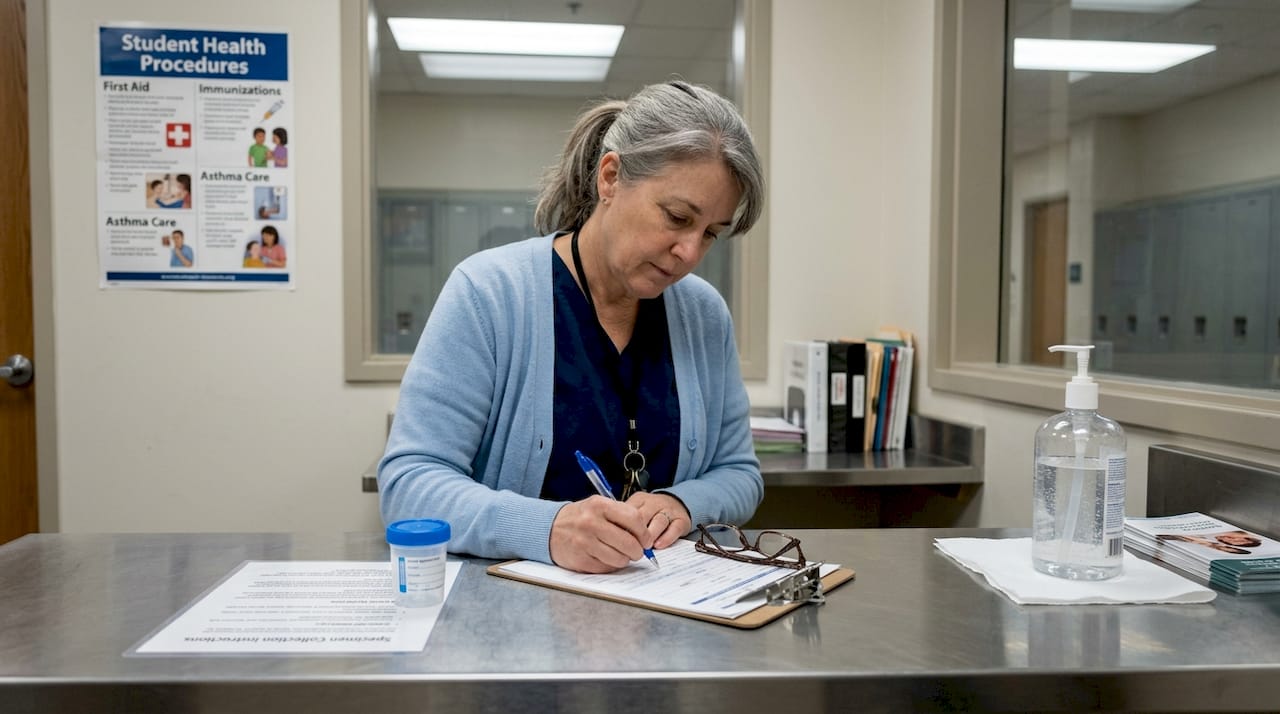
Pro Tip: Always use HHS-certified labs for confirmatory testing when initial screens return positive. Confirmatory tests eliminate false positives from cross-reactive substances like poppy seeds or certain medications, protecting students from wrongful accusations and your district from liability.
Early stakeholder communication prevents missteps and builds trust. Before announcing any program, brief school boards, parent organizations, student councils, and staff on the policy rationale, legal basis, and procedural safeguards. Transparency about what you will test for, how you will protect privacy, and what support you will offer students who test positive reduces resistance and demonstrates good faith.
Familiarize yourself with different types of drug tests available for students and review the best drug testing kits to match your budget and program goals. Investing time in method selection now saves costly revisions later.
How to implement a student drug screening program
With resources and strategy set, follow this structured rollout pathway to ensure compliance and effectiveness. A stepwise process guides you from policy drafting through ongoing evaluation, reducing errors and legal exposure.
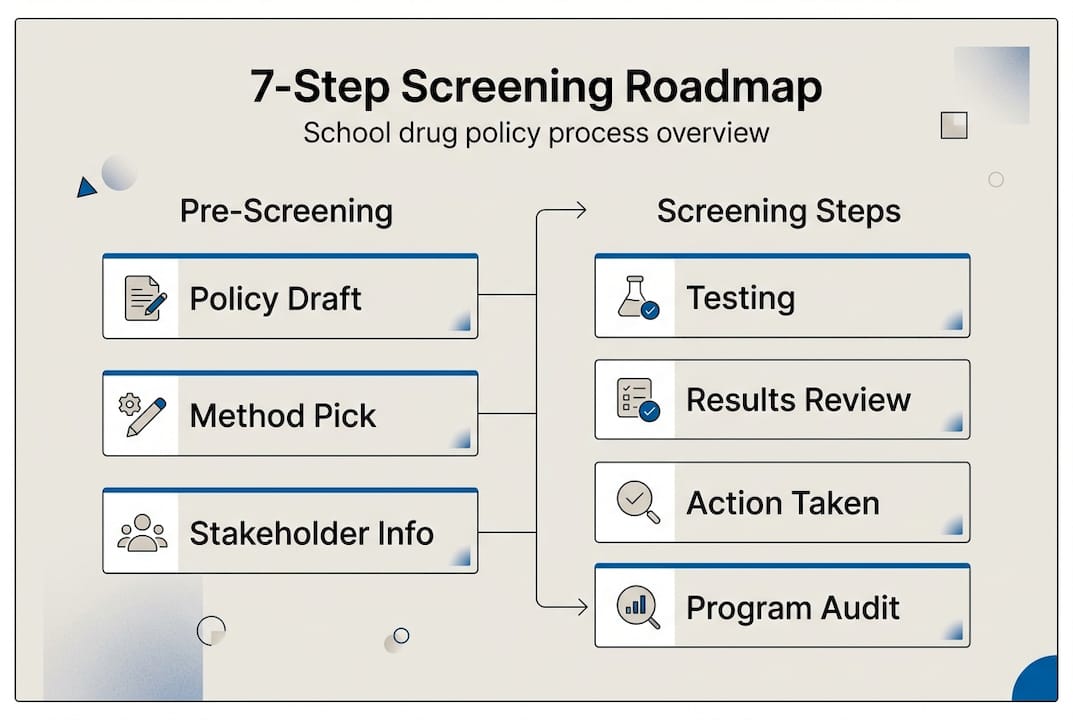
Policy development
Draft a written policy that specifies who faces testing, under what circumstances, and with what consequences. Include clear definitions of reasonable suspicion, random selection procedures, parental notification timelines, and confidentiality protections. Submit the draft to your district’s legal team and school board for approval before implementation.
Method selection
Match testing tools to your student demographics and program goals. If you aim to deter recent use at school events, oral fluid tests work well. For comprehensive screening that detects patterns over weeks, urine panels offer better value. Budget constraints may dictate starting with basic 5-panel tests and expanding to 10 or 12-panel kits as funding allows.
Stakeholder education
Host informational sessions for parents and students at least 30 days before testing begins. Explain the policy, answer questions, and distribute written materials in multiple languages if your community requires it. Transparent communication builds trust and reduces the perception that testing is punitive rather than protective.
Conducting tests
Schools must ensure privacy during collection and maintain a clear chain of custody for all samples. Designate a private testing location, train staff on proper collection procedures, and document every step from selection through sample handoff to the lab. Never allow untrained personnel to conduct tests or handle specimens.
Pro Tip: Create a standardized checklist for test administrators that includes student notification, consent verification, collection procedures, labeling requirements, and documentation steps. Consistency protects both students and staff from procedural errors that could invalidate results.
Action after positive results
Confirm all positive initial screens with laboratory-based tests before taking any action. Once confirmed, notify parents immediately and schedule a meeting to discuss next steps. Focus on supportive interventions such as counseling referrals, substance use education, or connections to community treatment resources rather than automatic suspension or expulsion.
Program evaluation
Review your screening program every semester. Track metrics like the number of tests conducted, positive rates, false positive rates, student participation in follow-up interventions, and any legal challenges. Use this data to refine your policy, adjust testing frequency, or modify consequences to better serve student health.
The table below outlines a typical implementation timeline:
| Phase | Timeline | Key Actions |
|---|---|---|
| Planning | Months 1-2 | Draft policy, secure legal review, select methods |
| Communication | Month 3 | Host stakeholder meetings, distribute materials |
| Pilot | Month 4 | Test small group, refine procedures |
| Full rollout | Month 5+ | Implement program, monitor compliance |
| Evaluation | Ongoing | Quarterly reviews, annual policy updates |
For detailed guidance on how to implement drug testing in schools, consult resources that walk through each phase with checklists and sample documents. A step-by-step drug testing guide and compliant drug testing workflow can streamline your rollout and reduce administrative burden.
Effectiveness, controversies, and supportive interventions
Once the steps are in place, consider the evidence for and against, and explore alternative or complementary practices. Empirical studies show mixed results on whether drug testing reduces student substance use. Some research indicates that random testing in middle schools deters later drug experimentation, while high school programs show less consistent impact. Critics cite privacy concerns, the potential for stigma, and limited evidence that testing alone changes behavior without accompanying education and support.
Privacy and stigma are real risks. Students may feel singled out or labeled as drug users simply for participating in athletics or clubs. Mitigation strategies include testing only under clear, narrowly tailored policies, maintaining robust confidentiality protocols, and communicating that testing aims to protect health rather than punish students. Never publicly disclose test results or use them for disciplinary actions beyond what your written policy specifies.
False positives pose another challenge. Over-the-counter medications, dietary supplements, and even certain foods can trigger initial positive results. Proper confirmation testing with SAMHSA-certified labs eliminates most false positives, but schools must budget for confirmatory tests and train staff to handle preliminary results with discretion.
Alternatives to drug testing deserve consideration. The National Association of School Nurses favors prevention and harm reduction over routine testing, emphasizing education, early intervention, and access to treatment. SAMHSA recommends confidential interviews and validated screening tools before resorting to biological testing, arguing that conversation-based approaches respect privacy while identifying students who need help.
Supportive interventions that connect students with resources rather than punishment include:
- Confidential counseling referrals for students who test positive or self-report substance use
- Amnesty policies that allow students to seek help without facing suspension or team removal
- Peer education programs where trained students lead prevention workshops
- Partnerships with community addiction treatment providers for seamless referrals
- Parent education nights that teach families how to recognize signs of drug use in students and communicate about substance risks
Schools that pair testing with robust support systems report better outcomes than those relying on testing alone. Students need pathways to addiction help that feel safe and confidential, not punitive. Consider adopting harm reduction campus policies that prioritize student health over zero-tolerance discipline.
“Effective school drug programs combine clear policies, evidence-based testing, and compassionate interventions that treat substance use as a health issue requiring support, not solely a disciplinary matter.”
Expert support and reliable testing solutions for your school
If you’re ready to implement or upgrade your student drug screening program, lean on professional tools and guidance for reliable, efficient execution. Partnering with experienced providers ensures you access scientifically validated testing methods, maintain regulatory compliance, and receive ongoing support as your program evolves.
CountryWideTesting offers customizable lab testing services that meet SAMHSA, ISO, CLIA, and CAP standards, giving you confidence that results will withstand scrutiny. Whether you need initial screening kits for on-campus use or full laboratory confirmation for positive results, you’ll find solutions tailored to school health programs. The 12-panel at-home test provides a comprehensive screening option that detects the most common substances students encounter, from marijuana and amphetamines to opiates and benzodiazepines.
Expert guidance helps you navigate policy development, method selection, and compliance requirements specific to your state and district. Nationwide drug testing support connects you with professionals who understand the unique challenges school administrators face, from budget constraints to community sensitivities. Streamline your compliance workflows, safeguard student privacy, and focus on what matters most: creating a healthy, supportive learning environment.
Frequently asked questions
Are random drug tests for all students legal in public schools?
Random drug tests are legal for students in extracurricular activities and athletics, but not for the general student body without reasonable suspicion. Supreme Court rulings permit testing when students voluntarily join programs beyond core academics.
What drugs are commonly detected in student screenings?
Most school screenings test for marijuana, amphetamines, opiates, cocaine, and PCP, but panels can be customized to include benzodiazepines, barbiturates, or synthetic drugs based on local trends.
How do schools protect student privacy during drug testing?
Schools must notify parents and use confidential processes, conducting confirmatory tests for any positive result. Results should never be publicly disclosed or shared beyond authorized personnel.
What happens if a student tests positive for drugs?
Schools should verify results, notify parents, and focus on supportive interventions or referrals rather than automatic punishment. Counseling and treatment connections produce better long-term outcomes than suspension alone.
Are there alternatives to drug testing for schools concerned about substance use?
Yes, options include confidential interviews and validated screening tools, education programs, and harm reduction approaches encouraged by health organizations. These methods respect privacy while identifying students who need help.