
Criminal defense drug testing checklist: ensure legal compliance
TL;DR:
- Reliable drug testing evidence requires proper documentation, chain of custody, and laboratory accreditation.
- Confirmatory GC-MS testing is essential to validate initial screening results and prevent false positives.
- Defense strategies include challenging procedural errors, gaps in custody, and scientific validity using Daubert motions.
One overlooked signature on a chain of custody form, one unaccredited lab, one missing confirmatory test. Any of these can unravel an otherwise solid defense. For criminal defense attorneys and their clients, drug testing evidence is rarely as straightforward as prosecutors make it seem. The science, documentation, and legal standards that govern admissibility are layered and demanding. This guide delivers a complete, actionable drug testing checklist covering every stage from sample collection to courtroom admissibility, so your defense is built on evidence you can stand behind.
Table of Contents
- Core criteria for a legal drug testing checklist
- Step-by-step: your criminal defense drug testing checklist
- Common pitfalls and critical red flags during drug testing
- Comparison of lab standards, test types, and legal admissibility
- What most checklists miss: strategic uses and overlooked defenses
- Drug testing solutions for criminal defense readiness
- Frequently asked questions
Key Takeaways
| Point | Details |
|---|---|
| Confirm full chain of custody | Every sample must be tracked and documented at every stage to avoid legal challenges. |
| Insist on GC-MS confirmation | GC-MS testing is required for most courts to validate results and avoid false positives. |
| Check lab accreditation | Only use results from accredited labs or risk evidence being inadmissible. |
| Review for common errors | Frequent issues include missing signatures, incomplete records, or unreliable screening. |
| Leverage flaws for defense | Attorneys can use procedural weaknesses to challenge or exclude drug test evidence. |
Core criteria for a legal drug testing checklist
There is no single national standard published by any bar association or federal body that spells out exactly what a criminal defense drug testing checklist must include. As best practices synthesized from forensic and legal defense sources confirm, reliable checklists draw from criminal law, forensic science, and laboratory standards simultaneously. That means your checklist has to be built from the ground up, pulling requirements from multiple disciplines.
Understanding the types of drug testing available for criminal cases is the first step in constructing that foundation. Your checklist framework must address five critical domains without exception:
- Documentation integrity: Every action taken on a sample must be recorded in real time, not reconstructed after the fact.
- Chain of custody: The sample must be traceable from collection to court, with no breaks, missing signatures, or timeline gaps.
- Appropriate testing methodology: Screening and confirmatory tests must both be appropriate for the substance at issue.
- Laboratory quality and accreditation: Only labs that meet recognized certification standards should be trusted for criminal cases.
- Admissibility standards: Evidence must satisfy the court’s requirements for reliability, which in federal courts and most states means meeting the Daubert standard for scientific evidence.
“The foundation of a drug testing challenge in criminal defense is almost always about documentation and scientific validity. Prosecutors rely on juries trusting lab results without question. Your job is to make them question every link in that chain.” — Forensic defense consulting best practice
A strong foundation across all five domains prevents costly surprises at trial. Without it, even a legally innocent client may find themselves fighting evidence that should never have been admitted.
Pro Tip: Always request discovery of the lab’s standard operating procedures (SOPs) early in the case. If the lab deviated from its own SOPs at any point, that deviation is grounds for a reliability challenge.
Step-by-step: your criminal defense drug testing checklist
With the key criteria explained, here is a complete checklist broken into clear, actionable steps for your case. Each step represents a potential point of failure if skipped, and each one is also a potential point of attack for the defense.
-
Test requisition review. Confirm the test was properly ordered by an authorized party. Check that the requisition form identifies the donor, the requesting authority, the specific substances being tested, and the reason for the test. Any ambiguity here can raise questions about consent and authorization.
-
Sample collection documentation. Verify that collection was performed by a trained collector following standardized protocols. For urine samples, this includes temperature verification within the correct window (90 to 100 degrees Fahrenheit), proper specimen cup sealing, and observed versus unobserved collection procedures where required by law.
-
Donor identification. The donor’s identity must be verified and documented before collection. This typically involves a government-issued photo ID. Confirm the name and identifying information match across all forms throughout the chain.
-
Specimen storage and handling. Samples must be stored at appropriate temperatures after collection and before analysis. Improper storage, such as leaving a specimen at room temperature for extended periods or failing to refrigerate, can degrade sample integrity and produce unreliable results.
-
Screening test and result logging. Initial immunoassay screening tests detect the presence of drug classes but are not substance-specific. Every screening result, positive or negative, must be logged with the exact date, time, and the specific test used.
-
Confirmatory GC-MS testing. This step is non-negotiable in criminal cases. GC-MS is the gold standard confirmatory test, and screening alone is legally insufficient because cross-reactivity can produce false positives. Classic examples include ibuprofen triggering a positive for THC, or poppy seed consumption causing a false opioid reading. Understanding why confirmatory drug testing matters can mean the difference between conviction and dismissal.
-
Result logging and MRO review. A Medical Review Officer (MRO) must review all confirmed positive results, contact the donor, and assess any legitimate medical explanations such as prescription medications before results are finalized and reported.
-
Final reporting and transmittal. The final report must identify the lab, certifying scientist, and MRO, include accreditation information, and document every step of the process. Confirm the report was transmitted securely and that its receipt is documented.
-
Full chain of custody audit. Review the chain of custody protocol at every stage. Every handoff requires a dated signature. Every transfer of the specimen must be traceable. Even one unsigned transfer can open the door to an admissibility challenge.
Pro Tip: Confirm every document in the chain is properly signed and dated before the sample leaves your client’s possession. Get your own copy of the collection documentation the same day if possible. Waiting until discovery often means missing your best opportunity to document pre-existing errors.
Common pitfalls and critical red flags during drug testing
Following the checklist resolves most problems, but certain errors slip through even careful processes. Knowing what to look for lets you act quickly and strategically rather than scrambling when evidence hits the courtroom.
Chain of custody failures are the most common and most exploitable errors in criminal drug testing cases. These include missing signatures on transfer forms, unexplained gaps in specimen storage records, specimens that passed through undocumented third-party handlers, and inconsistent timestamps. Any of these gaps means someone cannot definitively prove the sample tested in court is the same sample collected from your client.
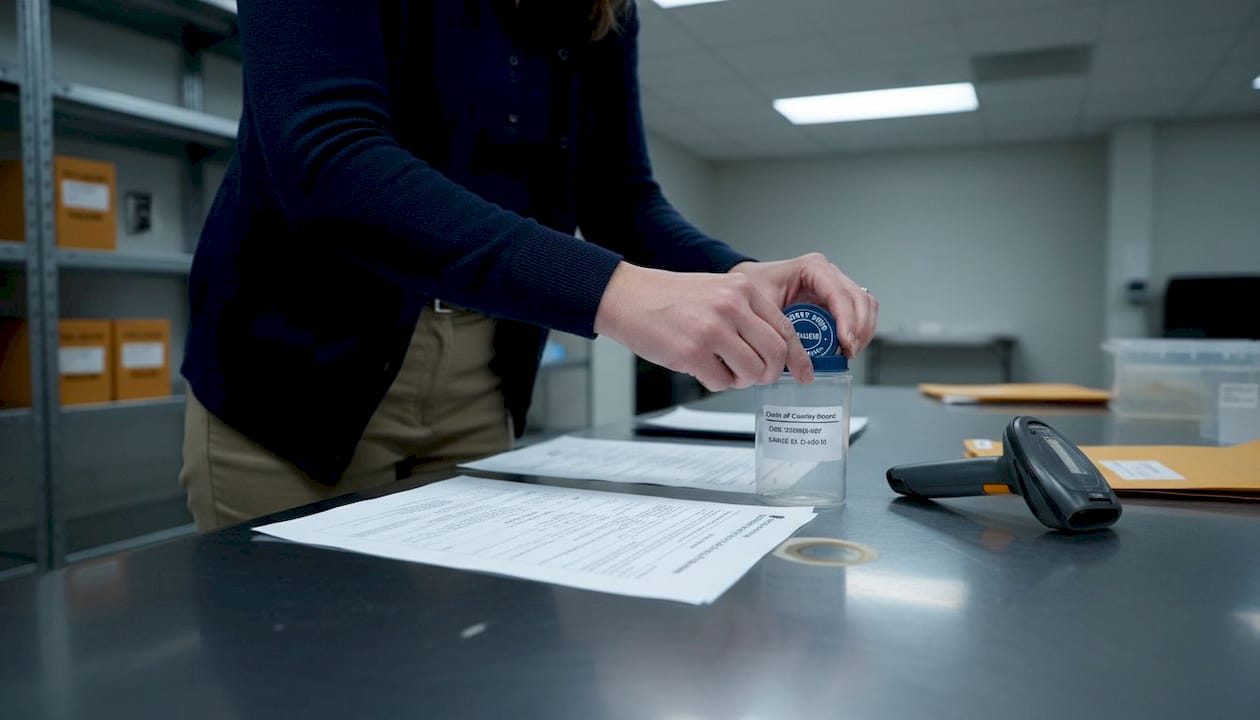
Absence of confirmatory testing is a major red flag that prosecutors sometimes overlook or fail to disclose. Immunoassay screening is a presumptive test. Courts have repeatedly found that breaks in chain of custody, lack of confirmatory testing, and results from unaccredited labs may all render evidence inadmissible or subject to a successful Daubert challenge.
Here are the most dangerous pitfalls organized for quick reference:
- Incomplete chain of custody forms: Missing dates, unsigned transfers, or altered documents
- No GC-MS confirmation: Relying on immunoassay screening alone, especially when cross-reactivity is plausible
- Unaccredited or improperly certified labs: Labs that do not hold CAP, CLIA, or SAMHSA certification for forensic testing
- Improper collection procedures: Untrained collectors, contaminated collection sites, or failure to verify donor identity
- Warrantless sample collection: Potential Fourth Amendment violations that could suppress the evidence entirely
- No MRO review: Positive results transmitted without required Medical Review Officer oversight
- Specimen integrity failures: Temperature deviations, improper sealing, or evidence of tampering
“Most wrongful positive reports in criminal cases trace back to faulty screening protocols or documentation failures, not intentional misconduct. That distinction matters when building a defense narrative for jurors.”
Understanding how to evaluate chain of custody requirements in forensic contexts is foundational to identifying these vulnerabilities. Similarly, reviewing drug testing kit standards helps you assess whether the tools used in collection even meet basic quality thresholds.
Red flags should prompt immediate action. File motions in limine to exclude evidence before trial, or prepare a Daubert motion to challenge the scientific reliability of the testing method itself. Acting early gives you control over what the jury sees.
Comparison of lab standards, test types, and legal admissibility
Understanding the risks is only half the battle. Comparing testing processes equips you to demand the highest standard from labs and prosecutors alike. The table below gives your defense team a fast-reference comparison of the most common drug testing methods used in criminal cases.
| Feature | Immunoassay screening | GC-MS confirmatory | LC-MS confirmatory |
|---|---|---|---|
| Purpose | Initial detection | Confirm and identify | Confirm and identify |
| Specificity | Low to moderate | Very high | Very high |
| False positive risk | High (cross-reactivity) | Very low | Very low |
| Legal admissibility | Insufficient alone | Accepted standard | Accepted standard |
| Turnaround time | Minutes to hours | 24 to 72 hours | 24 to 72 hours |
| Cost | Low | Moderate to high | Moderate to high |
| Required lab certification | CLIA waived minimum | CAP/CLIA certified | CAP/CLIA certified |
| Court-recognized standard | No | Yes | Yes |
Courts evaluating drug evidence focus heavily on whether the testing method is scientifically recognized, whether the lab that ran the test holds appropriate accreditation, and whether the specific analyst who certified the result is qualified. Lab certification standards have become increasingly scrutinized as defense attorneys have grown more sophisticated about challenging forensic evidence.
The difference between GC-MS vs LC-MS is worth understanding at a technical level as well. Both are highly specific and legally defensible, but GC-MS remains the more widely recognized standard in courtroom settings, particularly for urine testing. LC-MS is gaining ground for certain substances, including synthetic cannabinoids and novel psychoactive substances, where GC-MS may not perform as reliably.
Pro Tip: Before agreeing to any stipulations regarding lab results, request the lab’s accreditation documentation and the certifying scientist’s credentials. Prosecutors may push to stipulate to results quickly. Do not agree until you have reviewed every document in the testing record.
Only CAP and CLIA certified labs should be accepted without significant scrutiny in criminal proceedings. SAMHSA-certified labs add an additional layer of confidence for federally related cases. Labs that hold only a basic CLIA waiver are appropriate for point-of-care screening but should never serve as the evidentiary foundation in a criminal case.
What most checklists miss: strategic uses and overlooked defenses
Most drug testing checklists exist to ensure compliance, not to win cases. That is a meaningful distinction, and one that separates attorneys who manage cases from attorneys who dominate them.
A checklist followed defensively tells you whether the prosecution’s evidence meets minimum standards. A checklist used offensively tells you where to attack. Every box on the checklist that the prosecution cannot check is a potential crack in their case. The real strategic value is not in confirming your client passed a test. It is in exposing every procedural, scientific, or legal gap in how the prosecution obtained and handled its evidence.
Savvy defense attorneys use the checklist as a discovery roadmap. When you request SOPs, accreditation records, analyst certifications, instrument maintenance logs, and chain of custody forms, you are not just being thorough. You are signaling to prosecutors that you understand the science and that sloppy work will cost them. Laboratories know that an attorney who asks for instrument calibration records is an attorney who will make them prove their results in court.
The Daubert motion is an underutilized weapon in drug testing cases. When a testing method is not properly validated, when a lab deviated from accepted procedures, or when an analyst cannot demonstrate competency with the specific instrument used, there is a legitimate basis to argue the results fail the Daubert reliability standard. Many defense attorneys skip this step because it requires scientific fluency. But the attorneys who invest in understanding how confirmatory test consequences play out in court consistently gain better outcomes for their clients.
Perhaps the most overlooked defense strategy is preemptive education of the factfinder. Jurors trust lab results because they assume labs are infallible. Walking a jury through what immunoassay cross-reactivity actually means, or explaining why a chain of custody gap is legally significant and not just a paperwork technicality, can fundamentally shift how they evaluate the prosecution’s evidence. The defense that wins is often the one that reframes the question from “did your client test positive?” to “can the government prove beyond a reasonable doubt that this result is accurate and trustworthy?”
Many of the best defenses are not built on what the defense did, but on what the prosecution failed to do.
Drug testing solutions for criminal defense readiness
When your case demands evidence you can actually defend, the starting point is testing infrastructure that was built for legal accountability from the ground up.
At CountryWideTesting.com, attorneys and their clients can access lab testing services backed by CAP, CLIA, SAMHSA, and ISO-certified laboratories, exactly the accreditation standards courts expect. Every test comes with full documentation, chain of custody support, and MRO review where applicable. Whether you need to verify a client’s claim, build a baseline record before a court-ordered test, or obtain an independent result to counter prosecution evidence, the platform provides legally compliant options designed for defensibility. For field-level screening needs, the 10 panel saliva drug test delivers rapid, reliable preliminary results with traceable documentation. Pair that with lab confirmation, and your defense has a paper trail courts can trust.
Frequently asked questions
What should a criminal defense attorney look for in a drug test report?
Check for clear chain of custody, lab accreditation, confirmatory testing such as GC-MS as the gold standard, and complete documentation with signatures at every handoff.
What legal challenges can be made if the drug test process is flawed?
Common challenges involve breaks in chain of custody, lack of confirmatory testing, use of unaccredited labs, warrantless collection that triggers Fourth Amendment suppression, and Daubert motions for unreliable methodology.
Why is GC-MS confirmatory testing essential for court cases?
GC-MS confirmatory testing eliminates false positives from less specific screening tests, and screening alone is insufficient for legal admissibility because immunoassay cross-reactivity can produce misleading results with everyday substances like ibuprofen.
How can improper lab accreditation affect a criminal case?
Results from unaccredited labs may render the evidence inadmissible because courts require demonstrated reliability and recognized certification before accepting scientific evidence.
Is there an official national criminal defense drug testing checklist?
No, there is no single official checklist published by any bar association; reliable checklists are synthesized from forensic science, federal drug testing regulations, and criminal defense best practices.