
Top 7 benefits of lab-based drug testing for employers
Selecting the right drug testing method is a critical decision for employers who must balance workplace safety with regulatory compliance. Lab-based drug testing stands out as the gold standard, offering unmatched accuracy and reliability compared to onsite alternatives. This approach uses advanced scientific techniques to detect substance use while meeting federal requirements that protect both organizations and employees. Understanding these benefits helps you make informed decisions that strengthen your workplace policies and reduce legal risks. This article explores seven key advantages of lab-based testing to guide your selection process.
Table of Contents
- How Lab-Based Drug Testing Meets Critical Accuracy Criteria
- Ensuring Compliance With Federal Regulations Through Lab-Based Testing
- Advantages Of Lab-Based Testing Over Onsite Alternatives
- Implementing Lab-Based Drug Testing Programs: Best Practices For Employers
- Explore Reliable Lab-Based Drug Testing Services Today
- Frequently Asked Questions
Key takeaways
| Point | Details |
|---|---|
| Superior accuracy | Lab-based testing uses advanced chromatography and mass spectrometry to minimize false positives and detect substances missed by basic screening |
| Federal compliance | Certified labs meet SAMHSA and DOT requirements, protecting employers from fines and legal challenges |
| Tamper detection | Laboratory protocols identify synthetic urine and adulteration attempts that compromise test validity |
| Legal defensibility | Chain-of-custody documentation and detailed reporting support workplace policies in legal proceedings |
| Cost efficiency | Reducing false results saves HR resources and prevents wrongful termination disputes |
How lab-based drug testing meets critical accuracy criteria
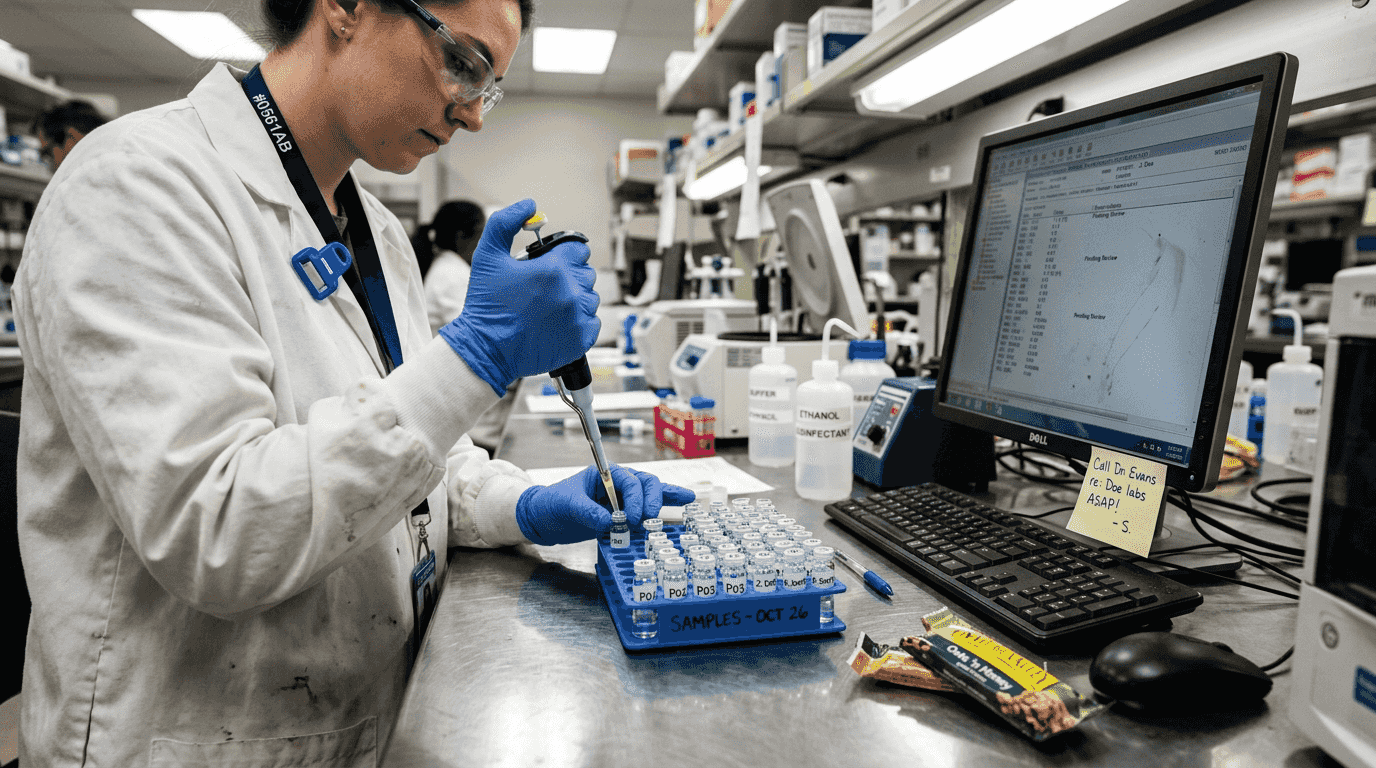
Lab-based testing achieves scientific precision that sets it apart from basic screening methods. The process relies on chromatography and mass spectrometry to identify substances with exceptional sensitivity and specificity. This technology drastically reduces false positives that plague immunoassay screening, where cross-reactivity with legal substances can trigger incorrect results.
The advanced detection capabilities reveal additional substance use that basic tests overlook. For example, mass spectrometry identifies specific opioid metabolites and synthetic cannabinoids that pose workplace safety risks but escape detection by presumptive testing. This comprehensive analysis gives you a complete picture of potential impairment issues.
Lab protocols also combat test tampering through sophisticated validation steps. Technicians examine samples for temperature, pH, creatinine levels, and other markers that indicate synthetic urine or dilution attempts. Multi-laboratory validated workflows ensure consistency across testing facilities, so results remain reliable regardless of where employees submit samples.
Pro Tip: Request confirmation testing for all non-negative immunoassay results to eliminate false positives before taking employment action.
“Laboratory testing provides the analytical certainty needed to make fair, defensible workplace decisions while protecting employee rights and organizational interests.”
The lab vs onsite drug testing impact on accuracy becomes clear when you compare error rates. While onsite tests offer speed, they sacrifice precision that can lead to costly mistakes. Laboratory analysis takes longer but delivers results you can trust when making critical employment decisions.
Ensuring compliance with federal regulations through lab-based testing
Federal mandates create strict requirements for workplace drug testing programs. Lab-based testing aligns with testing panels and procedures mandated by SAMHSA and DOT for covered employers. These regulations specify which substances to test, cutoff concentrations, and laboratory certification standards that only accredited facilities can meet.
Using certified laboratories is not optional for federal compliance. The 2026 guidelines require laboratories to maintain SAMHSA certification, which involves regular proficiency testing, quality control procedures, and inspection protocols. Non-compliance exposes your organization to significant risks:
- Financial penalties from regulatory agencies
- Disqualification from federal contracts
- Legal liability in wrongful termination cases
- Damage to organizational reputation
Adhering to SAMHSA and DOT guidelines protects you from these consequences. The regulations also address employee rights under the Americans with Disabilities Act, requiring employers to implement policies that balance safety concerns with privacy protections. This means you cannot discriminate against individuals in recovery programs or those using prescribed medications unless they pose a direct safety threat.
Implementing a compliant program requires careful policy development. Consider these essential steps:
- Review current federal requirements for your industry
- Select laboratories with active SAMHSA certification
- Establish written policies that address ADA considerations
- Train supervisors on legal constraints and employee rights
- Document all testing procedures and maintain records
Consultation with legal counsel helps you navigate complex regulations while avoiding discrimination claims. The drug testing compliance guide 2026 provides additional resources for developing policies that meet federal standards. Understanding why comply with federal drug testing requirements clarifies the legal and operational benefits of maintaining rigorous standards.
Advantages of lab-based testing over onsite alternatives
The choice between laboratory and onsite testing significantly impacts program effectiveness. Lab tests demonstrate higher sensitivity and can detect synthetic urine that compromises test validity. This capability addresses a growing concern as sophisticated adulterants become more accessible to employees attempting to cheat screenings.
Onsite tests deliver faster results, typically within minutes, but this speed comes with notable tradeoffs. Higher error rates increase the likelihood of false positives that damage employee morale and false negatives that allow impaired workers to remain in safety-sensitive positions. The immediate nature of onsite testing also makes it easier for individuals to use synthetic urine or other cheating methods without detection.
| Feature | Lab-Based Testing | Onsite Testing |
|---|---|---|
| Accuracy | High sensitivity, low error rate | Moderate accuracy, higher false results |
| Tamper Detection | Advanced validation protocols | Limited adulteration detection |
| Compliance | Meets federal certification standards | Often fails required panels |
| Legal Support | Full chain-of-custody documentation | Minimal documentation |
| Cost per Test | Higher upfront, lower total cost | Lower upfront, higher error costs |
Laboratory reports include comprehensive chain-of-custody documentation and detailed analytical data that strengthen legal defensibility. When employees challenge test results or termination decisions, this documentation provides the evidence needed to support your actions. Onsite tests rarely offer this level of detail, leaving you vulnerable in legal proceedings.
Federal programs require specific testing panels that onsite devices cannot reliably deliver. The 2026 SAMHSA guidelines mandate expanded opioid testing and lower cutoff concentrations that exceed the capabilities of most rapid tests. Using non-compliant methods exposes you to regulatory penalties and contract disqualification.
Pro Tip: Calculate total program costs including false positive investigations, retesting expenses, and potential wrongful termination settlements to see the true value of laboratory accuracy.
Reducing costly errors preserves HR resources and maintains workplace trust. False positives require time-consuming investigations, follow-up testing, and employee relations management. False negatives create safety incidents and liability exposure. Laboratory testing minimizes both risks through superior analytical methods.
Implementing lab-based drug testing programs: best practices for employers
Establishing an effective testing program requires careful planning and policy development. Your drug testing policy must align with federal laws and ADA requirements to protect both organizational interests and employee rights. This foundation prevents discrimination claims while maintaining safety standards.
Follow these essential steps to build a compliant program:
- Draft a comprehensive policy that specifies testing circumstances, substances tested, and consequences
- Select certified laboratories with SAMHSA accreditation and proven reliability
- Establish chain-of-custody procedures that document every sample handling step
- Create employee notification processes that respect privacy while ensuring awareness
- Develop supervisor training programs covering observation techniques and legal constraints
Selecting certified labs ensures your program meets official protocols. Verify laboratory accreditation through SAMHSA databases and confirm they maintain current certification status. This due diligence protects you from compliance failures that could invalidate test results or expose you to penalties.
Maintaining strict chain-of-custody documentation supports legal defensibility when employees challenge results. Every person who handles a sample must sign transfer records, creating an unbroken trail from collection to analysis. This documentation becomes critical evidence if you face wrongful termination claims or unemployment disputes.
Educating HR staff and supervisors prevents implementation mistakes that compromise program integrity. Training should cover:
- Recognizing signs of impairment without making medical diagnoses
- Understanding test interpretation and cutoff concentrations
- Respecting employee rights during collection and notification
- Maintaining confidentiality of test results and medical information
- Following progressive discipline procedures consistently
Reviewing and updating policies regularly keeps your program aligned with regulatory changes. The drug testing policies requirements evolve as new substances emerge and federal guidelines adapt to changing workplace needs. Annual policy reviews help you stay current with these developments.
Understanding how to conduct drug testing workplace procedures properly minimizes legal risks while maximizing program effectiveness. Consistency in application across all employees prevents discrimination claims and builds trust in your safety initiatives.
Explore reliable lab-based drug testing services today
Countrywide Testing provides certified lab-based drug testing tailored for employer compliance needs. Our services deliver accurate, federal regulation-aligned testing panels that ensure workplace safety while protecting employee rights. We partner with SAMHSA-certified laboratories that maintain the highest standards for analytical precision and chain-of-custody documentation.
Explore comprehensive lab testing services designed specifically for workplace programs. Our nationwide drug testing network ensures convenient access to certified facilities regardless of your location. We offer multiple testing options including the QuickScreen 10 panel saliva drug test for preliminary screening with laboratory confirmation available when needed. Partner with us to build a testing program that meets your compliance requirements while supporting a safe, productive workplace.
Frequently asked questions
What are the main benefits of lab-based drug testing for employers?
Lab-based testing offers superior accuracy through chromatography and mass spectrometry, ensuring federal compliance with SAMHSA and DOT requirements. It detects synthetic urine and adulteration attempts that compromise test validity, reducing false positives and negatives that waste HR resources. The comprehensive documentation and chain-of-custody procedures provide legal defensibility when employees challenge results or termination decisions.
How does lab-based testing detect synthetic urine?
Accredited labs use immunoassay and GC-MS techniques to identify synthetic urine through temperature checks, pH analysis, and creatinine level validation. Multi-laboratory studies confirm these workflows detect synthetic urine reliably across different testing facilities. Detecting synthetic urine ensures test validity and prevents tampering that could allow impaired employees to pass screening.
Are lab-based drug tests compliant with 2026 federal regulations?
Yes, laboratories certified under SAMHSA meet the 2026 federal workplace drug testing requirements including expanded opioid panels and updated cutoff concentrations. Using compliant labs protects employers from legal penalties, contract disqualification, and challenges to test results. The certification process ensures laboratories maintain quality control standards and proficiency testing that guarantee result accuracy.
What should employers consider when implementing lab-based testing?
Create drug testing policies consistent with ADA and privacy laws to avoid discrimination claims while maintaining safety standards. Ensure testing procedures follow federal guidelines by selecting certified laboratories and maintaining proper chain-of-custody documentation. Seek legal counsel to minimize risks of wrongful discharge claims and to develop policies that balance organizational needs with employee rights. Regular policy reviews keep your program aligned with evolving regulations and emerging substances.
How does lab-based testing reduce costs compared to onsite methods?
While lab tests have higher upfront costs per sample, they eliminate expensive false positive investigations and wrongful termination settlements. The superior accuracy prevents costly errors that require retesting, legal defense, and employee relations management. Reduced false negatives also prevent safety incidents and liability exposure that result when impaired workers remain in safety-sensitive positions. Total program costs favor laboratory testing when you account for these hidden expenses of less accurate methods.