
Alcohol testing tips for university athletics: Best practices for 2026
TL;DR:
- Effective university alcohol testing programs require combining the right methods, clear policies, and ongoing education to ensure compliance and deterrence.
- Implementing third-party testing, defining refusal consequences, and fostering a prevention-focused culture help protect athlete welfare and program integrity.
Athletic directors and coaches carry one of the most demanding compliance burdens in higher education. You’re responsible for protecting student-athlete welfare, preserving team integrity, and satisfying institutional and NCAA expectations all at once. Alcohol misuse remains one of the most common and underreported substance issues in college sports, and a poorly designed testing program can expose your program to legal liability, grievances, and public scrutiny. Getting the strategy right from the start matters more in 2026 than ever before.
Table of Contents
- Choosing the right alcohol testing methods
- How to implement compliant and fair alcohol testing programs
- Interpreting results and managing edge cases
- Education and prevention: building a culture of compliance
- Our take: What actually works in campus alcohol testing
- Put alcohol testing best practices to work with trusted solutions
- Frequently asked questions
Key Takeaways
| Point | Details |
|---|---|
| Select evidence-based tests | Urine and saliva tests are the most reliable and practical choices for campus alcohol screening. |
| Random testing works | Unannounced, third-party random tests deter misuse and add credibility to your policy. |
| Education is essential | Pairing regular education with enforcement shifts campus culture and reduces violations. |
| Handle refusals clearly | Make refusal policies explicit so every outcome is fair and enforceable. |
| Integrate prevention efforts | Combine compliance with wellness education for better athlete support and safer programs. |
Choosing the right alcohol testing methods
Now that the importance is clear, let’s examine which alcohol testing methods actually work best for university teams.
Athletic programs have more testing options available today than at any point in the past. The challenge isn’t finding a method. It’s choosing the right one for your specific context, budget, and compliance obligations. Common methodologies for alcohol testing in university athletics include urine, saliva, hair, or other samples collected by independent private testing firms.
Here’s a quick breakdown of each method:
- Urine testing: Detects alcohol metabolites for up to 80 hours using an EtG (ethyl glucuronide) marker. This is one of the most widely used methods because it’s cost-effective and processed through certified labs. It’s especially useful for post-incident investigations or scheduled testing windows.
- Saliva (oral fluid) testing: Provides near-instant results and detects recent alcohol use within a window of 12 to 24 hours. This method is minimally invasive, easy to administer on-site, and difficult to adulterate. It’s a strong choice for random or same-day testing.
- Breathalyzer testing: Measures blood alcohol content (BAC) in real time. Best used for situational testing, such as before a competition or after a reported incident. Results are immediate but only reflect current impairment, not past use.
- Hair follicle testing: Provides the longest detection window, up to 90 days, but does not detect alcohol reliably through standard hair panels. It’s more commonly used for other substances and generally not recommended as a primary alcohol test.
- Blood testing: The most accurate method for BAC measurement but requires medical personnel and lab processing. It’s typically reserved for post-accident situations where legal accuracy is required.
Comparing testing methods at a glance
| Test type | Detection window | Result speed | Cost level | Best use case |
|---|---|---|---|---|
| Urine (EtG) | Up to 80 hours | 24 to 72 hours (lab) | Low to moderate | Random and scheduled testing |
| Saliva | 12 to 24 hours | Minutes | Low | On-site, random, pre-event |
| Breathalyzer | 1 to 12 hours | Immediate | Low | Situational, real-time BAC |
| Blood | 6 to 24 hours | Hours (lab) | High | Post-incident, legal proceedings |
| Hair follicle | Up to 90 days | 5 to 10 business days | High | Rarely used for alcohol |
When you understand the types of drug tests for athletes, the decision becomes much clearer. Programs that rely on a single test type often create blind spots. For instance, if you only use breathalyzers, you miss detection windows for past-weekend use. If you only use urine EtG, you may not catch acute impairment on game day. It’s also worth understanding how alcohol shows up on drug tests and what each method actually detects, because not all tests are measuring the same thing.
Pro Tip: Combine saliva testing for random, day-of checks with urine EtG testing for follow-up or post-incident review. This two-layer approach increases deterrence and closes detection gaps that single-method programs leave open.
How to implement compliant and fair alcohol testing programs
After selecting appropriate methods, establishing compliant processes ensures fairness and protects both students and your program.
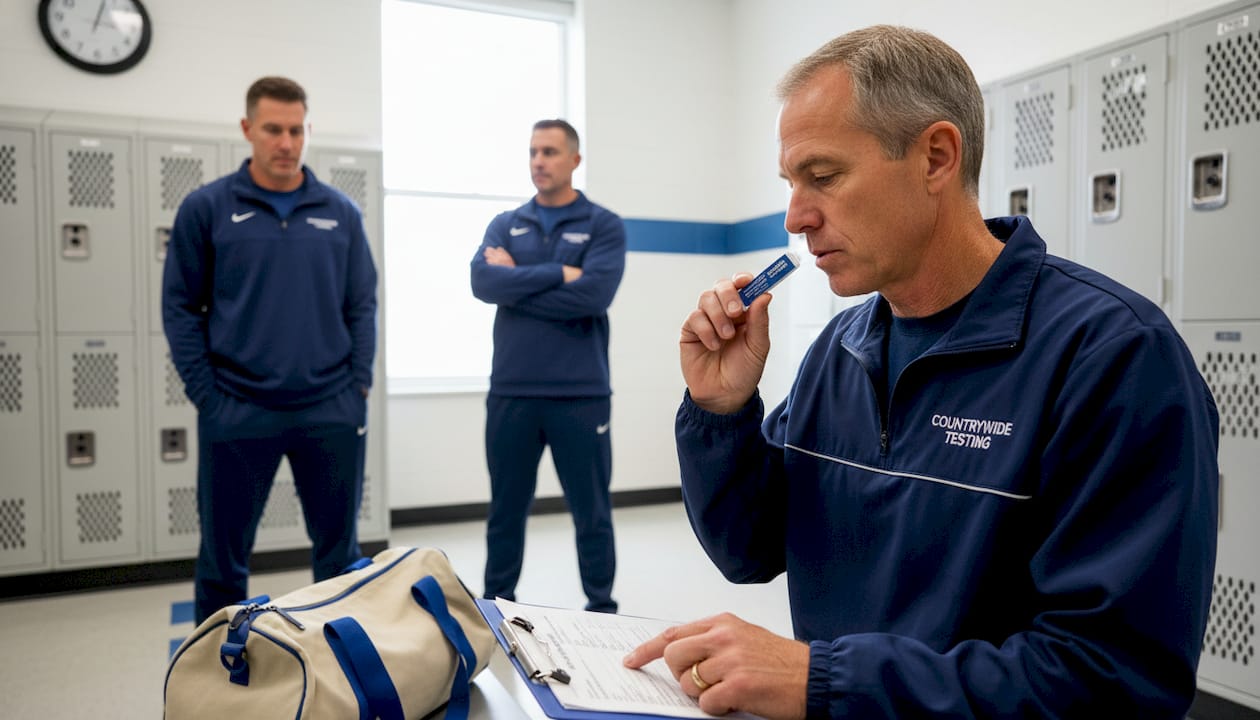
A testing program without structure is just a policy on paper. Execution is everything. Institutions that run effective programs follow a deliberate, documented process from the moment a policy is written to the moment a sanction is applied. Research shows that institutional programs emphasize random testing of student-athletes on squad lists, education sessions on alcohol abuse, and sanctions like probation or suspension for violations.
Here’s a step-by-step framework you can adapt for your institution:
- Draft the policy with legal and compliance review. Your policy document should define prohibited conduct, testing triggers, collection procedures, chain of custody, and a clear sanction ladder. Have it reviewed by your institution’s legal counsel and compliance office before distribution.
- Define testing frequency and selection methods. Decide whether testing will be random, scheduled, or triggered by reasonable suspicion. Random selection using a third-party lottery system removes bias and strengthens the program’s credibility.
- Publish and distribute the policy before the season starts. Every athlete on the squad list must sign an acknowledgment form before their first practice. This creates the paper trail you need if a dispute arises later.
- Conduct mandatory education sessions. Athletes must understand what the policy covers, why it exists, and what the consequences are. This isn’t just a compliance checkbox. It’s the foundation of genuine deterrence.
- Execute testing through certified third-party providers. Independent collection removes the appearance of favoritism and protects your staff from conflicts of interest.
- Apply sanctions consistently using the tiered structure. Common structures include a first violation resulting in mandatory counseling and probation, a second violation triggering a game suspension, and a third violation resulting in dismissal from the program.
- Document every step and maintain records. Chain of custody forms, test results, sanction notices, and appeal outcomes all belong in a secure, confidential file.
To understand how this connects to broader compliance standards, the NCAA drug testing FAQ clarifies that alcohol testing governance largely falls to institutions, which means your policies carry full weight.
“A well-written policy that isn’t enforced consistently does more damage than no policy at all. It signals that your standards are negotiable.”
The resources at building compliant workflows show how institutions structure these processes effectively, and NCAA drug testing compliance provides essential context for how university programs fit into the broader regulatory landscape.
Pro Tip: Always clarify refusal-to-test consequences in your policy document and during your pre-season education session. Athletes who don’t know that refusal equals a positive result will challenge the policy in ways that create administrative delays and sometimes legal exposure.
Interpreting results and managing edge cases
Implementing policies is just the first half. Interpreting results and addressing edge cases is where many programs struggle.
Even the most carefully written policy will encounter situations that weren’t anticipated. Knowing how to handle them in advance is what separates functional programs from ones that unravel under pressure.
BAC thresholds and what they mean. Pepperdine University defines intoxication for testing as a BAC of 0.08% or more, or by observed conduct, speech, or coordination issues. Refusal to take a breathalyzer, field sobriety test, or drug test is considered an admission of influence. That last point is critical. Most programs use 0.08% as the bright-line threshold because it aligns with legal definitions of impairment. However, behavioral indicators give you grounds to test even when BAC hasn’t been formally measured yet.
Key edge cases your policy must address:
- Refusal to test: Treat it as a confirmed positive. This must be stated clearly in writing and acknowledged by the athlete before the season.
- Diluted or invalid urine samples: Your policy should require a repeat collection within a defined window. Repeated failures to provide a valid sample may be treated as refusal.
- Prescribed medication claims: An athlete citing a prescription does not automatically escape a positive result for alcohol. Alcohol has no therapeutic exception. Prescription claims are only relevant for certain controlled substances.
- Chain of custody errors: If collection was mishandled, results may not hold up in an appeal. This is precisely why certified third-party collectors matter.
- Medical emergencies: If an athlete requires emergency care for alcohol intoxication, your policy should specify that this triggers automatic review even if no formal test was administered.
| Scenario | Recommended response | Sanction trigger |
|---|---|---|
| BAC at or above 0.08% | Confirm via documentation | Yes, follow tiered sanctions |
| Refusal to test | Treat as positive result | Yes |
| Behavioral indicators only | Conduct field sobriety check, collect test | Pending test result |
| Invalid sample (diluted) | Require immediate retest | Refusal if retest not provided |
| Prescription claim | Not applicable for alcohol | Positive stands |
For additional context on how to structure your approach, review testing protocol examples from other institutional settings. The principles transfer well to university athletics.
Education and prevention: building a culture of compliance
With compliant testing and clear interpretation practices, the next step is reinforcing prevention and a positive culture.
Testing without education is enforcement without understanding. Programs that rely purely on punitive measures tend to see cycling violations where athletes learn to time their use around testing windows rather than changing their behavior. Random testing combined with education sessions produces the strongest long-term reduction in alcohol infractions, and that’s not a coincidence.
Effective education programs for university athletics typically cover the following:
- Myths vs. facts about alcohol metabolism: Many athletes believe they can “sweat out” alcohol or that coffee sobers them up. Dispelling these myths early eliminates common excuses and improves honest behavior.
- Performance consequences: Alcohol disrupts sleep quality, delays muscle recovery, impairs reaction time, and interferes with hydration. Tying this to athletic performance makes the message land harder than a rulebook reading ever could.
- Mental health and stress: Many athletes turn to alcohol as a coping mechanism during high-pressure seasons. Connecting them to counseling and wellness resources as part of the education program reduces this risk.
- Peer pressure and team culture: Education sessions should include discussion of how team culture shapes individual choices. Coaches and team captains play an outsized role here.
- Policy specifics and rights: Athletes should leave every education session knowing exactly what the policy covers, what sanctions look like, what refusal means, and where to go if they need support.
- Support resources: Include contact information for campus counseling, anonymous help lines, and sports medicine staff.
Annual training isn’t optional. It’s your evidence that the institution took reasonable steps to inform athletes before testing began. The alcohol policy implementation guide provides additional structure for building these education components into your program calendar.
Our take: What actually works in campus alcohol testing
After working with university programs at various stages of compliance maturity, a few hard truths stand out consistently.
First, education-only programs don’t work. The data on this is clear. When there’s no credible enforcement attached to an alcohol policy, athletes treat the education session as a formality and the policy as a guideline. Deterrence requires real consequences, and those consequences need to be applied consistently from the first week of the season through the last.
Second, the refusal clause is the most overlooked element in most university alcohol policies. Athletic directors spend considerable time building out their sanction ladders and testing schedules, then leave refusal consequences buried in footnotes. When a refusal situation actually occurs, the program scrambles. Make refusal consequences front-page content in your policy and repeat them during every education session.
Third, bias is a program killer. When coaches or athletic staff administer testing themselves, even with the best intentions, the risk of favoritism accusations is real. Third-party testing through certified providers removes that risk entirely and strengthens your program’s credibility with athletes, parents, and administrators. College athletic screening insights confirm that programs using independent third-party collection report fewer appeals and higher athlete confidence in the process.
Finally, sustainability matters more than launch intensity. Many programs invest heavily in the first month of implementation and then let education and testing frequency drift by midseason. Compliance culture requires ongoing reinforcement. Schedule your testing cadence, your education touchpoints, and your policy reviews before the season starts so they don’t get displaced by game-day priorities.
Put alcohol testing best practices to work with trusted solutions
To implement the best practices above, university leaders need access to solutions that are compliant, reliable, and scalable.
Countrywide Testing offers a range of alcohol and drug testing products designed for institutional use, with access to certified labs that meet SAMHSA, ISO, CLIA, and CAP standards. Whether you need lab-processed urine panels, rapid on-site saliva tests, or multi-panel screening options, the platform supports compliant workflows from collection to results.
Athletic programs that need fast, on-site options can explore saliva alcohol test strips designed for accurate same-day screening, while programs requiring full lab confirmation can access lab testing services built to institutional compliance standards. Both options integrate with documented chain-of-custody processes so your results hold up through any appeal.
Frequently asked questions
What is the most reliable type of alcohol test for university athletes?
Urine and saliva tests, when administered by certified third-party providers, are reliable and commonly used for university athletics programs. Urine EtG testing offers a longer detection window, while saliva provides near-instant results for same-day use.
How do universities handle students who refuse an alcohol test?
Many university policies treat test refusal as a positive result or admission of use, enforcing the same sanctions as a confirmed infraction. As Pepperdine’s policy states, refusal to test is considered admission of influence.
Does the NCAA require alcohol testing for student-athletes?
NCAA policy leaves alcohol testing rules, rates, and penalties to institutional discretion, focusing on deterrence through education and random tests. Your institution’s policy carries the primary legal and compliance weight.
What BAC level is considered intoxication during student-athlete testing?
A BAC of 0.08% or above is the most widely used threshold, but observed impairment in conduct, speech, or coordination can also prompt disciplinary action under many policies.
Can education and prevention reduce the incidence of alcohol infractions?
Yes. Random testing combined with education strengthens compliance and reduces infractions over time. Neither element works as effectively in isolation as it does when they operate together as a coordinated program.