
Why Athletic Drug Screening Matters in College
Protecting fair play in collegiate sports means more than monitoring performance on the field. For human resource managers in American college athletics, athletic drug screening is a cornerstone of compliance, athlete safety, and institutional integrity. With the NCAA overseeing year-round, supervised testing to deter banned substance use, departments must navigate rigorous protocols while also supporting student-athlete well-being. This overview helps you understand both regulatory requirements and practical strategies to implement effective, athlete-centered drug screening programs.
Table of Contents
- Defining Athletic Drug Screening In College Sports
- Types Of Drug Tests Used For Athletes
- How Screening Procedures Safeguard Competition
- NCAA Regulations And Compliance Requirements
- Health Risks And Responsibilities For Hr Managers
- Common Pitfalls And How To Avoid Them
Key Takeaways
| Point | Details |
|---|---|
| Importance of Drug Screening | Athletic drug screening is essential for ensuring fairness and athlete well-being in collegiate sports. |
| Types of Testing Methods | Various testing methods, including urine, blood, saliva, and hair follicle tests, help maintain competitive integrity. |
| NCAA Compliance | The NCAA sets regulations to ensure consistent testing, educational requirements, and support systems for student-athletes. |
| Role of HR Managers | HR managers are crucial in developing comprehensive programs that prioritize education and rehabilitation over punishment. |
Defining Athletic Drug Screening in College Sports
Athletic drug screening represents a critical compliance and health protocol within collegiate sports environments. This systematic process involves comprehensive testing designed to detect and deter the use of prohibited substances among student-athletes. Athletic drug testing protocols help maintain fair competition and protect athlete well-being.
The fundamental components of athletic drug screening include several key elements:
- Substance Detection: Identifying banned performance-enhancing drugs and controlled substances
- Year-Round Testing: Conducting screenings both during competitive seasons and off-seasons
- Comprehensive Coverage: Testing across multiple sports and athletic programs
- Confidential Processing: Ensuring athlete privacy and professional handling of test results
Under NCAA guidelines, drug screening serves multiple critical purposes. The process involves supervised urine specimen collection, thorough laboratory analysis, and potential disciplinary actions for policy violations. These screenings are not punitive but preventative, aiming to educate athletes about health risks and maintain competitive integrity.
College athletic departments typically implement drug screening through structured protocols that balance athlete rights with institutional responsibilities. The testing process often includes:
- Advance notification of potential screening
- Confidential sample collection
- Laboratory processing
- Potential follow-up counseling or intervention
Pro tip: Develop a transparent drug screening policy that emphasizes education and support over punishment to create a more positive athletic environment.
Types of Drug Tests Used for Athletes
Athletic drug testing incorporates multiple sophisticated methods to detect prohibited substances and maintain competitive integrity. Drug testing procedures have evolved to provide comprehensive screening across collegiate sports programs, ensuring fair competition and athlete health.
The primary types of drug tests utilized in athletic environments include:
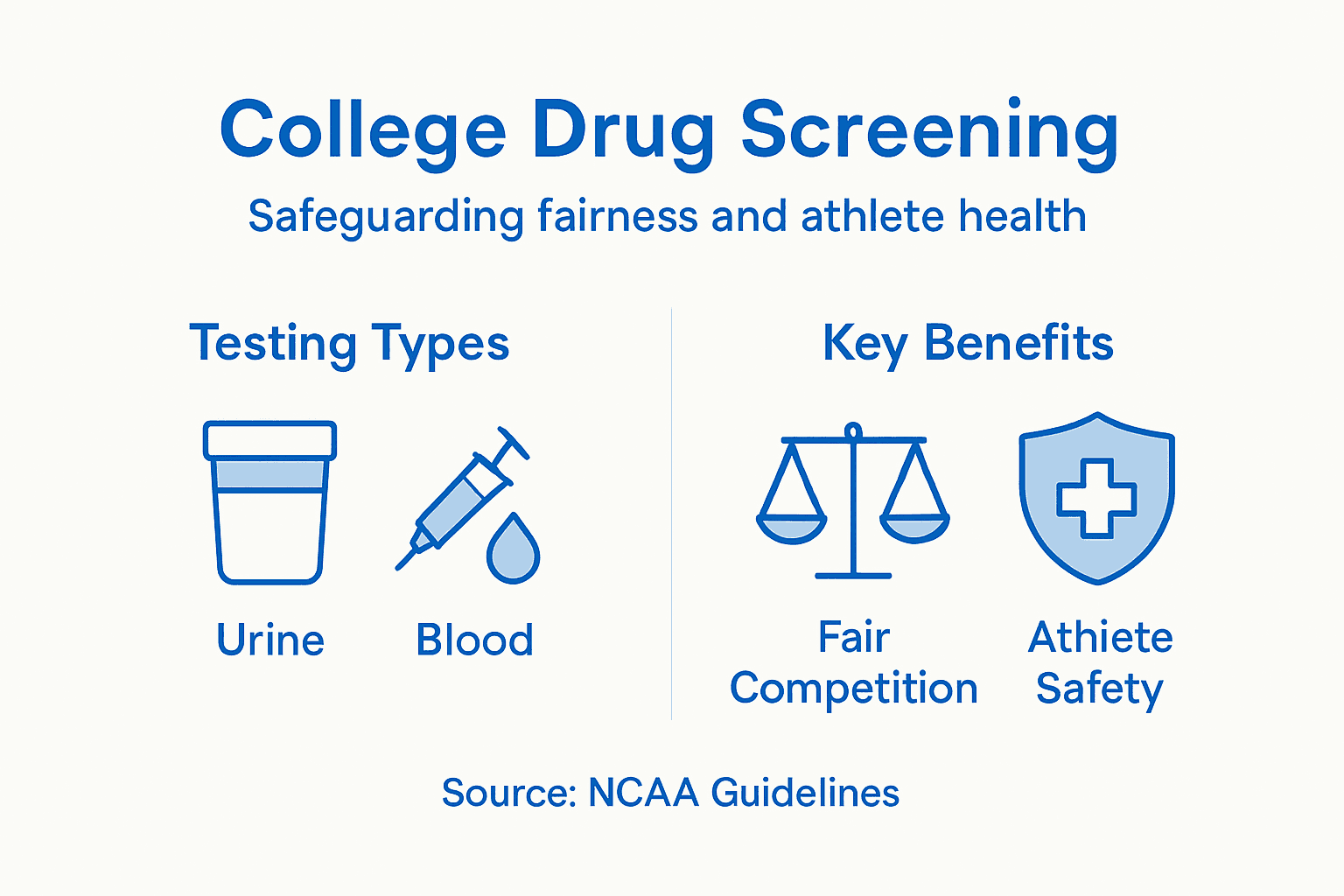
- Urine Tests: Most common method, detecting wide range of substances
- Blood Tests: Provides precise chemical substance detection
- Saliva Tests: Non-invasive screening with rapid results
- Hair Follicle Tests: Identifies long-term substance usage patterns
Urine drug screening remains the predominant method in collegiate athletics due to its efficiency and broad detection capabilities. These tests can identify performance-enhancing drugs, anabolic steroids, stimulants, and recreational substances with remarkable accuracy. Typically, initial screening is followed by confirmatory testing to ensure result reliability.
Here’s a comparison of common athletic drug testing methods and their key attributes:
| Test Method | Detection Window | Invasiveness | Common Use Cases |
|---|---|---|---|
| Urine | Days to weeks | Moderate | Routine NCAA screening |
| Blood | Hours to days | High | Confirmatory lab analysis |
| Saliva | Up to 48 hours | Low | Rapid field testing |
| Hair Follicle | Up to 90 days | Moderate | Long-term drug monitoring |
College athletic departments employ strategic testing protocols that balance comprehensive detection with athlete privacy. The testing process often involves:
- Random selection of athletes
- Supervised specimen collection
- Confidential laboratory analysis
- Potential follow-up interventions
Athletic drug testing is not about punishment, but protecting athlete health and maintaining fair competition.
Pro tip: Develop a transparent testing policy that emphasizes athlete education and support throughout the drug screening process.
How Screening Procedures Safeguard Competition
Athletic drug screening serves as a critical mechanism for maintaining fairness and integrity in collegiate sports. Competitive integrity protocols ensure that no athlete gains an unfair advantage through prohibited performance-enhancing substances.
The key ways screening procedures protect competitive balance include:
- Deterrence: Preventing potential drug use through systematic testing
- Detection: Identifying athletes who violate substance regulations
- Accountability: Enforcing consistent penalties for rule violations
- Education: Promoting awareness about prohibited substances
Comprehensive screening strategies go beyond simple testing, creating a holistic approach to maintaining athletic fairness. These procedures involve sophisticated methods that address both the immediate detection of prohibited substances and the long-term cultural prevention of drug misuse in sports environments.
Athletic departments implement multilayered screening approaches that typically involve:
- Comprehensive banned substance lists
- Random and targeted testing protocols
- Strict sample collection and verification procedures
- Clear disciplinary guidelines
- Rehabilitation and support programs
Fair competition requires more than just testing – it demands a commitment to athlete health and ethical performance.
Pro tip: Develop a transparent drug screening program that balances rigorous testing with athlete education and support.
NCAA Regulations and Compliance Requirements
The National Collegiate Athletic Association establishes comprehensive drug testing regulations designed to protect student-athletes and maintain competitive integrity. NCAA drug testing protocols provide a structured framework for monitoring and addressing substance use across collegiate sports programs.
Key components of NCAA drug regulation compliance include:
- Banned Substance List: Comprehensive catalog of prohibited performance-enhancing and recreational drugs
- Testing Frequency: Year-round random and targeted screening procedures
- Penalties: Graduated disciplinary actions for violations
- Medical Exception Processes: Structured pathways for approved therapeutic substances
- Educational Requirements: Mandatory athlete awareness programs
The compliance framework encompasses multiple levels of institutional responsibility. Athletic departments must implement robust policies that not only detect prohibited substances but also educate athletes about potential health and competitive risks associated with drug use.
Compliance procedures typically involve:
- Comprehensive athlete education programs
- Standardized testing protocols
- Confidential reporting mechanisms
- Clear disciplinary guidelines
- Rehabilitation and support options
Effective drug regulation is about creating a culture of health, integrity, and fair competition.
Pro tip: Develop a proactive compliance strategy that emphasizes education and support over punitive measures.
Health Risks and Responsibilities for HR Managers
Human resources managers play a pivotal role in protecting athlete health and institutional integrity through comprehensive drug screening programs. Campus drug prevention strategies require proactive management and multifaceted approaches to mitigating substance-related risks.
Key health risks HR managers must address include:
- Physiological Damage: Cardiovascular and hormonal disruptions
- Psychological Impact: Mental health and addiction potential
- Performance Degradation: Long-term athletic and academic consequences
- Institutional Liability: Legal and ethical organizational risks
The responsibilities of HR managers extend far beyond simple testing procedures. They must develop comprehensive programs that integrate education, support, and strategic intervention to protect both individual athletes and institutional interests.
Effective risk management typically involves:
The following table summarizes essential risk management actions for HR managers in athletic programs:
| Risk Area | Typical Strategy | Example Best Practice |
|---|---|---|
| Health Education | Targeted workshops | Substance abuse seminars for athletes |
| Policy Compliance | Regular audits | Annual program reviews |
| Confidential Reporting | Secure online platforms | Anonymous whistleblower systems |
| Rehab Support | Partnered counseling | Access to licensed therapists |
- Developing clear substance abuse policies
- Creating confidential reporting mechanisms
- Implementing athlete education programs
- Establishing rehabilitation support systems
- Maintaining rigorous documentation protocols
Successful drug prevention is about creating a culture of wellness, not just enforcing rules.
Pro tip: Design holistic drug screening programs that prioritize athlete support and educational interventions over punitive measures.
Common Pitfalls and How to Avoid Them
Athletic drug screening programs face numerous challenges that can compromise their effectiveness and integrity. Drug testing best practices require careful navigation of potential operational and procedural risks.
Common pitfalls in athletic drug screening include:
- Inadequate Training: Staff insufficiently prepared for testing protocols
- Communication Gaps: Poor athlete understanding of banned substances
- Procedural Errors: Inconsistent sample collection and handling
- Delayed Processing: Slow result verification and follow-up mechanisms
- Limited Education: Insufficient ongoing substance awareness programs
Successful drug screening programs demand comprehensive strategies that address potential vulnerabilities. Athletic departments must develop robust frameworks that anticipate and mitigate risks through proactive management and continuous improvement.
Strategies to prevent common pitfalls involve:
- Comprehensive staff training programs
- Regular policy review and updates
- Clear communication protocols
- Standardized testing procedures
- Confidential athlete support systems
Effective drug screening is about creating a culture of trust, not just enforcing rules.
Pro tip: Implement ongoing training and transparent communication to build a proactive, supportive drug screening environment.
Ensure Fair Play and Athlete Health with Trusted Drug Screening Solutions
Maintaining competitive integrity and protecting athlete well-being are critical challenges highlighted in “Why Athletic Drug Screening Matters in College.” With the need for reliable, confidential, and regulatory-compliant drug testing to detect prohibited substances and support athlete education, your program deserves tested and trusted resources. CountryWideTesting.com offers urine and mouth swab drug tests along with professional lab services conducted through licensed laboratories that meet SAMHSA, ISO, CLIA, and CAP standards. These solutions align with NCAA regulations and can help prevent common pitfalls such as procedural errors or delayed results.
Take control of your athletic drug screening program today by choosing comprehensive and compliant testing options at CountryWideTesting.com. Explore our range of products and laboratory services to safeguard fair competition and promote athlete health. Visit our landing page and learn how to implement transparent, trustworthy drug screening with expert support now.
Frequently Asked Questions
Why is athletic drug screening important in college sports?
Athletic drug screening is crucial to maintain fair competition, protect athlete health, and deter the use of prohibited substances among student-athletes.
What types of drugs are typically detected in athletic drug screenings?
Commonly detected substances in athletic drug screenings include performance-enhancing drugs, anabolic steroids, stimulants, and recreational drugs, which can impair an athlete’s health and performance.
How often do college athletes undergo drug screening?
College athletes can be subjected to drug screening year-round, including both during competitive seasons and off-seasons, to ensure compliance and maintain integrity in sports.
What happens if a college athlete tests positive for a banned substance?
If a college athlete tests positive, they may face disciplinary actions, which can include penalties, mandatory education programs, and potential rehabilitation support to address substance use issues.