
Workplace Alcohol Screening Guide for HR in 2026
TL;DR:
- Workplace alcohol screening requires a written policy, trained supervisors, and calibrated testing devices to ensure legality.
- Proper procedures and documentation prevent invalid results and protect employers from liability.
Workplace alcohol screening is defined as a structured process employers use to detect alcohol impairment in employees, protect workplace safety, and meet regulatory obligations. A compliant program requires more than a breathalyzer. It demands written policy, trained supervisors, documented chain-of-custody procedures, and a designated Medical Review Officer (MRO). Federal frameworks like 49 CFR Part 40 set the procedural floor for DOT-regulated industries, and many non-regulated employers adopt the same standards to build legally defensible programs. Following a step by step workplace alcohol screening guide from the start prevents the procedural gaps that invalidate results and expose employers to liability.
What prerequisites and policy elements must you establish first?
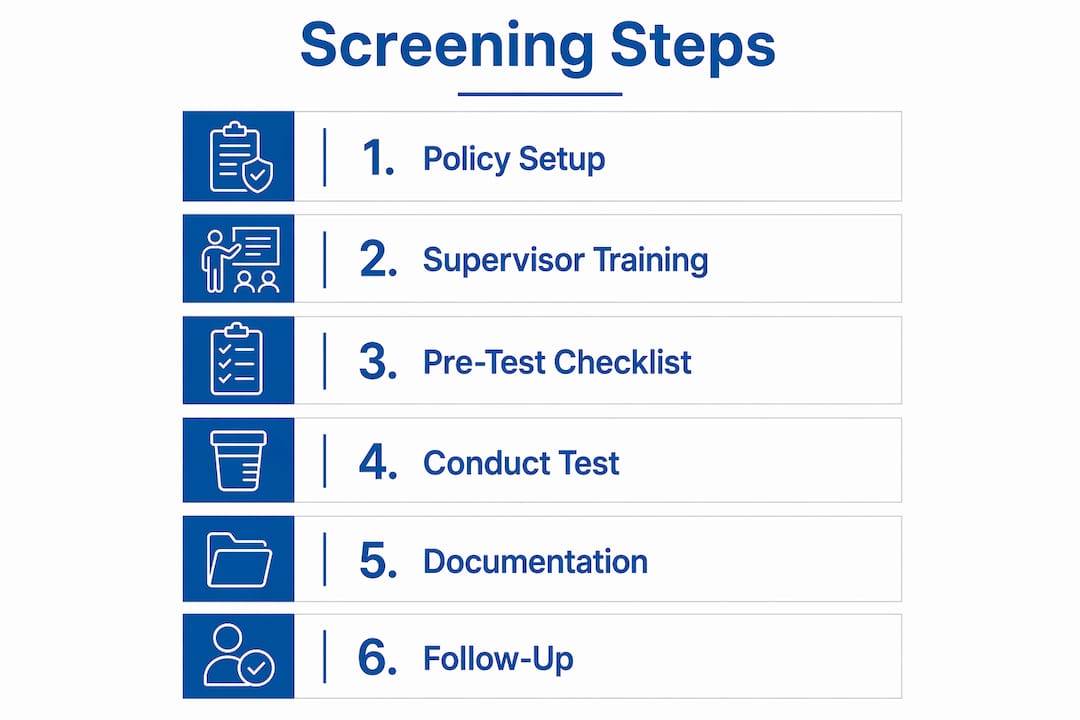
A written alcohol testing policy is the legal foundation of any compliant program. Employers must develop a comprehensive written policy that defines purpose, scope, chain-of-custody procedures, MRO designation, and confidentiality protections before a single test is administered.
Your policy must specify which testing scenarios apply to your workforce:
- Pre-employment: Testing candidates before they begin safety-sensitive roles
- Random: Unannounced testing of a randomly selected pool of employees
- Post-accident: Testing following workplace incidents or near-misses
- Reasonable suspicion: Testing triggered by observed behavioral or physical signs
- Return-to-duty: Testing employees returning after a positive result or leave
Each category carries different procedural requirements, so your policy must address them separately. Confidentiality provisions and clear disciplinary consequences must also appear in writing. Employees who know the rules in advance are far less likely to challenge results later.
Supervisor training is non-negotiable before your program goes live. Supervisors require specific training to detect objective signs such as slurred speech or odor to justify reasonable suspicion tests and avoid bias claims. Training should cover documentation of observed behavior, not just recognition of symptoms.
Pro Tip: Document every supervisor training session with sign-in sheets and training materials. These records protect you if a reasonable suspicion test is ever challenged in court or arbitration.
Which alcohol testing methods work best for workplace programs?
Breath alcohol testing is the gold standard for workplace impairment detection. Breath testing offers rapid, on-site detection of current impairment, unlike urine or blood testing, which may reflect past use or require medical personnel to administer. For most employers, an Evidential Breath Testing (EBT) device is the right tool for both screening and confirmation testing.
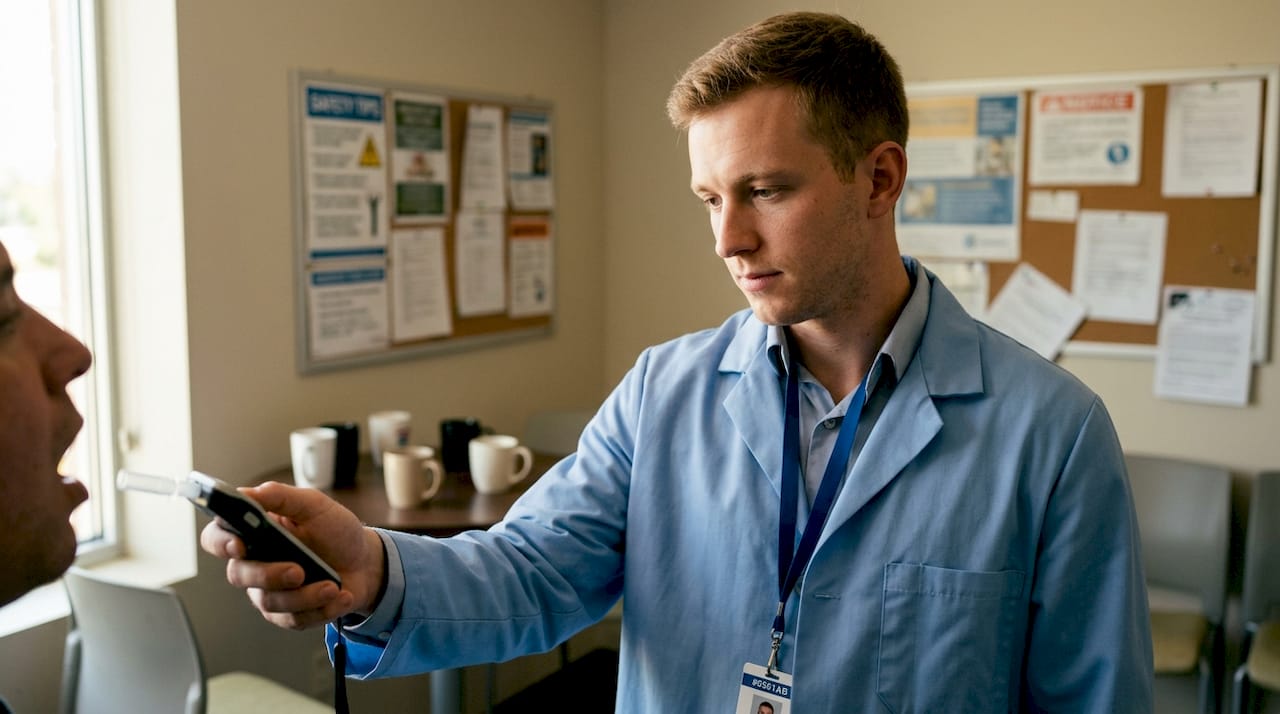
The four main testing methods each serve different purposes:
| Method | Detection window | Invasiveness | Best use case |
|---|---|---|---|
| Breath (EBT) | 1–24 hours | Non-invasive | Real-time impairment, DOT compliance |
| Saliva | 1–12 hours | Minimally invasive | On-site screening, reasonable suspicion |
| Urine | Up to 80 hours | Moderate | Post-accident, return-to-duty |
| Blood | 6–12 hours | Invasive | Medical or legal proceedings |
Breath testing wins on speed and non-invasiveness for most workplace scenarios. Urine testing captures a longer window but does not confirm current impairment. Blood testing is accurate but requires a medical setting and is rarely practical for routine workplace use.
Test selection should match the job’s safety sensitivity and your legal obligations. Safety-sensitive roles under DOT regulations require EBT devices that meet federal specifications. For non-regulated industries, alcohol screening methods like saliva tests offer a practical and cost-effective alternative for initial screening, provided your policy documents the rationale for the method chosen.
What are the step-by-step procedures for conducting alcohol screening?
A compliant alcohol screening process follows seven distinct steps. Skipping or shortcutting any of them creates procedural vulnerabilities that can invalidate your results.
-
Authorize the test. Document the reason for testing. For reasonable suspicion tests, the supervisor must record specific, observable behaviors before the employee is directed to testing. For random testing, use a verifiable random selection process and document it.
-
Prepare and calibrate the testing device. Evidential Breath Testing devices require periodic documented calibration as a legal mandate under 49 CFR §§40.233 and 40.333. Confirm the device is calibrated and within its service window before each use. Log the calibration check.
-
Conduct the initial screening test. The Breath Alcohol Technician (BAT) administers the test following the device manufacturer’s protocol. The employee blows into the mouthpiece until the device registers a complete sample. Record the result immediately.
-
Apply the 0.02% BAC threshold. A result below 0.02% BAC is negative. A result at or above 0.02% BAC triggers the next step. The 0.02% threshold and mandatory waiting period are mandated under 49 CFR Part 40 standards for DOT-regulated roles. This threshold matters because it separates incidental exposure from potential impairment.
-
Observe the mandatory waiting period. If the initial result is at or above 0.02% BAC, the BAT must observe the employee for 15–30 minutes before administering the confirmation test. This waiting period eliminates mouth alcohol as a source of false positives. The employee must not eat, drink, belch, or use tobacco during this window.
-
Conduct the confirmation test. The BAT administers a second breath test using the same EBT device. The confirmation result is the legally binding result. If the confirmation result is 0.04% BAC or above for DOT-regulated roles, the employee is removed from safety-sensitive duties immediately.
-
Document and maintain chain of custody. Failure to maintain chain-of-custody standards can invalidate results and jeopardize employer compliance. Complete all required forms, secure the documentation, and transmit results to the MRO according to your policy. Notify the employee of the result and the next steps in writing.
Pro Tip: Use a pre-test checklist for every screening event. A one-page form covering device calibration, employee ID verification, and observation period timing takes two minutes to complete and eliminates the most common procedural errors.
How do you maintain compliance and avoid program-breaking mistakes?
Program integrity depends on consistent execution, not just good intentions. The most common employer mistakes fall into four categories: missed calibration records, poorly timed post-accident tests, inadequate supervisor documentation, and confidentiality breaches.
“Post-accident alcohol testing must be performed within 2 hours, not exceeding 8 hours, to produce legally valid results.” This tight window means your supervisors need a clear, written protocol they can execute without consulting HR first.
Post-accident testing windows are extremely tight. Employers must act quickly to maintain compliance and produce defensible impairment assessments. Assign a designated person at each worksite who knows the protocol and has access to testing equipment at all times.
Calibration records are equally critical. Missing calibration documentation can result in program challenges and nullification of test results. Keep a calibration log for every EBT device, and schedule service intervals on a shared calendar with automated reminders.
Confidentiality is a legal obligation, not just a courtesy. Test results must be shared only with individuals who have a documented need to know, such as the MRO, safety officer, or HR director. Sharing results with a supervisor who is not directly involved in the case creates liability. Train everyone who touches test documentation on these boundaries.
For employer compliance, audit readiness requires organized records. Maintain testing logs, calibration records, policy acknowledgment forms, and training documentation in a single, secure location. Federal auditors and legal challenges both demand the same evidence.
The NIAAA-validated AUDIT screening tool offers a structured, objective approach to alcohol risk assessment that avoids leading questions and improves legal defensibility when used as part of a broader program. Pair it with brief counseling interventions under 15 minutes following positive screens. USPSTF data shows these short sessions carry the strongest evidence base for reducing unhealthy alcohol use in employees.
Key Takeaways
A compliant workplace alcohol screening program requires written policy, trained supervisors, calibrated equipment, strict chain-of-custody documentation, and time-sensitive post-accident testing to produce legally defensible results.
| Point | Details |
|---|---|
| Written policy first | Define scope, MRO designation, confidentiality, and disciplinary actions before testing begins. |
| Breath testing is the standard | EBT devices provide real-time impairment data and meet DOT compliance requirements. |
| The 0.02% BAC threshold triggers action | Any result at or above this level requires a mandatory 15–30 minute wait before confirmation testing. |
| Post-accident timing is critical | Testing must occur within 2 hours and no later than 8 hours after an incident to remain valid. |
| Calibration records protect your program | Missing EBT calibration logs can nullify results and expose your program to legal challenge. |
What I’ve learned from watching employers get this wrong
Most employers who struggle with alcohol screening programs do not fail on the testing itself. They fail on the paperwork and the preparation. I have seen programs collapse in arbitration not because the employee was sober, but because the supervisor’s documentation was vague, the calibration log had a gap, or the post-accident test happened at hour nine instead of hour seven.
The misconception I encounter most often is that buying a good breathalyzer is enough. The device is the least complicated part. What matters is the system around it: who authorizes the test, who observes the waiting period, who completes the chain-of-custody form, and who stores the records. Every one of those handoffs is a potential failure point.
Supervisor training is where I see the biggest gap between policy and practice. Supervisors are often reluctant to initiate reasonable suspicion tests because they fear being wrong or being accused of targeting an employee. That reluctance is understandable, but it is also dangerous. A supervisor who documents specific, observable facts, slurred speech, unsteady gait, the smell of alcohol, is protected. A supervisor who acts on a gut feeling without documentation is not.
The other lesson I would share is this: treat your alcohol testing program as a living document. Regulations update. Court decisions shift what is defensible. The HR alcohol testing protocols that held up in 2022 may need revision by 2026. Schedule an annual policy review with legal counsel and update your supervisor training materials at the same time. Proactive programs survive audits. Reactive ones do not.
— Alan
How Countrywidetesting supports your alcohol screening program
Countrywidetesting provides employers with the testing products and lab services needed to run a compliant, defensible alcohol screening program from day one.
From laboratory testing services that meet SAMHSA, ISO, CLIA, and CAP standards to chain-of-custody support and a broad catalog of on-site screening products, Countrywidetesting covers the full testing workflow. Whether you are setting up a new program or filling gaps in an existing one, the platform connects you with certified lab partners and the documentation tools your program requires. Visit Countrywidetesting to review available testing solutions and find the right fit for your workforce size and industry requirements.
FAQ
What is the BAC threshold that triggers a confirmation test?
A breath alcohol result at or above 0.02% BAC requires a mandatory 15–30 minute observation period followed by a confirmation test under 49 CFR Part 40 standards.
How long after an accident must alcohol testing occur?
Post-accident alcohol testing must be completed within 2 hours of the incident and no later than 8 hours to produce a legally valid result under DOT regulations.
What makes a workplace alcohol testing program legally defensible?
A legally defensible program requires a written policy, documented chain-of-custody procedures, calibrated EBT devices with maintenance records, trained supervisors, and a designated Medical Review Officer.
Can employers use saliva tests instead of breath tests?
Saliva tests are a practical option for initial screening in non-DOT-regulated workplaces, but DOT-regulated safety-sensitive roles require Evidential Breath Testing devices that meet federal specifications.
What should happen after an employee tests positive?
The employee must be removed from safety-sensitive duties immediately, notified of the result in writing, and referred to a Substance Abuse Professional (SAP) for evaluation before any return-to-duty testing occurs.