
Invalid Drug Test Result: What Employees and Employers Must Do
An invalid drug test result means the laboratory could not produce a reliable positive or negative for the specimen — the sample failed quality checks, not the donor. According to LegalClarity, an invalid result is neutral: it neither confirms drug use nor clears the donor. Three things happen next: a Medical Review Officer (MRO) contacts the donor, the donor gathers any relevant prescriptions or medical records, and the MRO decides whether to cancel the test or direct an immediate recollection under direct observation. The governing framework for DOT-regulated testing is 49 CFR Part 40, and the lab must be SAMHSA-certified for federal workplace testing.
- MRO review call: The MRO will contact you to discuss possible medical explanations.
- Gather documentation: Collect prescriptions, physician notes, and any recent lab results before that call.
- Expect possible recollection: If no acceptable explanation exists, a directly observed recollection is typically required.
Key Takeaways
An invalid drug test result is a neutral lab classification that triggers an MRO review process, not an automatic adverse employment action, and resolving it correctly depends on documentation, procedural accuracy, and following 49 CFR Part 40 where applicable.
| Point | Details |
|---|---|
| Invalid is not a positive | The lab could not interpret the specimen; no drug use is confirmed or denied. |
| MRO review is mandatory | Under 49 CFR §40.159, the MRO consults the lab, contacts the donor, and decides whether to cancel or direct recollection. |
| Documentation resolves most cases | Prescriptions and physician notes explaining the lab’s findings typically result in test cancellation without recollection. |
| DOT vs. private employer rules differ | DOT programs follow strict Part 40 procedures; private employers have more discretion but face legal risk without a consistent written policy. |
| Countrywidetesting supports retesting | Certified lab services, alternate specimen kits, and chain-of-custody documentation are available for individuals and employers needing a compliant retest. |
Table of Contents
- What an invalid drug test result actually means — and what it doesn’t
- Common causes of an invalid lab result you should know
- How the MRO and lab handle an invalid result under 49 CFR §40.159
- How DOT and non-DOT testing differ, and what employers must do
- What you should do as the donor right now
- What employers should do now to protect the company
- Possible outcomes and what each one means for employment
- Timeline from invalid result to final outcome, and who pays
- Practitioner-level tips that actually improve resolution outcomes
- Why getting this right matters more than most people realize
- Countrywidetesting supports retesting and documentation when it matters most
- Sources
What an invalid drug test result actually means — and what it doesn’t
“Invalid” is a specific laboratory classification, not a synonym for failed or suspicious. A lab flags a specimen invalid when specimen validity testing (SVT) produces results that fall outside acceptable ranges, making it impossible to confirm or rule out the presence of targeted substances. The lab runs SVT on every urine specimen, measuring creatinine concentration, specific gravity, and pH, and screening for immunoassay interference. When those markers conflict or fall outside established thresholds, the specimen cannot be reliably interpreted.
This classification sits in a distinct category from other non-negative outcomes. Conflating them creates real problems for both donors and employers, so the distinctions matter.
| Result Category | What It Means | Typical Next Step |
|---|---|---|
| Invalid | Lab cannot interpret the specimen reliably | MRO review; possible recollection |
| Dilute | Creatinine and specific gravity are low but within testable range | MRO reports result; employer may direct recollection |
| Adulterated | Specimen contains a substance not expected in human urine | MRO reports as refusal to test |
| Substituted | Creatinine and specific gravity are incompatible with human urine | MRO reports as refusal to test |
| Positive | Drug or metabolite confirmed above cutoff | MRO verifies; reported to employer |
The key practical difference: adulterated and substituted results are reported as refusals to test, which carry the same consequences as a positive under DOT rules. An invalid result does not. It triggers a review process, not an automatic adverse action. For point-of-care or at-home lateral-flow tests, an invalid reading typically shows no control line and usually results from incorrect procedure or insufficient sample volume — a different mechanism than a lab SVT failure, but the same principle applies: the result cannot be read, so it cannot be acted on.
Understanding lab testing terminology before a result arrives puts both HR teams and donors in a much stronger position.
Common causes of an invalid lab result you should know
Labs flag specimens invalid for a range of reasons, some entirely innocent and some that raise legitimate questions. Knowing which category your situation likely falls into shapes how you respond.
Common technical and collection triggers include:
- Inconsistent creatinine and specific gravity: When these two markers don’t align as they should in human urine, the lab cannot confirm the specimen is valid. Medical conditions affecting kidney function or muscle metabolism are frequent legitimate causes.
- Borderline abnormal pH: Normal urine pH runs roughly 4.5–8.5. Readings outside that range, or borderline readings near 9.0, can indicate interference, degradation, or a medical condition. Time and temperature during transport can also shift pH.
- Immunoassay interference: Certain medications, supplements, or substances can interfere with the immunoassay screening on multiple specimen portions, preventing a reliable reading.
- Dilution: Excessive fluid intake before collection can push creatinine and specific gravity toward the edges of acceptable ranges, sometimes triggering an invalid rather than a dilute classification.
- Collection or handling errors: Improper sealing, labeling errors, or chain-of-custody breaks can compromise specimen integrity before it reaches the lab.
- Temperature and time issues: Specimens held too long or exposed to temperature extremes can degrade in ways that affect pH and other validity markers.
- Certain medications and medical conditions: Conditions like urinary tract infections, kidney disease, or metabolic disorders can alter creatinine and specific gravity in ways that look suspicious but are entirely medical in origin. Some prescription medications interfere with immunoassay panels.
Some of these causes are completely innocent. Others, like deliberate dilution or the introduction of interfering substances, raise tampering concerns. The MRO’s job is to sort one from the other.
Pro Tip: Before your MRO call, pull together prescription labels, any recent physician notes, and a brief log of your fluid intake in the 24 hours before the test. A UTI, kidney condition, or prescription that explains the lab’s findings can resolve the matter without recollection. See also: can a UTI affect a drug test.
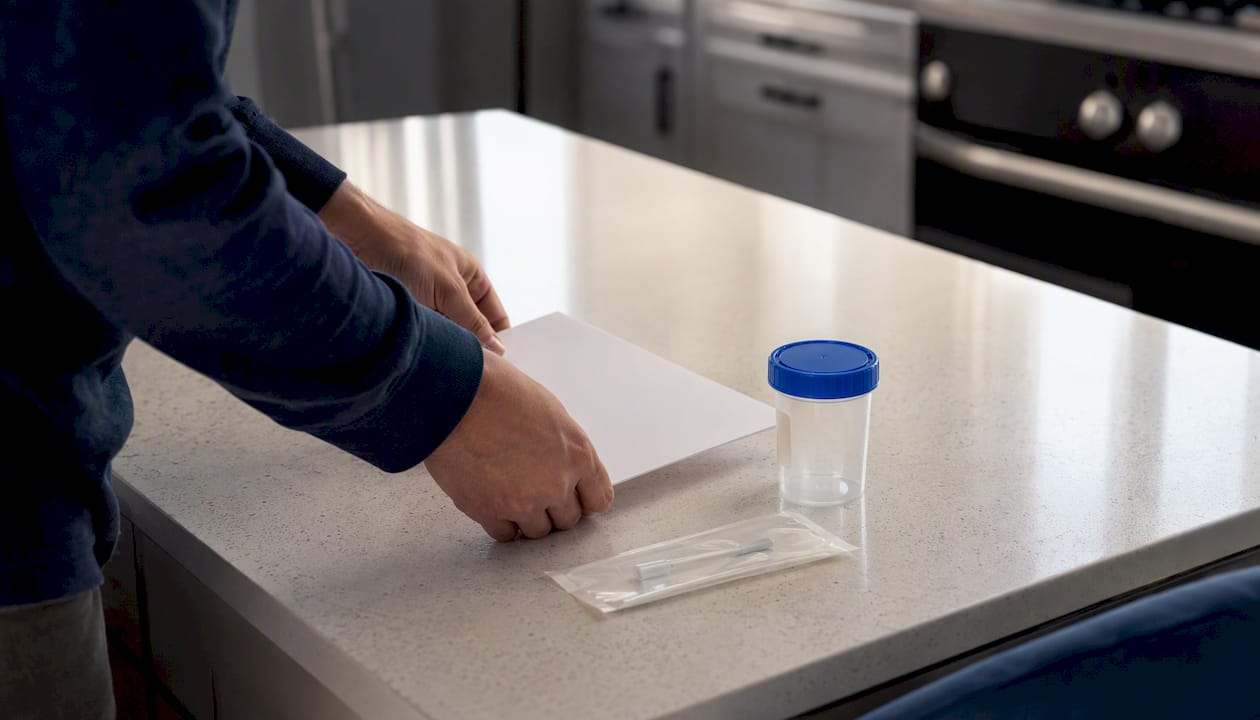
How the MRO and lab handle an invalid result under 49 CFR §40.159
The regulatory workflow is precise. Under 49 CFR §40.159, the MRO follows a defined decision sequence after the lab reports an invalid result. Skipping steps or improvising is not an option in DOT-regulated testing.
The decision flow works like this:
- Lab reports invalid result. The certifying scientist documents the specific reason (e.g., pH out of range, immunoassay interference) on the Chain of Custody Form (CCF).
- MRO consults the certifying scientist. The MRO discusses the lab’s findings, the specific validity markers that failed, and whether retesting the primary specimen at another HHS-certified lab is appropriate.
- MRO contacts the donor. Using the procedures in §40.131, the MRO reaches out to discuss possible medical explanations. The donor has the opportunity to explain prescriptions, medical conditions, or other relevant factors.
- MRO evaluates the explanation. If the donor provides an acceptable medical explanation — documented by a prescription or physician note — the MRO documents “Test Cancelled” on Copy 2 of the CCF and reports the cancellation to the Designated Employer Representative (DER). No further action is required.
- No acceptable explanation exists. The MRO cancels the test AND directs an immediate recollection under direct observation. The eCFR version of §40.159 confirms this requirement, along with the split-specimen reconfirmation rules that apply when a split specimen exists.
- Alternate specimen consideration. In some circumstances, an alternate specimen type (oral fluid, for example) may be practicable when direct-observed urine recollection presents logistical challenges.
One nuance worth knowing: when pH is borderline high, roughly in the 9.0–9.5 range, Transportation Department guidance confirms the MRO may factor in elapsed time and temperature during transport. If those conditions plausibly explain the pH reading, the MRO can cancel the test without requiring recollection. That judgment call is the MRO’s alone to make, documented in the file.
If a donor admits to adulteration or substitution during the MRO interview, that admission is documented the same day and reported to the DER as a refusal to test — a significantly more serious outcome than an invalid result.
How DOT and non-DOT testing differ, and what employers must do
The procedural gap between DOT-regulated and private employer testing is substantial. For DOT-covered positions — commercial drivers, aviation workers, pipeline operators, and others under federal safety mandates — every step of the invalid result process is governed by 49 CFR Part 40. There is no employer discretion on whether to follow MRO procedures. The MRO is the final authority on result interpretation, and the employer acts on the MRO’s report, not the raw lab data.
Private employers have more flexibility, but that flexibility cuts both ways. Many follow SAMHSA-certified lab practices and mirror Part 40 procedures voluntarily, which is sound policy. Those that don’t risk inconsistent treatment, legal exposure, and challenges to the defensibility of their testing program.
For DOT-regulated employers, the action list is fixed:
- Preserve all CCF copies immediately upon notification.
- Contact the DER only through proper channels; do not discuss the result directly with the donor outside the MRO process.
- If the MRO directs recollection, arrange it immediately. DOT rules require removal from safety-sensitive duties until a valid result is obtained.
- Compensate current employees for time and reasonable travel costs associated with a required recollection, consistent with applicable federal wage rules.
- Document every step with timestamps.
For private employers, the recommended action list:
- Follow your written drug testing policy consistently. Inconsistent treatment of invalid results is a primary source of discrimination claims.
- Consult your company’s drug testing policy and legal counsel before taking any adverse action based on an invalid result alone.
- Treat the invalid result as a process event, not a disciplinary one, until the MRO’s final determination is in hand.
- Maintain CCF copies, MRO communications, and recollection documentation in a secure, access-controlled file.
A red flag worth escalating: repeated invalid results with different stated reasons. That pattern warrants closer scrutiny, documented escalation, and potentially a conversation with your MRO about tampering indicators. For a broader look at compliance obligations, the drug testing compliance guide for employers covers both DOT and private-sector frameworks in detail.
What you should do as the donor right now
If you’ve received notice of an invalid result, the window between now and your MRO call is your most productive time. Use it.
Numbered checklist for donors:
- Secure your paperwork. Keep your copy of the CCF and any collection site documentation. You may need it later.
- List every medication and supplement you took in the 72 hours before the test, including over-the-counter products, vitamins, and herbal supplements.
- Pull prescription labels and physician notes. If a prescription could explain immunoassay interference or an abnormal creatinine reading, that documentation is your strongest asset. Gathering prescription information before the MRO call is the most effective step a donor can take toward a favorable resolution.
- Note your fluid intake. Write down approximately how much you drank in the 24 hours before the test. Excessive hydration is a common innocent cause of borderline readings.
- Contact your prescribing physician if a medical condition might explain the result. A brief note from your doctor carries significant weight with the MRO.
- Prepare for the MRO call. Answer questions honestly and specifically. Do not speculate about causes you can’t document.
- Request documentation. After the MRO call, ask for written confirmation of the outcome — whether the test was cancelled or recollection was directed.
Documents to gather before the call:
- Prescription labels (current and recent)
- Physician notes or recent lab results showing a relevant medical condition
- A brief written log of fluid intake and any supplements taken before the test
A simple script for the MRO call: State your name, confirm the test date and collection site, then say: “I’d like to share some information that may explain the lab’s findings. I take [medication name] prescribed by [physician name] for [condition]. I can provide documentation.” Keep it factual. If you don’t know why the result was flagged, say so plainly rather than guessing. Medications like ADHD prescriptions can affect immunoassay panels in ways that aren’t obvious — knowing how ADHD medication shows up on a drug test before the call helps you frame the conversation accurately.
What employers should do now to protect the company
HR’s job at this stage is procedural accuracy and documentation. The goal is a defensible record, not a quick resolution.
HR action checklist:
- Secure CCF copies immediately. Store them in a restricted-access file separate from the employee’s general personnel record.
- Notify the DER. The Designated Employer Representative should be the single point of contact for MRO communications. Keep that channel clean.
- Follow your written policy to the letter. If your policy says you follow Part 40 procedures for all testing, apply them uniformly regardless of whether the test is technically DOT-covered.
- Assess safety-sensitive duty status. For DOT-regulated positions, the employee cannot perform safety-sensitive functions while awaiting a valid result. Document the removal decision and its basis.
- Arrange recollection logistics if directed. If the MRO directs immediate recollection under direct observation, coordinate a gender-appropriate collector and minimize advance notice to the employee to preserve result integrity.
- Do not take adverse employment action based solely on an invalid result. Wait for the MRO’s final determination.
Recordkeeping requirements:
- CCF copies (all parts retained by the employer)
- MRO written report and any correspondence
- Recollection documentation, including collection site confirmation and new CCF
- Timestamps on every notification and action taken
- Any written communications with the employee regarding duty status
Federal DOT regulations require employers to retain drug testing records for specific periods depending on the result type. Cancelled tests must be retained for at least one year. Positive, refusal, and other non-negative results carry longer retention requirements. Consult drug testing laws for the full federal retention schedule.
Red flags that should prompt escalation:
- Repeated invalid results with different documented reasons
- A donor who refuses to discuss the result with the MRO
- Inconsistencies between the collection site’s temperature log and the lab’s reported specimen temperature
Document each red flag and discuss it with your MRO. Do not act unilaterally.
Possible outcomes and what each one means for employment
The MRO’s review produces one of several distinct outcomes, and each carries different implications for the donor and the employer.
Outcome scenarios:
- MRO accepts medical explanation → Test cancelled. The employer receives a “Test Cancelled” report. No adverse action is permitted based on this result. The employer may, depending on policy, direct a new test under standard conditions.
- Recollection produces a negative result. The process ends. The employee returns to normal duties with no adverse record from the invalid result.
- Recollection produces another invalid result with the same reason. The MRO may consider an alternate specimen type. If the same pattern repeats under direct observation, the MRO documents the situation and consults with the lab. This scenario is rare but requires careful documentation.
- Recollection produces another invalid result with a different reason. This pattern raises tampering concerns and should be escalated. The MRO and employer should document and treat it accordingly.
- Donor admits adulteration or substitution. The MRO documents the admission the same day and reports it to the DER as a refusal to test — the same consequence as a verified positive under Part 40.
- Split specimen confirms a positive. When an invalid result accompanies a verified positive on the split specimen, the positive directs reporting and the invalid classification is superseded per Part 40 rules.
Employment rights and legal exposure:
Under DOT rules, the procedural protections are explicit: the MRO must follow §40.159, the donor has the right to explain, and the employer must act on the MRO’s report. Private employers have more discretion, but at-will employment does not eliminate the risk of a wrongful termination claim if an employer acts on an invalid result without following its own written policy. In criminal justice or probation contexts, an invalid result may trigger a hearing rather than an automatic violation, but outcomes depend on the supervising authority’s rules.
If you’re facing adverse action based on an invalid result and the employer did not follow proper procedures, consulting an employment attorney is worth considering. For readers navigating immigration-related testing, abnormal lab results in immigration medical exams follow a separate procedural framework governed by USCIS requirements.
Timeline from invalid result to final outcome, and who pays
The process moves faster than most people expect, at least in the early stages.
Typical timeline:
- Day 0–2: Lab completes SVT and reports the invalid result to the MRO.
- Day 1–3: MRO consults the certifying scientist and initiates donor contact per §40.131.
- Day 2–5: MRO call with the donor; medical explanation reviewed.
- Day 3–5 (if recollection directed): Immediate recollection under direct observation is arranged. “Immediate” under Part 40 means as soon as practicable, typically within the same business day or the next.
- Day 5–10: New specimen processed; results reported to MRO and then to DER.
- Split-specimen reconfirmation: If applicable, add 3–5 business days for shipment and testing at a second HHS-certified lab.
Who pays:
For current employees in DOT-regulated programs, the employer bears the cost of required recollection, including reasonable travel time and expenses. Pre-employment applicants generally bear their own costs unless the employer’s policy states otherwise, though some employers cover recollection costs to avoid delays in onboarding. Private employer obligations vary by state and company policy. Federal wage rules require that non-exempt employees be compensated for time spent on employer-directed testing during working hours.
Common delays include split-specimen shipment logistics, difficulty reaching the donor for the MRO interview, and situations where an alternate specimen type must be arranged.
Practitioner-level tips that actually improve resolution outcomes
Most donors and HR teams focus on the recollection and miss the window where documentation does the most work.
Pro Tip: Have prescription copies physically in hand before the MRO calls, not after. MROs work on tight timelines, and a donor who can provide documentation during the initial call resolves the matter faster than one who asks for time to gather records.
A few tactics that make a real difference in practice:
- Match the recollection reason to the original test reason. If the original test was a random, the recollection should be documented as a random recollection. Mismatching the reason creates audit problems.
- Document creatinine and specific gravity contradictions in context. If a donor has a documented kidney condition, the MRO’s file should include that medical record alongside the lab’s SVT data. The contradiction becomes explainable rather than suspicious.
- For borderline pH readings near 9.0–9.5, ask the collection site for the temperature log and the time elapsed between collection and lab receipt. If time and temperature plausibly explain the pH shift, the MRO can cancel without recollection. That question is worth asking.
- HR teams: plan direct observation logistics before they’re needed. Identify gender-appropriate collectors at nearby collection sites in advance. When the MRO directs immediate recollection, having a site ready cuts hours off the process.
- Donors: request a copy of the MRO’s written report. You are entitled to it. Keep it with your other test documentation in case the result is referenced in a future employment background check.
Countrywidetesting’s lab testing services support retesting and alternate specimen collection through SAMHSA, CLIA, and CAP-certified laboratories, with chain-of-custody documentation handled through the process. For employers who need guidance on interpreting the lab report that comes back, how to interpret lab drug test results walks through each field on the CCF and what it means for HR compliance.
Why getting this right matters more than most people realize
The MRO process exists for a reason that often gets lost in the procedural detail: it protects both sides. Employers who treat an invalid result as a de facto positive expose themselves to wrongful termination claims, ADA complications, and policy inconsistency that undermines every future test they administer. Donors who assume the worst and don’t engage with the MRO process miss the single most effective opportunity to resolve the matter without consequence.
The distinction between a medical explanation and a tampering indicator is not always obvious from the outside. A donor with a kidney condition and a donor who deliberately diluted a specimen can produce similar lab markers. The MRO’s review, the documentation exchange, and the direct observation protocol exist precisely to make that distinction with evidence rather than assumption.
Invalid does not mean guilty. It means the lab needs more information. Treating it that way — with documentation, procedural accuracy, and good faith on both sides — is what produces fair outcomes.
Countrywidetesting supports retesting and documentation when it matters most
When an invalid result requires a retest, an alternate specimen, or tighter documentation control, having the right testing infrastructure in place makes the difference between a smooth resolution and a drawn-out process.
Countrywidetesting connects individuals and employers with SAMHSA, CLIA, and CAP-certified laboratory services for confirmatory and retesting needs, including oral fluid collection options when urine recollection presents complications. The platform offers lab testing services with chain-of-custody documentation, at-home and on-site saliva test kits for employers who need immediate alternate-specimen options, and educational resources that help HR teams stay compliant with both DOT and private-sector testing requirements. For employers managing a directed recollection, Countrywidetesting’s certified lab network handles the process with the documentation standards that hold up in audits and disputes. Place your order or request a custom testing solution directly at Countrywidetesting.
Sources
The regulations and guidance below govern U.S. workplace drug testing. Sources marked as DOT/federal apply directly to DOT-regulated testing programs; the others provide useful context for private employer programs.
- 49 CFR § 40.159 - What does the MRO do when a drug test …
- §40.159 What does the MRO do when a drug test result is …
- What Does an Invalid Drug Test Result Mean? - LegalClarity
The DOT/federal sources govern any safety-sensitive position covered by 49 CFR Part 40. Private employers not subject to DOT oversight are not legally required to follow Part 40, but adopting its procedures voluntarily is widely recognized as best practice for defensibility and consistency.
This article is general information, not a substitute for advice from a qualified doctor. Consult a qualified healthcare professional about your own circumstances before acting on anything here.