
How to Request Drug Testing for Defense: A US Guide
How to formally request drug testing for defense
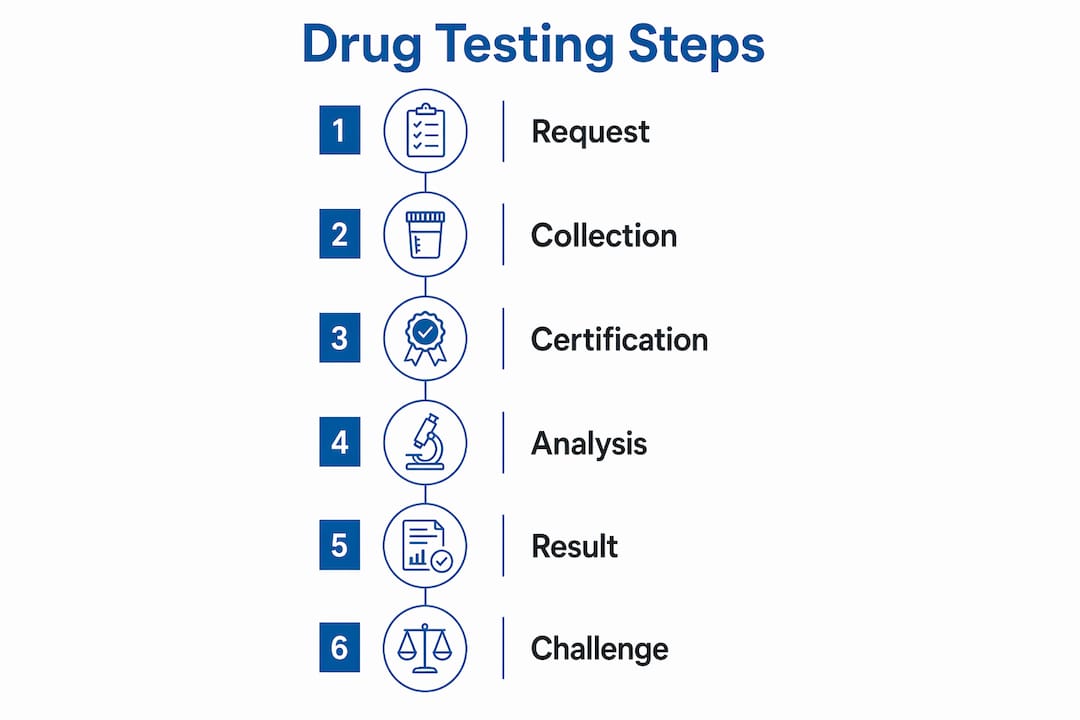
Requesting drug testing for defense purposes is not as simple as buying a kit at the pharmacy. The legal drug testing process requires formal steps, certified laboratories, and documented procedures that hold up under scrutiny. Whether you are an individual defending yourself in a workplace dispute, an employer building a defensible record, or an organization managing compliance, the same core rules apply.
Here is what the request process must include:
- Submit your request in writing. Verbal requests leave no paper trail. Use your organization’s official drug test request forms or submit a written memo that specifies the reason for testing (employment dispute, legal proceeding, post-incident investigation).
- State the defense context clearly. Specify whether the test is for a legal case, workplace dispute, or regulatory compliance. This determines which protocols and certifications apply.
- Use only certified laboratories with chain of custody procedures. Only labs meeting SAMHSA, ISO, CLIA, or CAP standards produce results that are legally admissible.
- Confirm professional specimen collection. The collector must be authorized and the process must be documented from start to finish.
- Request confirmatory testing upfront. Ask explicitly that any preliminary positive be confirmed using GC-MS (gas chromatography-mass spectrometry) before results are used in any defense context.
- Follow timing requirements. Reasonable suspicion testing, for example, must typically occur within 24 hours of the triggering incident.
Table of Contents
- Why certified labs and chain of custody are non-negotiable
- How to navigate employer and legal drug testing policies
- Common mistakes that undermine your defense drug test
- How to interpret results and act on them for defense
- How Countrywidetesting supports defense-grade drug testing
- How to handle disputes or challenges to drug test results
- Countrywidetesting makes certified defense testing straightforward
- Key Takeaways
Why certified labs and chain of custody are non-negotiable
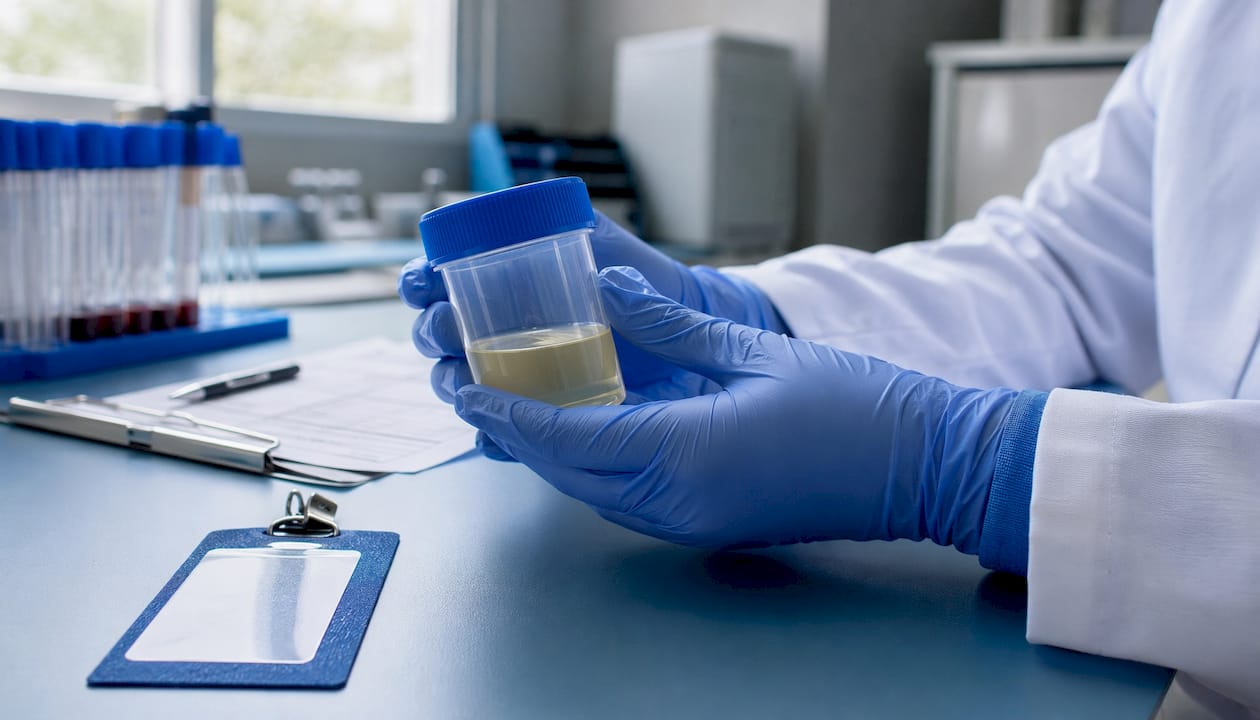
SAMHSA certifies laboratories for federal workplace drug testing programs, establishing standardized collection and testing procedures that protect the integrity of every specimen. Without that certification, results can be challenged and thrown out. In legal defense contexts, failure to maintain a properly documented chain of custody often leads directly to inadmissibility of drug test evidence in court.
Chain of custody is the documented record of who handled a specimen, when, and under what conditions, from the moment of collection through laboratory analysis. It prevents tampering and contamination claims.
- Professional collection is mandatory. The collector must verify your identity with a government-issued photo ID, explain the procedure, and supervise the process.
- The Federal Custody and Control Form (CCF) must be completed, signed by both the donor and collector, and distributed correctly.
- Tamper-resistant sealing of the specimen must occur in the donor’s presence.
- Secure transport to a certified lab must be documented at every handoff.
Home or over-the-counter drug tests lack independent verification and professional collection, which means they carry no legal weight in workplace disputes or court proceedings. Healthcare experts consistently warn against relying on non-lab tests in any defense scenario.
Pro Tip: Ask the collection site to confirm their laboratory’s SAMHSA or CAP certification before you provide a specimen. A certified collector should be able to produce that documentation on request.
How to navigate employer and legal drug testing policies
Understanding the specific policy framework governing your test is just as important as the test itself. SAMHSA guidelines and workplace policies stress clear communication and strict adherence to drug testing protocols. Submitting a request outside the established process can result in delays, rejection, or results that cannot be used.
- Read your employer’s drug testing policy before submitting any request. Policies differ significantly for random, reasonable suspicion, pre-employment, and post-incident testing.
- Follow the format and timeline your policy specifies. Some organizations require requests through HR; others route them through a Drug Program Coordinator or designated agency representative.
- Know your privacy rights. Federal law and most state laws limit who can access drug test results and how they can be used. Results must be kept in a confidential file, separate from general personnel records.
- Transparency helps. Clear written policies on how results are used, whether for rehabilitation referrals or disciplinary action, reduce conflict and improve acceptance of outcomes.
- In legal defense contexts, consult your defense attorney before submitting a request. The timing and method of your request can affect how results are interpreted and used.
Employers treating a refusal to test as a positive result is a real and documented consequence. Following exact procedures protects you from that outcome.
Common mistakes that undermine your defense drug test
Most problems in the steps for drug testing requests come down to shortcuts that seem harmless but destroy legal defensibility. Experts emphasize that documentation, certified labs, and proper procedures are the foundation of any credible result.
- Using an OTC or home test kit as your primary evidence. These are useful for personal screening, not legal defense.
- Submitting an oral or informal request. Without documentation, there is no proof the request was made correctly.
- Missing the collection window. Failing to appear at the designated collection site within the specified timeframe is often treated as a refusal, with the same consequences as a positive result.
- Skipping confirmatory testing. A preliminary positive from an immunoassay screen is not a confirmed result. SAMHSA requires confirmatory testing using GC-MS before any positive is used in a legal or employment action.
- Not requesting a copy of the CCF. You are entitled to a copy of the Federal Custody and Control Form. Keep it.
- Ignoring the Medical Review Officer (MRO) process. If a specimen tests positive at the lab, the MRO contacts the donor before reporting results. Missing that call can result in a confirmed positive that could have been explained.
Pro Tip: Arrive at least 15 minutes early to your collection appointment and bring a valid government-issued photo ID. Failure to establish your identity means the collector cannot proceed, and that may be recorded as a refusal.
How to interpret results and act on them for defense
Understanding what your results actually mean is where many people lose ground. There are two distinct stages: the initial immunoassay screen and the confirmatory GC-MS test. A positive on the initial screen alone is not a final result.
- Preliminary positive: Requires GC-MS confirmation before any action can be taken. Do not accept a preliminary positive as definitive.
- Confirmed positive: The MRO reviews the result and contacts you to discuss any legitimate medical explanation, such as a valid prescription. If an explanation is accepted, the result is reported as negative.
- Negative result: Documented and filed. In a defense context, retain a copy for your records.
- Contested result: You have the right to request a retest of the split specimen (if one was collected) at a different certified laboratory. This request must typically be made within 72 hours of receiving the MRO’s notification.
- Documentation matters. Gather all related records: the CCF, lab report, MRO communication, and any prescription documentation. These form the evidentiary foundation of your defense.
If you believe a result is incorrect, act quickly. Timelines for challenging results are short, and missing them forfeits your options.
How Countrywidetesting supports defense-grade drug testing
Countrywidetesting partners with laboratories certified under SAMHSA, ISO, CLIA, and CAP standards, which means every test processed through the platform meets the requirements for legal and workplace admissibility. The platform serves individuals, employers, and organizations across the US with a range of options suited to defense contexts.
- Urine and saliva testing options, including multi-panel kits for broad substance detection.
- Lab-confirmed mail-in tests that combine the convenience of at-home collection with certified laboratory analysis and documented chain of custody.
- Professional collection support and guidance on completing the CCF correctly.
- Educational resources that walk you through the request process, from selecting the right test to understanding your results.
- Confidential handling of all specimens and results, in compliance with federal privacy standards.
For employers managing drug testing HR policies or individuals preparing for a legal proceeding, Countrywidetesting provides the documentation trail and certified lab partnerships that defense scenarios require.
How to handle disputes or challenges to drug test results
If you receive a result you believe is wrong, the process for challenging it is formal and time-sensitive. Start by contacting the MRO directly. The MRO is the licensed physician responsible for reviewing all non-negative results, and they are required to give you the opportunity to explain a positive before it is finalized.
Request a split specimen retest at a second SAMHSA-certified laboratory if one was collected during your original test. This is your strongest procedural option. Compile all documentation: the original CCF, the lab report, MRO correspondence, and any supporting medical records such as prescriptions. In workplace disputes, involve your HR representative or union representative immediately. In legal cases, your defense attorney should be coordinating directly with the MRO and the laboratory. Acting within the required timeframes, typically 72 hours from MRO notification, is the difference between having options and having none.
Countrywidetesting makes certified defense testing straightforward
When the stakes are high, the testing process needs to be right the first time. Countrywidetesting gives individuals and employers direct access to certified lab testing services backed by SAMHSA, CLIA, CAP, and ISO-certified laboratories, with chain of custody documentation built into every order.
You get lab-confirmed results that hold up in court or HR proceedings, without having to navigate multiple vendors or guess whether your test meets federal standards. The platform covers urine, saliva, and multi-panel testing, with mail-in confirmation options for situations where professional collection at a clinic is not practical. Whether you are an employer building a compliant testing program or an individual preparing a legal defense, Countrywidetesting has the certified testing solution you need. Visit countrywidetesting.com to place your order or explore lab testing options today.
Key Takeaways
Requesting drug testing for defense requires certified labs, documented chain of custody, and formal written procedures to produce legally admissible results.
| Point | Details |
|---|---|
| Submit requests in writing | Written requests with a stated defense purpose create the documentation trail that formal procedures require. |
| Use SAMHSA/CAP-certified labs | Only labs certified under SAMHSA, ISO, CLIA, or CAP standards produce results admissible in court or workplace disputes. |
| Demand confirmatory testing | GC-MS confirmation is required before any preliminary positive can be used in a legal or employment defense context. |
| Act fast on disputes | Requests to retest a split specimen must typically be made within 72 hours of MRO notification. |
| Countrywidetesting for defense testing | Countrywidetesting provides certified lab-confirmed testing with chain of custody documentation suited to legal and workplace defense needs. |