
Emerging Drug Panels in 2026: What Employers Must Know
TL;DR:
- Drug panels in 2026 now detect synthetic opioids, designer benzodiazepines, and emerging substances using LC-MS/MS. Breath testing provides rapid detection of recent drug use, while LC-MS/MS confirms the presence of novel synthetics for legal and clinical accuracy. Employers must regularly update testing policies, verify lab certifications, and adopt new technologies to stay compliant with evolving drug threats.
Emerging drug panels in 2026 are expanded screening tools designed to detect novel synthetic opioids, designer benzodiazepines, and other substances that standard 5- or 10-panel immunoassay tests routinely miss. These updated panels integrate technologies like liquid chromatography-tandem mass spectrometry (LC-MS/MS) and breath-based detection to close the gap between what synthetic drug manufacturers produce and what laboratories can reliably find. For healthcare professionals, employers, and compliance officers, understanding these shifts is no longer optional. The regulatory environment is moving fast, and your testing protocols need to keep pace.
What new substances are included in emerging drug panels in 2026?
Standard urine drug screens are inadequate for detecting the most dangerous substances circulating in 2026. The core problem is structural: immunoassay tests are designed around known molecular targets, and synthetic drug chemists change those structures faster than test manufacturers can respond.
The substances now appearing in updated panels include:
- Nitazenes: A class of synthetic opioids 10–100 times more potent than morphine, nitazenes escape routine immunoassay detection entirely. A negative result on a standard opioid screen means nothing when nitazenes are involved.
- Designer benzodiazepines: Etizolam and clonazolam are widely misused but structurally distinct from pharmaceutical benzodiazepines. Standard benzo screens miss them consistently.
- Gabapentinoids: Pregabalin and gabapentin misuse has grown sharply. Gabapentinoid misuse contributes to over 35% of opioid-related deaths in the UK, a figure that signals a serious clinical risk that most American panels have not yet addressed.
- Xylazine: A veterinary sedative now appearing as a fentanyl adulterant. No FDA-approved immunoassay test currently covers it, making LC-MS/MS the only reliable detection method.
- Ketamine: Chronic ketamine use causes irreversible uropathy in 20–30% of long-term users. Its inclusion in clinical panels reflects growing recognition of its misuse outside controlled medical settings.
The clinical and safety risks these substances pose are not theoretical. A worker impaired by etizolam or a nitazene analog will test clean on a standard panel. That result creates false confidence and real liability.
Pro Tip: If your current panel does not specifically name the substances it screens for, request a full analyte list from your laboratory. A “10-panel test” label tells you almost nothing about synthetic drug coverage.
Practitioners now emphasize targeted confirmatory testing paired with direct patient questioning as the most effective clinical approach. Broad-spectrum immunoassays alone no longer meet the standard of care for high-risk populations.
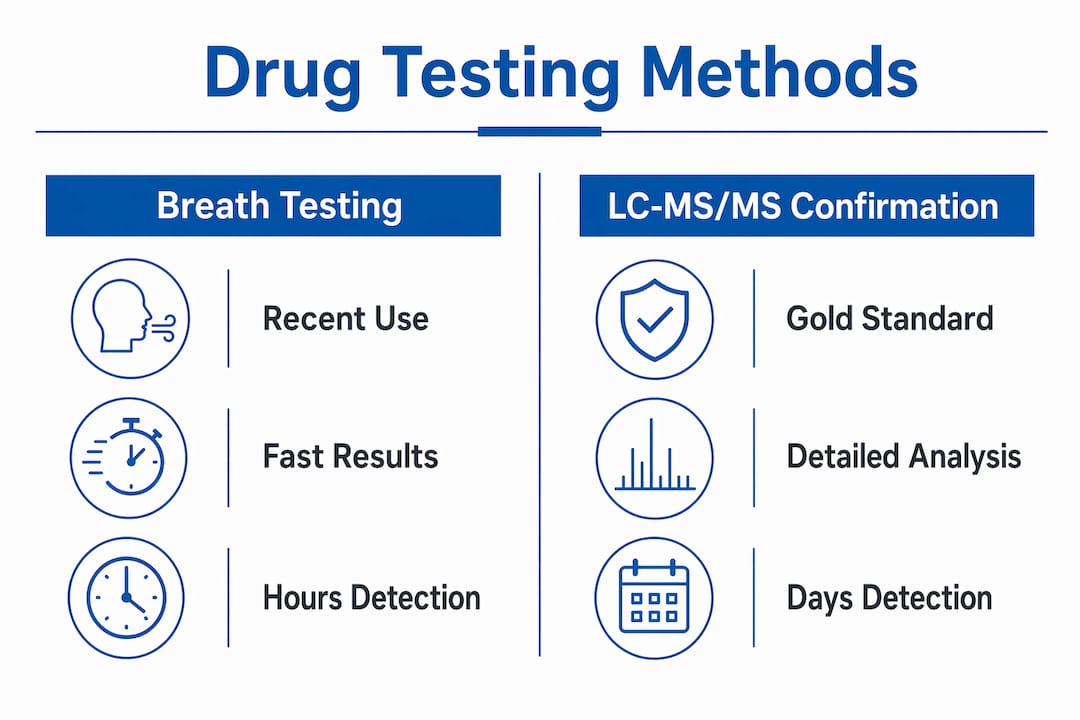
How are new detection technologies transforming drug testing in 2026?
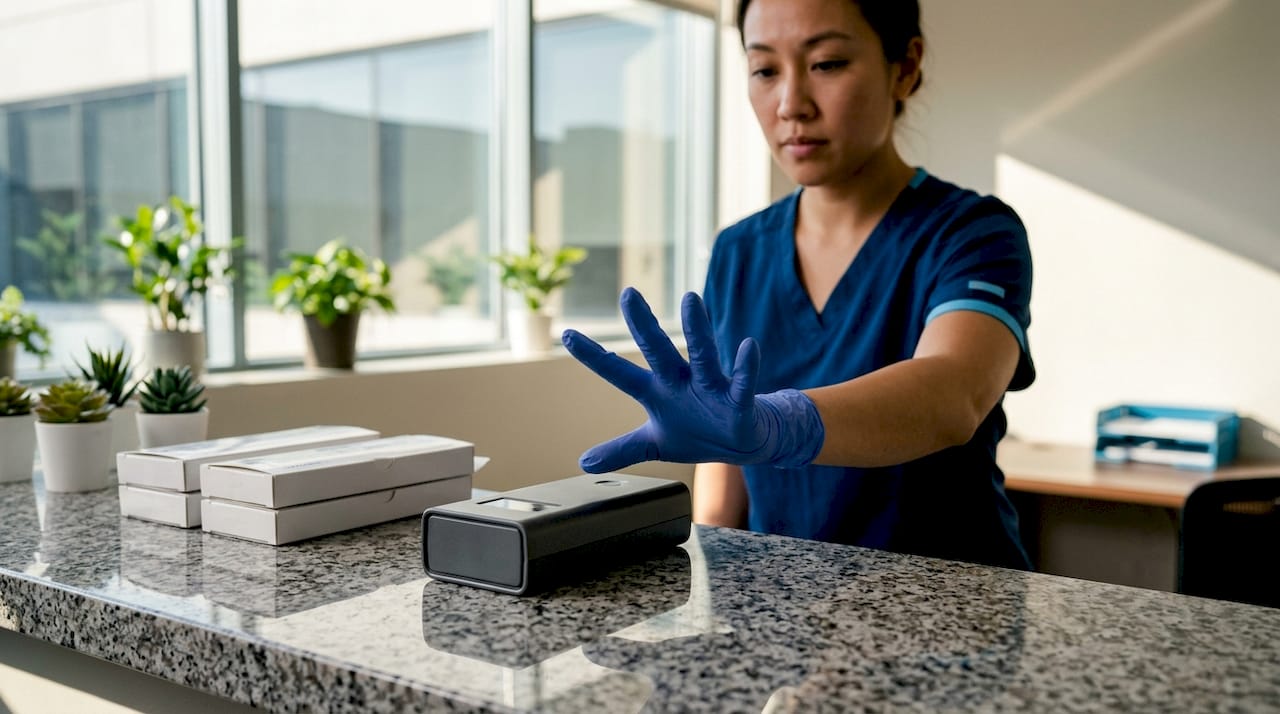
The two technologies reshaping drug screening innovations in 2026 are breath-based testing and LC-MS/MS confirmation. Each serves a different purpose, and neither replaces the other.
Breath-based testing: recent use, fast results
Breath testing panels modeled after DOT urine drug tests can detect recent use of amphetamines, marijuana, cocaine, opiates, and PCP in breath aerosols within hours of consumption. That detection window is the key differentiator. Urine testing detects metabolites that can linger for days or weeks. Breath testing detects the drug itself, indicating active or very recent impairment.
Lifeloc Technologies is developing the SpinDetect breath analyzer, initially targeting forensic and international markets for qualitative and quantitative delta-9-THC detection, with U.S. workplace integration pending FDA approval. Industry leaders recommend a staged adoption approach, beginning in forensic settings before regulatory clearance for workplace use. That timeline matters for compliance officers planning ahead.
LC-MS/MS: the confirmatory gold standard
LC-MS/MS identifies substances by their exact molecular weight and fragmentation pattern. No other widely available method matches its specificity for designer drugs and potent synthetics. Negative results on standard immunoassays do not guarantee sobriety from potent synthetics without LC-MS/MS confirmation. That is not a caveat. It is a clinical and legal fact.
The table below compares the two primary detection approaches:
| Feature | Breath testing | LC-MS/MS confirmation |
|---|---|---|
| Detection window | Hours (recent use) | Days to weeks (metabolites) |
| Best use case | Post-incident, safety-sensitive | Confirmatory, legal defensibility |
| Synthetic drug coverage | Limited to validated analytes | Broad, including novel synthetics |
| Regulatory status | Pending FDA workplace approval | Established, lab-based standard |
| Collection method | Non-invasive breath sample | Urine, oral fluid, or blood |
Pro Tip: For safety-sensitive roles, consider pairing breath testing for post-incident screening with LC-MS/MS confirmation for pre-employment and random testing. The two methods cover different windows and different threats.
Breath testing’s strength lies in detecting very recent use, making it excellent for incident assessment but not a full replacement for routine screenings. Employers who understand this distinction will build more legally defensible and clinically sound programs.
What are the latest regulatory and compliance considerations?
The regulatory environment shaping new drug testing panels in 2026 is moving on multiple fronts simultaneously. Compliance officers who treat their panel as a static document are already behind.
Key regulatory developments include:
- The 2026 National Drug Control Strategy mandates rapid updates to screening panels and emphasizes advanced data acquisition, including AI-assisted analysis and wastewater surveillance, to track emerging drug threats in real time.
- Marijuana rescheduling discussions at the federal level continue to affect how THC appears in workplace testing policies. Employers in safety-sensitive industries governed by DOT regulations must monitor DEA and FDA guidance closely, as rescheduling does not automatically remove THC from federal testing panels.
- Laboratory certification requirements are tightening. Labs processing workplace drug tests must hold SAMHSA certification for federally mandated testing. CAP and CLIA accreditation remain the standard for clinical and forensic work. Employers should verify their lab’s credentials before adding novel analytes to their panel.
- Drug testing panels are expected to see more frequent updates as agencies close the gap between synthetic drug supply and testing mandates. Employers should build review cycles into their testing policies, not treat panel composition as a one-time decision.
The 2026 drug testing compliance guide from Countrywidetesting covers how these regulatory shifts translate into specific employer obligations. Staying current with laboratory testing standards is the baseline, not the ceiling.
How can employers and healthcare professionals implement these panels?
Implementation is where policy meets practice. The following steps reflect what actually works when organizations transition to updated drug testing protocols.
-
Audit your current panel against known threats. Request a full analyte list from your lab and compare it against the substances now circulating in your region. Xylazine, nitazenes, and designer benzodiazepines are not hypothetical risks. They are present in the drug supply now.
-
Choose your testing matrix based on your use case. Urine testing remains the standard for pre-employment and random screening because of its established detection windows and regulatory acceptance. Oral fluid testing suits observed collection scenarios. Breath testing, once FDA-cleared for workplace use, will suit post-incident assessment. Understanding the role of each panel type helps you match the tool to the situation.
-
Require LC-MS/MS confirmation for all positive results. An immunoassay positive is a preliminary result. LC-MS/MS confirmation is what holds up in a medical review officer review, an arbitration, or a court. Effective testing combines targeted confirmatory testing with specific patient questioning to enhance accuracy and legal defensibility.
-
Train your staff on what new substances look like clinically. A worker impaired by a designer benzodiazepine may present differently than someone impaired by alcohol or traditional opioids. HR managers and supervisors need updated reasonable-suspicion training that reflects the current drug supply.
-
Build a review cycle into your written policy. The drug screening workflow should include a scheduled annual review of panel composition, with a process for adding analytes when new threats emerge. Static policies create compliance gaps.
-
Balance detection windows with your decision-making needs. If your goal is to identify current impairment, recent-use detection via breath or oral fluid is more relevant than a urine test showing cannabis metabolites from two weeks ago. If your goal is to verify abstinence in a return-to-duty context, urine or hair testing provides the longer window you need.
At-home testing options, such as those available through PRYM Wellness, are expanding access to preliminary screening outside clinical settings. These tools work best as a first step, not a final determination.
Key Takeaways
Emerging drug panels in 2026 require LC-MS/MS confirmation, updated analyte lists covering synthetics like nitazenes and designer benzodiazepines, and a regulatory review cycle built into every employer’s written testing policy.
| Point | Details |
|---|---|
| Standard panels miss key synthetics | Nitazenes and designer benzodiazepines escape immunoassay detection; LC-MS/MS confirmation is required. |
| Breath testing detects recent use | Validated breath panels identify drug use within hours, making them ideal for post-incident screening. |
| Regulations are updating fast | The 2026 National Drug Control Strategy mandates rapid panel updates; treat your policy as a living document. |
| Lab credentials matter | Verify SAMHSA, CAP, or CLIA certification before adding novel analytes to your testing program. |
| Match the matrix to the purpose | Urine, oral fluid, and breath testing each serve different detection windows and compliance contexts. |
The uncomfortable truth about drug testing in 2026
Most workplace drug testing programs are built around the drug threats of 2010. The panels are familiar, the workflows are established, and nobody questions them until something goes wrong.
What I have seen repeatedly is that organizations treat a negative test result as proof of sobriety rather than proof that the tested substances were not detected. That distinction matters enormously when nitazenes are involved. A worker can be dangerously impaired and test clean on a standard 10-panel screen. The test did not fail. The panel was simply never designed to find that substance.
The breath testing technology coming to market is genuinely useful, but the industry is overselling it as a replacement for urine testing. It is not. It answers a different question: was this person using drugs in the last few hours? That is a valuable question in a post-accident investigation. It is the wrong question for pre-employment screening, where you want to know about patterns of use, not last night’s choices.
My advice to compliance officers is straightforward. Stop treating your drug testing panel as a compliance checkbox and start treating it as a clinical tool. That means knowing what your panel actually tests for, understanding what it misses, and building a process to update it when the threat changes. The 2026 National Drug Control Strategy is explicit that the synthetic drug supply will keep evolving. Your panel needs to evolve with it.
— Alan
How Countrywidetesting supports your 2026 testing program
Drug testing programs that worked in 2024 may leave real gaps in 2026. Countrywidetesting connects employers, healthcare facilities, and compliance officers with lab screening and urine test services backed by SAMHSA, CAP, and CLIA-certified laboratories.
Countrywidetesting offers expanded panel options that go beyond the standard 5- or 10-panel screen, with LC-MS/MS confirmation available for legally defensible results. Orders are placed online, and services reach clients nationwide. Whether you need pre-employment screening, random testing, or post-incident confirmation, Countrywidetesting provides the certified lab infrastructure to keep your program current and compliant with 2026 standards.
FAQ
What substances are new to drug panels in 2026?
Updated panels now include nitazenes, designer benzodiazepines like etizolam and clonazolam, gabapentinoids, xylazine, and ketamine. These substances escape standard immunoassay detection and require LC-MS/MS confirmation for accurate results.
Is breath testing approved for workplace drug testing in 2026?
Breath testing for workplace use is pending FDA approval in the United States as of 2026. It is currently validated for forensic and research applications, with commercial workplace deployment expected after regulatory clearance.
Why do standard 10-panel tests miss synthetic drugs?
Standard immunoassay screens target specific molecular structures. Synthetic drug manufacturers alter those structures to create new analogs, which the existing antibody-based tests do not recognize. LC-MS/MS identifies substances by molecular weight and fragmentation, making it far more effective against novel synthetics.
How often should employers update their drug testing panels?
The 2026 National Drug Control Strategy recommends treating panel composition as a dynamic policy. Employers should review their analyte lists at least annually and update them when new substances appear in regional drug supply data or federal guidance.
What lab certifications should employers require for drug testing?
For federally mandated workplace testing, SAMHSA certification is required. For clinical and forensic applications, CAP and CLIA accreditation are the recognized standards. Always verify your laboratory’s current credentials before expanding your panel to include novel analytes.