
7 Steps to Make Alcohol Testing for Custody Hold Up in U.S. Courts
Yes, family courts across the United States can and do order alcohol testing in custody cases, but only when a parent presents credible evidence of a problem, not a bare accusation. Judges weigh test results against the child’s best interests, and a single positive rarely decides a case on its own. If you’re facing a testing request or order, your first moves are simple: get everything in writing, comply with whatever protocol the court sets, insist on a named lab and collection method, and talk to a family-law attorney before you sign anything.
TL;DR:
- Courts typically require credible evidence such as police reports or medical records before ordering alcohol testing in custody cases, not just suspicion or accusations.
- Blood and breath tests detect recent intoxication within hours, while urine (EtG) and hair tests reveal drinking patterns over days or months, depending on the detection window.
- Verified collection procedures and lab standards are crucial, as results from certified labs with a documented chain of custody hold more weight in court.
- Specificity in testing agreements, including type, collection site, frequency, and consequences of missed tests, prevents disputes and enhances enforceability.
- State laws vary, with some jurisdictions like California requiring a preponderance of evidence based on documented pattern of abuse before ordering tests.
Table of Contents
- When Courts Order Alcohol Testing for Custody
- Alcohol Test Types and What Each One Actually Detects
- How Judges Weigh Alcohol Testing Results in Custody Decisions
- Testing Agreements and Remote Monitoring Programs
- What to Do If You’re Ordered to Test: A Step-by-Step Checklist
- How State Laws on Alcohol Testing for Custody Differ
- Where Certified Lab Testing Fits Into a Custody Case
- Why Clear Testing Protocols Beat Vague Accusations
- Getting Court-Ready Alcohol Testing Through Countrywidetesting
- Statutes, Standards, and Practitioner Resources
- Sources
- FAQ
When Courts Order Alcohol Testing for Custody
Judges don’t order alcohol testing for custody on a whim, and they don’t order it because one parent dislikes the other’s drinking habits. Courts need a reason grounded in evidence, and that evidence usually comes from one of a handful of recognizable sources.
Common triggers that lead a judge to order testing:
- A DUI arrest or conviction, especially one that occurred while the child was in the car
- Police reports documenting intoxication during a custody exchange or at the parent’s home
- Medical records showing alcohol-related treatment, hospitalization, or a diagnosed substance use disorder
- Sworn testimony from a credible witness, such as a teacher, coach, or family member, describing a pattern of impairment
- Repeated safety incidents, like missed pickups, erratic behavior at exchanges, or a child reporting a parent “acting funny”
None of these alone guarantees a testing order, but together they build the kind of record judges rely on. Most states apply a “best interests of the child” standard, and many require the requesting parent to meet a preponderance of the evidence threshold, meaning it’s more likely than not that abuse is occurring, before the court will impose testing. This is not a criminal case, so the standard is lower than “beyond a reasonable doubt,” but it’s still a real bar. Vague suspicion or a messy divorce grudge doesn’t clear it.
There’s also a meaningful difference between a court order and a voluntary testing agreement. Parents sometimes agree to submit to alcohol tests as part of a mediated settlement or a temporary custody arrangement, without a judge ever issuing a formal order. These agreements can be just as binding as a court order if they’re incorporated into a custody decree, but they only work when they’re specific. A handshake agreement to “test when asked” invites disputes later, because neither side has defined what counts as compliance.
What a testing agreement should always specify in writing:
- The exact type of test (breath, urine, EtG, hair, or continuous transdermal monitoring)
- Who administers or collects the sample, and whether it must happen at a certified lab
- How often testing occurs, including random versus scheduled testing
- What counts as a missed or refused test, and the consequence for each
If you’re negotiating a voluntary arrangement, push back on anything that sounds loose. “Reasonable testing upon request” is not enforceable in any meaningful way. “Random EtG urine testing, collected at [named lab], with results sent directly to both parties promptly” is something a judge can actually enforce if the other parent stops complying. The looser the language, the more likely you’ll end up back in court arguing about what the agreement even meant.
Alcohol Test Types and What Each One Actually Detects
Not all alcohol tests answer the same question, and that distinction matters more in custody court than almost anywhere else. A breath test tells you whether someone was impaired in the last few hours. A hair test tells you whether someone has been drinking heavily for months. Confusing the two, or expecting one test to answer both questions, is a common and costly mistake for parents navigating custody alcohol tests.
Breath and blood tests measure blood alcohol concentration (BAC) at the moment of collection. Blood is considered the most direct and legally reliable measure of intoxication at a specific point in time, which is why it shows up so often in DUI cases. But both tests have a short detection window, typically just hours, so they only prove something if the test happens close to the suspected drinking event. Neither test tells a judge anything about a pattern of use over the past month.
Urine testing for ethyl glucuronide (EtG) and ethyl sulfate (EtS) extends that window considerably. These are metabolites the body produces after processing alcohol, and they can be detected in urine for a few days after drinking, sometimes longer depending on the amount consumed and the testing cutoff used. Clinical and forensic guidance on alcohol biomarkers notes that EtG testing is sensitive enough to pick up incidental exposure, meaning mouthwash, hand sanitizer, or even certain foods can occasionally trigger a low-level positive. That sensitivity is exactly why confirmatory lab testing matters so much in a custody dispute. A screening-level positive that never gets confirmed by a certified lab is a weak piece of evidence a good attorney will challenge.
Hair follicle testing takes a longer view. It can reveal a pattern of heavy alcohol use stretching back approximately 90 days, but it can’t pinpoint when during that window drinking occurred, and it isn’t well suited to detecting occasional or moderate use. Courts tend to use hair testing when the question isn’t “did this parent drink last Tuesday” but “has this parent had an ongoing problem for months.”
Transdermal and continuous monitoring devices represent a different approach entirely. Rather than capturing a single moment, these systems track alcohol exposure through the skin continuously, often worn as an ankle bracelet, and log data throughout the day. Bar association resources on alcohol abuse in custody cases point out that courts increasingly find continuous monitoring persuasive, particularly when it’s paired with identity verification, because it produces an ongoing, timestamped record rather than a single snapshot a parent can time around.
| Test type | What it measures | Typical detection window |
|---|---|---|
| Breath (breathalyzer) | Current BAC | Several hours |
| Blood | Current BAC | Several hours |
| Urine (standard) | Recent alcohol metabolites | Up to 24 hours |
| Urine (EtG/EtS) | Recent metabolites, more sensitive | Up to 3 to 5 days |
| Hair follicle | Pattern of heavy use | Roughly 90 days |
| Transdermal/continuous monitor | Ongoing exposure, real time | Continuous while worn |
For custody cases specifically, the choice of test should match the question the court is actually asking. If the dispute centers on a single incident, breath or blood evidence collected at the time matters most. If the dispute is about an ongoing pattern, EtG urine testing on a random schedule, hair testing, or continuous monitoring will carry more weight than any single snapshot ever could.
How Judges Weigh Alcohol Testing Results in Custody Decisions
A single positive test almost never ends a custody case by itself. Judges are trained to look for patterns, not moments, and family-law practitioners consistently note that reliable, verifiable information carries more weight than isolated incidents. A parent who tests positive once, explains the circumstance credibly, and then complies with a testing schedule for the following six months without incident is in a very different position than a parent who tests positive repeatedly or refuses to test at all.
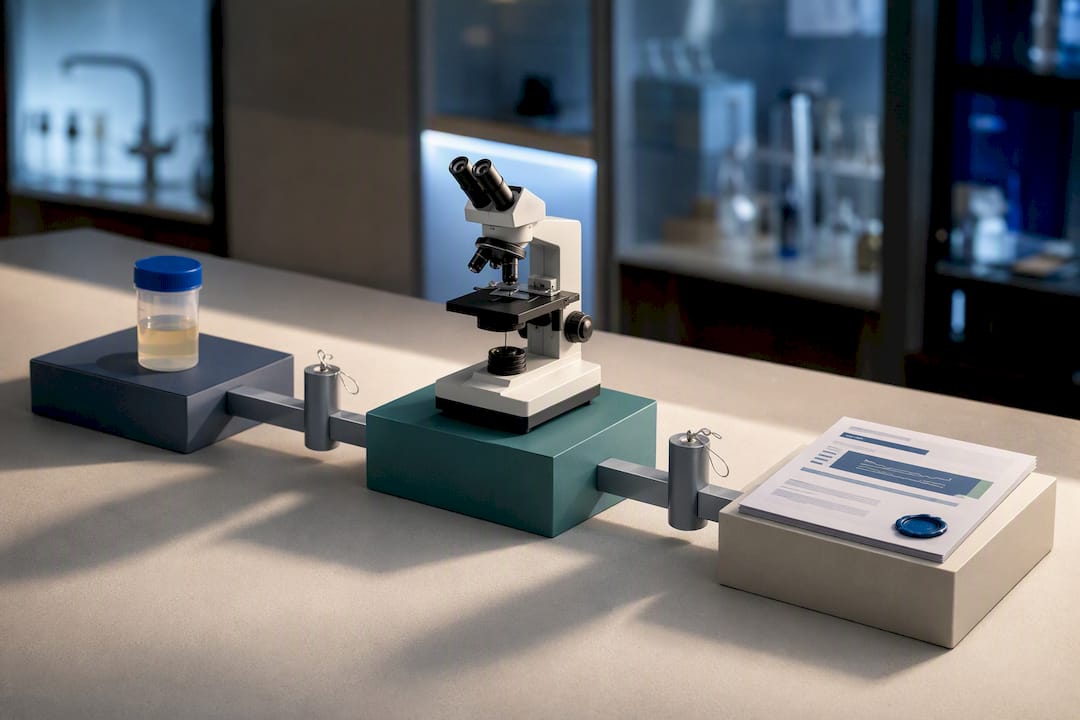
That said, how a test was collected and processed matters just as much as the result itself. Courts give far more weight to results that follow a documented chain of custody, meaning there’s a clear, unbroken record of who collected the sample, how it was transported, and who processed it. Results confirmed through labs meeting SAMHSA, CLIA, or CAP standards are treated as substantially more credible than an at-home screening test a parent administered without oversight. This is where a lot of custody testing disputes actually get decided, not on whether alcohol was detected, but on whether the process that detected it can withstand scrutiny.
What tends to strengthen the evidentiary weight of a test result:
- A documented chain of custody from collection to lab report
- Processing through a certified laboratory rather than a self-administered screening kit
- Verified collection procedures, including photo ID and, where relevant, timestamped video
- A pattern of results over weeks or months rather than a single data point
- Corroborating evidence, such as witness statements or police reports, that aligns with the test results
When a court does find a credible pattern of alcohol abuse, the response is usually remedial rather than punitive. Supervised visitation, mandatory substance abuse treatment or counseling, and continued random testing are far more common outcomes than an outright loss of custody. Courts generally want to preserve the parent-child relationship where it’s safe to do so, and outright termination or severe restriction of custody tends to be reserved for cases involving repeated failures, refusal to comply with treatment, or a direct safety incident involving the child.
Pro Tip: If you’re the parent being asked to test, request that the order specify a certified lab by name rather than “any qualified facility.” A vague location requirement is one of the most common sources of disputes, because it leaves room to argue later that a particular collection site didn’t meet chain-of-custody standards.
Testing Agreements and Remote Monitoring Programs
The details buried in a testing agreement decide whether it protects you or trips you up months later. Family-law practitioners emphasize that agreements need to be specific about who, what, when, and where, and that specificity is what separates an enforceable order from a source of endless post-decree litigation.
Elements every testing agreement should nail down:
- Who collects the sample: a certified lab, a monitoring company, or a specific named facility
- Which tests are authorized, and under what circumstances each one applies
- Testing frequency, including whether it’s random, scheduled, or triggered by specific events
- Verification steps, such as photo identification and timestamped submission, to confirm the sample actually came from the tested parent
- Consequences for a missed test, a refused test, or a tampered sample, spelled out in advance rather than left to a judge’s later interpretation
- How long results are retained and who has access to them
Remote monitoring technology has changed how a lot of these agreements get structured. Instead of requiring a parent to drive to a collection site on a set schedule, many courts now accept programs that combine facial or photo verification with timestamped uploads, sometimes backed up by an independent lab confirmation when a result needs to be challenged. According to ABA family law resources, this shift toward remote, verifiable monitoring is partly practical. It’s easier on parents’ schedules and easier on court dockets, but it only works when the verification features are strong enough to prevent someone else from submitting a sample on the tested parent’s behalf.
Tamper evidence matters here too. A monitoring system that can’t prove the sample wasn’t swapped or diluted isn’t much more persuasive than a self-report. Courts that have seen these systems in action tend to favor ones with built-in checks: a photo taken at the moment of collection, a timestamp that can’t be edited, and a clear audit trail showing the chain of custody from device to report.
Privacy is the other half of this conversation, and it’s one parents often overlook until it’s too late. Alcohol testing records in custody cases typically carry confidentiality protections. California’s statute, for example, limits disclosure of testing results and penalizes unauthorized release. That doesn’t mean the results are secret from the court or the other parent’s attorney, but it does mean they shouldn’t circulate beyond the people who legitimately need them. If you’re negotiating a testing agreement, ask directly who receives results, how they’re stored, and whether they can be sealed from the broader case file. For a deeper look at how monitoring evidence gets used strategically in family court, this breakdown of alcohol testing and custody strategy walks through how attorneys build a record around monitoring data.
What to Do If You’re Ordered to Test: A Step-by-Step Checklist
Getting a testing order or request doesn’t have to feel like a trap, but how you respond in the first week matters. Here’s a sequence that protects both your rights and your credibility with the court.
- Get the order or agreement in writing before you do anything else. Verbal instructions from an ex, a mediator, or even a well-meaning attorney aren’t enough. You need the specific test type, frequency, collection location, and reporting format documented.
- Confirm the lab meets recognized standards. Ask whether the facility is SAMHSA certified, CLIA certified, or CAP accredited. If the order doesn’t name a specific lab, request that it does before your first test.
- Choose certified lab confirmation over unverified at-home screening whenever the result needs to hold up in court. A drug and alcohol screening process built around confirmatory lab testing produces a defensible record; a drugstore test strip generally does not.
- Keep every receipt, collection record, and lab report. Build your own file separate from whatever the other party or the court maintains. If a dispute arises six months from now, you want your own paper trail.
- Understand the chain-of-custody form before you sign it. This document tracks your sample from collection to lab result, and errors on it can undermine an otherwise clean test. Instructions for filling out a chain-of-custody form correctly are worth reviewing before your first appointment.
- If you dispute a result, request independent retesting immediately. Document the date, time, and circumstances of the disputed test, and don’t wait weeks to raise the issue.
- Loop in your attorney the moment anything feels ambiguous. Whether it’s an unclear collection site, a missed test you couldn’t avoid, or a result you believe is wrong, silence works against you far more than a prompt, documented objection.
Pro Tip: Never assume a missed test will be treated as a minor scheduling issue. Courts often treat a missed or refused test the same as a positive result unless you can document a legitimate reason, such as a medical emergency, and notify the testing facility and the other party immediately.
How State Laws on Alcohol Testing for Custody Differ
Alcohol testing requirements aren’t uniform across the country, and that variation catches a lot of parents off guard. Some states have explicit statutes spelling out when a court can order testing and what standard of proof applies. Others leave it almost entirely to judicial discretion, guided by broader “best interests of the child” language without a dedicated alcohol-testing statute at all. That difference affects how easy or difficult it is for either parent to request testing, and how much documentation a judge will expect before granting the request.
California offers one of the clearest statutory examples. Under Family Code §3041.5, a court may order alcohol or drug testing when it makes a finding, based on a preponderance of the evidence, that a parent has a history of habitual or continual abuse. Critically, the statute also makes clear that a positive test result alone does not automatically determine the custody outcome. It’s one piece of evidence a judge weighs alongside everything else in the case, not a trigger for an automatic ruling.
Other states approach this differently, some requiring a more specific evidentiary showing before testing can be ordered, others granting judges broader discretion to order testing as part of general fact-finding in a contested custody case. This variability is exactly why generic advice about “how custody alcohol tests work” only goes so far.
How to find the rules that actually apply to your case:
- Search your state’s family code or domestic relations statutes for language specifically addressing substance abuse testing in custody proceedings
- Check whether your state’s courts have published family-law bench guides or self-help resources through the court system
- Ask the family court clerk’s office whether local rules or standing orders address testing procedures
- Consult a family-law attorney licensed in your state before agreeing to any testing arrangement, since local practice often diverges from the statutory text
The gap between what a statute says and how local judges actually apply it can be significant, which is exactly the kind of nuance a family-law attorney tracks day to day and a general internet search won’t reveal.
Where Certified Lab Testing Fits Into a Custody Case
Some testing services work with laboratories that meet SAMHSA, ISO, CLIA, and CAP standards; in a custody dispute, that distinction is the difference between a result a judge takes seriously and one opposing counsel picks apart. An at-home screening test has its place for a parent who simply wants a private baseline check, but it typically won’t carry the same evidentiary weight as a result processed through a certified lab with a documented chain of custody.
The general rule of thumb: use at-home screening for personal awareness or informal reassurance, and use mail-in lab confirmation whenever a result might end up in front of a judge. A confirmatory lab test creates a paper trail, including verified collection details and a certified analysis, that stands up to cross-examination in a way a screening kit alone cannot.
Beyond testing kits, some providers maintain educational resources specifically addressing testing procedures for family-law situations, drawing on lab partnerships used for employer and federal compliance testing. That overlap matters. The same rigor that keeps a workplace drug test defensible in an employment dispute is what keeps an alcohol test defensible in a custody courtroom: certified processing, verified collection, and a chain of custody that can’t be easily challenged. For parents comparing test types before choosing one, these examples of alcohol testing methods break down detection windows and reliability in plain terms.
Why Clear Testing Protocols Beat Vague Accusations
Family courts do their best work when the rules are specific and both parents know exactly what compliance looks like. Vague testing requirements, the kind that say a parent must submit to testing “as reasonably requested,” create far more conflict than they resolve. One parent thinks a request is reasonable; the other thinks it’s harassment disguised as concern for the child. That ambiguity ends up back in front of a judge, burning time and money that could have gone toward actually parenting.
The alcohol testing orders that work best are the ones built like contracts: specific labs, specific frequency, specific consequences, spelled out before anyone’s frustrated or afraid. That specificity protects the parent who’s sober and complying just as much as it protects the child. A parent who can point to six months of clean, certified results has a far stronger position than one relying on their word alone.
Courts should lean toward remedial orders, treatment, monitoring, graduated trust, rather than punitive ones whenever the evidence allows it. Testing exists to answer a factual question, not to punish a parent for a past mistake. When the process stays individualized and evidence-based, it tends to serve the child better than either extreme: ignoring a real problem or treating every allegation as proven fact.
— Alan
Getting Court-Ready Alcohol Testing Through Countrywidetesting
If a custody case requires documented, lab-confirmed alcohol testing rather than a drugstore screening kit, there are services that provide direct paths to results built for scrutiny, not just personal peace of mind. Unlike a standalone at-home test, some services connect you to labs meeting SAMHSA, ISO, CLIA, and CAP standards, so the paperwork behind your result can actually hold up when opposing counsel starts asking questions about chain of custody.
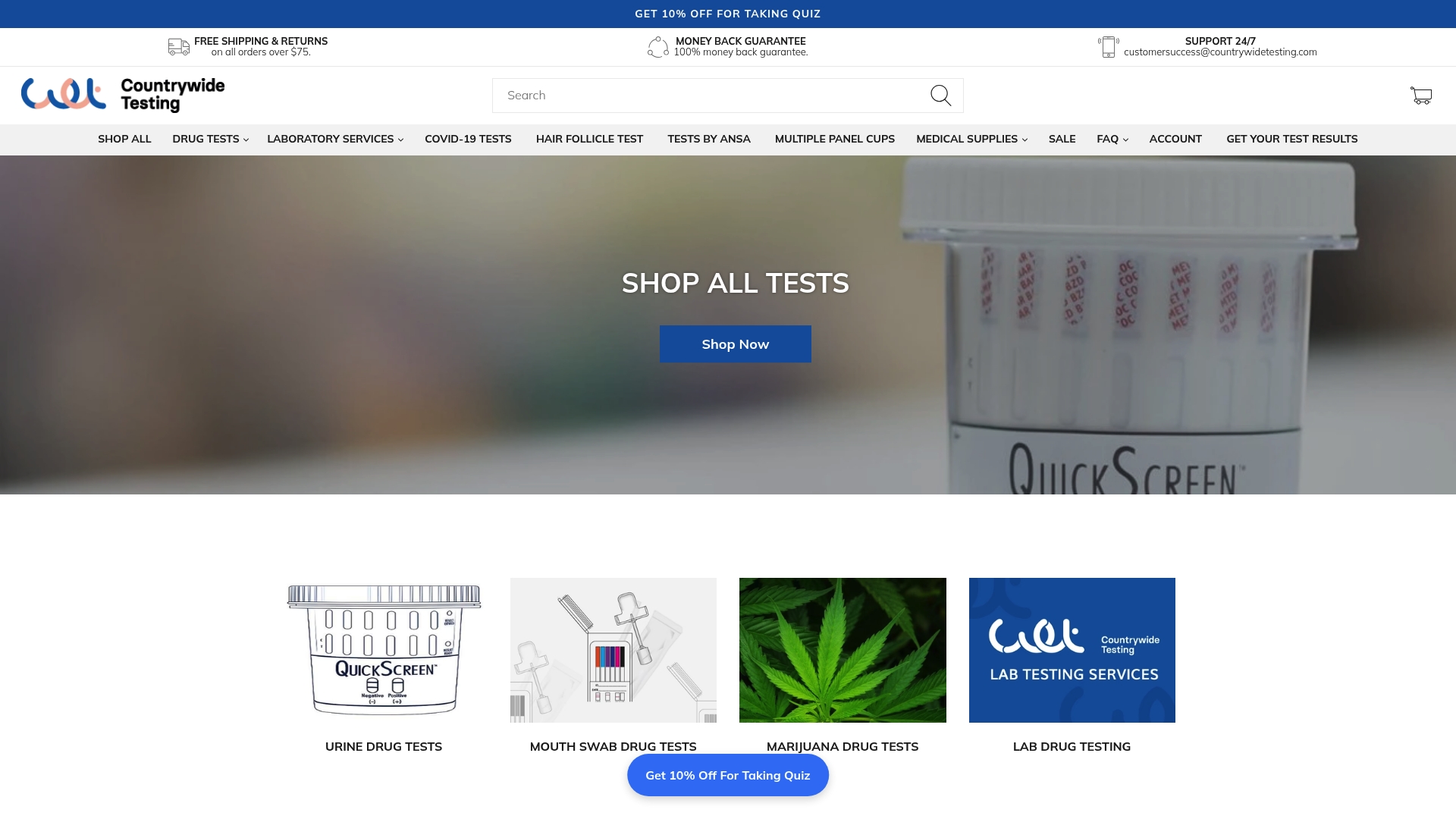
Ordering starts with choosing the right test for your situation, whether that’s a mail-in confirmation kit or a broader lab testing arrangement suited to an ongoing custody order. The Lab Testing Services page walks through what’s available and what documentation comes back with your results. If you’re not sure which option fits your court order, the main Countrywidetesting site offers a full view of available testing products and support for figuring out the right fit before you commit to an order.
Statutes, Standards, and Practitioner Resources
Verifying the legal and technical claims behind an alcohol testing order shouldn’t require a law degree, but it does require checking the right sources.
- California’s statutory language on testing grounds and confidentiality is available directly through Family Code §3041.5
- Forensic detail on how alcohol biomarkers work and their detection limits is covered in the NCBI clinical and forensic overview
- Practitioner-level guidance on building enforceable testing agreements comes from the AAML Foundation
- Broader context on how courts evaluate alcohol abuse claims in custody disputes is available through ABA family law resources
State bar associations and local family court self-help centers are also worth checking directly, since they often publish jurisdiction-specific guidance that generic legal articles can’t cover.
This article is general information, not a substitute for advice from a qualified lawyer. Consult a qualified legal professional about your own circumstances before acting on anything here.
Sources
- 3041.5. Controlled substances or alcohol abuse testing of persons seeking custody or visitation; grounds for testing; confidentiality of results; penalties for unauthorized disclosure
- Alcohol biomarkers: clinical and forensic considerations (NCBI/NLM overview)
- Determining alcohol abuse in child custody cases (ABA family law resources)
- AAML Foundation resources on testing and family law
FAQ
How do you prove alcoholism in a child custody case?
Courts typically look for a documented pattern rather than a single incident: DUI records, police reports, medical records, witness testimony, and repeated, verified test results over time. A preponderance of the evidence standard generally applies, meaning the evidence must show it’s more likely than not that habitual abuse is occurring.
How far back can an alcohol test detect drinking?
It depends entirely on the test. Breath and blood tests only detect drinking within the last several hours, standard urine tests cover roughly 24 hours, EtG urine testing can reach back 3 to 5 days, and hair follicle testing can reflect a pattern of use over roughly 90 days.
What type of alcohol test is commonly used in custody-related cases?
EtG urine testing is one of the most commonly requested tests in custody disputes because it captures a longer window than breath or blood testing while remaining relatively fast and affordable. Continuous transdermal monitoring is increasingly used for ongoing compliance tracking, particularly when a court wants an extended record rather than periodic snapshots.
How does court-ordered alcohol testing actually work?
A judge issues an order specifying the test type, frequency, and an approved collection method, often a certified lab or monitoring service. The tested parent submits samples according to that schedule, and results go to the court, opposing counsel, or both, depending on confidentiality terms set in the order.
Where can I order lab-based alcohol testing for a custody matter?
Countrywidetesting offers lab testing services through labs meeting SAMHSA, CLIA, and CAP standards, suitable for parents who need documented, court-ready results. Current pricing and available test options are listed directly on the site.