
Urine vs. Mouth Swab Drug Tests: Key Differences
TL;DR:
- Urine tests detect drug metabolites over longer periods, ideal for pattern use and compliance.
- Mouth swab tests are best for recent use, providing immediate, tamper-resistant results.
- Matching testing type to safety goals improves effectiveness and workforce trust.
Most HR managers assume one drug test is as good as another. They pick a format, stick with it, and call it a compliance program. But that assumption quietly creates gaps in safety coverage, opens the door to tampering, and can leave your organization exposed in a post-incident review. The truth is, urine and mouth swab tests each capture a fundamentally different picture of drug use, and choosing the wrong one for your situation can undermine everything your testing policy is designed to protect. Here’s what you actually need to know to make a defensible, effective choice.
Table of Contents
- Understanding urine and mouth swab drug tests
- Detection windows and sensitivity
- Convenience, tampering resistance, and accuracy
- Choosing the right test for workplace needs
- What most HR managers miss about drug test choices
- Find the best drug testing solutions for your workplace
- Frequently asked questions
Key Takeaways
| Point | Details |
|---|---|
| Urine excels in chronic detection | Urine testing can identify drug use over longer timeframes, supporting compliance needs. |
| Mouth swab best for recent use | Mouth swab tests quickly detect recent substance use and are harder to tamper with. |
| Logistics affect choice | Practical issues like sample collection, privacy, and accuracy influence which test fits best. |
| False positive rates are low | Both tests have low error rates, with urine labs providing extra validity checks. |
| Policy must match workplace needs | Choosing the right test depends on your industry, compliance, and employee safety priorities. |
Understanding urine and mouth swab drug tests
Let’s start with the basics so we’re working from the same foundation.
Urine drug testing is the most widely used method in workplace screening. An employee provides a urine sample, typically in a private restroom setting, which is then tested either on-site with an immunoassay strip or sent to a certified laboratory for confirmation. Urine tests screen for metabolites, which are the byproducts your body produces as it breaks down drugs. Because metabolites accumulate over time, urine tests are highly effective at identifying chronic or repeated drug use.
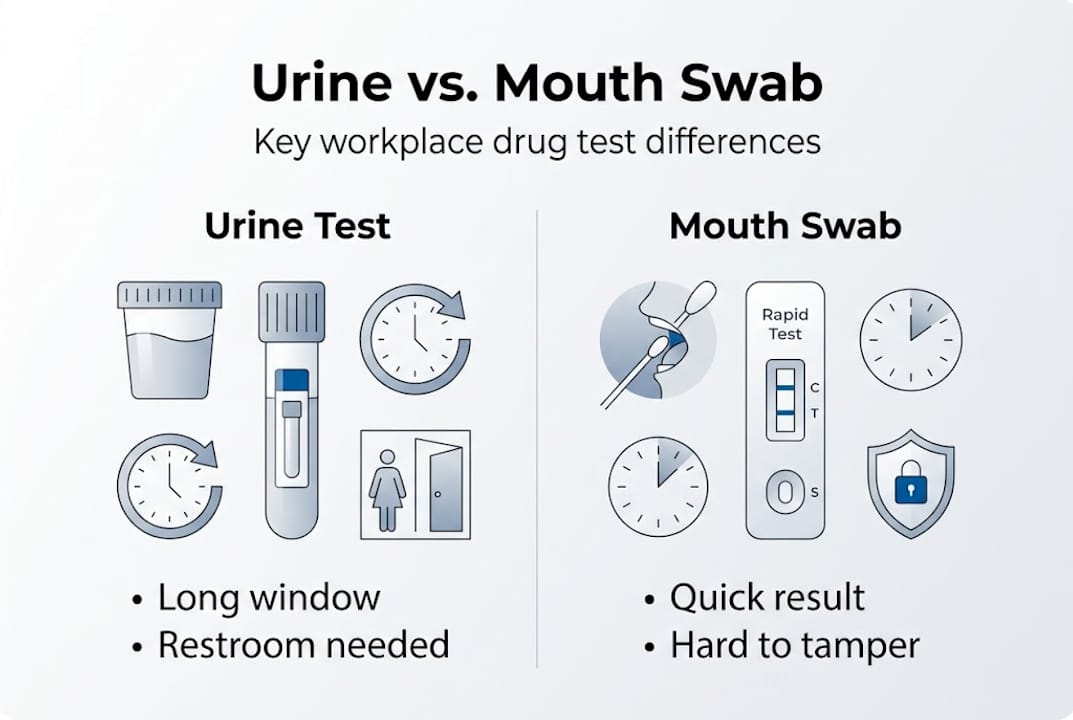
Mouth swab testing, also called oral fluid testing or saliva testing, works differently. A collection swab is placed between the cheek and gum for a few minutes to absorb saliva. The sample is then tested for parent drugs, meaning the actual drug compounds circulating in the bloodstream rather than metabolites. This gives mouth swab tests a sharper window into very recent use.
Both methods can detect a broad panel of substances. Common targets include:
- Marijuana (THC)
- Cocaine
- Amphetamines and methamphetamine
- Opioids including heroin and prescription painkillers
- Phencyclidine (PCP)
- Benzodiazepines
- Buprenorphine
- Barbiturates
The collection process shapes how each test fits into your workplace. Urine testing requires a restroom, some privacy, and a chain of custody process for shipping samples. For more detail on why employers consistently choose this format, see the discussion of urine testing benefits. Mouth swab testing, by contrast, can happen right at a worksite, roadside, or accident scene with no restroom needed. A supervisor can observe the entire collection process without any privacy concerns.
As the oral swab test reliability data shows, the format you choose also affects the integrity of your results. Because THC detection reaches up to 30 days in urine while oral fluid is better suited for detecting recent use, employers benefit from understanding which window aligns with their actual safety objectives.
Pro Tip: If your primary goal is confirming employees are fit for duty right now, a mouth swab test delivers a more targeted answer. If you need to document a pattern of use, urine testing is the right tool.
Detection windows and sensitivity
With an understanding of each test’s mechanics, let’s examine how timing and sensitivity can affect your screening outcomes.
Detection windows are arguably the most important factor when building a testing policy, and this is where the two methods diverge most sharply.
Urine testing detection windows (approximate, depending on frequency of use):
| Substance | Occasional use | Chronic or heavy use |
|---|---|---|
| THC (marijuana) | 3 to 4 days | Up to 30 days |
| Cocaine | 2 to 4 days | Up to 10 days |
| Methamphetamine | 3 to 5 days | Up to 7 days |
| Heroin/opioids | 2 to 4 days | Up to 7 days |
| PCP | 8 to 14 days | Up to 30 days |
| Benzodiazepines | 3 to 7 days | Up to 6 weeks |
Mouth swab testing detection windows (approximate):
| Substance | Detection window |
|---|---|
| THC (marijuana) | 4 to 24 hours |
| Cocaine | 1 to 2 days |
| Methamphetamine | 1 to 4 days |
| Heroin/opioids | 1 to 2 days |
| PCP | 1 to 3 days |
| Benzodiazepines | 1 to 2 days |
The contrast is striking for THC in particular. Urine can flag a cannabis user who last consumed three weeks ago. That person may be completely sober and functional on the job. A mouth swab, by comparison, would only flag someone who consumed within the past 24 hours or so, making it a closer proxy for current impairment.
This has real consequences for compliance. Federal programs governed by the Department of Transportation or the Substance Abuse and Mental Health Services Administration (SAMHSA) have traditionally relied on urine as the primary method because of its longer detection reach and established legal defensibility. Review the specifics on urine detection timeframes to see how this plays out across different substances and compliance standards.
For post-incident testing, the math flips. If a forklift accident happens at 2:00 PM and you want to know whether an employee was under the influence at the time of the event, a mouth swab test collected within the hour gives you far more relevant data. For those scenarios, understanding the oral detection windows becomes essential.
Both methods, when conducted correctly, offer strong sensitivity rates. However, some research shows that oral fluid testing has slightly lower sensitivity for THC compared to urine, particularly for heavy users who have consumed more than 24 hours before the test. For a broader review of how accuracy compares across formats, drug test accuracy breakdowns are worth consulting as you build your policy.
The practical implication: use urine for pre-employment and random testing programs where you need broad historical detection. Use oral fluid for reasonable suspicion or post-incident situations where time of use matters most.
Convenience, tampering resistance, and accuracy
Once detection spans are clear, let’s tackle the practical challenges of collection and accuracy.
Collection logistics affect not just the employee experience but also the integrity of your results. A test that can be easily tampered with or one that requires cumbersome setup creates liability, not just inconvenience.
Urine collection challenges:
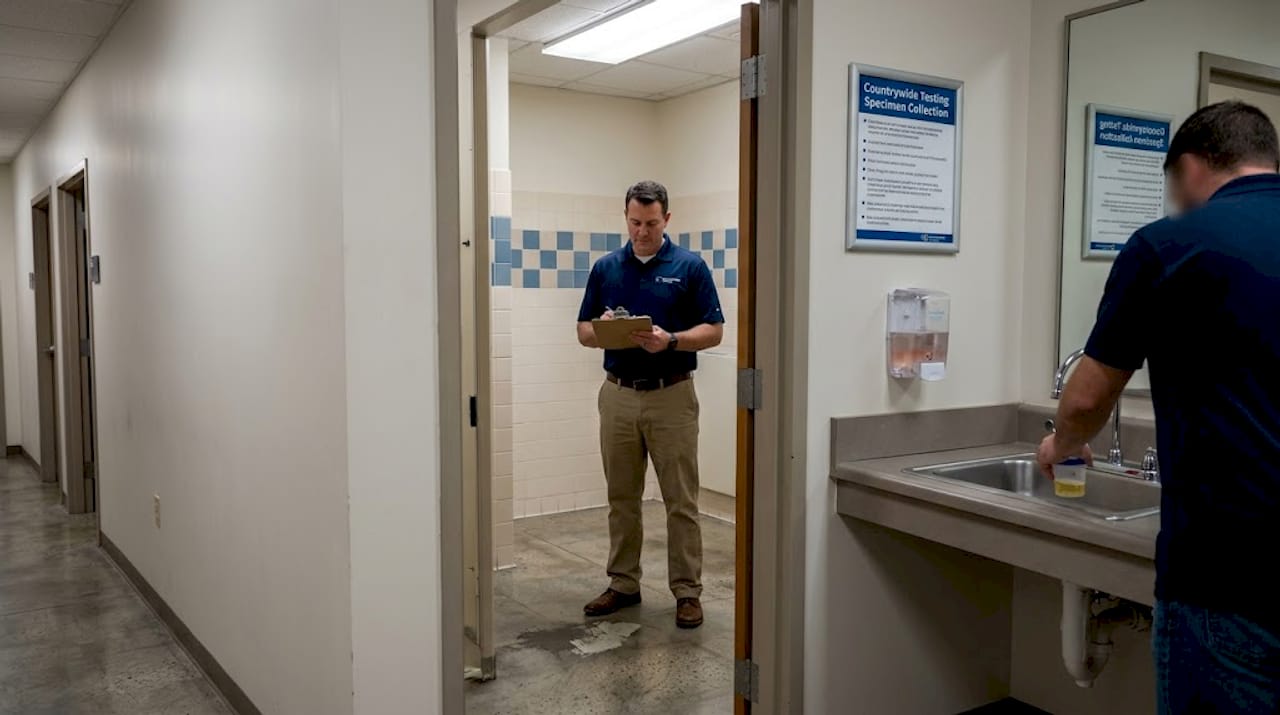
- Requires access to a private restroom.
- Supervisor cannot observe the collection directly without special accommodations.
- Can be delayed or rescheduled, giving employees time to dilute or adulterate samples.
- Needs a chain of custody form and temperature verification to confirm sample validity.
- Shipping to a certified lab adds time before results are available.
Oral fluid collection advantages:
- Observed collection means no opportunity for substitution or adulteration.
- No restroom needed, so testing can happen anywhere.
- Results available in minutes for screening strips, or same-day for lab-confirmed results.
- Suitable for field use, remote worksites, and transportation settings.
“Oral fluid testing removes the biggest variable in urine testing: the collection environment. When a supervisor can watch the process from start to finish, you eliminate an entire category of tampering risk.”
Tampering with urine samples is a well-documented problem. Common methods include diluting with water, adding adulterants like bleach or vinegar, or substituting a clean sample entirely. Certified labs counter this with validity checks measuring pH, creatinine levels, and specific gravity. But those checks only catch tampering after the fact, and only if the tamper was imperfect.
Mouth swab tests are far harder to beat. You cannot substitute someone else’s saliva easily, and dilution is not possible when the swab is placed directly in the collector’s mouth under supervision.
On accuracy, false positives run about 3-7% for oral tests, and laboratory urine tests include validity checks using pH and creatinine levels to flag suspicious samples. Both methods benefit significantly from lab confirmation rather than relying solely on rapid strip results. A positive rapid screen should always be confirmed by a Medical Review Officer (MRO) at a certified lab before any employment action is taken.
Understanding the factors affecting test results is especially valuable here since certain medical conditions, medications, and dietary supplements can occasionally trigger unexpected readings. Staying current on drug testing trends is equally important as new adulterants and synthetic substances continue to evolve.
Pro Tip: Always use certified lab confirmation for any positive result before taking disciplinary or termination action. Rapid tests are screening tools, not final verdicts.
Choosing the right test for workplace needs
Now that we’ve covered how tests perform and what can go wrong, let’s turn to making an informed choice that fits your organization’s needs.
Not every workplace has the same risk profile, compliance burden, or operational setup. The right testing method depends on context, not convention.
By industry:
- Transportation and logistics: DOT-regulated employers must use SAMHSA-certified urine testing for federally mandated testing. Oral fluid is approved by some DOT agencies for certain purposes, but urine remains the primary standard.
- Construction and manufacturing: Both methods work well. Oral fluid is particularly useful for post-incident testing on-site without transporting employees to a collection facility.
- Healthcare: Urine testing is standard for pre-employment and random programs, particularly for roles with access to controlled substances.
- Retail and hospitality: Oral fluid tests offer a fast, low-friction option for pre-employment screening when turnover is high and quick onboarding is a priority.
- Office and professional settings: Either method works. Urine testing provides a deeper detection window, which may be more appropriate for safety-sensitive roles even in desk-based environments.
By situation:
- Pre-employment: Urine testing is preferred for its broader detection window and established compliance track record.
- Random testing programs: Urine remains the standard for federally regulated programs. For non-regulated employers, oral fluid offers speed and convenience.
- Post-incident: Oral fluid testing is stronger here because it captures recent use more accurately and can be administered immediately on-site.
- Reasonable suspicion: Oral fluid is ideal because time matters and on-site collection is possible without logistical delays.
- Return-to-duty: Urine testing provides the historical depth needed to confirm an employee has remained clean over a period of time.
As noted by drug testing consensus data, urine remains the gold standard for broad detection and compliance, while oral fluid is rapidly emerging for convenience and tampering resistance in field and post-incident scenarios.
For a practical look at how these decisions play out across different workforce scenarios, reviewing HR screening examples gives you real-world context for policy planning.
Pro Tip: Build a tiered approach into your drug testing policy. Use urine for pre-employment and random testing, then designate oral fluid as your go-to method for post-incident and reasonable suspicion situations. This covers both historical and immediate detection without relying on a single format for every scenario.
What most HR managers miss about drug test choices
Here is the part most drug testing guides skip entirely: the test you choose sends a message to your workforce, whether you intend it to or not.
A rigid, one-size-fits-all urine testing program with no flexibility signals suspicion and distrust. Employees notice. Done poorly, it erodes morale without meaningfully improving safety. Done well, with clear policy communication and consistent enforcement, it reinforces that the workplace takes safety seriously for everyone.
Oral fluid testing, by contrast, is harder to argue with. The collection is observed, the timing is immediate, and employees understand that the test captures what’s happening now rather than what happened weeks ago. That transparency can actually improve buy-in.
The uncomfortable truth is that many employers choose urine testing simply because it’s familiar, not because it’s the best fit for their risk environment. Following current testing trends shows a clear shift toward oral fluid in non-regulated sectors precisely because forward-thinking HR teams are asking the right questions rather than defaulting to legacy practices.
The best testing programs are intentional. They match the detection need to the test format, communicate the rationale to employees, and build in room for situational flexibility. A post-incident test should tell you about right now. A pre-employment test should tell you about patterns. Confusing those goals wastes money and weakens your compliance position.
Find the best drug testing solutions for your workplace
Taking action on your testing policy shouldn’t require navigating a maze of compliance jargon and vendor options on your own.
CountryWideTesting.com connects employers with lab-grade testing solutions built for real workplace demands. Whether your program needs the depth of lab testing services with full SAMHSA, CLIA, and CAP certification, or the on-site speed of our saliva drug test kits for field use, you’ll find certified products built for compliance. For employers who need broader panel coverage, our 12-panel saliva kits offer expanded substance detection in a fast, supervised-collection format. Reach out and let’s build the right program for your industry.
Frequently asked questions
How long after drug use can urine and mouth swab tests detect substances?
Urine tests detect THC up to 30 days after use in heavy users, while mouth swab tests are most effective within 24 to 48 hours of recent consumption.
Do urine tests have a higher risk of tampering than mouth swab tests?
Yes, urine tests are more vulnerable to tampering in unsupervised settings, while oral tests offer stronger tampering resistance because the entire collection is directly observed.
What is the false positive rate for mouth swab drug tests?
False positives run 3-7% for oral tests, and certified lab confirmation with MRO review is always recommended before taking any employment action based on a positive screen.
Which test is more commonly used in regulated industries?
Urine testing is the recognized gold standard for compliance in federally regulated industries, though oral fluid tests are gaining traction in non-regulated workplaces for their convenience and speed.