
What Is a Urine Drug Test and Why It Matters
Ensuring driver safety and federal compliance is a constant challenge for HR managers in the American trucking industry. Choosing the most reliable urine drug testing solution is not just a regulatory box to check, but a crucial element in building a safe and healthy workplace. This article clarifies accuracy and interpretation in urine drug testing, reveals common myths, and highlights what sets compliant testing programs apart for commercial fleets.
Table of Contents
- Defining Urine Drug Tests And Common Myths
- Key Types Of Urine Drug Testing Methods
- How The Urine Drug Testing Process Works
- Legal Framework And Dot Compliance Requirements
- Common Uses In Trucking And Workplace Settings
- Risks, Limitations, And Test Alternatives
Key Takeaways
| Point | Details |
|---|---|
| Importance of Accuracy | Urine drug tests require confirmatory testing for accuracy, particularly following initial positive results. |
| Types of Testing Methods | Immunoassay screenings offer quick results but may generate false positives; confirmatory tests ensure high accuracy. |
| Legal Compliance | Transportation industries are subject to strict federal drug testing regulations to maintain safety and accountability. |
| Effective Policies | Organizations should develop transparent drug testing policies emphasizing support and rehabilitation for employees. |
Defining Urine Drug Tests and Common Myths
Urine drug testing represents a critical screening method used across multiple professional environments to detect the presence of controlled substances. Drug screening techniques have evolved significantly, providing employers and healthcare professionals with reliable tools for identifying potential substance use.
At its core, a urine drug test analyzes an individual’s urine sample to detect traces of specific drugs or their metabolites. These tests can identify a wide range of substances, including:
- Marijuana
- Cocaine
- Amphetamines
- Opioids
- Prescription medications
- Synthetic drugs
Contrary to popular misconceptions, urine drug tests are not designed to punish individuals but to ensure workplace safety, maintain health standards, and support rehabilitation efforts. Accuracy and interpretation are crucial aspects of these screenings.
Drug testing provides an objective method to assess potential substance use risks in professional and medical environments.
Many myths surround urine drug testing, which can lead to misunderstandings about their purpose and effectiveness. Urinalysis techniques have advanced significantly, improving detection methods and reducing false positives.
Pro tip: Always consult certified laboratory professionals when interpreting drug test results to ensure accurate and fair assessment.
Key Types of Urine Drug Testing Methods
Urine drug testing involves several sophisticated methodologies designed to detect the presence of controlled substances with varying levels of accuracy and specificity. Laboratory methodologies have evolved to provide comprehensive screening techniques that address different professional and medical needs.
The two primary types of urine drug testing methods include:
-
Immunoassay Screening
- Rapid initial testing method
- Cost-effective
- Provides quick results
- Prone to potential false positives
-
Confirmatory Testing
- Uses advanced chromatographic techniques
- Highly specific and accurate
- Includes Gas Chromatography/Mass Spectrometry (GC/MS)
- Liquid Chromatography/Tandem Mass Spectrometry (LC-MS/MS)
Advanced drug testing techniques balance speed, cost, and accuracy to provide reliable substance screening.
Immunoassay represents the first-line screening method, offering rapid and affordable initial detection. However, these tests have limitations in identifying specific drug metabolites. Diagnostic methods often require follow-up confirmatory testing to ensure precise results.
Here’s a concise comparison of urine drug testing methods and their practical implications:
| Method | Speed | Specificity | Business Impact |
|---|---|---|---|
| Immunoassay Screening | Very rapid | Moderate | Enables quick hiring decisions |
| GC/MS Confirmatory | Slower | High | Reduces liability risk |
| LC-MS/MS Confirmatory | Moderate | Very high | Ensures regulatory compliance |
Confirmatory tests like Gas Chromatography/Mass Spectrometry (GC/MS) provide a more definitive analysis by separating and identifying individual chemical compounds with exceptional precision. These advanced techniques help mitigate the potential inaccuracies associated with initial immunoassay screenings.
Pro tip: Always request confirmatory testing for any initial positive drug screening to ensure accurate and fair results.
How the Urine Drug Testing Process Works
Urine drug testing follows a meticulously structured process designed to ensure accurate and reliable substance detection. Point-of-care testing protocols involve multiple critical stages that maintain the integrity of the screening process.
The typical urine drug testing process includes several key steps:
-
Sample Collection
- Conducted at designated collection sites
- Strict chain of custody procedures
- Temperature and appearance verification
- Prevention of sample tampering
-
Initial Screening
- Immunoassay testing
- Rapid colorimetric analysis
- Preliminary substance detection
- Quick identification of potential drug presence
-
Confirmatory Testing
- Advanced chromatographic methods
- Gas Chromatography/Mass Spectrometry (GC/MS)
- Precise chemical compound identification
- Definitive result verification
Comprehensive drug testing requires multiple layers of verification to ensure accuracy and legal defensibility.
Sample Integrity is paramount in the testing process. Urine screening techniques include strict protocols to prevent potential manipulation. Collection sites employ multiple safeguards, such as direct observation, temperature checks, and sealed collection containers to maintain the validity of the testing process.
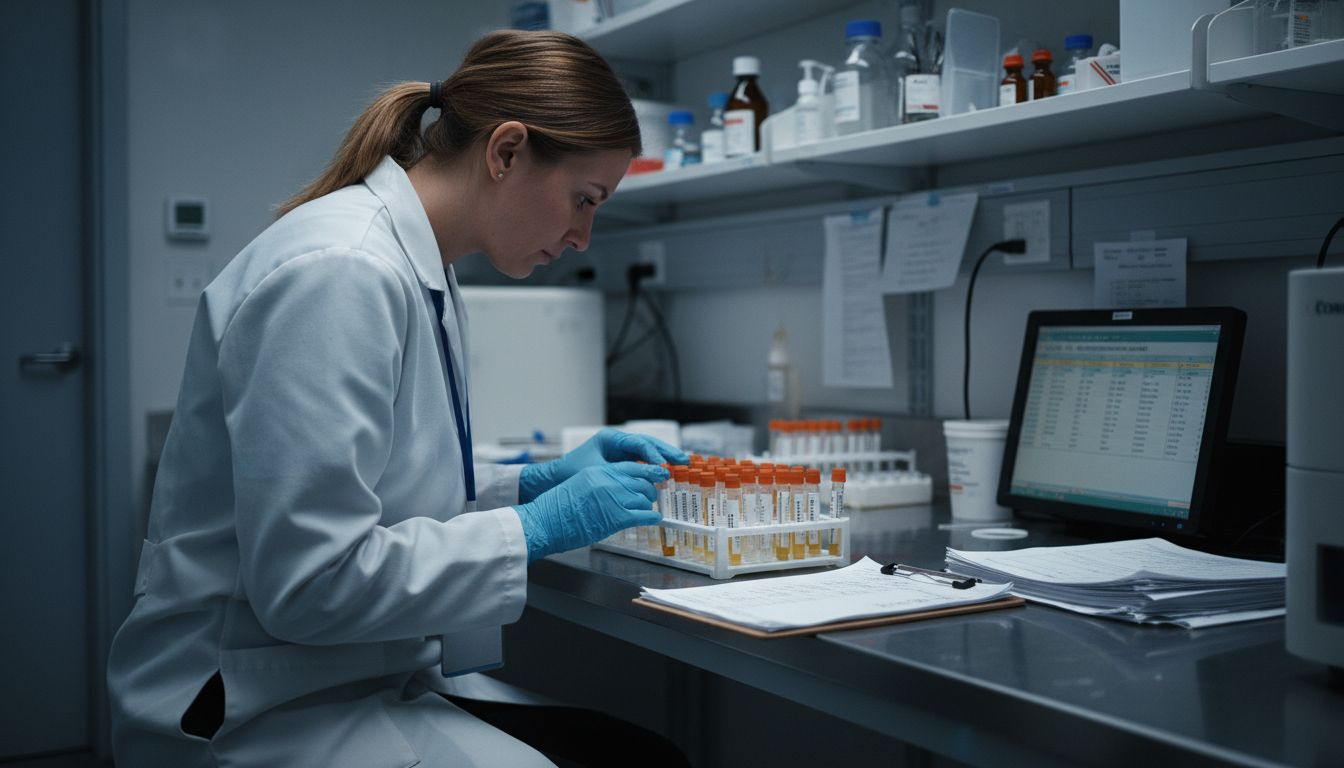
Confirmatory testing provides the final word on initial screening results. When an initial test shows a potential positive result, advanced laboratory techniques like Gas Chromatography/Mass Spectrometry (GC/MS) are used to provide a definitive and scientifically validated analysis.
Pro tip: Understand that a single positive screening requires confirmatory testing to ensure absolute accuracy and fairness.
Legal Framework and DOT Compliance Requirements
Drug testing in transportation industries is governed by stringent federal regulations designed to ensure public safety and workplace integrity. Drug testing procedures mandate comprehensive screening protocols for safety-sensitive positions across various transportation sectors.
The Department of Transportation (DOT) requires multiple types of drug testing for commercial drivers:
-
Pre-Employment Testing
- Mandatory for all new safety-sensitive employees
- Conducted before beginning safety-sensitive duties
- Screens for prohibited substances
-
Random Testing
- Unpredictable screening intervals
- Minimum annual testing rates specified
- Applies to all commercial drivers
-
Post-Accident Testing
- Required after significant transportation incidents
- Determines potential substance involvement
- Mandatory within specific time frames
Federal regulations provide a comprehensive framework to maintain safety and accountability in transportation industries.
Commercial Driver Requirements are particularly strict. FMCSA regulations specify detailed protocols for commercial motor vehicle operators, including comprehensive testing for substances like marijuana, cocaine, amphetamines, opioids, and phencyclidine (PCP).
Non-compliance with DOT drug testing regulations can result in severe consequences, including immediate driver disqualification, company penalties, and potential legal action. Transportation companies must maintain meticulous records and follow precise testing protocols to remain within federal guidelines.
Pro tip: Develop a robust internal tracking system to ensure consistent compliance with all DOT drug testing requirements.
Common Uses in Trucking and Workplace Settings
Urine drug testing plays a critical role in maintaining safety and productivity across various professional environments, particularly in transportation and safety-sensitive industries. Workplace drug screening serves multiple essential purposes beyond mere compliance.
Key scenarios for workplace drug testing include:
-
Pre-Employment Screening
- Identifies potential substance use before hiring
- Protects workplace safety
- Reduces liability risks
- Establishes baseline employee health standards
-
Random Testing
- Deters ongoing substance abuse
- Ensures continuous workplace safety
- Provides unexpected evaluation intervals
- Maintains consistent monitoring
-
Post-Accident Investigation
- Determines potential substance involvement in workplace incidents
- Supports insurance and legal requirements
- Helps understand root causes of accidents
- Promotes accountability
Comprehensive drug testing programs protect employees, employers, and public safety.
Trucking Industry Specifics are particularly stringent. Urine drug testing protocols are mandatory for commercial drivers, addressing unique safety challenges inherent in long-haul transportation.
Beyond regulatory compliance, workplace drug testing demonstrates a commitment to employee wellness, safety, and organizational integrity. Companies use these screenings not just as punitive measures, but as proactive tools for supporting employee health and preventing potential workplace risks.
Pro tip: Develop a transparent drug testing policy that emphasizes support and rehabilitation alongside compliance.
Risks, Limitations, and Test Alternatives
Urine drug testing, while widely used, comes with inherent challenges that organizations must carefully consider. Urinalysis testing limitations reveal complex biochemical and analytical constraints that can impact test reliability.
Key risks and limitations of urine drug testing include:
-
False Positive/Negative Results
- Biochemical variability
- Individual metabolism differences
- Cross-reactivity with medications
- Potential sample contamination
-
Ethical and Privacy Concerns
- Potential workplace stigmatization
- Invasive testing procedures
- Racial and social bias risks
- Personal privacy implications
-
Detection Window Limitations
- Short substance detection timeframes
- Inconsistent metabolite persistence
- Variability across different substances
- Potential for manipulation
Drug testing methods require nuanced interpretation and understanding of their inherent scientific limitations.
Alternative Testing Methods offer complementary approaches to traditional urine screening. Drug screening alternatives provide different detection windows and potentially more accurate results:
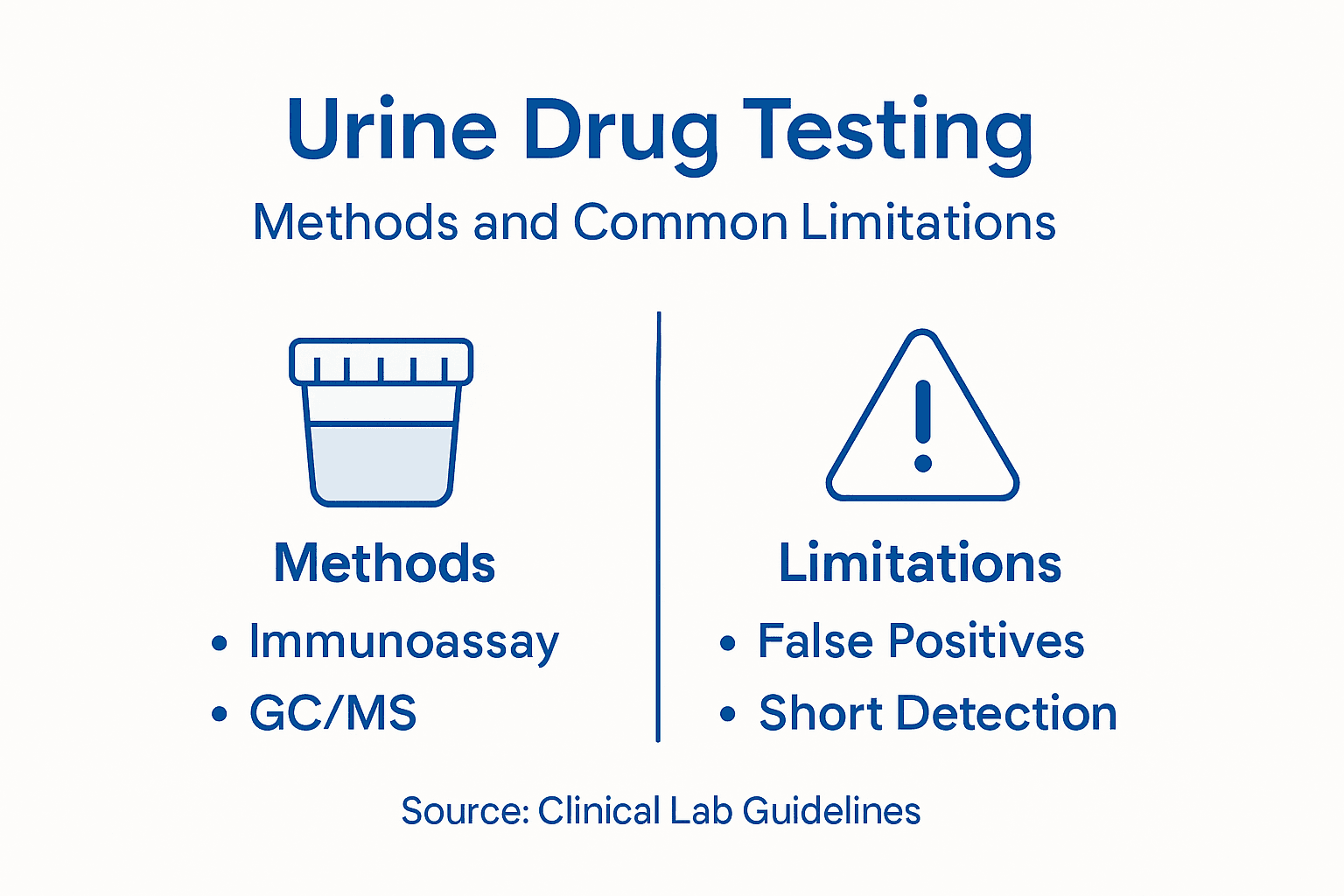
Explore alternative drug testing methods often considered by organizations:
| Method | Detection Window | Invasiveness | Best Use Case |
|---|---|---|---|
| Urine Test | Short (days) | Moderate | Routine workplace screening |
| Hair Follicle Test | Long (up to 90 days) | Low | Long-term substance history |
| Blood Test | Very short (hours) | High | Accident/impairment review |
-
Hair Follicle Testing
- Longer detection window (up to 90 days)
- Less invasive
- More difficult to manipulate
-
Blood Testing
- Direct substance detection
- Precise current impairment assessment
- Higher accuracy for recent use
Understanding these limitations helps organizations develop more comprehensive and fair drug screening strategies that balance safety, privacy, and scientific accuracy.
Pro tip: Implement a multi-method testing approach that combines different screening techniques for more comprehensive results.
Ensure Accurate and Compliant Urine Drug Testing with Trusted Solutions
Understanding the importance of urine drug tests in workplace safety and regulatory compliance is only the first step. The challenges of obtaining reliable results, managing confirmatory testing, and adhering to DOT guidelines can feel overwhelming. At CountryWideTesting.com, we address these critical needs by providing access to a broad range of urine drug testing products and laboratory services that meet strict standards like SAMHSA, ISO, CLIA, and CAP. Whether you need rapid immunoassay kits or advanced confirmatory testing through certified labs, we have your testing solutions covered.
Take control of your drug testing programs today with our verified testing products and expert support. Visit CountryWideTesting.com to explore reliable urine and mouth swab drug tests, customized lab services, and educational resources that help you maintain safety and compliance. Get started now to reduce risk and build trust within your organization with screening solutions designed for accuracy and fairness.
Frequently Asked Questions
What is a urine drug test?
A urine drug test is a screening method that analyzes an individual’s urine sample to detect the presence of controlled substances or their metabolites. It is commonly used in workplaces and healthcare settings to ensure safety and compliance.
How accurate are urine drug tests?
Urine drug tests vary in accuracy depending on the testing method used. Initial screenings, such as immunoassay, can yield false positives or negatives. Confirmatory tests like Gas Chromatography/Mass Spectrometry (GC/MS) provide highly accurate results by precisely identifying chemical compounds.
What are common substances detected in urine drug tests?
Urine drug tests can identify a wide range of substances, including marijuana, cocaine, amphetamines, opioids, prescription medications, and synthetic drugs. The specific substances tested can vary by the type of screening.
Why is confirmatory testing important after an initial positive result?
Confirmatory testing is crucial because it provides a definitive analysis of the initial testing results. It helps to mitigate the risk of false positives, ensuring a fair and accurate assessment before any adverse actions are taken.