
20 mg/dL Threshold: How U.S. Employers Handle Diluted Drug Tests
A dilute drug test result means your urine sample had abnormally low creatinine and specific gravity, usually from too much fluid intake before collection. It doesn’t prove tampering. It simply means the lab can’t confirm the sample falls within normal physiological ranges, so specimen validity testing flags it for follow-up. What happens next depends on whether the result is also negative or positive, and on your employer’s testing authority.
TL;DR:
- Dilute drug test results mainly reflect excessive water intake or medical conditions, not necessarily deliberate tampering or cheating.
- Creatinine levels below 20 mg/dL and specific gravity under 1.003 typically indicate dilution, but low readings can also stem from health or body composition factors.
- Lab checks like pH, temperature, and adulterant tests help differentiate between pre-collection dilution and post-collection tampering.
- Employers regulated by DOT must treat confirmed positive dilutes as verified positives, while negative dilutes under 2 mg/dL creatinine are often considered substitution.
- Proper early disclosure of medical issues and compliance with chain-of-custody procedures can prevent misinterpretation and disputes over dilute results.
Table of Contents
- What Labs Mean by Dilute, Abnormal, and Invalid Results
- Common Causes of Dilute Urine in Drug Testing
- How Labs Detect Dilution and Adulteration
- Employer and Regulatory Response Under DOT Rules
- Reducing the Risk of an Accidental Dilute Result
- What to Do After a Dilute Result
- How Certified Lab Testing Reduces Dilute-Result Disputes
- Correcting the Myths Around Dilute Results
- Countrywidetesting’s Lab Testing Services for Compliant Screening
- Sources
What Labs Mean by Dilute, Abnormal, and Invalid Results
Labs classify urine specimens using two core markers: creatinine and specific gravity. A creatinine level below 20 mg/dL is traditionally considered dilute, while anything under 2 mg/dL signals something more serious: non-physiologic substitution, meaning the sample may not be human urine at all.
Specific gravity works alongside creatinine to confirm the picture:
- Normal range: roughly 1.003 to 1.030
- Dilute range: below 1.003, paired with low creatinine
- Substituted: creatinine under 2 mg/dL and specific gravity under 1.0010
A single low reading isn’t automatic proof of intent. Medical conditions, hydration habits, and even body composition can push numbers into dilute territory without anyone trying to cheat a test.
Common Causes of Dilute Urine in Drug Testing
Water-loading is the most common intentional cause. Drinking two or three 12-ounce glasses of water can produce a tenfold dilution effect within about 30 minutes, and that effect can linger for hours. Someone nervous about an upcoming test who chugs water beforehand, thinking they’re being careful, often ends up with a dilute flag instead of a clean pass.
But plenty of dilute results have nothing to do with strategy:
- Caffeine and certain prescription diuretics increase urine output naturally.
- Kidney conditions and diabetes insipidus can chronically lower creatinine concentration.
- Low muscle mass, common in older adults or smaller-framed individuals, produces less creatinine overall.
- Post-collection tampering (adding water to a cup after the fact) is chemically different from pre-collection dilution and often triggers separate adulterant checks.
Pro Tip: If you have a documented medical condition affecting hydration or kidney function, tell the collector or the MRO before your test, not after you get flagged. That context changes how the result gets interpreted.
How Labs Detect Dilution and Adulteration
Specimen Validity Testing (SVT) is the umbrella term for the panel of checks labs run alongside the standard drug screen. It exists because a diluted or doctored sample can produce a false negative on the primary test, and SVT catches what the initial screen misses.
The core markers and what they reveal:
- Creatinine: low levels indicate dilution or substitution.
- Specific gravity: confirms whether the fluid-to-waste ratio falls outside normal range.
- pH: extreme readings (too acidic or too alkaline) suggest an added chemical.
- Temperature: must register within four minutes of collection; a reading more than a couple degrees off body temperature points to a substituted sample.
- Nitrite and gluteraldehyde: these show up when someone has added a masking agent, a strategy still common enough that recent toxicology reviews call for better multi-analyte detection.
When SVT flags something abnormal, the lab typically confirms results with gas chromatography-mass spectrometry (GC-MS), the gold standard for distinguishing a genuine physiological anomaly from deliberate tampering. Temperature and pH tend to catch post-collection tricks; creatinine and specific gravity are better at catching pre-collection water-loading or a legitimate medical condition.
Employer and Regulatory Response Under DOT Rules
For DOT-regulated employers, 49 CFR § 40.197 sets the procedural rules, and getting this wrong opens the door to grievances and legal exposure.
- Positive-dilute results get treated as a verified positive. No separate dilute designation applies once a substance is confirmed.
- Negative-dilute results depend on creatinine level. If creatinine falls between 2 and 20 mg/dL, the employer’s policy determines whether a recollection is required or optional. Below 2 mg/dL, the specimen is treated as substituted, not merely dilute.
- Direct-observation recollection is reserved for substitution-level findings, not routine dilute negatives, unless company policy specifically requires it.
- Document every MRO communication in writing and preserve chain-of-custody paperwork in case the result is ever challenged.
HR teams should have standard language ready before a dilute result ever crosses their desk, so nobody improvises a response under pressure.
Reducing the Risk of an Accidental Dilute Result
Most dilute results are avoidable with basic timing and fluid awareness, not deception.
- Test earlier in the day when possible. First-morning urine is naturally more concentrated, which lowers your odds of an accidental dilute flag.
- Skip the water-loading impulse. Drinking normally, not excessively, in the hours before a scheduled test is enough.
- Avoid diuretics like excess caffeine the morning of the test.
- Disclose any prescriptions or medical conditions affecting urine output to the collector ahead of time.
Pro Tip: Vitamin B supplements can turn urine bright yellow, and some people mistake that color as proof of a “clean,” normal-concentration sample. It changes nothing about the biochemical markers labs actually measure, so don’t rely on it as a signal.
What not to try: OTC “detox” cleansers, synthetic urine substitutes, or diluting a cup with tap water after collection. All of these trigger the pH, temperature, and adulterant checks described above, and get flagged faster than most people expect.
What to Do After a Dilute Result
For donors, the process is straightforward if you move quickly:
- Contact the MRO directly and provide any relevant medical documentation or current prescriptions.
- Follow recollection instructions exactly as given, including timing windows.
- Request and keep copies of every lab report and MRO communication for your own records.
For employers, the checklist runs parallel:
- Follow MRO direction rather than making an independent call on next steps.
- Reserve direct-observation recollection for cases where it’s actually required, not as a default response to any dilute flag.
- If a result is disputed, confirm that chain-of-custody documentation is intact before pursuing independent lab confirmation.
How Certified Lab Testing Reduces Dilute-Result Disputes
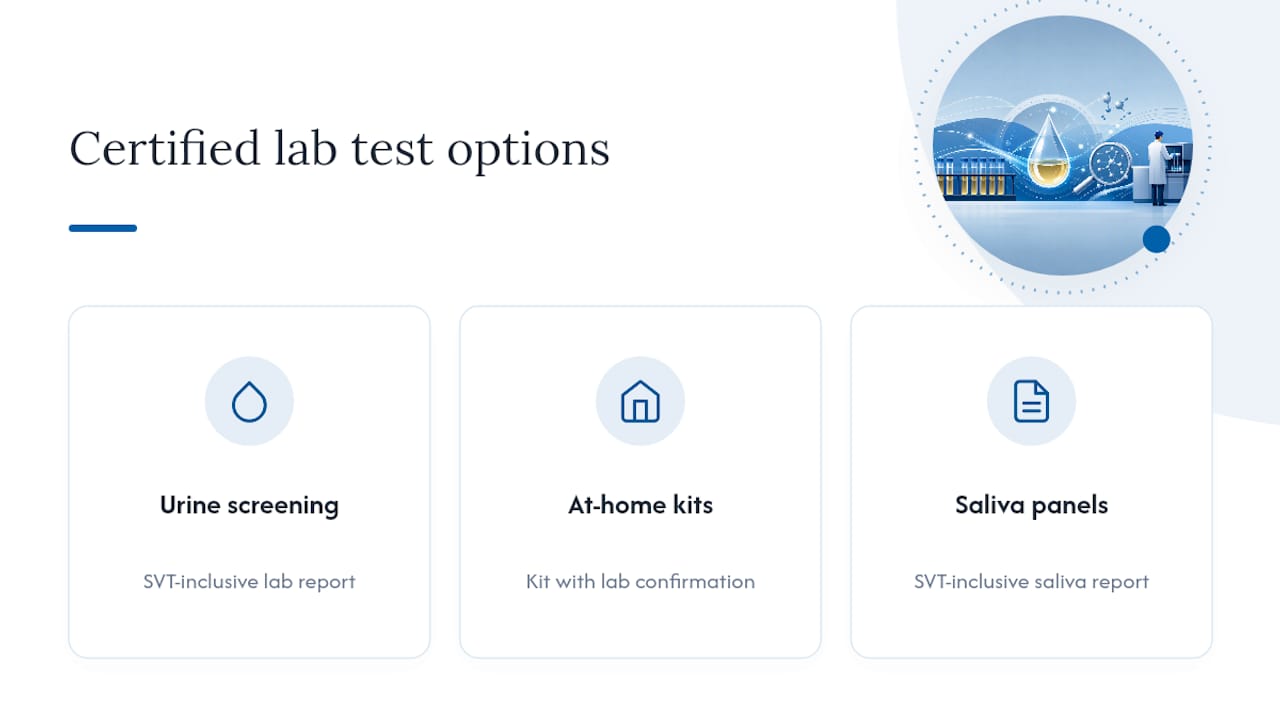
Working with labs that hold SAMHSA, CLIA, and CAP certification matters because those standards govern exactly how SVT gets performed and documented. Countrywidetesting connects employers and individuals with certified lab partners for urine screening, at-home collection kits with lab confirmation, and saliva panel alternatives, each producing SVT-inclusive reports that hold up if a result is ever challenged.
Correcting the Myths Around Dilute Results
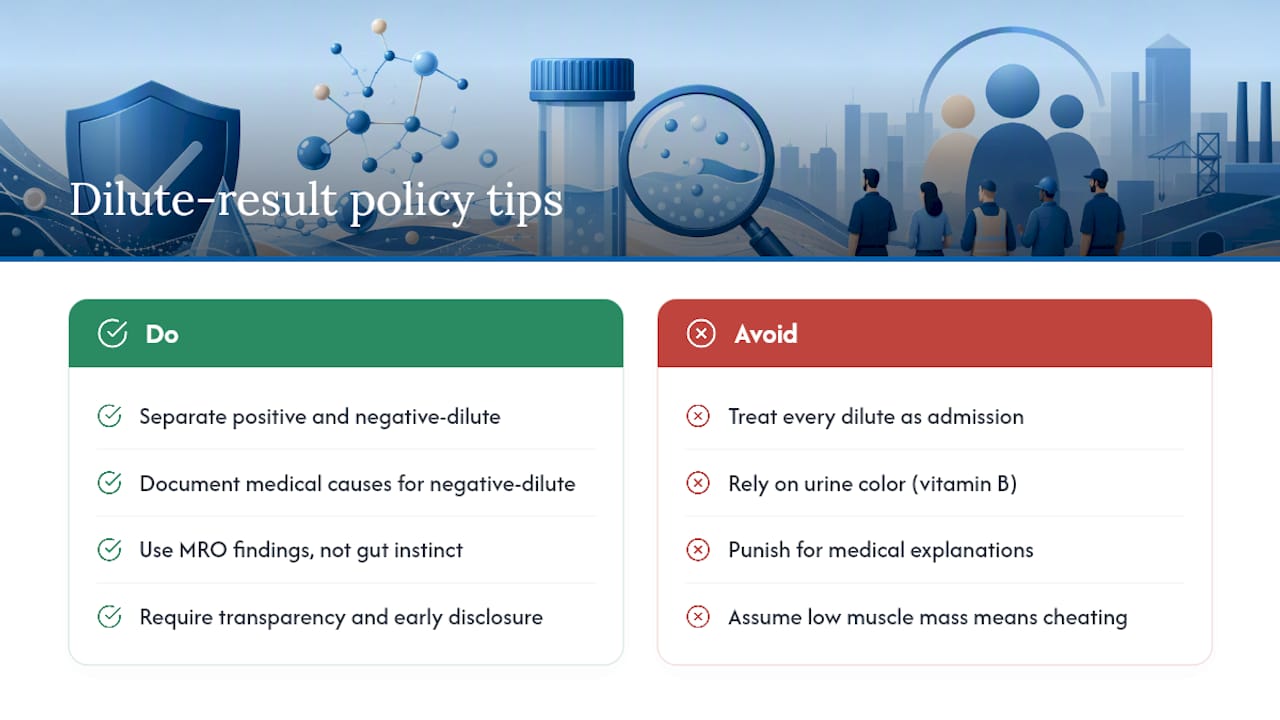
The vitamin B trick gets repeated constantly online, and it’s mostly harmless nonsense. Coloring urine yellow does nothing to creatinine or specific gravity, the two numbers that actually determine dilute status. People who rely on it are gambling on a visual cue that lab equipment never even looks at.
The bigger issue is policy overcorrection. Some employers treat every dilute negative like a confession, which punishes people with legitimate medical explanations, low muscle mass, or a kidney condition, alongside anyone actually trying to beat a test. A fair policy separates positive-dilute (treated as verified positive under DOT rules) from negative-dilute with a documented medical cause. Transparency and early disclosure protect employees, and leaning on MRO findings rather than gut instinct protects employers from costly disputes.
— Alan
Countrywidetesting’s Lab Testing Services for Compliant Screening
A practical alternative to guessing your way through a dilute result dispute involves using screening services where every test includes SVT analysis by default, so creatinine, specific gravity, and adulterant checks are built into the report instead of something requested separately after a problem surfaces.
The service lineup covers lab-based urine screening with full chain-of-custody documentation, saliva panel options like the QuickScreen 10 Panel Saliva Drug Test for employers who want to sidestep urine-dilution disputes entirely, and employer packages built for recurring compliance needs. Documented chain-of-custody matters because it’s what turns a disputed result into a defensible one, whether you’re an HR manager building policy or an individual who needs a clean, verifiable report. Visit the lab testing services page to see current options and place an order.
This article is general information, not a substitute for advice from a qualified doctor. Consult a qualified healthcare professional about your own circumstances before acting on anything here.
Sources
- Diluted Urine in Drug Tests: How to Ensure Accuracy
- Adulteration and specimen validity checks (UNC School of Government course material)
- 49 CFR § 40.197 - What happens when an employer receives a report of a dilute urine specimen?
- Review: Sample adulteration of urine in clinical and forensic toxicology (2023)